# How Intelligent Conveyors Are Redefining Material Handling Systems
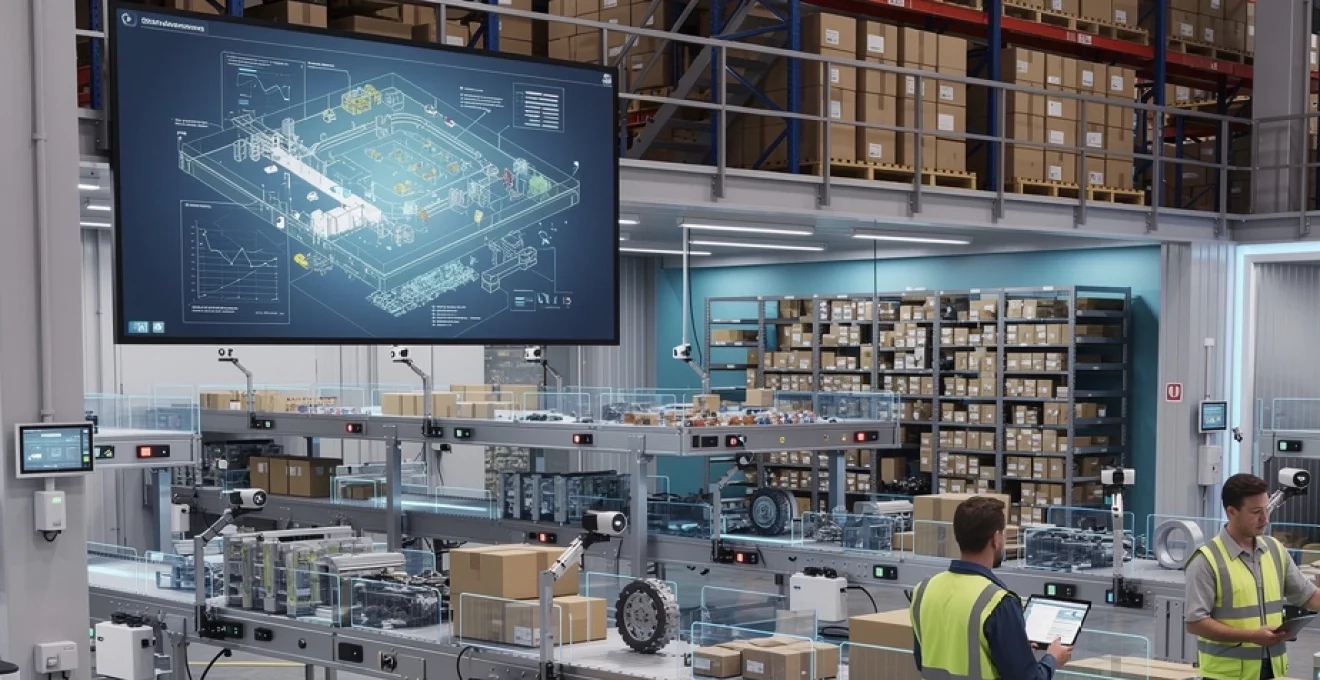
Manufacturing and logistics operations are experiencing a fundamental transformation as intelligent conveyor systems replace traditional material handling infrastructure. These advanced networks combine sensors, artificial intelligence, and automated controls to create responsive, self-optimising transport systems that dramatically improve operational efficiency. Facilities implementing intelligent conveyor technology report throughput increases of 30-40% alongside significant reductions in energy consumption and maintenance costs. The convergence of Industry 4.0 technologies with physical material handling equipment has created opportunities for unprecedented levels of automation, visibility, and control across warehouse and production environments.
What distinguishes intelligent conveyors from their conventional counterparts is their ability to make autonomous decisions based on real-time data analysis. Rather than simply moving products from point A to point B at fixed speeds, these systems continuously adjust routing, speed, and sequencing based on current conditions. This adaptive capability transforms conveyors from passive transport mechanisms into active participants in warehouse orchestration, creating material handling networks that respond dynamically to changing operational demands.
Core technologies driving intelligence in modern conveyor systems
The intelligence embedded in modern conveyor systems stems from several converging technologies working in harmony. These technological foundations enable conveyors to sense their environment, process information locally, and make decisions that optimise material flow without constant human intervention. Understanding these core technologies helps facility managers appreciate the capabilities and requirements of intelligent conveyor infrastructure.
Integration of IoT sensors and Real-Time monitoring capabilities
Internet of Things sensors form the sensory nervous system of intelligent conveyor networks. These devices continuously monitor belt tension, motor temperature, vibration patterns, and component wear across the entire conveyor infrastructure. Modern installations typically feature 20-30 sensor points per 100 metres of conveyor, generating continuous streams of operational data. This sensor density allows systems to detect anomalies within milliseconds, triggering automated responses before minor issues escalate into operational disruptions.
Temperature sensors positioned at motor housings and drive units provide early warning of overheating conditions, while vibration monitors identify bearing deterioration weeks before failure occurs. Photoelectric sensors track product presence and spacing, enabling zone-based control systems to maintain optimal gap distances between items. Load cells embedded in conveyor frames measure weight distribution, allowing systems to adjust speeds dynamically based on current loading conditions. The aggregated data from these sensors feeds into central monitoring platforms that provide facility managers with comprehensive visibility across entire material handling operations.
Machine learning algorithms for predictive maintenance and failure prevention
Artificial intelligence transforms raw sensor data into actionable intelligence through sophisticated pattern recognition algorithms. Machine learning models analyse historical performance data alongside real-time sensor readings to predict component failures with remarkable accuracy. Advanced systems achieve prediction horizons of 2-3 weeks, providing maintenance teams with sufficient lead time to schedule interventions during planned downtime periods rather than responding to unexpected breakdowns.
These algorithms identify subtle deviations from normal operating patterns that human operators might overlook. A gradual increase in motor current draw combined with elevated bearing temperatures might indicate impending drive unit failure, prompting the system to generate maintenance alerts. Neural networks trained on thousands of hours of operational data can distinguish between normal operational variations and genuine fault conditions, dramatically reducing false positive alerts that plague simpler threshold-based monitoring systems. Facilities implementing AI-driven predictive maintenance report 25-35% reductions in unplanned downtime and 15-20% decreases in overall maintenance costs.
Vision systems and barcode scanning for automated sortation
Computer vision technology enables intelligent conveyors to identify, track, and route individual items without human intervention. High-resolution cameras positioned above conveyor lines capture images at rates exceeding 100 frames per second, while onboard processors analyse these images in real-time to extract relevant information. Modern vision systems can read barcodes from any angle, even on damaged or poorly printed labels, achieving read rates above 99.5% in demanding distribution environments.
Beyond simple barcode reading, advanced vision systems perform dimensional analysis, damage detection, and label verification. These capabilities enable automated quality control processes that identify packaging defects, verify correct labelling, and ensure dimensional compliance before products reach shipping areas. When integrated with conveyor control systems, vision data drives sortation decisions, directing each item to its designated destination based on order information
When combined with barcode data and product master records, these systems can automatically divert items to the correct lane, palletising cell, or packing station with minimal PLC programming changes. In high-speed parcel hubs, intelligent conveyors equipped with vision systems effectively become the “eyes and brain” of the sortation network, continuously verifying identity, orientation, and condition at scale. For operators, this means fewer manual scans, less rework on misrouted parcels, and far higher confidence that each item is in the right place at the right time.
Edge computing architecture in distributed conveyor networks
To process this constant stream of sensor and vision data without overloading central servers, intelligent conveyors increasingly rely on edge computing architectures. Instead of sending every data point to the cloud or a central control room, compact industrial PCs and embedded controllers mounted along the conveyor line execute analytics locally. They filter, aggregate, and respond to events in milliseconds, while only transmitting relevant summaries or exceptions upstream.
This distributed intelligence reduces network latency and increases resilience. If a site loses its connection to a cloud platform, edge nodes can continue operating critical functions such as local safety interlocks, speed control, and basic routing. You can think of it as giving each conveyor segment its own “mini control centre” that collaborates with others rather than waiting for distant instructions. For facilities with large footprints or multiple buildings, this approach also keeps bandwidth requirements manageable as they scale up their smart conveyor infrastructure.
Adaptive routing and dynamic load balancing in smart conveyor networks
Once a conveyor network can sense its environment and process data locally, the next logical step is intelligent control of material flow. Adaptive routing and dynamic load balancing turn what used to be rigid, pre-defined conveyor paths into flexible transport networks that respond to congestion, downtime, and shifting priorities. This is particularly valuable in high-mix, high-volume operations where product types, order profiles, and shift patterns change from hour to hour.
Rather than pushing every carton or tote down the same fixed path, smart conveyors distribute workload across available routes, much like a modern navigation app diverts drivers around traffic. The result is smoother throughput, fewer bottlenecks, and better use of every piece of installed equipment. For operations managers tasked with squeezing more capacity out of existing floorspace, these capabilities can feel like adding extra lanes to a highway without pouring a single slab of concrete.
Zone-based control systems for throughput optimisation
Zone-based control is one of the fundamental building blocks of adaptive conveyor routing. In a zoned conveyor, each section or “zone” is controlled independently with its own sensors and actuators, allowing products to accumulate without contact and restart without manual intervention. Zero-pressure accumulation (ZPA) logic ensures that items maintain safe gaps, preventing pressure damage and enabling automated merging and sorting further downstream.
Modern intelligent conveyors extend basic ZPA with dynamic logic that adjusts zone lengths, release timing, and accumulation rules based on real-time conditions. For example, if a downstream packing area begins to slow, the system can extend accumulation upstream and automatically reduce feed rates, preventing a hard stop. Conversely, when a high-priority batch order enters the system, the control logic can temporarily shorten gaps and prioritise release in the relevant zones to meet tight service-level agreements. This type of fine-grained control is a key reason why zone-based systems often deliver double-digit improvements in practical throughput compared with run‑to‑failure legacy lines.
Real-time path selection algorithms in cross-belt sorters
In complex sortation systems—such as cross-belt or tilt-tray sorters—intelligent conveyors rely on real-time path selection algorithms to decide where and when to route each item. These algorithms consider numerous variables: destination lane availability, current and predicted congestion, priority codes, and even carrier cut-off times. Every carton effectively becomes a “packet” moving through a network, with routing decisions optimised on the fly.
Advanced control software uses heuristics and, increasingly, reinforcement learning techniques to improve routing performance over time. By learning from historical patterns—peak times, typical error conditions, or recurring bottlenecks—the system gradually refines its decision rules. For you as an operator, this means that a sorter installed today may perform measurably better six months from now without any hardware changes, simply because the algorithms have learned the most efficient way to move your specific product mix.
Variable speed drive technology and energy consumption reduction
Variable speed drives (VSDs) are another cornerstone technology in intelligent conveyor systems. Instead of running motors at fixed speeds, VSDs adjust RPM based on real-time demand, allowing conveyors to speed up during peaks and slow or stop during lulls. This not only smooths product flow but also reduces mechanical stress and energy use. Studies in automated warehouses show that VSD-equipped conveyors can cut energy consumption by 20–40% compared to constant-speed lines, especially when combined with smart idle modes.
Intelligent control strategies go beyond simple start/stop logic. They coordinate acceleration and deceleration ramps between adjacent zones to avoid product collisions and unnecessary braking. Some systems even match conveyor speeds to upstream process rates, minimising idle time at workstations and packaging cells. The effect is similar to eco-driving techniques in vehicles: by avoiding harsh starts and stops and maintaining steady speeds where possible, you reduce wear, save power, and extend the life of motors, belts, and rollers.
Industrial conveyor automation platforms and control interfaces
Behind the mechanical motion of intelligent conveyors sits a sophisticated software and control stack. Industrial automation platforms tie together PLCs, drives, sensors, and higher-level IT systems into a cohesive whole. For engineering teams, the choice of platform—and how it is configured—has a direct impact on project complexity, commissioning time, and long-term maintainability. For operations, these platforms define how intuitive it is to monitor performance, diagnose issues, and roll out continuous improvement changes.
As factories and warehouses push towards full Industry 4.0 integration, we increasingly see converged environments where OT (operational technology) and IT systems share common data models and communication protocols. Intelligent conveyors are often at the centre of this convergence, acting as both the physical backbone of material flow and a rich source of operational data for analytics, planning, and optimisation.
Siemens TIA portal and rockwell FactoryTalk integration
Two of the most widely used ecosystems for conveyor automation are Siemens TIA Portal and Rockwell Automation’s FactoryTalk suite. Both provide integrated environments for programming PLCs, configuring drives, setting up HMI screens, and connecting to higher-level systems. When you deploy intelligent conveyors within these platforms, you benefit from standardised libraries, diagnostics, and reusable function blocks for common tasks like motor control, zone logic, and safety interlocks.
In a Siemens-based environment, for example, TIA Portal allows engineers to create modular conveyor templates that can be replicated and parameterised across multiple lines. This significantly reduces engineering hours when expanding capacity or adding new sortation branches. Similarly, Rockwell’s FactoryTalk View and Studio 5000 enable centralised management of tags, alarms, and recipes, making it easier to roll out consistent control strategies across distributed conveyor networks. The result is a more maintainable system where new features—such as predictive maintenance algorithms or enhanced safety logic—can be deployed with minimal disruption.
SCADA systems for centralised conveyor management
Supervisory Control and Data Acquisition (SCADA) systems sit above PLC-level control, providing operators with a unified view of the entire conveyor installation. Through intuitive dashboards, you can monitor belt speeds, accumulation levels, equipment health, and alarm conditions from a single control room. Modern SCADA solutions overlay real-time graphics onto plant layouts, allowing maintenance teams to pinpoint issues to specific conveyors, motors, or zones in seconds.
For intelligent conveyor systems, SCADA platforms also act as data concentrators, storing historical trends that feed into analytics and continuous improvement projects. Want to understand why a particular sorter lane is often close to capacity during certain shifts? SCADA trend charts and reports can reveal patterns that would be nearly impossible to see from the shop floor alone. As more sites adopt web-based SCADA clients, this visibility extends beyond the facility walls, enabling regional or global operations teams to benchmark performance across multiple warehouses and plants.
Api-driven warehouse management system connectivity
The true power of intelligent conveyors emerges when they are tightly integrated with Warehouse Management Systems (WMS) and other enterprise software. API-driven connectivity replaces brittle, point-to-point interfaces with flexible, service-oriented architectures. Instead of hard-coding destinations into PLC logic, conveyors request routing instructions from the WMS or Warehouse Control System (WCS) in real time, based on order status, inventory position, and shipping priorities.
This approach makes material handling far more adaptable. If your business introduces a new carrier, SKU, or value-added service, you can often support it with configuration changes in the WMS rather than expensive reprogramming of the conveyor controls. APIs also enable rich two-way communication: conveyors report back on item movement, dwell times, and exceptions, giving planners accurate, real-time visibility into where every order is within the fulfilment process. For fast-growing operations, this type of flexible integration is essential to avoid technology lock-in and keep pace with changing customer expectations.
Digital twin simulation for conveyor layout planning
Digital twin technology adds another layer of intelligence to conveyor system design and optimisation. By building a virtual replica of your conveyor layout—including sensors, motors, control logic, and expected product flows—you can simulate performance long before the first piece of steel is installed. Engineers can test different conveyor speeds, accumulation strategies, merge points, and buffer sizes to identify bottlenecks and validate design choices.
This simulation capability is particularly useful when you are upgrading an existing facility and must fit new intelligent conveyors into a constrained footprint. What happens if you add a second induction line to a sorter, or change a manual packing area to an automated one? A digital twin allows you to run “what-if” scenarios, measure the impact on throughput and utilisation, and choose options that maximise ROI. Once the physical system is live, the same twin can be fed with real-time data to support ongoing optimisation, turning layout planning from a one-off project into a continuous process.
Autonomous mobile robot integration with fixed conveyor infrastructure
As intelligent conveyors become more capable, they increasingly operate alongside Autonomous Mobile Robots (AMRs) to create hybrid material handling systems. Conveyors excel at high-volume, point-to-point movement along fixed routes, while AMRs provide flexible, on-demand transport between zones, floors, or even buildings. Integrating the two allows you to combine the speed and reliability of conveyors with the adaptability of mobile robotics.
In a typical setup, conveyors handle repetitive flows—such as moving totes from picking to packing—while AMRs ferry replenishment stock, empty cartons, or special orders between islands of automation. Handshake points, such as conveyor-mounted transfer stations or vertical lifts, enable seamless exchange between the moving belt and the mobile robot. Coordination software ensures that an AMR arrives just as a tote reaches the transfer point, minimising dwell time and preventing congestion.
Achieving this level of orchestration requires clear communication between the conveyor control system, the AMR fleet manager, and higher-level WMS or MES platforms. Standard protocols such as MQTT and RESTful APIs are increasingly used to share mission data, status updates, and priorities. When done well, the combined system behaves like a single, intelligent material handling network: conveyors and robots dynamically share the workload, re-routing around blocked aisles, maintenance zones, or temporary surges. For operators facing space constraints or variable demand, this conveyor–AMR synergy offers a practical path to scalable automation without major civil works.
Industry-specific applications transforming warehouse operations
While the core technologies behind intelligent conveyors are broadly similar, their application differs markedly from one industry to another. Each sector imposes its own constraints—whether that is product fragility, regulatory compliance, or environmental conditions—that shape how systems are designed and operated. Understanding these nuances can help you avoid generic solutions and instead specify conveyor automation that truly fits your operation.
From e-commerce fulfilment centres shipping thousands of parcels per hour, to cold chain facilities preserving temperature-sensitive pharmaceuticals, intelligent conveyor systems are being tailored to support unique workflows. The common thread is a shift from manual, reactive handling to predictable, data-driven movement that underpins higher service levels and more resilient supply chains.
E-commerce fulfilment centres and high-speed parcel sortation
E-commerce has been one of the strongest drivers of intelligent conveyor adoption. Fulfilment centres must process large volumes of small, diverse items with extremely tight cut-off times and high customer expectations for tracking accuracy. Here, intelligent conveyors with integrated scanners, weight checks, and dimensioning systems turn chaotic order streams into orchestrated flows. Cross-belt or sliding-shoe sorters operating at speeds beyond 10,000 parcels per hour depend on real-time control and high read rates to maintain performance.
Dynamic routing algorithms direct parcels to the optimal chute based not just on destination, but also on carrier commitments, consolidation rules, and last-minute order changes. For returns processing—a major cost centre in e-commerce—reversible conveyor paths and smart accumulation buffers help manage unpredictable volumes without overwhelming staff. By instrumenting every key junction with sensors and tying conveyor events into the order management system, operators gain parcel-level traceability that supports proactive customer notifications and streamlined exception handling.
Cold chain distribution and temperature-controlled conveyor systems
Cold chain logistics introduces additional complexity for intelligent conveyors, as systems must maintain strict temperature ranges while still delivering high throughput. Conveyors operating in chilled or frozen environments require specialised materials, lubricants, and motor configurations to prevent condensation, icing, or premature wear. Intelligent controls also need to account for door openings, defrost cycles, and varying ambient conditions between zones.
Temperature and humidity sensors integrated along the conveyor path feed data to monitoring systems that verify compliance with regulatory and customer requirements. If a section of the line experiences a temperature excursion, affected items can be automatically identified and diverted for inspection, rather than scrapping entire batches. Variable speed drives and smart start/stop logic further help reduce energy consumption in refrigeration systems by minimising unnecessary heat loads from motors and friction. For pharmaceutical or high-value food products, this combination of traceability, control, and efficiency is essential to maintaining both product integrity and profitability.
Automotive manufacturing assembly line synchronisation
In automotive and other complex manufacturing environments, intelligent conveyors are central to synchronising assembly operations. Unlike parcel handling, where items can often be buffered or re-routed, assembly lines must deliver components to workstations in the correct sequence and at the right takt time. Skid conveyors, skillet systems, and overhead power-and-free lines increasingly incorporate smart controls that adjust spacing, speed, and routing based on real-time production status.
For example, if a particular workstation experiences a quality issue that slows output, intelligent conveyors can automatically expand buffers upstream and, where possible, re-route certain sub-assemblies to parallel lines. Integration with MES (Manufacturing Execution Systems) ensures that each vehicle or product variant carries its digital build record, allowing scanners and RFID readers along the conveyor to trigger the right tools, instructions, and test routines. This tight coupling between material movement and information flow is a hallmark of modern smart factories, supporting higher product customisation without sacrificing efficiency.
Return on investment metrics and total cost of ownership analysis
Implementing intelligent conveyors represents a significant capital investment, so stakeholders rightly ask: how do we quantify the benefits? A robust business case looks beyond headline throughput gains to consider the full spectrum of ROI metrics and total cost of ownership (TCO) over the system’s lifecycle. While each facility is unique, several common levers consistently drive value.
On the revenue side, intelligent conveyors enable higher order capacity, faster cycle times, and improved on-time delivery performance—all of which support growth and customer retention. On the cost side, reductions in manual handling, unplanned downtime, errors, and energy usage contribute to lower operating expenses. Many facilities see payback periods of three to five years, with some high-throughput e-commerce or parcel hubs achieving ROI even sooner due to the sheer volume of orders processed.
To build a compelling TCO analysis, you should consider not only purchase and installation costs, but also maintenance, spare parts, software licensing, and periodic upgrades over 10–15 years. Intelligent conveyors often have higher upfront costs than basic systems but lower lifecycle expenses thanks to predictive maintenance, standardised components, and modular designs that support incremental expansion. Including these factors in your financial model helps avoid underestimating long-term savings.
Key performance indicators typically used to assess intelligent conveyor projects include:
- Throughput and capacity utilisation: cases, parcels, or units per hour, and percentage of rated capacity used during peak periods.
- Labour productivity: orders processed per labour hour, or reduction in manual touches per unit shipped.
- Order accuracy and error rates: mis-ships, mis-sorts, and damage incidents per thousand orders.
- Equipment availability and downtime: mean time between failures (MTBF), mean time to repair (MTTR), and overall equipment effectiveness (OEE).
- Energy consumption: kWh per unit handled, and associated carbon footprint reductions.
By tracking these KPIs before and after implementation, you can quantify the true impact of intelligent conveyors on your material handling system. Perhaps most importantly, intelligent infrastructure positions your operation for future change. As product mixes evolve, service expectations rise, and labour markets tighten, having a flexible, data-driven conveyor network becomes less a competitive advantage and more a necessity. Investing now in intelligent conveyors is therefore not just about solving today’s bottlenecks—it is about building a resilient foundation for tomorrow’s supply chain challenges.