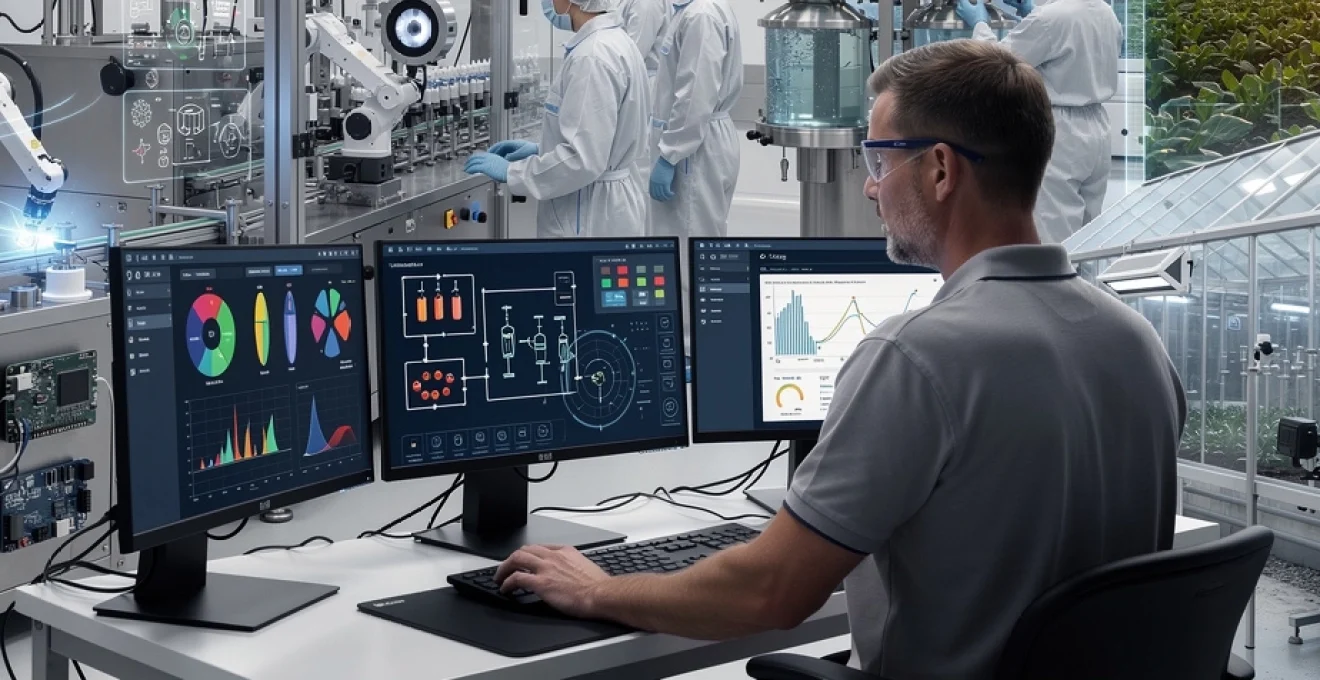
Micro-automation represents a transformative approach to industrial process optimisation, particularly within specialised manufacturing environments where precision and control are paramount. Unlike large-scale automation systems that require substantial capital investment and comprehensive infrastructure overhaul, micro-automation focuses on targeted improvements that deliver measurable results with minimal disruption to existing operations. This technology enables manufacturers to address specific bottlenecks, enhance quality control measures, and improve operational efficiency without the complexity associated with full-scale automation implementations.
The growing adoption of micro-automation technologies reflects the evolving landscape of modern manufacturing, where companies increasingly seek agile solutions that can adapt to changing market demands whilst maintaining competitive advantages. These systems provide the flexibility to implement incremental improvements that compound over time, creating substantial operational benefits across diverse industrial sectors.
Defining Micro-Automation technologies in specialised manufacturing environments
Micro-automation encompasses a range of compact, intelligent systems designed to automate specific processes or functions within larger manufacturing operations. These technologies distinguish themselves from traditional automation through their modular nature, lower implementation costs, and ability to integrate seamlessly with existing equipment and workflows. The fundamental principle behind micro-automation lies in identifying discrete processes that can benefit from automated control whilst maintaining the flexibility to scale or modify implementations as operational requirements evolve.
The strategic value of micro-automation becomes particularly evident when examining its application across various industrial contexts. Rather than requiring comprehensive system redesigns, these technologies enable manufacturers to implement targeted improvements that address specific operational challenges. This approach proves especially valuable in niche manufacturing environments where production volumes may not justify large-scale automation investments, yet precision and consistency remain critical success factors.
Programmable logic controllers (PLCs) for Single-Process optimisation
Programmable Logic Controllers represent the cornerstone of micro-automation implementations, providing robust, reliable control systems for individual manufacturing processes. Modern PLCs offer sophisticated programming capabilities that enable precise control over complex sequences, timing operations, and safety interlocks. These systems excel in applications requiring deterministic responses to input conditions, making them ideal for processes where repeatability and reliability are essential.
The evolution of PLC technology has significantly enhanced their applicability in micro-automation scenarios. Contemporary controllers feature expanded memory capacity, faster processing speeds, and enhanced communication capabilities that facilitate integration with other automation components. This technological advancement enables manufacturers to implement sophisticated control algorithms that optimise single processes whilst maintaining system simplicity and cost-effectiveness.
Arduino and raspberry pi integration in legacy equipment retrofitting
Open-source microcontroller platforms have revolutionised the approach to legacy equipment modernisation, offering cost-effective solutions for adding intelligent control capabilities to existing machinery. Arduino and Raspberry Pi systems provide accessible entry points for implementing micro-automation, particularly in scenarios where custom solutions are required to address unique operational challenges. These platforms enable manufacturers to develop tailored automation solutions without the expense and complexity associated with proprietary industrial controllers.
The versatility of these platforms extends beyond simple control functions, encompassing data acquisition, communication protocols, and user interface development. This comprehensive capability set enables manufacturers to transform legacy equipment into intelligent, connected systems that contribute to overall operational efficiency. The extensive community support and available libraries further accelerate implementation timelines whilst reducing development costs.
SCADA systems for Real-Time process monitoring and control
Supervisory Control and Data Acquisition systems provide centralised monitoring and control capabilities that enhance operational visibility across distributed manufacturing processes. Modern SCADA implementations leverage cloud-based architectures and mobile connectivity to deliver real-time information access regardless of location or device. These systems enable operators to monitor key performance indicators, identify emerging issues, and implement corrective actions before problems escalate into costly disruptions.
The integration of SCADA systems with micro-automation components creates powerful synergies that amplify the benefits of both technologies. By combining local process control with centralised monitoring and analysis capabilities, manufacturers can achieve unprecedented levels of operational insight and control. This integration proves particularly valuable in applications where multiple micro-automation systems must coordinate their activities to achieve optimal overall performance.
Industrial internet of things (IIoT) sensors in precision manufacturing
Industrial IoT sensors form the sensory nervous system of modern micro-automation implementations, providing continuous monitoring capabilities that enable predictive maintenance, quality assurance, and process optimisation. These devices have evolved beyond simple measurement tools
that simply report basic parameters. Today’s IIoT devices incorporate on-board processing, edge analytics, and secure connectivity that allow them to participate actively in closed-loop control. In precision manufacturing environments, micro-automation solutions often begin with strategically placed sensors measuring vibration, temperature, humidity, torque, or dimensional accuracy at critical points in the process. These data streams provide the foundation for condition-based maintenance, early fault detection, and fine-grained process tuning.
When integrated with PLCs, SCADA platforms, or lightweight microcontrollers, IIoT sensors enable manufacturers to move from reactive troubleshooting to predictive and even prescriptive interventions. For example, a network of accelerometers on a high-speed spindle line can detect micro-vibrations long before they become visible defects or catastrophic failures, triggering automated slowdowns or maintenance work orders. As sensor costs continue to fall and wireless protocols become more reliable, deploying dense sensor networks is increasingly practical even for small and niche operators who previously viewed advanced instrumentation as out of reach.
Pharmaceutical manufacturing process automation using Micro-Controllers
Pharmaceutical production is one of the most tightly regulated manufacturing domains, where even minor process deviations can have significant quality or safety implications. Micro-automation technologies, particularly micro-controllers and compact robotics, are well suited to this environment because they can be introduced incrementally into existing validated lines. Rather than replacing entire systems, manufacturers can automate specific high-risk or high-variability steps, improving repeatability while maintaining compliance with Good Manufacturing Practice (GMP) standards.
By deploying targeted micro-automation in pharmaceutical processes, organisations can address common pain points such as manual data recording, operator-dependent quality variation, and inefficient cleaning or changeover procedures. Micro-controllers with built-in data logging and electronic batch record capabilities also help strengthen audit trails and support regulatory inspections. As regulatory bodies increasingly emphasise data integrity and continuous process verification, these small-scale automation enhancements can deliver outsized compliance and efficiency benefits.
Automated tablet coating systems with vision inspection technology
Tablet coating is a classic example of a niche process where micro-automation can make a substantial difference. Traditional coating operations rely heavily on operator judgement to determine endpoint, appearance, and uniformity, which can lead to batch-to-batch variability. By introducing micro-controller based control of spray rates, drum speed, and inlet air conditions, manufacturers can stabilise the coating environment and achieve more consistent film formation. These controllers can execute precise recipes, manage ramp-up and ramp-down profiles, and respond rapidly to sensor feedback.
When coupled with compact vision inspection systems mounted at the coating pan outlet, micro-automation extends into real-time quality assurance. High-resolution cameras and smart image-processing algorithms assess parameters such as colour, gloss, and surface coverage on a sample of tablets during or immediately after coating. The micro-controller can then adjust process parameters automatically if it detects trends towards non-conformance. This combination of automated tablet coating systems with vision inspection technology reduces rework, minimises waste, and generates granular quality data that supports continuous improvement initiatives.
Sterile Fill-Finish line robotics for vial processing
The fill-finish stage for injectable products demands extreme control over sterility and particulate contamination. Here, micro-automation often takes the form of compact robotic modules installed at critical transfer points within the isolator or restricted access barrier system. Small six-axis robots or SCARA units can be programmed via dedicated micro-controllers to handle vials, syringes, or cartridges with high precision, eliminating human intervention in high-risk zones. This not only reduces contamination risk but also alleviates ergonomic strain for operators who would otherwise perform repetitive sterile tasks.
Because full-scale robotic fill-finish systems can be prohibitively expensive, a micro-automation strategy focuses on the most error-prone or labour-intensive sub-steps: de-nesting, infeed alignment, capping, or inspection rejection handling. These robotic modules can be retrofitted onto existing lines and integrated with PLCs and environmental monitoring systems, ensuring synchronised motion and real-time response to quality events. As demand for small-batch and personalised medicines increases, flexible micro-automated vial processing helps manufacturers adapt quickly to frequent product changeovers without sacrificing sterility assurance.
Temperature-controlled crystallisation process management
Active pharmaceutical ingredient (API) crystallisation is highly sensitive to temperature, agitation, and concentration gradients. Small deviations can result in undesired polymorphs, broad particle size distributions, or filtration challenges. Micro-controllers, paired with high-accuracy temperature probes and agitation sensors, enable fine-grained management of crystallisation profiles in both development and commercial-scale reactors. These systems execute complex temperature ramps, hold periods, and cooling curves with repeatable accuracy that is difficult to achieve manually.
In many facilities, micro-automation of crystallisation begins with a single reactor retrofitted with a dedicated control module and IIoT-connected sensors. Over time, similar modules can be deployed across the reactor fleet, enabling centralised monitoring and advanced analytics on crystallisation performance. When combined with in-line spectroscopy or turbidity measurements, micro-controllers can adjust cooling rates or seed addition in real time, steering the process towards the desired crystal habit and size distribution. The result is improved yield, more robust downstream processing, and a reduced risk of batch failures.
Clean room environmental monitoring with wireless sensor networks
Maintaining compliant conditions in clean rooms and controlled environments is resource intensive, especially when monitoring relies on manual data collection. Wireless sensor networks provide a micro-automation pathway to continuous, real-time oversight of temperature, relative humidity, differential pressure, and particle counts throughout the facility. Battery-powered IIoT nodes communicate via secure protocols to a central gateway, which in turn feeds a SCADA system or environmental monitoring platform. This architecture reduces cabling complexity and simplifies retrofits in occupied clean room spaces.
With automated alarm thresholds and trend analysis, environmental deviations can be detected and addressed before they compromise product quality or require extensive investigations. For example, a gradual loss of pressure cascade across clean zones may signal filter loading or door-sealing issues, prompting proactive maintenance. Because all readings are time-stamped and stored electronically, wireless monitoring networks also strengthen data integrity and simplify regulatory reporting. In many cases, these micro-automation solutions pay for themselves by preventing a single major deviation event.
Precision agriculture automation technologies and field applications
Precision agriculture is an ideal testbed for micro-automation because it relies on targeted interventions rather than blanket treatments. Instead of automating entire farms with large, capital-intensive machinery, growers can apply compact technologies to specific operations such as fertiliser dosing, irrigation scheduling, or microclimate control. These tools allow farmers to respond to within-field variability, improving resource efficiency and crop performance while reducing environmental impacts.
From a practical standpoint, micro-automation in agriculture often involves integrating low-cost sensors, small controllers, and communication modules with existing implements and infrastructure. The goal is not to replace experienced growers but to augment their decision-making with high-resolution data and repeatable, automated actions. As climate volatility and input costs rise, the ability to fine-tune field operations using micro-automation technologies can be a decisive competitive advantage.
Variable rate technology (VRT) for fertiliser application systems
Variable Rate Technology enables fertiliser spreaders and applicators to adjust nutrient delivery on the move, based on prescription maps or real-time sensor inputs. In a micro-automation context, this typically involves adding GPS receivers, electronic flow control valves, and micro-controller based rate controllers to existing equipment. The controller interprets spatial data and adjusts application rates across the boom or spread pattern, ensuring that each part of the field receives the appropriate input level.
This targeted approach helps reduce over-application in high-fertility zones and boosts yields in previously under-served areas. Studies in many cropping systems have demonstrated fertiliser savings of 10–20% with VRT, often with equal or improved yield outcomes. For smaller farms, starting with a single VRT-enabled implement rather than a fully autonomous fleet can be a cost-effective path into precision agriculture automation. Over time, additional micro-automated components—such as section control, automatic headland management, or in-season topdressing systems—can be layered on.
Automated greenhouse climate control using zigbee networks
Greenhouses provide a controlled environment, but managing temperature, humidity, CO₂ levels, and light intensity manually can be both labour-intensive and imprecise. Micro-automation solutions leverage low-power wireless protocols such as Zigbee to create distributed sensor and actuator networks within the greenhouse. Each node might monitor environmental conditions or control a specific device—vents, fans, heaters, or irrigation valves—while a central micro-controller or PLC coordinates their operation.
Because Zigbee networks are mesh-based, they are resilient to individual node failures and well suited to complex greenhouse layouts. Climate control algorithms can maintain narrow setpoint bands that support optimal plant growth while minimising energy consumption. For example, automated night-time vent management can reduce heat loss, whereas coordinated shading and misting can prevent temperature spikes on hot days. For growers, the transition from manual switches and standalone thermostats to automated greenhouse climate control using Zigbee networks is often one of the most tangible quality and productivity upgrades.
Drone-based crop monitoring with multispectral imaging
While drones themselves are highly visible examples of automation, the micro-automation element lies in the payload integration and data-processing workflows. Lightweight micro-controllers manage multispectral or hyperspectral cameras, GPS modules, and stabilisation gimbals, ensuring that images are captured consistently and geo-referenced accurately. Once flights are completed, image data can be processed using cloud-based platforms to generate vegetation indices, canopy temperature maps, or stress detection overlays.
These insights allow farmers to pinpoint localised problems such as nutrient deficiencies, pest outbreaks, or irrigation failures long before they are visible from the ground. In many operations, drone-based monitoring replaces or complements manual scouting, enabling more frequent and objective assessments. When combined with VRT-enabled application equipment, drone outputs can feed directly into prescription maps, closing the loop between detection and intervention. The result is a micro-automation ecosystem where small devices and focused applications work together to enhance overall farm performance.
Smart irrigation controllers with soil moisture feedback loops
Water management is a critical concern in both open-field and protected agriculture. Smart irrigation controllers combine soil moisture probes, weather data, and crop models to decide when and how much to irrigate. At the heart of many systems is a micro-controller that executes control logic, communicates with sensors via wired or wireless links, and actuates valves or pumps. Instead of fixed schedules, irrigation events are triggered by soil moisture thresholds or evapotranspiration estimates, creating a closed feedback loop.
From an implementation standpoint, growers can start with a single smart controller managing one block or zone, then expand as benefits are realised. Field studies commonly report water savings of 20–40% with smart irrigation, along with improved plant health and reduced disease pressure. As with other micro-automation technologies, the emphasis is on incremental enhancement: retrofitting existing valves and pumps with smart controllers rather than replacing entire irrigation systems. Over time, integrating irrigation data with yield maps and other agronomic information can support more sophisticated water-use efficiency strategies.
Textile industry Micro-Automation solutions for quality enhancement
The textile sector has historically relied on a combination of skilled labour and large-scale looms or finishing lines. However, as quality expectations tighten and product lifecycles shorten, micro-automation offers a practical path to improving consistency without completely retooling factories. By targeting specific processes—such as yarn tension control, fabric inspection, dye-bath management, or cutting accuracy—manufacturers can address common sources of defects and rework.
For instance, retrofitting looms with electronic tension sensors and micro-controller based actuators can stabilise yarn feed and reduce broken ends, leading to fewer stoppages and more uniform fabrics. Similarly, compact vision systems mounted above inspection tables can automatically flag weaving faults, colour shading, or surface contamination, supporting operators rather than replacing them. In dyeing and finishing, micro-automation of chemical dosing, bath temperature, and dwell times helps maintain recipe fidelity across batches. Collectively, these small-scale enhancements improve first-pass yield and shorten lead times, which is crucial for fashion-driven and technical textile segments alike.
Food processing automation: HACCP compliance and traceability systems
Food manufacturers operate under stringent safety frameworks such as Hazard Analysis and Critical Control Points (HACCP), where documenting and controlling critical parameters is non-negotiable. Micro-automation technologies play a key role in automating monitoring and record-keeping at these control points. Rather than relying on manual checks of cooking temperatures, chill-down times, or metal detector performance, micro-controllers and IIoT sensors can capture data automatically, trigger alarms when limits are exceeded, and store records in secure databases.
Consider a small ready-meal producer implementing micro-automation at its thermal processing step. Temperature probes connected to a compact PLC or micro-controller continuously log core product temperatures, automatically verifying that each batch meets lethality requirements. If deviations occur, the system can halt downstream packaging, preventing non-compliant product from progressing. Similar approaches can be used for pH control in fermented products, weight checks in portioning, or seal integrity testing in packaging lines. In each case, the automation scope is narrow but directly aligned with a HACCP critical control point, delivering both safety and efficiency gains.
Traceability is another area where micro-automation delivers significant value, especially as regulators and retailers demand end-to-end visibility across the supply chain. Barcode or RFID readers positioned at key transfer points, tied back to micro-controllers or edge gateways, can automatically link raw material lots to finished goods pallets. When integrated with enterprise systems, this granular tracking supports rapid and targeted recalls, reducing both risk and cost. For niche processors, the combination of food processing automation, HACCP compliance, and traceability systems can differentiate their offerings and build trust with increasingly discerning consumers.
ROI analysis and implementation strategies for niche industrial Micro-Automation
Despite the clear technical benefits, many organisations hesitate to invest in micro-automation due to perceived complexity or uncertain returns. A structured ROI analysis helps clarify where small-scale automation can deliver the greatest impact. Rather than treating automation as an all-or-nothing proposition, it is more effective to evaluate individual processes based on downtime costs, scrap rates, labour intensity, and quality variability. Processes that score highly on these dimensions are prime candidates for focused automation interventions.
From a financial standpoint, micro-automation projects often exhibit relatively short payback periods—sometimes 12 to 24 months—because they target well-defined inefficiencies. Key ROI contributors include reduced unplanned downtime, lower rework and waste, improved compliance, and redeployment of skilled staff from repetitive tasks to higher-value activities. To capture these benefits, it is essential to track baseline performance metrics before implementation and compare them against post-deployment results. Doing so not only validates the business case but also informs future automation priorities.
Successful implementation strategies typically follow an incremental, experiment-driven approach rather than a monolithic roll-out. Many organisations start with a pilot project on a single line or cell, using off-the-shelf micro-controllers, sensors, and simple HMI interfaces to validate the concept. Lessons learned from this pilot—technical integration challenges, operator training needs, or data-management issues—feed into a refined template for broader deployment. Engaging cross-functional teams, including maintenance, quality, IT, and front-line operators, helps ensure that micro-automation solutions are both technically sound and operationally accepted.
Change management is often as important as the technology itself. Clear communication about the goals of micro-automation—reducing errors, improving safety, and enhancing job quality rather than eliminating roles—can mitigate resistance. Providing training that demystifies PLCs, IIoT sensors, or basic scripting empowers operators and technicians to participate actively in continuous improvement. Over time, organisations that embrace micro-automation as a series of manageable, high-impact projects are better positioned to adapt to market shifts, regulatory changes, and technological advances without the disruption associated with large-scale automation overhauls.