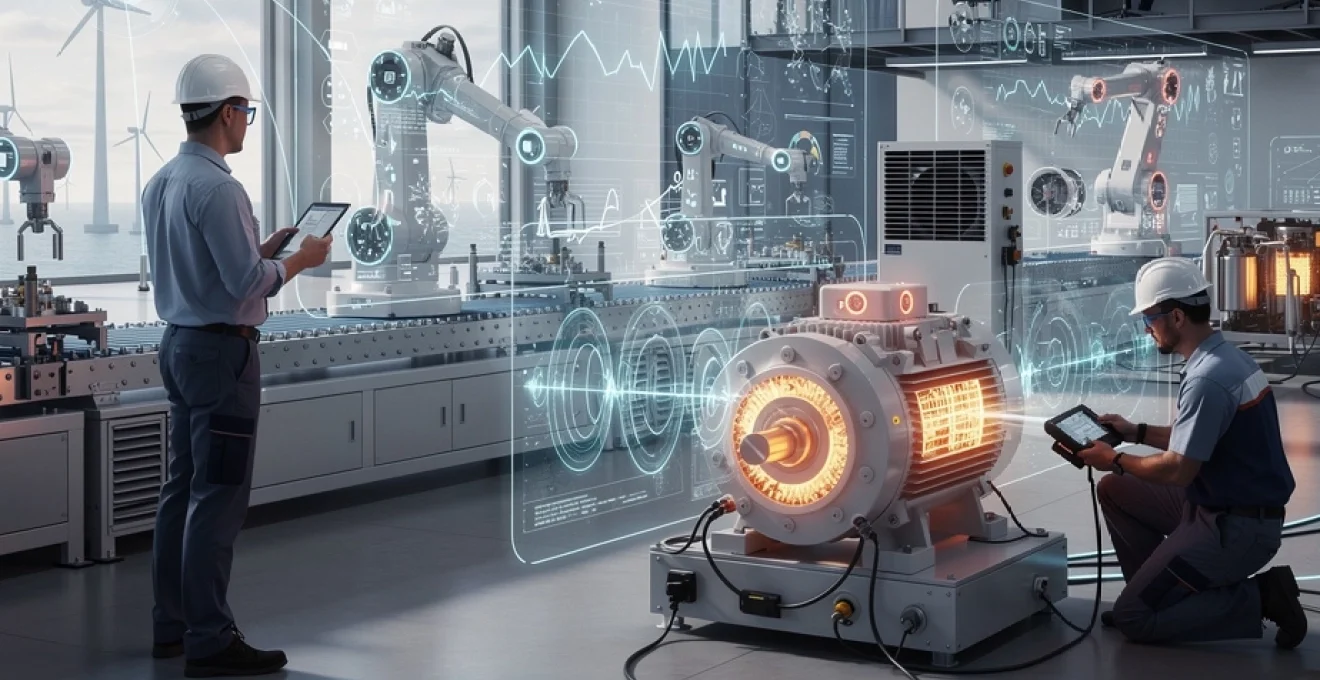
The industrial landscape is experiencing a profound transformation as self-diagnosing equipment revolutionises traditional maintenance approaches. Modern manufacturing facilities are witnessing unprecedented improvements in operational efficiency, with predictive maintenance systems reducing unplanned downtime by up to 70% whilst simultaneously cutting maintenance costs by 25%. This technological evolution represents far more than incremental improvement—it signifies a fundamental shift towards intelligent, autonomous equipment management that anticipates problems before they occur.
Self-diagnosing equipment leverages sophisticated algorithms, advanced sensors, and machine learning capabilities to continuously monitor operational parameters, identify potential failures, and initiate corrective actions without human intervention. This proactive approach eliminates the reactive maintenance cycles that have historically plagued industrial operations, creating more resilient and efficient manufacturing environments.
Predictive analytics integration in modern industrial equipment
The integration of predictive analytics into industrial equipment represents a paradigm shift from traditional calendar-based maintenance schedules to data-driven, condition-based strategies. Modern predictive systems analyse vast quantities of operational data in real-time, identifying subtle patterns and anomalies that precede equipment failures by weeks or even months.
Predictive analytics platforms process multiple data streams simultaneously, including vibration signatures, temperature fluctuations, pressure variations, and electrical parameters. These systems create comprehensive equipment health profiles that enable maintenance teams to schedule interventions at optimal times, maximising both equipment availability and maintenance efficiency.
Machine learning algorithms for vibration pattern recognition
Vibration analysis represents one of the most sophisticated applications of machine learning in predictive maintenance. Advanced algorithms can differentiate between normal operational vibrations and those indicating potential mechanical issues such as bearing wear, misalignment, or rotor imbalance. These systems continuously learn from historical vibration data, refining their diagnostic accuracy over time.
Modern vibration monitoring systems utilise FFT (Fast Fourier Transform) algorithms to decompose complex vibration signals into constituent frequency components. Machine learning models then analyse these frequency patterns, comparing them against established baselines to identify developing problems. This approach enables maintenance teams to detect bearing defects up to 90 days before failure occurs.
Iot sensor networks and Real-Time data collection systems
The backbone of self-diagnosing equipment lies in comprehensive IoT sensor networks that provide continuous monitoring capabilities. These interconnected systems collect data from numerous parameters including temperature, pressure, vibration, acoustic emissions, and electrical characteristics. The proliferation of wireless sensor technologies has made it economically viable to monitor previously inaccessible equipment components.
Edge computing devices process initial data filtering and analysis locally, reducing bandwidth requirements whilst enabling rapid response to critical conditions. This distributed processing architecture ensures that mission-critical alerts reach maintenance teams within seconds of detection, regardless of network connectivity issues.
Digital twin technology implementation in manufacturing
Digital twin technology creates virtual replicas of physical equipment that mirror real-world performance characteristics and operational behaviours. These sophisticated models enable maintenance teams to simulate various operational scenarios, predict equipment responses to changing conditions, and optimise maintenance strategies without disrupting production processes.
Manufacturing facilities implementing digital twin technology report 20-30% improvements in maintenance planning accuracy. These virtual models continuously update themselves based on real-time sensor data, ensuring that simulations accurately reflect current equipment conditions and performance characteristics.
Condition monitoring through thermal imaging and acoustic analysis
Thermal imaging systems identify equipment problems by detecting abnormal heat patterns that indicate mechanical friction, electrical resistance, or fluid leakage issues. Automated thermal monitoring systems can identify bearing problems, electrical connection failures, and insulation breakdowns before they result in equipment damage or safety hazards.
Acoustic analysis complements thermal monitoring by identifying sound patterns associated with various failure modes. Ultrasonic monitoring systems detect high-frequency sounds produced by bearing wear, steam leaks, and electrical arcing. Advanced acoustic analysis algorithms can isolate specific sound signatures from complex industrial environments, providing precise diagnostic information.
Advanced diagnostic technologies revolutionising equipment health monitoring
The landscape of equipment health monitoring has been transformed by the emergence of sophisticated diagnostic platforms that integrate multiple monitoring technologies into comprehensive maintenance management systems. These advanced solutions provide unprecedented visibility into equipment conditions whilst automating many aspects of
diagnostics, trending, and failure prediction. By combining sensor inputs, historical performance data, and AI-driven analytics, these platforms transform raw signals into actionable insights, enabling maintenance teams to intervene before minor deviations escalate into costly breakdowns.
Siemens MindSphere platform for industrial asset intelligence
Siemens MindSphere is a cloud-based industrial IoT operating system that connects machines, systems, and sensors to deliver holistic asset intelligence. By aggregating data from self-diagnosing equipment across entire plants or distributed sites, MindSphere enables centralised monitoring, predictive analytics, and automated maintenance workflows. Organisations can build custom applications to track specific KPIs such as mean time between failures (MTBF) or energy consumption, aligning predictive maintenance strategies with business objectives.
The platform’s strength lies in its ability to normalise heterogeneous data sources and apply advanced analytics at scale. Machine learning models within MindSphere detect anomalies across vibration, temperature, and process variables, triggering alerts when equipment deviates from defined performance envelopes. For maintenance teams, this means fewer blind spots, faster root cause analysis, and a progressive shift from reactive troubleshooting to proactive optimisation.
GE predix edge computing solutions for Real-Time diagnostics
GE’s Predix ecosystem extends advanced analytics to the edge, placing diagnostic intelligence directly on or near industrial assets. Edge devices running Predix services process high-frequency data locally, enabling real-time diagnostics even when connectivity to cloud platforms is limited or intermittent. This architecture is particularly valuable for remote or harsh environments, such as oil and gas fields or power generation sites, where network reliability cannot be guaranteed.
By performing anomaly detection and rule-based evaluation at the asset level, Predix minimises latency between fault detection and response. Self-diagnosing equipment can adjust operating parameters, initiate controlled shutdowns, or send high-priority alerts to maintenance teams within milliseconds of identifying a critical condition. This combination of edge computing and predictive analytics significantly improves equipment reliability and reduces the risk of catastrophic failures.
ABB ability system for automated fault detection
The ABB Ability platform integrates sensors, communication infrastructure, and analytics tools into a unified environment for automated fault detection and equipment health monitoring. ABB’s systems collect condition data from motors, drives, switchgear, and process equipment, correlating these signals to identify patterns that precede failures. Built-in diagnostic libraries leverage decades of domain expertise, providing preconfigured fault models for common industrial assets.
Automated fault detection within ABB Ability allows self-diagnosing equipment to move beyond simple alarm thresholds. Instead of generating generic “high temperature” or “high vibration” alerts, the system identifies likely root causes such as bearing degradation, lubrication issues, or electrical imbalance. Maintenance teams receive prioritised work orders with recommended corrective actions, reducing diagnostic time and ensuring that limited resources focus on the most critical issues first.
Schneider electric EcoStruxure predictive maintenance architecture
Schneider Electric’s EcoStruxure architecture is designed to provide end-to-end visibility from connected products on the plant floor to analytics and applications at the enterprise level. In the context of predictive maintenance, EcoStruxure combines intelligent devices, secure communication layers, and cloud-based analytics to support fully integrated, self-diagnosing equipment strategies. Connected circuit breakers, variable speed drives, and PLCs continuously report health indicators to central analytics engines.
EcoStruxure’s predictive maintenance applications use this data to forecast degradation trends, estimate remaining useful life (RUL), and propose optimal maintenance windows that align with production schedules. For facility managers, this translates into a powerful toolset for balancing equipment health with operational priorities. You can, for instance, defer non-critical interventions during peak production periods while proactively planning major overhauls for scheduled shutdowns, maximising both uptime and asset longevity.
Rockwell automation FactoryTalk analytics platform integration
Rockwell Automation’s FactoryTalk Analytics platform focuses on extracting meaningful insights from automation and control systems data. By integrating directly with PLCs, SCADA systems, and intelligent devices, FactoryTalk captures detailed operational histories and real-time performance metrics across entire production lines. Embedded analytics models assess this data to detect anomalies, predict failures, and recommend maintenance actions.
The platform’s integration capabilities allow it to feed predictions into existing CMMS or EAM systems, automatically generating work orders and aligning them with resource availability. This closes the loop between detection, decision, and action, which is essential if you want your maintenance automation to deliver tangible results on the shop floor. As FactoryTalk learns from outcomes over time, its models become increasingly accurate, reducing false positives and further improving the efficiency of self-diagnosing equipment.
Self-diagnosing equipment applications across industrial sectors
Whilst the underlying principles of self-diagnosing equipment are consistent, their applications vary significantly across industries. Each sector faces unique operating conditions, regulatory requirements, and risk profiles, which shape how predictive maintenance and automated diagnostics are implemented. From offshore wind farms to urban office towers, self-diagnosing systems are redefining what “reliability” means in practice.
Across these domains, the common thread is a move towards continuous monitoring, intelligent fault detection, and automated response. The result is not only fewer unplanned outages but also improved safety, energy efficiency, and asset utilisation. Understanding how different sectors deploy these technologies can help you benchmark your own maintenance strategy and identify opportunities for improvement.
Autonomous wind turbine monitoring systems in offshore energy
Offshore wind turbines operate in some of the most demanding environments on earth, where access is limited and weather windows are short. To maintain high availability, operators rely heavily on autonomous monitoring systems that enable turbines to self-diagnose mechanical and electrical issues. Integrated vibration sensors, gearbox oil quality monitors, and generator temperature probes continuously feed data into central analytics platforms.
Machine learning models assess this data to detect early signs of bearing wear, blade imbalance, or yaw system faults. When anomalies are detected, the turbine can automatically adjust operating parameters, limit power output, or initiate safe shutdowns to prevent secondary damage. Maintenance planners then use predictive reports to schedule service vessels and technicians when conditions are favourable, reducing both operational risk and maintenance costs.
Railway infrastructure smart diagnostics for track and signal equipment
Railway networks increasingly depend on smart diagnostics to keep track, signalling, and rolling stock assets in optimal condition. Trackside sensors, instrumented rail vehicles, and intelligent signalling equipment generate continuous streams of data related to vibration, geometry, and electrical performance. Self-diagnosing systems analyse this information to detect issues such as rail corrugation, ballast degradation, or signal relay failures.
These analytics platforms prioritise maintenance interventions based on risk, traffic density, and asset criticality. For example, a developing defect on a high-speed line will be flagged for immediate attention, whilst minor anomalies on lower-traffic routes may be bundled into planned maintenance windows. This data-driven approach enhances safety, improves on-time performance, and allows infrastructure operators to make better-informed renewal and investment decisions.
Manufacturing line robotic arms with integrated health monitoring
In modern manufacturing lines, robotic arms often serve as the backbone of high-throughput, precision operations. To minimise the impact of unexpected failures, these robots are equipped with integrated health monitoring systems that track joint torque, motor current, cycle counts, and positional accuracy. Embedded controllers compare live data against digital models of expected behaviour, enabling robots to self-diagnose emerging issues.
When deviations from normal patterns are identified—such as increased torque on a particular axis indicating wear or misalignment—the system can automatically reduce speed, adjust path profiles, or request maintenance through the plant’s CMMS. Some advanced setups even allow robots to redistribute workload among neighbouring units, much like a team member stepping in when a colleague is under strain. This level of autonomy keeps production flowing whilst extending the service life of high-value robotic assets.
HVAC system self-diagnostic protocols in commercial buildings
Commercial buildings are adopting self-diagnosing HVAC systems to enhance occupant comfort, reduce energy consumption, and streamline maintenance. Intelligent chillers, air handling units, and variable air volume (VAV) boxes monitor air flow, temperature differentials, valve positions, and compressor performance in real-time. Built-in diagnostics compare these readings against design parameters and historical trends to identify inefficiencies and faults.
For facility managers, this means that issues such as clogged filters, refrigerant leaks, or failing actuators are detected early, often before occupants notice any change in comfort levels. Automated fault codes and maintenance recommendations are transmitted to building management systems, which can adjust setpoints, isolate problematic zones, or dispatch technicians as needed. Over time, this self-diagnostic capability supports more precise energy optimisation and compliance with sustainability standards.
Machine learning models for anomaly detection and failure prediction
At the heart of self-diagnosing equipment lie machine learning models trained to distinguish between normal operation and anomalous behaviour. These models ingest large volumes of multivariate time-series data—vibration, temperature, pressure, current draw, and more—and learn complex relationships that would be impossible to capture with simple threshold rules. Once deployed, they continuously evaluate incoming data streams to provide early warnings of degradation and impending failures.
Common approaches include supervised learning models trained on labelled failure events, unsupervised anomaly detection techniques that identify outliers without prior labels, and semi-supervised hybrids that leverage both known and unknown patterns. For instance, autoencoders and isolation forests are widely used to detect anomalies in high-dimensional sensor data, whilst gradient boosting and random forests excel at predicting specific failure modes. The goal is to generate reliable predictions with low false alarm rates, so maintenance teams can trust the system and act with confidence.
Implementing these models effectively requires high-quality data and thoughtful feature engineering. Organisations must ensure consistent sensor calibration, robust data storage, and appropriate sampling frequencies. In many cases, domain expertise is encoded into engineered features—such as vibration band energies or temperature rise rates—that make models more interpretable and accurate. As models are exposed to more operational scenarios, they can be retrained or fine-tuned, steadily improving prediction performance and supporting truly predictive maintenance strategies.
Economic impact analysis of automated maintenance systems
Investing in automated maintenance and self-diagnosing equipment inevitably raises questions about return on investment. While hardware, software, and integration costs can be substantial, numerous studies indicate that the financial benefits significantly outweigh the initial expenditure. Reduced unplanned downtime, lower emergency repair costs, extended asset life, and optimised spare parts inventories all contribute to the economic case for predictive maintenance.
To structure the analysis, many organisations focus on a set of core metrics: reduction in unplanned downtime hours, change in maintenance labour utilisation, decrease in spare parts write-offs, and improvements in overall equipment effectiveness (OEE). By comparing baseline performance against post-implementation results, it becomes possible to quantify the impact of maintenance automation in concrete financial terms. In some industrial settings, payback periods of 18–36 months are now common, especially where high-value continuous processes are involved.
| Impact Area | Typical Improvement Range | Economic Effect |
|---|---|---|
| Unplanned downtime reduction | 30–70% | Increased production output and revenue protection |
| Maintenance cost reduction | 20–30% | Lower labour and emergency repair expenditure |
| Asset life extension | 15–40% | Deferral of capital replacement investments |
| Spare parts inventory optimisation | 20–35% | Reduced carrying costs and obsolescence risk |
Beyond direct cost savings, automated maintenance systems also create strategic value. Higher reliability improves customer satisfaction and contract performance, particularly in sectors where service-level agreements (SLAs) penalise downtime. Enhanced visibility into asset health supports better capital planning, as you can prioritise replacement or refurbishment based on data rather than assumptions. Moreover, documented condition monitoring and automated record-keeping simplify compliance with safety and environmental regulations, reducing the risk of fines or operational restrictions.
Implementation challenges and technical integration strategies
Despite the compelling benefits, implementing self-diagnosing equipment and automated maintenance systems is not without challenges. Many facilities operate mixed fleets of legacy and modern assets, each with different communication protocols, data formats, and control architectures. Integrating these into a unified predictive maintenance platform can feel like assembling a puzzle with pieces from different sets. Additionally, cultural resistance and skills gaps can slow adoption if technicians and engineers are not fully engaged in the transformation.
Technically, successful implementation starts with a robust integration strategy. This often involves deploying industrial gateways and middleware capable of translating between proprietary protocols and standardised formats such as OPC UA or MQTT. Edge devices can handle local preprocessing, data compression, and initial analytics, ensuring that only relevant information is sent to central platforms. Cybersecurity must be addressed from the outset, with encrypted communication, network segmentation, and strict access controls protecting both operational technology (OT) and information technology (IT) environments.
On the organisational side, change management is critical. Maintenance teams need training not only on new tools, but also on how to interpret predictive insights and adjust workflows accordingly. Rather than viewing automation as a threat, technicians should be involved in pilot projects and encouraged to provide feedback on model outputs and system usability. Over time, this collaborative approach builds trust in self-diagnosing equipment and fosters a culture where data-driven decisions become the norm.
Finally, it is essential to start with clearly defined use cases and realistic scope. Trying to “automate everything” in one step often leads to complexity and disappointment. A more effective strategy is to select a handful of critical assets, implement predictive analytics and self-diagnostic capabilities, and measure the impact. Once positive results are demonstrated—such as a measurable reduction in unplanned downtime—you can scale the solution across additional lines, plants, or regions with greater confidence and stakeholder support.