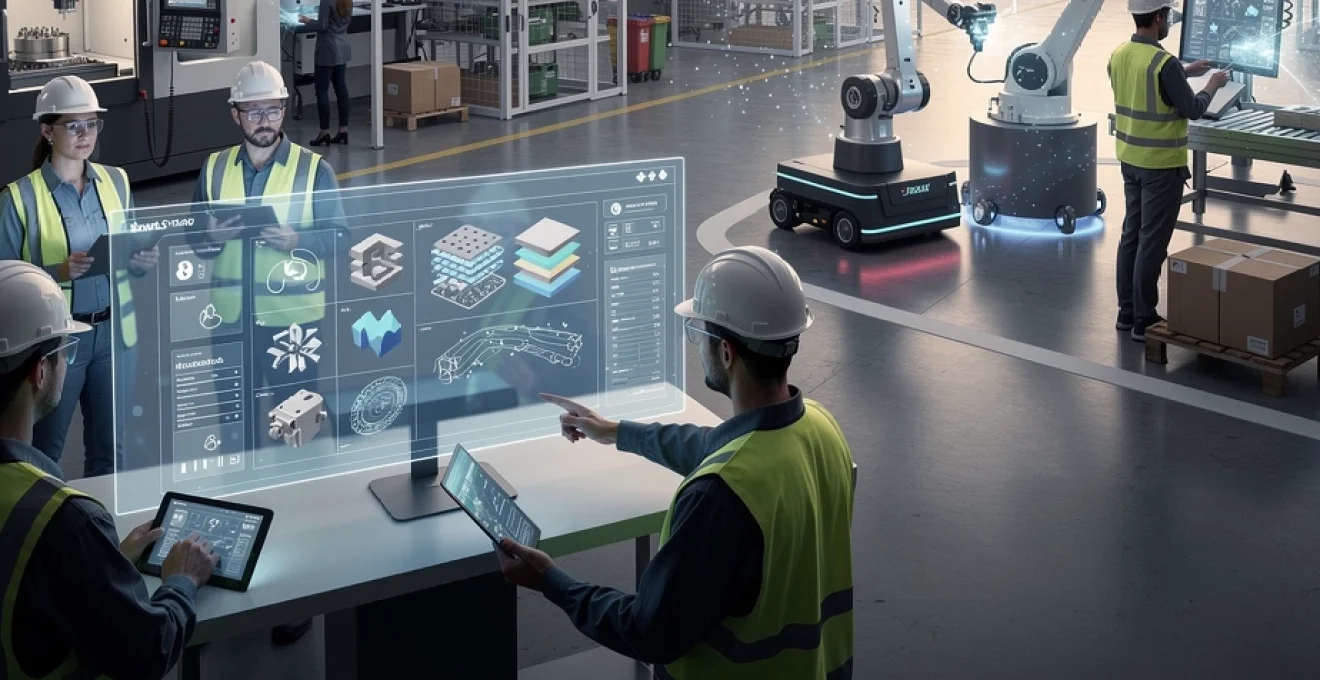
The industrial sector stands at a transformative crossroads. Manufacturing facilities that once operated with mechanical precision and analogue control systems now integrate artificial intelligence, interconnected sensors, and autonomous decision-making platforms. For professionals working in engineering, production management, quality assurance, and technical operations, the pace of technological advancement has fundamentally altered what it means to maintain career relevance. The half-life of technical knowledge—the time it takes for half of what you know to become obsolete—has shortened dramatically across industrial disciplines. What was considered cutting-edge expertise five years ago may now represent baseline competency, whilst entirely new skill domains have emerged that weren’t part of traditional engineering curricula. This acceleration demands a fundamental shift in how industrial professionals approach their career development, moving from episodic training interventions to sustained, systematic learning strategies that span entire professional lifespans.
The economic imperative for continuous learning extends beyond individual career advancement. Organisations face persistent skills shortages in critical technical areas, with 73% of employees expressing interest in exploring new roles within their companies according to recent workforce mobility research. This internal talent development represents a more sustainable approach than perpetual external recruitment, particularly when technological change creates demand for competencies that simply don’t exist in sufficient numbers in the external labour market. The manufacturing professionals who embrace lifelong learning position themselves as invaluable assets capable of bridging legacy systems and emerging technologies, a combination of institutional knowledge and adaptive capability that no external candidate can replicate.
Industry 4.0 and digital transformation demands in manufacturing
The fourth industrial revolution represents more than incremental improvement in manufacturing processes—it constitutes a fundamental reimagining of how production systems operate, communicate, and optimise performance. Digital transformation in manufacturing encompasses the integration of cyber-physical systems, cloud computing, cognitive computing, and networked connectivity that transforms traditional production environments into intelligent, self-optimising ecosystems. For industrial professionals, this transformation demands fluency in technologies that didn’t feature in traditional mechanical or electrical engineering programmes, creating a substantial knowledge gap that only continuous learning can address.
The convergence of operational technology (OT) and information technology (IT) has created entirely new professional domains. Process engineers now require understanding of data architecture, network security, and analytics platforms alongside their core thermodynamics and fluid mechanics knowledge. Maintenance technicians need competency in software troubleshooting and network diagnostics in addition to mechanical and electrical repair skills. This blurring of traditional boundaries means that professionals can no longer afford to remain within narrow specialisations—the most valuable contributors possess T-shaped skill profiles, with deep expertise in one area complemented by broader working knowledge across adjacent disciplines.
Industrial internet of things (IIoT) integration and smart factory systems
The Industrial Internet of Things fundamentally changes how manufacturing equipment generates, transmits, and utilises data. Modern production machinery incorporates dozens or even hundreds of sensors monitoring variables from vibration signatures and thermal profiles to power consumption patterns and acoustic emissions. These sensors create continuous data streams that flow to edge computing devices, cloud platforms, and analytical engines that extract actionable intelligence. For professionals working with these systems, understanding sensor technologies, communication protocols like OPC UA and MQTT, and data interpretation methodologies has become essential. You cannot optimise what you cannot measure, and IIoT provides measurement granularity that was simply impossible in previous generations of manufacturing equipment.
Smart factory implementations require professionals who can bridge the gap between shop floor operations and digital infrastructure. This includes understanding how sensor placement affects data quality, how communication network architecture impacts system reliability, and how analytical models translate equipment behaviour into predictive insights. The learning challenge extends beyond initial implementation—as IIoT platforms evolve and new sensor technologies emerge, professionals must continually update their knowledge to leverage these capabilities effectively. Recent surveys indicate that organisations investing in IIoT training for existing staff achieve 40% faster deployment timelines and 35% higher system utilisation rates compared to those relying solely on vendor support or external consultants.
Programmable logic controllers (PLCs) and SCADA system evolution
Programmable Logic Controllers have formed the backbone of industrial automation for decades, but contemporary PLC systems bear little resemblance to their predecessors from even ten years ago. Modern controllers incorporate motion control, advanced process control algorithms, safety functions, and connectivity capabilities that transform them from simple logic devices into sophisticated computing platforms. The programming environments have evolved from ladder logic focused tools to integrated development environments supporting multiple IEC 61131-3 languages, object-oriented programming
and modular software architectures. As a result, industrial professionals must move beyond basic ladder logic troubleshooting toward understanding structured text, function block diagrams, and even object-oriented approaches that support reusable code libraries and standardised templates. Continuous learning in PLC programming now means staying current with vendor-specific ecosystems (such as Siemens TIA Portal or Rockwell Studio 5000) while also grasping broader concepts like version control, cybersecurity hardening, and integration with higher-level manufacturing execution systems.
Supervisory Control and Data Acquisition (SCADA) platforms have also evolved from simple visualisation tools into central hubs for real-time analytics, remote operations, and enterprise-level reporting. Modern SCADA architectures are increasingly web-based, virtualised, and integrated with cloud services, requiring skills that sit at the intersection of OT and IT. Engineers and technicians must understand topics such as role-based access control, secure remote connectivity, and high-availability architectures to design and maintain robust systems. Without a commitment to ongoing PLC and SCADA training, even experienced professionals risk being locked out of the most advanced projects and higher-responsibility roles.
Additive manufacturing and CNC machining technology advancements
Additive manufacturing and advanced CNC machining are reshaping how industrial components are designed, prototyped, and produced. Where traditional subtractive processes focused on removing material from billets or castings, modern workflows often combine 3D printing, multi-axis CNC machining, and hybrid manufacturing cells. This shift demands that machinists, toolmakers, and process engineers continuously expand their understanding of CAM software, toolpath optimisation, and new materials suited to high-precision, digitally driven manufacturing environments.
In many facilities, five-axis CNC machines, mill-turn centres, and high-speed machining strategies are becoming the norm rather than the exception. To fully exploit these capabilities, professionals must keep up with developments in cutting tool technology, workholding innovation, and simulation-driven process validation. Similarly, additive technologies—whether polymer-based, metal powder bed fusion, or directed energy deposition—require continuous learning about design for additive manufacturing (DfAM), post-processing requirements, and quality assurance techniques. The competitive advantage increasingly goes to those who can fluently move between CAD models, CAM strategies, and machine setup, rather than relying on legacy manual methods alone.
Predictive maintenance through machine learning algorithms
Predictive maintenance has moved from theoretical promise to practical reality as machine learning algorithms are integrated into industrial maintenance strategies. Instead of relying solely on time-based or reactive maintenance, many manufacturers now deploy models that analyse vibration, temperature, current draw, and process data to predict failures before they occur. For maintenance engineers and reliability professionals, this shift means learning to collaborate with data scientists, understand feature engineering basics, and interpret algorithm outputs in a practical, plant-floor context.
Continuous learning in this domain does not require every technician to become a programmer, but it does demand familiarity with concepts such as anomaly detection, regression models, and classification algorithms. You need to understand what kind of data improves model accuracy, how sensor installation affects signal quality, and how to validate predictive insights against real-world failure modes. As more CMMS and condition monitoring platforms embed AI-driven predictive modules, those professionals who can translate algorithmic predictions into effective maintenance plans will be in highest demand—and will be best placed to reduce downtime, spare-part costs, and safety incidents.
Regulatory compliance and safety standards evolution across sectors
Alongside technological disruption, industrial careers are being reshaped by rapidly evolving regulatory frameworks and safety standards. From occupational health and safety to environmental stewardship and hazardous area compliance, manufacturers face a complex and constantly shifting requirements landscape. For engineers, HSE managers, and operations leaders, continuous learning is not simply desirable—it is a legal and ethical necessity. Outdated knowledge in these areas can directly translate into non-compliance, fines, reputational damage, or serious incidents.
What makes this especially challenging is that regulatory change rarely happens in isolation. Updates to standards such as ISO 45001 or ISO 14001 often cascade into changes in procedures, training needs, documentation, and control measures across entire production sites. Professionals who invest in staying current through formal courses, standards body publications, and industry forums are better equipped to interpret these changes pragmatically. Rather than viewing compliance as a tick-box exercise, they can align it with operational excellence and risk reduction, adding real strategic value to their organisations.
ISO 45001 occupational health and safety management updates
ISO 45001 has become the global benchmark for occupational health and safety management systems, yet many organisations still operate with legacy mindsets rooted in earlier standards or purely local regulations. Recent revisions and guidance emphasise topics such as worker participation, mental health, contractor management, and integration of safety considerations into overall business strategy. For safety professionals and line managers alike, continuous learning in this area means understanding not only the letter of the standard but also how to embed its principles into everyday industrial operations.
In practical terms, this may involve upskilling in risk assessment methodologies, incident investigation techniques, and leading indicators for safety performance rather than relying solely on lagging metrics like lost-time injuries. It also requires familiarity with digital tools—such as mobile inspection apps and incident reporting systems—that support proactive safety management. As regulators and insurers increasingly look at how effectively ISO 45001 is implemented, those with current expertise can influence everything from site design reviews to procurement decisions, significantly improving both compliance and safety culture.
ATEX directive requirements for explosive atmospheres
In sectors where flammable gases, vapours, or combustible dusts are present, understanding the ATEX directives is critical. Equipment selection, zoning, ventilation design, and ignition source control all hinge on accurate interpretation of ATEX requirements. Yet ATEX standards and associated guidance documents continue to evolve, reflecting new technologies, incident investigations, and risk reduction strategies. Engineers, maintenance teams, and project managers must therefore commit to continuous learning to ensure that hazardous area installations remain compliant over time.
Consider the impact of introducing new automation equipment into an existing ATEX Zone 1 area. Without up-to-date knowledge of equipment group classifications, temperature classes, and protection concepts (such as Ex d, Ex e, or Ex i), there is a real risk of inadvertently increasing explosion hazards. Ongoing training helps professionals assess such changes correctly, update hazardous area dossiers, and coordinate with notified bodies where required. From a career perspective, current ATEX expertise is a powerful differentiator, opening doors to specialised project roles in industries like oil and gas, chemicals, pharmaceuticals, and grain handling.
Environmental management system changes under ISO 14001:2015
ISO 14001:2015 introduced a stronger emphasis on lifecycle thinking, leadership engagement, and strategic environmental planning compared with earlier versions of the standard. For industrial organisations, this means environmental considerations now extend beyond on-site emissions and waste management to include upstream supply chains and downstream product impacts. Environmental managers, process engineers, and production leaders must therefore maintain up-to-date knowledge of how these expectations translate into practical changes on the factory floor.
Continuous learning in environmental management might involve understanding new methodologies for carbon footprinting, water stewardship, or circular economy initiatives relevant to specific manufacturing processes. It can also require getting to grips with emerging reporting frameworks and disclosure requirements, such as those connected to climate-related financial risk. When you can connect environmental performance with energy efficiency, cost savings, and brand reputation, ISO 14001 expertise becomes a strategic asset rather than a compliance burden, strengthening both your career prospects and your organisation’s market position.
REACH and RoHS chemical compliance in european markets
For manufacturers supplying into European markets, REACH and RoHS regulations represent two of the most significant chemical compliance regimes. They dictate which substances can be used, in which applications, and at what concentrations, and they are updated on a regular basis as new substances of concern are identified. Product designers, procurement specialists, and quality managers must therefore track evolving restricted substance lists, authorisation requirements, and reporting obligations to maintain market access.
Continuous learning in REACH and RoHS compliance involves more than memorising lists of chemicals. It requires understanding how to build robust supplier questionnaires, interpret material declarations, and maintain technical documentation that can withstand regulatory scrutiny. As customers increasingly demand full supply chain transparency, those professionals who keep their regulatory knowledge current will be better placed to lead substitution projects, support eco-design initiatives, and protect their organisations from costly recalls or import restrictions.
Automation technologies reshaping traditional manufacturing roles
Automation technologies are fundamentally reshaping what it means to work in manufacturing. Tasks that were once manual, repetitive, or ergonomically challenging are increasingly handled by robots, automated material handling systems, and software bots. Rather than eliminating industrial careers, this shift is transforming them. Operators, technicians, and engineers are moving up the value chain, taking on responsibilities that require problem-solving, systems thinking, and digital fluency. Continuous learning is the mechanism that allows individuals to transition from traditional task-based roles to these higher-value, automation-enabled positions.
The most resilient professionals are those who see automation not as a threat but as a catalyst for skill enhancement. They actively seek opportunities to learn how new systems are specified, installed, programmed, and maintained. They also recognise that soft skills—communication, collaboration, and change management—become more important as teams interact with complex, integrated automation solutions. By continually updating both technical and interpersonal capabilities, you can remain central to your organisation’s automation journey rather than being sidelined by it.
Collaborative robotics (cobots) and human-machine interface design
Collaborative robots, or cobots, are designed to work safely alongside humans without the need for extensive guarding. Their rise has introduced new requirements for risk assessment, programming, and ergonomic workstation design. For production engineers and technicians, continuous learning in cobot technology means understanding safety-rated monitored stop functions, power and force limiting, and the impact of different end-effector designs on overall risk levels. It also involves learning user-friendly programming interfaces, often based on graphical workflows or direct-teach methods, which differ significantly from traditional robot programming languages.
Equally important is the growing field of human-machine interface (HMI) design. As cobots and other automation systems become more prevalent, intuitive interfaces are critical to ensure that operators can interact with them safely and efficiently. Professionals must learn principles of user-centred design, clear visual communication, and error-proofing to reduce the risk of misuse or confusion. When you combine technical knowledge of collaborative robotics with strong HMI design skills, you can help create automation solutions that feel more like capable teammates than opaque black boxes on the factory floor.
Robotic process automation (RPA) in production planning
While physical robots handle materials and assemblies, robotic process automation (RPA) focuses on automating administrative and information-processing tasks. In manufacturing, RPA is increasingly used in areas such as production planning, scheduling, inventory reconciliation, and order processing. Planning engineers and operations analysts who once relied on spreadsheets and manual data entry now have the opportunity to design and oversee digital “bots” that execute repetitive workflows around the clock.
Continuous learning in RPA requires an understanding of business process mapping, basic scripting or low-code configuration, and integration with ERP and MES systems. Rather than fearing that RPA will remove planning roles, forward-looking professionals learn how to identify suitable processes for automation, define exception-handling rules, and monitor performance. This allows them to shift their focus from routine data manipulation to higher-level optimisation, scenario analysis, and cross-functional coordination—activities that are difficult to automate and highly valued by employers.
Computer vision systems for quality control inspection
Computer vision is rapidly transforming quality control, inspection, and traceability in manufacturing. High-resolution cameras, advanced lighting, and AI-based image analysis algorithms can now detect defects that are invisible to the human eye, at speeds far beyond manual inspection. For quality engineers and production teams, this creates a powerful incentive to learn how to specify, implement, and maintain vision systems as part of a broader quality strategy.
Key learning areas include understanding how lighting angles affect defect visibility, how to choose appropriate lenses and sensors, and how to train and validate machine learning models for classification or anomaly detection. You also need to understand how vision systems integrate with PLCs, robots, and data collection platforms to trigger rejections, rework, or process adjustments. Professionals who upskill in computer vision not only improve first-pass yield and reduce scrap but also gain highly portable expertise that is in demand across automotive, electronics, food and beverage, and pharmaceutical manufacturing.
Autonomous guided vehicles (AGVs) in warehouse operations
Autonomous Guided Vehicles and Autonomous Mobile Robots (AMRs) are becoming central to modern warehouse and intralogistics operations. They handle tasks such as pallet movement, component delivery, and finished goods transport, often working in dynamic environments alongside human workers. For logistics managers, industrial engineers, and maintenance technicians, continuous learning about AGV technologies is essential to design safe, efficient material flow systems.
This learning spans topics such as navigation methods (from magnetic tape and QR codes to LiDAR and SLAM), fleet management software, traffic control algorithms, and battery management. It also includes understanding how AGVs interface with warehouse management systems and production lines to ensure just-in-time delivery. As facilities adopt more flexible, scalable intralogistics solutions, those who have invested in AGV and AMR knowledge will be well-positioned to lead implementation projects, optimise layouts, and troubleshoot complex interactions between people, machines, and materials.
Upskilling pathways for process engineers and technicians
For process engineers and technicians, the question is no longer whether to upskill but how to structure a sustainable learning journey. Industrial careers now span multiple technology generations, and the most successful professionals treat their development like an ongoing project with clear milestones. Rather than waiting for annual appraisals or occasional vendor courses, they proactively identify gaps in their knowledge and seek targeted learning opportunities—formal and informal—that align with both current role demands and future aspirations.
A practical starting point is to map your existing competencies against the emerging requirements of Industry 4.0, regulatory compliance, and advanced automation. Where are you strongest, and where are you repeatedly relying on others? This skills audit can guide decisions about whether to pursue short intensive courses, vendor certifications, online modules, or longer vocational programmes. Many professionals adopt a blended approach: for example, combining a formal qualification in automation technology with self-directed study in data analytics and on-the-job exposure to cross-functional projects. The key is to view upskilling as a continuous process rather than a single event.
Mentoring and peer learning also play a critical role in upskilling pathways. Shadowing an experienced controls engineer during a commissioning project, co-leading a root cause analysis with a senior reliability specialist, or participating in cross-site communities of practice can all accelerate learning far beyond what is possible through theory alone. At the same time, sharing your own expertise with less experienced colleagues reinforces your knowledge and builds your leadership profile. Over time, this combination of formal education, hands-on experience, and collaborative learning can transform your career trajectory, preparing you for roles such as lead engineer, technical specialist, or operations manager.
Cross-functional competencies in lean six sigma and kaizen methodologies
While advanced technologies often capture the headlines, many of the most powerful career-enhancing skills in industrial environments are methodology-based rather than equipment-specific. Lean, Six Sigma, and Kaizen methodologies provide structured approaches to problem-solving, waste reduction, and continuous improvement that apply across sectors, processes, and technology platforms. For industrial professionals, developing cross-functional competency in these methods is akin to acquiring a universal toolkit that can be carried from one challenge to the next.
Continuous learning in Lean and Six Sigma involves more than memorising acronyms or tools; it requires repeated practice in real projects, guided reflection, and exposure to diverse problem contexts. You might start with foundational concepts such as value stream mapping, 5S, and basic statistical analysis, then progress to more advanced techniques like Design of Experiments (DoE) or Failure Mode and Effects Analysis (FMEA). Each new application deepens your understanding of both the methodology and the specific process you are improving, making you more effective and more valuable to your organisation.
Kaizen, with its emphasis on incremental, daily improvement driven by frontline employees, also demands an ongoing learning mindset. Facilitating Kaizen events, coaching teams through root cause investigations, or designing visual management systems all require strong communication skills and an ability to translate data into practical actions. As you build these cross-functional competencies, you become a bridge between departments—able to converse with maintenance, production, quality, and supply chain teams in a shared improvement language. This not only strengthens your influence but also opens up broader career pathways into operational excellence, continuous improvement leadership, and plant management.
Professional development through chartered engineering status and vocational qualifications
For many industrial professionals, formal recognition of expertise through Chartered Engineering status or advanced vocational qualifications remains a powerful career milestone. Pathways such as Chartered Engineer (CEng), Incorporated Engineer (IEng), or equivalent national accreditations provide structured frameworks for continuous professional development (CPD). They typically require evidence of sustained learning, ethical practice, and increasing responsibility over time—conditions that align closely with the demands of fast-evolving industrial careers.
Pursuing chartered status encourages you to document your learning systematically, reflect on how new knowledge is applied, and seek breadth as well as depth in your experience. This might include leading multi-disciplinary projects, contributing to standards committees, or mentoring junior colleagues, all of which reinforce your capacity for technical leadership. In many organisations, chartered status is also linked to higher responsibility roles, participation in strategic decision-making, and improved remuneration, making it both a professional and financial investment.
Vocational qualifications, from advanced apprenticeships to higher national diplomas and specialist certificates, play an equally important role in continuous learning—particularly for technicians and early-career engineers. Modern programmes are increasingly aligned with industry standards and developed in partnership with employers, ensuring strong relevance to real-world plant environments. By stacking these qualifications over time—for example, progressing from a Level 3 technical certificate to a foundation degree and beyond—you can build a robust, practice-based educational portfolio that evolves with your career. When combined with on-the-job learning and active engagement in professional networks, these formal pathways ensure that your industrial skills remain current, credible, and in constant demand.