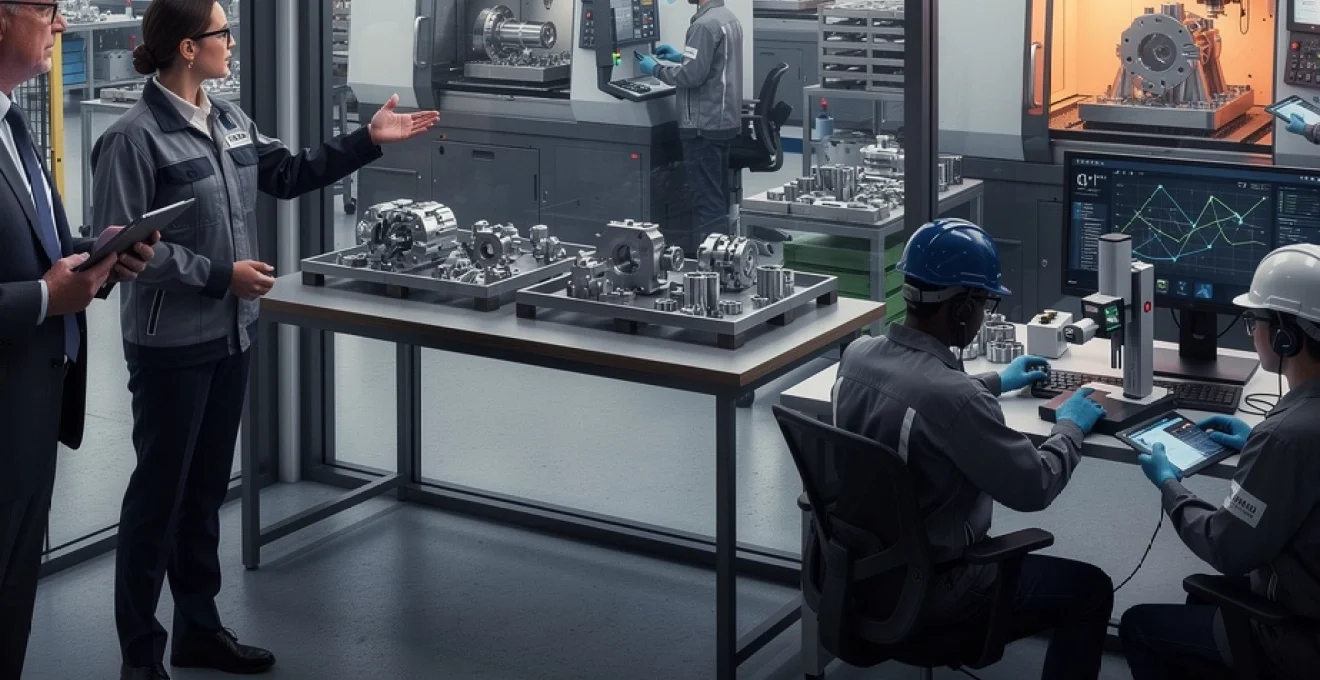
In today’s hyper-competitive manufacturing landscape, industrial organisations face mounting pressure to deliver exceptional quality whilst managing costs, maintaining technological relevance, and navigating increasingly complex regulatory frameworks. For many companies, the traditional model of maintaining every manufacturing capability in-house has become financially unsustainable and strategically limiting. Outsourcing specialised industrial operations represents a transformative approach that enables businesses to access world-class capabilities without the capital-intensive burden of ownership. This strategic delegation of specific manufacturing processes to expert third-party providers has evolved from a simple cost-cutting measure into a sophisticated business strategy that addresses multiple operational challenges simultaneously. As global supply chains become more interconnected and technological advancement accelerates, the question for industrial leaders is no longer whether to outsource certain operations, but rather which processes to delegate and how to select partners that align with strategic objectives.
Core competency concentration through strategic outsourcing partnerships
Every manufacturing organisation possesses a unique set of capabilities that differentiate it from competitors and create genuine value for customers. These core competencies might include proprietary design methodologies, exceptional customer relationships, specialised assembly techniques, or innovative product development processes. However, many companies find their internal resources diluted across numerous activities that, whilst necessary, don’t directly contribute to competitive advantage. When you examine your organisation’s activities honestly, you’ll likely identify processes that consume significant management attention and capital investment yet provide minimal differentiation in the marketplace.
Strategic outsourcing partnerships enable you to redirect focus toward activities that genuinely matter. By delegating secondary manufacturing processes to specialist providers, leadership teams gain the bandwidth to concentrate on innovation, market development, and customer engagement. Consider a medical device manufacturer whose competitive advantage lies in biomechanical design and regulatory expertise. Does it make strategic sense for this organisation to invest millions in metal fabrication equipment and employ metallurgical engineers? Or should those resources be directed toward enhancing design capabilities and accelerating regulatory approval processes? The answer becomes obvious when viewed through the lens of competitive differentiation.
Furthermore, outsourcing creates organisational clarity by establishing defined boundaries between core and non-core activities. This clarity cascades throughout the organisation, informing investment decisions, talent acquisition strategies, and operational improvement initiatives. Your teams can develop deeper expertise in areas that truly matter, whilst specialist partners handle peripheral manufacturing processes with superior efficiency. This concentration of effort typically results in enhanced innovation velocity, as research and development resources aren’t fragmented across disparate activities. According to recent industry analyses, organisations that successfully concentrate on core competencies through strategic outsourcing report 23-31% faster product development cycles compared to vertically integrated competitors attempting to maintain all capabilities internally.
Cost reduction mechanisms in specialised manufacturing process delegation
Whilst strategic focus represents the primary justification for outsourcing, cost reduction remains a compelling driver for most organisations. However, the financial benefits extend well beyond simple labour arbitrage. The comprehensive cost structure of maintaining specialised manufacturing capabilities internally includes numerous elements that outsourcing can significantly reduce or eliminate entirely. Understanding these cost mechanisms enables you to build accurate financial models that capture the true economic impact of delegation decisions.
Capital expenditure elimination via Third-Party equipment access
Manufacturing equipment represents substantial capital investment that depreciates over time whilst requiring continuous maintenance and eventual replacement. Specialised machinery for processes like precision machining, additive manufacturing, or surface treatment can cost hundreds of thousands or even millions of pounds. When you outsource these processes, you effectively convert fixed capital expenditure into variable operational costs, improving balance sheet metrics and freeing capital for strategic investments. Your outsourcing partner amortises equipment costs across multiple clients, achieving utilisation rates that single-company operations rarely attain. This shared infrastructure model means you access cutting-edge equipment without bearing the full acquisition cost or the risk of technological obsolescence.
Labour cost optimisation through variable workforce models
Maintaining in-house manufacturing capabilities requires permanent staffing commitments that create fixed cost structures regardless of production volumes. Skilled operators, maintenance technicians, quality inspectors, and supervisory personnel represent ongoing labour expenses even during periods of reduced demand. Outsourcing transforms these fixed costs into variable expenses that scale with production requirements. During peak demand periods, your partner can allocate additional capacity without you needing to manage workforce expansion. Conversely, when demand softens, you’re not burdened with underutilised labour costs. Recent benchmarking studies indicate
that manufacturers using outsourced specialised industrial operations can reduce direct labour costs by 15–30%, primarily through improved utilisation, cross-trained teams, and variable shift patterns. Additionally, you avoid the hidden expenses of recruitment, ongoing training, overtime premiums, and redundancy packages. Instead of being locked into rigid staffing models, you benefit from a variable workforce that flexes in line with your order book, which is particularly valuable in cyclical or project-based industries.
Overhead reduction in facility maintenance and compliance management
Beyond direct labour and equipment, in-house specialised operations carry a significant burden of overheads related to plant maintenance, utilities, and compliance. Maintaining a dedicated facility for high-spec processes such as cleanroom assembly, heat treatment, or hazardous chemical handling involves continuous spending on HVAC systems, filtration, calibration, safety equipment, and facility upgrades. When you outsource these specialised operations, those ongoing obligations shift to your contractor, who spreads them across multiple clients and production programmes, dramatically reducing your share of the total cost.
Compliance management is another overhead frequently underestimated in financial models. Environmental monitoring, health and safety audits, certification renewals, and documentation for regulatory bodies all demand specialist expertise and administrative time. Outsourcing partners in specialised industrial operations typically maintain dedicated compliance teams and robust systems as part of their core business model. For you, this means fewer internal audits to manage, reduced paperwork, and a lower risk of costly non-compliance incidents. In effect, you’re renting not only the plant and people but also a fully formed compliance infrastructure.
Economies of scale leveraged through shared service providers
Specialised industrial service providers operate at a scale that most single manufacturers cannot justify. Because they consolidate demand from numerous clients, they purchase raw materials, consumables, and tooling in greater volumes, often securing 5–15% better pricing than individual plants can negotiate. These economies of scale flow through to you in the form of more competitive unit costs, particularly for outsourcing complex manufacturing processes where consumables and tooling are a significant cost driver. Think of it as carpooling for high-end manufacturing resources: everyone shares the ride, and each participant pays less than they would for a private vehicle.
Economies of scale also manifest in process optimisation and continuous improvement. A specialist provider performing the same operation for multiple clients accumulates a depth of experience and data that a single in-house line rarely matches. This accumulated learning leads to shorter setup times, reduced scrap rates, and improved overall equipment effectiveness (OEE). As a result, your outsourced operations can achieve performance levels that would be expensive and time-consuming to replicate internally. Over time, these compounding improvements can produce substantial savings, making specialised industrial outsourcing a powerful lever in long-term cost competitiveness.
Access to advanced technologies and proprietary industrial methodologies
One of the most compelling benefits of outsourcing specialised industrial operations is accelerated access to advanced technologies that would otherwise demand heavy investment and long implementation cycles. In many cases, outsourcing partners act as technology incubators, trialling and deploying new processes, software, and equipment before they become mainstream. By partnering with these providers, you effectively plug into a constantly evolving innovation ecosystem without carrying the risk of early adoption. This is particularly valuable in sectors where manufacturing technologies change rapidly, such as aerospace, medical devices, and high-performance automotive components.
Beyond hardware, specialist partners often bring proprietary methodologies, process know-how, and digital workflows that have been refined over years of focused practice. You benefit from these proprietary industrial methodologies as part of your service agreement, gaining capabilities that would take considerable time and expertise to build in-house. Instead of experimenting blindly, you leverage proven solutions and documented best practices. The result is a shorter learning curve, fewer implementation missteps, and faster realisation of value from new manufacturing technologies.
CNC machining and precision engineering capabilities
High-precision CNC machining is a classic example of a specialised capability where outsourcing delivers disproportionate value. Modern multi-axis machining centres, high-speed spindles, and advanced fixturing systems represent a major capital commitment, compounded by the need for skilled programmers and operators. By outsourcing precision machining, you gain access to this sophisticated infrastructure along with expert teams who work with tight tolerances and complex geometries daily. For industries where microns matter, such as aerospace or medical implants, this expertise directly translates into better product performance and reduced rework.
Outsourced CNC partners typically employ advanced CAM software, digital simulations, and toolpath optimisation techniques that can significantly reduce cycle times. They also maintain extensive libraries of cutting tools, fixtures, and proven machining strategies for different materials, from titanium alloys to engineering plastics. You avoid the trial-and-error phase that in-house teams often endure when tackling new materials or part designs. Instead, you can move from design to production-ready parts more quickly, improving your overall time-to-market while maintaining the dimensional accuracy and surface finish your customers expect.
Additive manufacturing and rapid prototyping infrastructure
Additive manufacturing and rapid prototyping have moved well beyond experimental status and now represent critical enablers for agile product development. However, industrial-scale 3D printers, especially those for metal additive manufacturing, are expensive to purchase and operate. They also require tightly controlled environments, specialised maintenance, and trained technicians who understand design-for-additive principles. Outsourcing these specialised operations allows you to harness the benefits of additive manufacturing—such as lightweight structures, complex internal channels, and tooling-free iteration—without committing to full-scale internal adoption.
Rapid prototyping via outsourced partners dramatically shortens development feedback loops. Instead of waiting weeks for internal tooling changes or machining setups, you can receive functional prototypes in days. This agility not only accelerates design validation but also encourages a more experimental mindset, as you are less constrained by internal capacity or equipment limitations. In many cases, outsourcing additive manufacturing capabilities also opens the door to low-volume production and bridge tooling alternatives, allowing you to test market demand before investing in conventional manufacturing tools.
Iso-certified quality management systems integration
Quality is non-negotiable in specialised industrial operations, particularly where safety-critical components or regulated industries are concerned. Many specialist outsourcing providers operate under rigorous, ISO-certified quality management systems—such as ISO 9001, ISO 13485 for medical devices, or IATF 16949 for automotive—that are deeply embedded in their daily routines. When you collaborate with such partners, you effectively integrate their quality frameworks into your own supply chain, benefiting from robust documentation, traceability, and continuous improvement processes without having to build every capability internally.
This integration can significantly simplify regulatory audits and customer approvals. Instead of demonstrating every detailed control in-house, you can point to your partner’s certifications, process maps, and validation protocols as part of your overall quality narrative. Of course, you retain responsibility for end-to-end quality, but the heavy lifting in specific operations is handled by experts whose business revolves around compliance. For organisations striving to elevate their quality performance, partnering with ISO-certified providers can serve as both a shortcut and a benchmark for internal improvements.
Industry 4.0 technologies: IoT sensors and predictive maintenance platforms
Industry 4.0 is reshaping manufacturing through the integration of IoT sensors, data analytics, and intelligent automation. Implementing a comprehensive Industry 4.0 strategy in-house can feel overwhelming, akin to rewiring an aircraft mid-flight. Outsourcing specialised operations to providers that already deploy connected machines, predictive maintenance platforms, and real-time monitoring systems gives you immediate exposure to these capabilities. You benefit from higher equipment uptime, data-driven decision-making, and greater process transparency without spearheading the digital transformation alone.
Many advanced outsourcing partners offer digital portals where you can monitor order status, machine utilisation, quality metrics, and delivery performance in real time. Embedded IoT sensors feed data into predictive algorithms that flag potential failures before they occur, reducing unplanned downtime and improving delivery reliability. As you evaluate partners, it’s worth asking: how mature are their Industry 4.0 capabilities, and how will their data integrate into your own systems? The right collaboration can become a stepping stone towards a broader digitalisation strategy across your entire manufacturing network.
Risk mitigation in supply chain volatility and capacity fluctuations
Modern supply chains are subject to constant disruption, from raw material shortages and geopolitical instability to energy price spikes and labour constraints. Outsourcing specialised industrial operations can serve as a critical risk mitigation tool, offering resilience that would be difficult and costly to duplicate internally. Instead of relying on a single in-house facility, you can distribute critical operations across multiple expert providers and geographic regions. This diversification helps stabilise your output even when local conditions become challenging, much like diversifying an investment portfolio to weather market volatility.
Furthermore, specialised outsourcing providers often maintain their own contingency plans, dual-sourcing strategies, and buffer stocks, all of which contribute to a more robust supply chain. When you collaborate closely and share demand forecasts, these partners can align their capacity planning with your requirements, smoothing out variability. The key is to treat outsourcing as a strategic risk management tool rather than a purely transactional cost-saving exercise. By doing so, you build a more flexible and shock-resistant manufacturing ecosystem that can adapt quickly when the unexpected occurs.
Production scalability during seasonal demand variations
Many industrial businesses experience pronounced seasonal cycles or project-based spikes in demand. Attempting to size internal capacity around these peaks leads to chronic underutilisation during quieter periods, driving up unit costs. Outsourcing specialised operations enables you to scale production up or down quickly, without incurring the full cost of idle machines or underused labour. Your partners can draw on shared resources and cross-trained teams, flexing capacity across multiple clients to accommodate short-term surges.
This scalability is particularly valuable when launching new products or entering new markets, where demand forecasts carry higher uncertainty. Instead of investing early in dedicated lines, you can use outsourced capacity as a buffer until demand stabilises. If volumes subsequently justify it, you may decide to internalise some capabilities; if not, you have avoided sunk costs. Asking yourself, “Do we need to own this capacity, or simply access it when necessary?” can be a powerful lens for structuring your manufacturing strategy around outsourcing.
Regulatory compliance burden transfer to specialist contractors
Regulatory landscapes across industries such as pharmaceuticals, aerospace, food processing, and chemicals are becoming more stringent and complex. Each new directive or standard adds layers of documentation, validation, and monitoring obligations. By outsourcing specialised operations within these heavily regulated areas to experienced contractors, you transfer a substantial portion of the compliance burden to organisations built to handle it. These specialists often maintain dedicated regulatory affairs teams, validated processes, and established relationships with certification bodies and inspectors.
While you remain responsible for overall product compliance, your role shifts from hands-on execution to oversight and integration. Instead of drafting every protocol yourself, you review and approve documentation that your partner has already prepared and implemented across multiple clients. This shared responsibility not only reduces your internal resource requirements but also lowers the risk of non-compliance due to inexperience or oversight. Think of it as hiring an experienced pilot for a challenging route: you still own the aircraft, but you rely on specialist skill to ensure a safe journey.
Liability distribution in hazardous material processing operations
Some industrial processes—such as chemical etching, high-temperature heat treatment, or explosive atmospheres—carry inherent safety and environmental risks. Operating these processes in-house exposes your organisation to significant liability, including potential accidents, contamination incidents, or long-term exposure concerns for employees. Outsourcing hazardous material processing to qualified partners allows you to distribute and, in some cases, reduce these liabilities. Specialist providers typically invest heavily in engineered controls, personal protective equipment, and emergency response planning tailored to their processes.
Additionally, these partners are more likely to maintain appropriate insurance coverage, risk assessments, and documented safety cases specific to hazardous operations. When you conduct thorough due diligence and embed clear contractual obligations, you can ensure that liabilities are shared fairly and proportionately. This doesn’t absolve you of responsibility, but it does enable you to focus on safer, higher-value activities while relying on partners whose core competence lies in managing complex industrial risks. In effect, you transform high-risk processes into managed services with defined performance and safety parameters.
Time-to-market acceleration through parallel processing workflows
In many sectors, speed to market can be as decisive as the product itself. Outsourcing specialised industrial operations supports time-to-market acceleration by enabling parallel processing workflows that would be difficult to coordinate within a single facility. For example, while your internal team focuses on final assembly and system integration, outsourced partners can execute precision machining, surface treatments, and subassembly in parallel. This concurrent engineering approach compresses lead times and reduces idle periods between process steps, much like running multiple tracks in a relay rather than passing a single baton sequentially.
Specialist partners often maintain dedicated project management teams who coordinate schedules, material flows, and quality checks to align with your launch milestones. When combined with digital communication tools and shared planning platforms, this coordinated outsourcing model can shave weeks off traditional product introduction timelines. To maximise these gains, it is essential to engage outsourcing partners early in the design process, ensuring manufacturability and clear specifications from the outset. By doing so, you transform your supply base into an extension of your development team, rather than a downstream recipient of finished drawings.
Global talent pool access and specialised skills acquisition
Talent shortages in specialised industrial disciplines are a growing concern worldwide. As experienced technicians and engineers retire, many organisations struggle to replace their expertise, particularly in niche processes such as advanced heat treatment, complex coatings, or statistical process optimisation. Outsourcing provides immediate access to a global talent pool without the long lead times of recruitment and training. Instead of competing locally for scarce skills, you partner with organisations that have already assembled and developed the necessary expertise on a regional or international scale.
This access goes beyond individual specialists; it encompasses multidisciplinary teams who understand the full context of industrial operations, from materials science to automation and quality engineering. By tapping into this collective knowledge, you can solve complex manufacturing challenges more quickly and effectively. A helpful way to view outsourcing in this context is as renting a high-performance brain trust: you bring in concentrated expertise exactly when needed, without carrying the ongoing overhead of permanent employment for every specialised skill set.
Metallurgical engineering expertise in heat treatment processes
Heat treatment and metallurgical optimisation are critical in industries where mechanical performance, fatigue life, and corrosion resistance are paramount. However, building an in-house team of metallurgical engineers and equipping them with appropriate furnaces, quench systems, and testing labs is both expensive and time-consuming. Outsourcing these specialised industrial operations to providers with deep metallurgical expertise enables you to achieve precise material properties consistently, even across complex geometries and demanding alloys.
These partners typically employ metallurgists who can advise on steel selection, heat treatment cycles, and post-treatment testing regimes based on years of empirical data and modelling. They also maintain instruments such as hardness testers, microstructure analysis equipment, and non-destructive testing systems to validate results. Instead of treating heat treatment as a black box, you gain clear, data-backed insight into how processing parameters influence performance. This improves not only product reliability but also design confidence, as you can push the boundaries of lightweighting or durability with a solid understanding of material behaviour.
Chemical process engineering for coating and surface treatment
Coating and surface treatment processes—such as anodising, electroplating, passivation, or advanced polymer coatings—sit at the intersection of chemistry, materials science, and process control. Small deviations in bath composition, temperature, or dwell time can dramatically affect adhesion, appearance, and corrosion performance. Maintaining consistent quality in-house requires skilled chemical process engineers, sophisticated monitoring equipment, and rigorous environmental controls. Outsourcing surface treatment to specialist providers gives you access to all three without building them from scratch.
Experienced outsourcing partners in this field often develop proprietary bath chemistries, pre-treatment sequences, and rinsing protocols that deliver stable, repeatable results across large volumes. They also handle the associated environmental responsibilities, including effluent treatment, waste disposal, and compliance with REACH or other chemical safety regulations. For your business, this means you can offer high-performance, corrosion-resistant products while avoiding the complexity of running a chemical plant. You focus on specifying performance requirements; your partner translates those requirements into robust, controlled industrial processes.
Lean six sigma practitioners in process optimisation
Continuous improvement methodologies such as Lean and Six Sigma are powerful tools for eliminating waste, reducing variation, and enhancing throughput. However, many organisations lack sufficient in-house practitioners with the time and mandate to apply these methods consistently across specialised operations. Outsourcing to providers who employ certified Lean Six Sigma practitioners embeds structured improvement thinking directly into the processes you delegate. Over time, this leads to fewer defects, shorter lead times, and more predictable output from your outsourced workstreams.
These practitioners leverage statistical analysis, value stream mapping, and root cause problem-solving to systematically refine operations. When you collaborate closely, their insights can also feed back into your own upstream processes, such as design for manufacturability or supplier selection. In this way, outsourcing becomes not just a way to shift work externally, but a conduit for importing best-practice operational excellence into your wider organisation. By choosing partners who treat continuous improvement as a core discipline rather than a buzzword, you position your business to reap the full benefits of outsourcing specialised industrial operations.