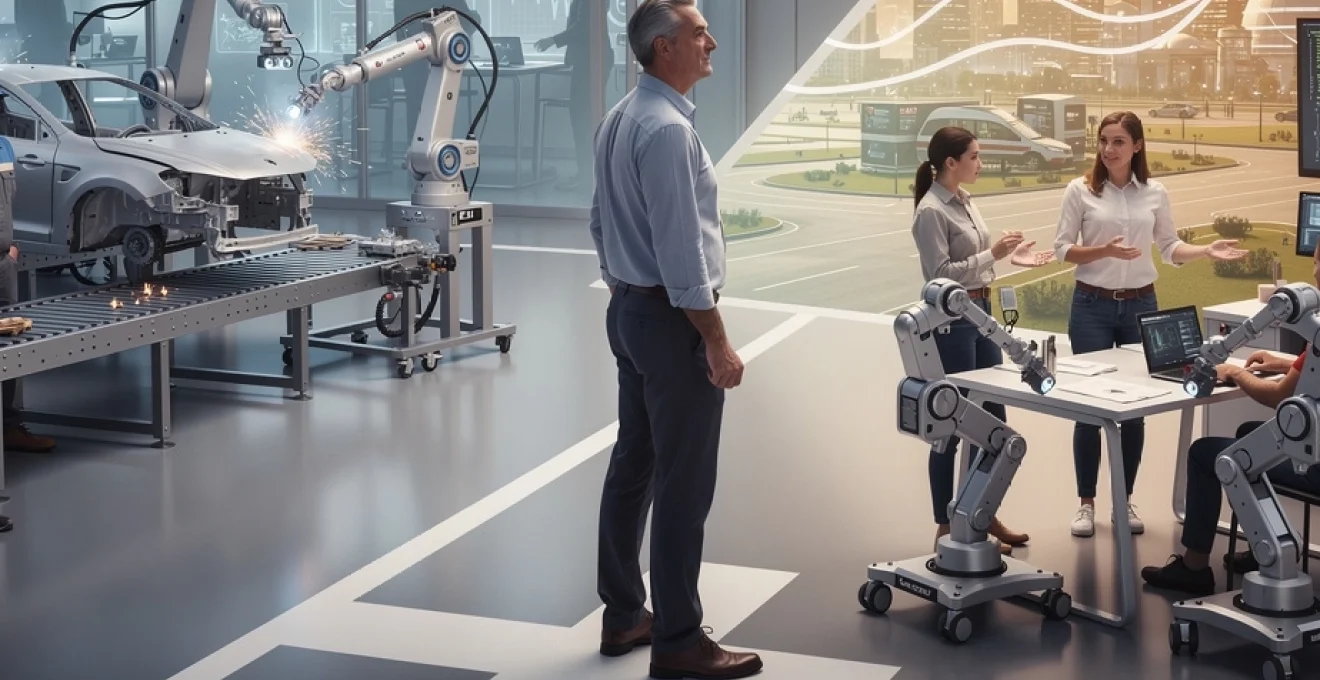
The Fourth Industrial Revolution is reshaping manufacturing landscapes at an unprecedented pace, creating a complex web of challenges and opportunities for workers across all industrial sectors. While smart factories and artificial intelligence promise enhanced productivity and operational excellence, the human element remains the cornerstone of successful digital transformation. Manufacturing employees find themselves at the intersection of technological advancement and workforce evolution, navigating fears about job displacement whilst discovering new avenues for professional growth and skill development.
This transformation extends far beyond simple automation, encompassing sophisticated human-machine collaboration that demands entirely new competency frameworks. The statistics reveal a striking reality: by 2030, approximately 54% of workers across manufacturing sectors will require significant reskilling, yet 14% may lack access to necessary training programmes. Understanding both the technological implications and human dynamics of this transition becomes essential for organisations seeking to maintain competitive advantage whilst fostering employee engagement and retention.
Digital transformation and industry 4.0: workforce displacement patterns across manufacturing sectors
The landscape of manufacturing employment is experiencing dramatic shifts as Industry 4.0 technologies penetrate traditional production environments. Automation and augmentation are fundamentally altering task distribution, with human-performed tasks expected to decrease from 47% to 33% by 2030. This transition reflects not merely job elimination, but rather a sophisticated reallocation of responsibilities between human workers and intelligent systems.
Manufacturing sectors demonstrate varying degrees of technological adoption and workforce impact. Electronics manufacturing leads the charge with 25% growth in AI and Big Data requirements, whilst consumer goods sectors show 22% increases in these competencies. The automotive industry presents particularly compelling transformation patterns, where traditional assembly line roles evolve into technology-augmented positions requiring digital literacy and human-machine interface expertise.
Automation impact on traditional assembly line workers in automotive manufacturing
Automotive manufacturing represents perhaps the most visible transformation in industrial automation, where traditional assembly line workers face significant role evolution. Modern automotive plants increasingly deploy collaborative robotics and AI-driven quality systems, requiring workers to transition from manual assembly tasks to supervisory and programming functions. Mercedes-Benz’s Factory 56 exemplifies this shift, where human workers collaborate with automated systems to achieve both flexibility and efficiency gains.
The impact extends beyond simple task replacement. Assembly line workers must now understand complex production systems, interpret data analytics, and manage exception handling scenarios. This evolution demands competencies in digital interfaces, problem-solving methodologies, and continuous learning capabilities. Workers who successfully navigate this transition often discover enhanced job satisfaction and improved career progression opportunities within technologically advanced manufacturing environments.
Artificial intelligence integration effects on quality control and inspection roles
Quality control functions experience profound transformation through AI integration, with machine vision systems and predictive analytics revolutionising inspection processes. Traditional quality inspectors must evolve into quality analysts, interpreting AI-generated insights and managing exception scenarios that automated systems cannot resolve. This shift requires understanding statistical analysis, pattern recognition, and decision-making frameworks that complement artificial intelligence capabilities.
The human role in AI-augmented quality control emphasises critical thinking and contextual understanding that machines cannot replicate. Inspectors become quality intelligence specialists, responsible for training AI systems, validating algorithmic decisions, and handling complex quality scenarios requiring human judgement. This evolution typically results in enhanced job security and increased professional value, as these roles become integral to maintaining production standards in smart manufacturing environments.
Robotic process automation consequences for administrative and data entry positions
Administrative functions within manufacturing environments face significant disruption through robotic process automation, particularly affecting routine data entry and documentation tasks. Traditional administrative roles evolve into process optimisation and exception management positions, requiring understanding of automated workflows and digital process improvement methodologies. Workers must develop competencies in system administration, process analysis, and workflow optimisation to remain relevant in automated environments.
The transformation creates opportunities for administrative professionals to become business process specialists, focusing on continuous improvement and system integration challenges. These evolved roles often provide greater intellectual stimulation and career advancement potential compared to traditional administrative functions. However, the transition requires substantial reskilling investment and adaptation to technology-centric work environments.
Machine learning applications transforming predictive maintenance engineering functions
Predictive maintenance represents one of manufacturing’s most successful AI applications, fundamentally altering maintenance engineering roles. Traditional preventive maintenance schedules give way to
data-driven strategies in which machine learning models analyse sensor data, vibration patterns and operating conditions to predict failures before they occur. Maintenance engineers move from reactive troubleshooters to reliability strategists, interpreting algorithmic outputs, refining models with domain knowledge and coordinating interventions with production planning. This shift requires fluency in condition monitoring technologies, understanding of anomaly detection methods and the ability to translate predictive insights into actionable maintenance plans.
Rather than replacing maintenance engineers, predictive maintenance technologies amplify their impact. Engineers who understand both the physical assets and the digital tools become indispensable, able to balance risk, cost and uptime with far greater precision. In many organisations, these new roles sit at the heart of cross-functional teams, collaborating with data scientists, production managers and suppliers to continuously improve asset performance and support long-term operational excellence.
Critical skills gap analysis: technical competencies required for industrial evolution
As Industry 4.0 technologies become embedded within smart manufacturing environments, the most pressing challenge is not technology availability, but the widening industrial skills gap. Organisations increasingly report difficulty in finding workers who combine traditional engineering expertise with digital skills, data literacy and cybersecurity awareness. A clear understanding of the technical competencies required for industrial evolution enables companies to design targeted reskilling and upskilling strategies, rather than relying on ad hoc training initiatives.
These competencies span programming languages, data analytics, cybersecurity, human-machine interface design and lean manufacturing integration with smart factory technologies. Each skill area contributes to the broader capability of operating, maintaining and optimising automated production systems. When we analyse this from a workforce planning perspective, the question becomes not simply “Which skills do we need?” but “How do we build these skills at scale, across all levels of the organisation, without leaving people behind?”
Programming languages and software platforms: python, MATLAB, and PLC systems proficiency
Programming is no longer confined to specialist IT departments; it is increasingly a core capability for engineers, technicians and advanced operators. In the context of industrial transformation, Python and MATLAB have emerged as key languages for data analysis, simulation and machine learning model development, whilst PLC (Programmable Logic Controller) programming remains fundamental for real-time control of machinery. Workers who can navigate these environments are better equipped to diagnose issues, customise solutions and collaborate effectively with software development teams.
For many manufacturing professionals, learning to program in Python or working with MATLAB scripts may feel like learning a new technical dialect. However, even basic proficiency—such as the ability to manipulate datasets, run simple simulations or adjust control logic—can significantly enhance problem-solving capabilities on the shop floor. PLC systems proficiency, covering platforms such as Siemens TIA Portal, Rockwell Studio 5000 or Schneider EcoStruxure, enables technicians to modify control sequences, integrate new sensors and ensure safe, reliable operation of complex production lines.
Data analytics and statistical modelling capabilities for operational intelligence
Data has become the raw material of modern manufacturing, but without analytics skills it remains an underutilised asset. Operational intelligence depends on workers who can interpret dashboards, understand basic statistical concepts and question data-driven insights with healthy scepticism. Skills such as trend analysis, root cause investigation, correlation versus causation assessment and basic statistical modelling enable employees to move from intuition-driven decisions to evidence-based actions.
In practical terms, this may mean a production engineer using regression analysis to understand the factors driving scrap rates, or a maintenance planner applying time-series analysis to forecast spare parts requirements. Familiarity with tools such as SQL, Power BI or Tableau, combined with an understanding of concepts like control charts, confidence intervals and process capability indices, allows teams to transform raw machine data into actionable operational intelligence. When employees at all levels can “speak the language of data”, collaboration between operations, IT and management becomes far more effective.
Cybersecurity frameworks and industrial control systems protection protocols
As factories become more connected, cybersecurity shifts from a specialised concern to a critical operational requirement. Industrial control systems (ICS) and operational technology (OT) networks face increasing exposure to cyber threats, ranging from ransomware to targeted attacks on critical infrastructure. Workers responsible for engineering, maintenance and IT must therefore understand basic cybersecurity frameworks, threat vectors and protection protocols specific to industrial environments.
Key competencies include awareness of standards such as IEC 62443, understanding of network segmentation between IT and OT layers, and familiarity with secure remote access practices for vendors and service providers. At a practical level, this means operators recognising suspicious behaviour on HMIs, engineers managing firmware updates safely, and supervisors enforcing robust password and authentication policies. Cybersecurity in manufacturing is not solely a technical issue; it is a culture of vigilance, where every employee understands their role in protecting production systems and sensitive data.
Human-machine interface design and user experience engineering principles
In highly automated plants, the human-machine interface (HMI) becomes the primary lens through which operators perceive and control complex systems. Poorly designed interfaces increase cognitive load, slow down decision-making and contribute to errors, whereas intuitive and ergonomic HMIs empower workers to act quickly and confidently. As a result, user experience (UX) engineering principles are increasingly relevant to industrial design teams and automation engineers alike.
Core skills include understanding information hierarchy, visual cognition, colour coding for alarms, and the use of simple, consistent navigation structures. Designing HMIs is less about aesthetics and more about clarity under pressure—can an operator identify a critical alarm and its root cause within seconds, even during a high-stress event? When engineers apply UX principles to HMIs, they reduce training time, improve safety and help operators focus on problem-solving instead of fighting with the interface.
Lean manufacturing methodologies integration with smart factory technologies
Many organisations treat lean manufacturing and Industry 4.0 as separate initiatives, but the most successful manufacturers integrate lean methodologies directly with smart factory technologies. Concepts such as value stream mapping, 5S, standard work and continuous improvement still form the backbone of operational excellence. However, digital tools now provide real-time visibility, automated data capture and advanced analytics to support these lean practices at scale.
Employees therefore need dual fluency: an understanding of lean principles and the ability to leverage digital systems that support them. For example, digital andon systems, electronic work instructions and automated OEE (Overall Equipment Effectiveness) dashboards can transform traditional lean routines into dynamic, data-enriched practices. When workers can use these tools to identify waste, test countermeasures and monitor results in near real time, continuous improvement evolves from periodic workshops into an everyday, embedded behaviour across the factory.
Psychological adaptation challenges: employee resistance and change management strategies
Technical readiness alone does not guarantee successful industrial transformation; psychological adaptation is equally critical. Workers often experience a mix of curiosity, anxiety and scepticism when confronted with smart manufacturing technologies and artificial intelligence on the shop floor. Fears about job loss, perceived skill obsolescence and loss of control can manifest as resistance to change, reduced engagement or passive non-compliance with new processes.
Effective change management strategies acknowledge these emotional realities instead of treating them as obstacles to be eliminated. Transparent communication about why changes are happening, how roles will evolve and what support will be provided helps to build trust. Involving frontline employees in pilot projects, co-designing new workflows and openly addressing concerns through Q&A sessions can transform resistance into ownership. Just as importantly, leaders must model learning behaviours themselves—when managers demonstrate that they are also learning new tools and adapting, it sends a powerful signal that change is a shared journey rather than a top-down mandate.
Reskilling and upskilling frameworks: corporate training programmes and educational partnerships
To close the industrial skills gap and support employees through transformation, organisations require structured reskilling and upskilling frameworks rather than isolated training events. The most effective approaches blend internal academies, external certifications, and partnerships with universities and technology providers. These frameworks recognise that learning in an Industry 4.0 context is continuous, modular and closely linked to evolving job roles.
Strategic workforce development involves mapping current competencies, identifying future skill requirements and designing learning pathways that are accessible, flexible and aligned with business needs. This often includes offering micro-learning modules, on-the-job coaching, virtual labs and simulations, as well as formal courses. When done well, reskilling programmes do more than protect employability; they signal to employees that the organisation is investing in their long-term growth, which in turn reinforces loyalty and motivation.
Siemens digital factory academy and schneider electric university training models
Industrial technology leaders such as Siemens and Schneider Electric have developed comprehensive training ecosystems that many manufacturers now use as benchmarks. The Siemens Digital Factory Academy provides structured curricula covering automation systems, digital twins, industrial networking and data analytics, often combining classroom instruction with hands-on practice in simulated production environments. These programmes allow engineers and technicians to experiment with new technologies in a low-risk setting before applying them on live production lines.
Similarly, Schneider Electric University offers free and paid online courses on topics including energy management, industrial automation, cybersecurity and sustainable operations. Such platforms exemplify scalable, globally accessible training models that companies can integrate into their own development frameworks. By leveraging these existing ecosystems instead of building everything from scratch, manufacturers can accelerate skill acquisition, standardise knowledge levels across sites and ensure alignment with vendor best practices and evolving product roadmaps.
Collaborative robotics certification programmes through ABB and KUKA institutes
Collaborative robots, or cobots, are changing how humans and machines work side by side on the factory floor. To ensure safe and effective deployment, workers need practical training that covers programming, safety standards, workflow design and optimisation. Robotics manufacturers such as ABB and KUKA have responded by establishing specialised institutes and certification programmes focused on collaborative robotics.
These programmes typically offer tiered learning paths, from introductory courses on robot safety and basic operation to advanced modules on application development, vision system integration and cell design. Participants gain hands-on experience configuring cobots for tasks such as assembly, packaging or machine tending, while also learning how to adapt programmes as product variants change. Certifications from recognised robotics institutes not only validate individual competencies but also give employers confidence that their teams can deploy cobots safely and productively.
Government-industry partnerships: singapore’s SkillsFuture and germany’s industrie 4.0 initiatives
Public policy plays a pivotal role in shaping how societies navigate the workforce impacts of industrial transformation. Singapore’s SkillsFuture initiative is often cited as a leading example, providing financial credits, training subsidies and structured learning pathways to help citizens continuously upgrade their skills. Manufacturing workers can access courses on automation, data analytics and digital operations, supported by partnerships between government agencies, polytechnics and industry players.
Germany’s Industrie 4.0 initiatives similarly emphasise collaboration between government, industry associations and research institutions. Programmes promote standardisation, best-practice sharing and joint research on topics such as cyber-physical systems and smart logistics. Importantly, many of these initiatives include specific measures to support SMEs, which often struggle to fund large-scale training on their own. For manufacturers worldwide, these models demonstrate how coordinated ecosystems—rather than isolated company efforts—can create a more inclusive and future-ready industrial workforce.
Micro-credentialing and modular learning pathways for continuous professional development
Traditional degree programmes and lengthy classroom courses often struggle to keep pace with the speed of technological change in smart manufacturing. As a result, micro-credentialing and modular learning pathways are gaining traction as more agile approaches to continuous professional development. Micro-credentials—short, focused certifications on specific competencies—allow workers to build skills incrementally, stacking modules over time to create broader qualifications.
For example, an operator might first complete a micro-credential on basic data literacy, then progress to modules on PLC diagnostics, industrial networking or AI-assisted quality control. Each credential signals tangible capabilities to current and future employers, while allowing individuals to tailor learning journeys to their interests and career goals. From an organisational perspective, modular pathways make it easier to align training investments with strategic priorities, ensuring that the right skills are developed at the right time across the workforce.
Economic opportunities and labour market transformation in smart manufacturing environments
Despite legitimate fears about job displacement, the rise of smart manufacturing also creates significant economic opportunities and new forms of employment. Automation tends to reduce repetitive, hazardous or low-value tasks, while generating demand for higher-skilled roles in systems integration, data analytics, cyber-physical system design and advanced maintenance. Studies from organisations such as the World Economic Forum suggest that, over time, technology-induced job creation can offset many of the roles displaced—provided that reskilling keeps pace.
Labour markets in regions that embrace Industry 4.0 technologies are already showing signs of this transformation. Demand is rising for roles such as industrial data scientist, automation engineer, robotics technician and digital manufacturing consultant. At the same time, supply chains are being reconfigured, with nearshoring and regional production hubs creating new clusters of smart factories. For workers and policymakers alike, the challenge is to ensure that these opportunities are accessible—not only to highly educated talent, but also to mid-career employees and vocational workers who form the backbone of industrial economies.
Case studies: successful workforce transition models from BMW group, general electric, and bosch manufacturing
Real-world examples from leading manufacturers demonstrate that human-centric strategies can turn industrial transformation into a story of shared progress rather than disruption. BMW Group, for instance, has invested heavily in in-house training centres and digital learning platforms to prepare workers for more automated production systems. In its plants, older workers are often paired with younger colleagues in mentoring arrangements that combine deep process knowledge with digital fluency, helping both groups adapt to new technologies.
General Electric (GE) has approached workforce transition through its Brilliant Factory initiatives, where cross-functional teams implement digital twins, advanced analytics and lean practices simultaneously. Employees are encouraged to experiment with new tools, and successful pilots are scaled across sites. Bosch has likewise focused on reskilling programmes and participatory change management, involving workers in the design of new workstations and cobot deployments. Across these case studies, a common pattern emerges: when companies treat employees as partners in transformation—backed by structured training, transparent communication and respect for existing expertise—the human side of industrial evolution becomes a competitive advantage rather than a constraint.