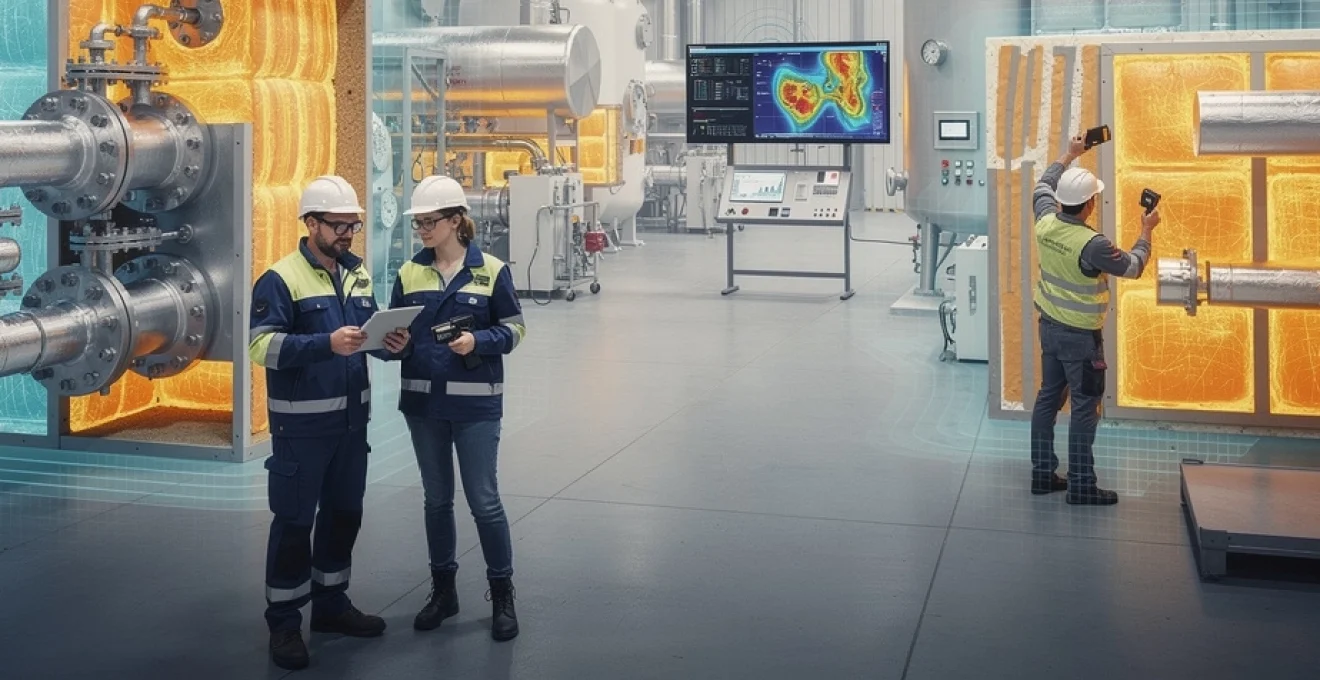
Industrial facilities face mounting pressure to optimise energy consumption whilst maintaining operational excellence and meeting increasingly stringent environmental regulations. Energy costs represent a significant portion of operational expenses across manufacturing, processing, and distribution sectors, making effective thermal management strategies crucial for sustainable business operations. Modern insulation technologies offer sophisticated solutions that extend far beyond traditional thermal barriers, incorporating advanced materials science, smart monitoring systems, and integrated performance analytics to deliver measurable improvements in energy efficiency.
The industrial landscape has evolved dramatically over the past decade, with facilities requiring more precise temperature control, reduced carbon emissions, and enhanced operational reliability. Contemporary insulation solutions address these challenges through innovative approaches that combine multiple technologies, creating comprehensive thermal management systems capable of delivering substantial energy savings whilst protecting valuable equipment and maintaining optimal working environments.
Thermal bridging elimination through advanced insulation technologies
Thermal bridging represents one of the most significant sources of energy loss in industrial facilities, occurring when conductive materials create pathways for heat transfer that bypass insulation systems. Advanced insulation technologies now incorporate sophisticated design principles and cutting-edge materials to eliminate these thermal bridges, creating continuous thermal barriers that dramatically improve overall system performance.
Modern thermal bridging solutions utilise computational fluid dynamics modelling to identify potential heat transfer pathways before installation, enabling engineers to design comprehensive insulation systems that address every potential weakness. These systems often incorporate multiple insulation layers with varying thermal properties, creating redundant barriers that ensure consistent performance even when individual components experience degradation or damage.
Aerogel-based solutions for High-Temperature industrial applications
Aerogel insulation technology has revolutionised high-temperature applications across industrial sectors, offering exceptional thermal performance in extremely compact installations. These silica-based materials achieve thermal conductivity values as low as 0.013 W/mK, significantly outperforming traditional insulation materials whilst requiring minimal installation space. The unique microstructure of aerogel creates millions of tiny air pockets that effectively trap heat whilst maintaining structural integrity at temperatures exceeding 650°C.
Industrial facilities utilising aerogel insulation report energy savings of 20-40% compared to conventional systems, with additional benefits including reduced maintenance requirements and extended equipment lifespan. The hydrophobic properties of modern aerogel formulations provide excellent moisture resistance, eliminating concerns about thermal performance degradation in humid industrial environments.
Vacuum insulation panels in cryogenic storage systems
Vacuum insulation panels (VIPs) deliver unparalleled thermal performance for cryogenic storage applications, achieving thermal conductivity values below 0.004 W/mK under optimal conditions. These systems utilise evacuated cores surrounded by barrier films that prevent air infiltration, creating near-perfect thermal barriers that maintain extremely low temperatures with minimal energy input.
The implementation of VIP technology in liquefied natural gas storage facilities has demonstrated remarkable results, with some installations achieving 95% reduction in boil-off rates compared to conventional insulation systems. However, VIP systems require careful handling during installation and ongoing monitoring to ensure barrier integrity, as even minor punctures can significantly compromise thermal performance.
Phase change materials integration in thermal management
Phase change materials (PCMs) represent an innovative approach to thermal management that stores and releases thermal energy during phase transitions, effectively smoothing temperature fluctuations whilst reducing peak energy demands. Industrial applications benefit from PCM integration through reduced HVAC loads, improved process temperature stability, and enhanced equipment protection during thermal cycling.
Modern PCM systems incorporate encapsulation technologies that prevent material migration whilst maintaining thermal transfer efficiency. These systems prove particularly valuable in applications with variable thermal loads, such as batch processing facilities or seasonal manufacturing operations, where traditional insulation systems cannot adapt to changing thermal requirements.
Reflective Multi-Layer insulation for heat recovery systems
Multi-layer reflective insulation systems maximise heat recovery potential by incorporating low-emissivity surfaces that redirect radiant heat back into process streams rather than allowing it to escape to the environment. These systems typically combine reflective foils with spacer materials that maintain air gaps, creating highly effective barriers against radiant heat transfer whilst maintaining lightweight, compact profiles.
Heat recovery applications benefit significantly from reflective insulation integration, with properly designed systems capturing 60-80% of otherwise wasted thermal energy. The durability of modern
outer layers and the stability of adhesive systems ensure long-term performance, even in harsh industrial environments with frequent thermal cycling and vibration. When combined with heat exchangers, economisers, and flue gas recovery units, reflective multi-layer insulation can dramatically increase the overall efficiency of heat recovery systems, shortening payback periods and supporting corporate decarbonisation strategies.
Industrial process optimisation through strategic insulation placement
Beyond material selection, the strategic placement of insulation within industrial processes plays a decisive role in improving energy performance. Rather than treating insulation as a uniform envelope, leading facilities now map thermal losses across their sites and prioritise high-impact locations such as steam lines, furnace walls, and refrigerated zones. This targeted approach ensures that every metre of insulation delivers measurable value, aligning capital investment with energy saving potential.
Process engineers increasingly collaborate with energy managers and maintenance teams to identify where insulation can stabilise temperatures, reduce heat loss, and protect process integrity. By focusing on choke points, junctions, valves, and interfaces between hot and cold systems, you can often unlock substantial energy savings without large-scale rebuilds. The result is a more resilient, more efficient industrial process that supports consistent product quality and reduced downtime.
Steam distribution network efficiency enhancement
Steam distribution networks are often among the most energy-intensive systems in industrial facilities, yet many kilometres of piping, traps, and valves remain poorly insulated or completely bare. Heat loss from uninsulated steam lines can exceed 100 W/m in high-pressure systems, translating into significant fuel consumption and higher greenhouse gas emissions. By optimising insulation on steam pipes, condensate return lines, and associated fittings, you can dramatically enhance overall network efficiency.
Modern steam system insulation strategies combine high-temperature insulation materials with removable jackets for components requiring regular maintenance, such as steam traps and control valves. This removable insulation makes it easier for technicians to access equipment without leaving it permanently bare, a common challenge in older plants. When paired with regular steam trap surveys and leak detection programmes, strategic insulation upgrades can reduce steam losses by 10–30%, lowering both fuel use and water consumption.
Furnace and boiler heat loss minimisation techniques
Furnaces and boilers operate at extreme temperatures, making them prime candidates for advanced industrial insulation solutions. Heat loss through refractory linings, doors, observation ports, and casing penetrations not only wastes energy but also increases the thermal stress on surrounding structures. To minimise these losses, engineers now deploy multi-layer lining systems that combine refractory bricks, ceramic fibre modules, and high-performance backing insulation.
Techniques such as hot spot mapping using infrared thermography help identify localised areas of excessive heat loss, guiding targeted repairs rather than full relinings. You might be surprised how often a simple door seal upgrade or additional insulation on access hatches delivers immediate energy savings. Over time, optimised furnace and boiler insulation contributes to more stable combustion, reduced fuel usage, and extended equipment lifespan, particularly when coupled with regular condition monitoring.
Pipeline insulation systems for petrochemical operations
Petrochemical pipelines transport fluids across a wide range of temperatures, from cryogenic feedstocks to superheated process streams. Maintaining these temperatures within tight limits is crucial for both process efficiency and safety, especially when dealing with volatile or viscous materials. Advanced pipeline insulation systems therefore combine thermal performance with mechanical protection and, in many cases, fire resistance.
In practice, this often involves multi-layer systems featuring corrosion-resistant jacketing, water-repellent insulation materials, and integral vapour barriers to prevent moisture ingress. For long-distance pipelines, engineers may also incorporate heat tracing systems beneath the insulation to prevent wax formation or freezing, with the insulation minimising the energy required for tracing. By designing pipeline insulation around specific process requirements, petrochemical operators can reduce pumping energy, maintain product quality, and avoid unplanned shutdowns due to blockages or thermal instability.
HVAC ductwork thermal performance optimisation
Although HVAC systems are sometimes viewed as secondary to core process equipment, their energy footprint in industrial buildings can be substantial. Poorly insulated ductwork leads to temperature losses in heated air and gains in cooled air, forcing fans, chillers, and boilers to work harder to maintain setpoints. Optimising duct insulation in production areas, warehouses, and cleanrooms therefore contributes directly to improved industrial energy performance.
Effective HVAC ductwork insulation involves more than simply wrapping main trunks. Branch lines, fittings, dampers, and terminal devices should also receive appropriate insulation to avoid localised condensation and thermal bridging. In high-humidity or low-temperature applications, vapour barriers and sealed joints are critical to prevent moisture ingress and mould growth. When combined with efficient fans and modern control strategies, upgraded duct insulation can reduce HVAC energy use by 15–25% and improve comfort for operators on the plant floor.
Cold storage and refrigeration insulation strategies
Cold storage facilities, blast freezers, and refrigerated process rooms rely on robust insulation to maintain low temperatures and minimise refrigeration loads. Any weakness in the thermal envelope—such as poorly sealed doors, thermal bridges at structural penetrations, or degraded insulation—translates directly into higher compressor energy use. As energy prices rise, ensuring high-performance insulation in cold storage becomes one of the fastest routes to operational savings.
Modern strategies typically include high-R-value panels, continuous vapour barriers, and careful detailing to avoid ice build-up at junctions. Insulated floor systems with thermal breaks at door thresholds help prevent condensation and frost heave, protecting both equipment and building structure. Leveraging advanced insulation technologies in cold rooms can cut refrigeration energy demand by 20–30%, while also improving product stability and reducing food or pharmaceutical waste.
Quantitative energy performance assessment methodologies
To justify investment in industrial insulation solutions, you need robust, quantitative methods to assess energy performance. Rather than relying on rules of thumb, forward-thinking facilities combine laboratory measurements with field data to build a clear picture of thermal behaviour. These methodologies enable you to compare alternative insulation options, validate savings after installation, and support continuous improvement programmes.
Typical assessment approaches include thermal conductivity testing, surface temperature measurements, infrared imaging, and detailed energy audits that track fuel consumption and process efficiency over time. By integrating these tools into a structured methodology, organisations can move from reactive maintenance to proactive optimisation. The outcome is a more transparent understanding of where energy is used, where it is wasted, and how insulation upgrades can deliver the greatest returns.
Thermal conductivity measurement using heat flow metres
Thermal conductivity is a fundamental property for comparing insulation materials and predicting heat transfer rates in service. Heat flow metres provide a controlled way to measure this parameter under well-defined temperature gradients, enabling engineers to select the most appropriate material for each industrial application. In a typical test, a sample is placed between a hot and cold plate while sensors measure the heat flux passing through it.
By correlating this heat flow with the temperature difference and sample thickness, you obtain a reliable thermal conductivity value that can feed into energy models and design calculations. This data is particularly valuable when evaluating innovative insulation technologies or assessing how ageing, moisture, or mechanical compression affect performance. If you have ever wondered why two materials with similar thicknesses behave so differently in the field, precise thermal conductivity measurements often provide the answer.
Infrared thermography analysis for insulation defect detection
Infrared thermography has become a cornerstone technique for detecting insulation defects in industrial environments. By capturing thermal images of equipment, walls, roofs, and process lines, engineers can quickly identify hot and cold spots that indicate missing, damaged, or saturated insulation. The method is non-invasive and can often be carried out while systems are in operation, minimising disruption.
Thermographic surveys help pinpoint issues such as thermal bridges at structural members, gaps around penetrations, and deteriorated cladding that allows water ingress. When integrated into an annual maintenance programme, infrared analysis enables you to track how insulation performance evolves over time and to prioritise repairs with the greatest energy-saving potential. Think of it as a thermal “health check” for your facility, revealing problems that would otherwise remain hidden behind walls and casings.
Return on investment calculations for insulation upgrades
Even when the technical benefits of advanced industrial insulation are clear, investment decisions hinge on economic justification. Return on investment (ROI) calculations provide a structured way to quantify the financial impact of insulation upgrades, taking into account installation costs, energy savings, maintenance reductions, and potential production gains. By expressing these factors in monetary terms over the expected life of the insulation, you can build a compelling business case.
A typical ROI assessment starts by estimating baseline heat losses and associated fuel costs, then modelling how improved insulation will reduce these losses. Additional benefits, such as fewer unplanned shutdowns or increased throughput due to more stable process temperatures, can also be included. In many industrial scenarios, payback periods for targeted insulation projects fall between one and three years, with some high-temperature applications achieving even faster returns. This economic clarity helps align energy efficiency goals with broader financial objectives.
Energy audit protocols and performance monitoring systems
Comprehensive energy audits form the foundation of any effective industrial energy efficiency programme. Standardised audit protocols—such as those aligned with ISO 50002 or national guidelines—ensure that all major energy-using systems are systematically evaluated, including boilers, furnaces, compressed air, HVAC, and process heating and cooling. Within this framework, insulation performance is assessed alongside control strategies, equipment efficiency, and operational practices.
Once initial improvements are implemented, ongoing performance monitoring systems help ensure that savings are sustained. These systems may include sub-metering, temperature and pressure sensors, and data analytics platforms that track key performance indicators over time. By correlating changes in energy use with insulation upgrades and maintenance activities, you gain a dynamic view of how thermal management influences overall industrial energy performance. Continuous monitoring also makes it easier to spot emerging issues, such as insulation degradation or process changes that alter heat loads.
Regulatory compliance and industry standards implementation
Industrial insulation does not exist in a regulatory vacuum. Across Europe and many other regions, energy efficiency directives, building codes, and safety regulations specify minimum insulation performance, fire resistance, and environmental criteria. Compliance with these requirements is not only a legal obligation but also a key driver for systematic improvement of industrial energy performance. By aligning insulation projects with recognised standards, you reduce regulatory risk and enhance asset value.
Relevant frameworks include energy management standards such as ISO 50001, product and system standards like EN 14303 for thermal insulation products, and sector-specific regulations addressing process safety and emissions. Many countries also offer incentives, tax relief, or preferential financing for projects that exceed minimum standards and deliver verified energy savings. When planning insulation upgrades, it is therefore prudent to engage with qualified designers and auditors who can ensure that material selection, installation methods, and documentation meet or surpass regulatory expectations.
Case studies from manufacturing and processing industries
Real-world case studies provide concrete evidence of how advanced insulation solutions enhance industrial energy performance. In the chemical processing sector, for instance, a mid-sized plant that replaced outdated mineral wool with aerogel-based insulation on its high-temperature reactors reported fuel savings of 25% and a payback period of just under two years. The improved temperature stability also reduced by-product formation, increasing overall yield and profitability.
In the food and beverage industry, a cold storage operator upgraded its refrigerated warehouses with high-performance panel insulation and rigorous air sealing measures. Combined with improved door management and defrost control, the project cut refrigeration energy use by almost 30% while significantly reducing temperature excursions that previously led to product spoilage. Another example from the metals sector saw a steel mill use infrared thermography to guide targeted furnace insulation repairs, reducing heat loss by an estimated 15% and extending refractory life without a full shutdown.
Future technologies and smart insulation systems integration
The future of industrial insulation lies at the intersection of advanced materials, digital monitoring, and integrated process control. Emerging technologies such as self-healing insulation composites, nano-structured aerogels, and tunable phase change systems promise even higher thermal performance with reduced thickness and weight. At the same time, embedded sensors and wireless monitoring platforms are transforming passive insulation into an active participant in industrial energy management.
Imagine insulation systems that continuously report their own condition, detecting moisture ingress, mechanical damage, or loss of performance and alerting maintenance teams before issues escalate. Coupled with machine learning algorithms, these smart insulation solutions can help predict optimal maintenance windows, adjust process setpoints to exploit recovered heat, and support real-time optimisation of industrial energy performance. As regulatory pressures intensify and competitiveness hinges increasingly on energy efficiency, integrating these next-generation insulation technologies will become a strategic priority for forward-looking industrial operators.