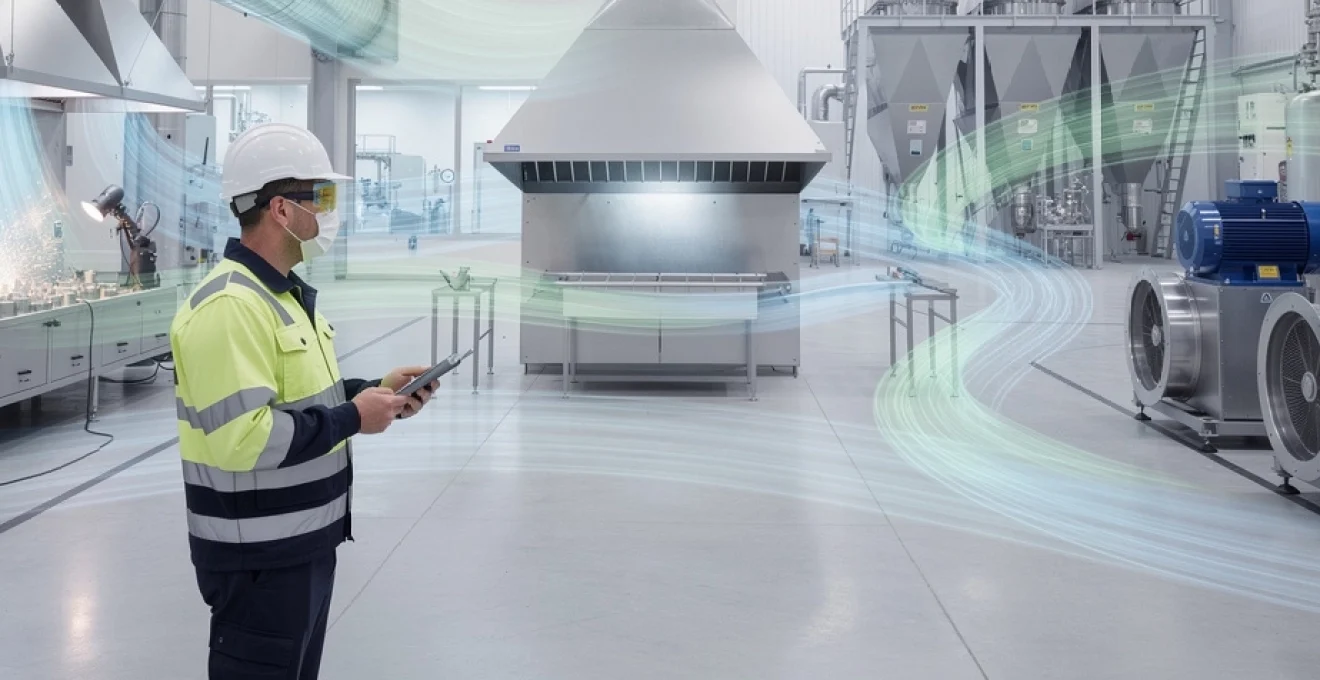
Industrial environments present unique challenges that demand sophisticated ventilation solutions to protect workers and maintain operational efficiency. Modern manufacturing facilities, chemical processing plants, and production environments generate various airborne contaminants that pose significant health risks without proper control measures. These hazards range from toxic vapours and combustible gases to fine particulate matter and biological contaminants, each requiring specific ventilation strategies to ensure workplace safety.
The evolution of industrial ventilation technology has transformed how organisations approach worker protection and environmental compliance. Advanced systems now integrate multiple control mechanisms, from localised extraction points to facility-wide air management networks. Effective ventilation design not only safeguards human health but also enhances productivity, reduces equipment corrosion, and minimises environmental impact through controlled emissions management.
Local exhaust ventilation systems for hazardous substance control
Local exhaust ventilation (LEV) systems represent the most effective engineering control for managing hazardous substances at their source. These systems operate on the principle of capturing contaminants before they can disperse into the broader workspace, protecting workers from exposure to dangerous materials. Unlike general ventilation approaches that dilute contaminants throughout an entire facility, LEV systems focus on immediate containment and removal.
The effectiveness of LEV systems depends on three critical factors: adequate capture velocity, proper hood design, and sufficient transport velocity through ductwork. Capture velocity must overcome the momentum of contaminant-laden air, whilst transport velocity ensures materials remain suspended during conveyance to filtration or disposal systems. Research indicates that properly designed LEV systems can achieve contaminant removal efficiencies exceeding 95% when correctly matched to specific applications.
Fume hood design and capture velocity optimisation
Fume hoods serve as the primary interface between hazardous processes and ventilation systems, requiring careful design to maximise capture efficiency whilst minimising energy consumption. The relationship between face velocity and capture effectiveness follows complex fluid dynamics principles that consider both the physical properties of contaminants and the work patterns of operators. Modern computational fluid dynamics (CFD) modelling enables engineers to optimise hood geometry for specific applications, reducing turbulence that can compromise capture performance.
Contemporary fume hood designs incorporate variable air volume (VAV) controls that automatically adjust airflow based on sash position and occupancy. These systems maintain minimum face velocities of 0.4-0.5 metres per second for most applications whilst reducing energy consumption during periods of reduced activity. Smart hood technology now integrates sensors that monitor contaminant levels in real-time, providing feedback for dynamic adjustment of capture velocities based on actual hazard levels rather than conservative design assumptions.
Downdraft table applications in welding and grinding operations
Downdraft tables provide an elegant solution for capturing heavy particulates and fumes generated during metalworking operations. These systems utilise the natural settling tendency of welding fumes and grinding dust, drawing contaminants downward through perforated work surfaces. The design eliminates the interference common with overhead extraction systems whilst maintaining clear operator sight lines to work areas.
Effective downdraft systems require careful attention to air velocity distribution across the work surface to ensure uniform capture. Studies show that velocity variations exceeding 20% can create dead zones where contaminants escape capture. Modern downdraft designs incorporate plenum chambers beneath work surfaces to equalise pressure distribution, achieving more consistent capture performance across large work areas.
Push-pull ventilation systems for chemical processing plants
Push-pull ventilation systems combine supply air (push) with exhaust collection (pull) to create controlled airflow patterns around open process vessels or treatment tanks. This approach proves particularly effective for managing vapours from large surface areas where traditional canopy hoods would be impractical. The push air creates a velocity field that directs contaminants toward strategically positioned exhaust inlets.
The success of push-pull systems depends on precise balancing of supply and exhaust airflows to prevent contaminant bypass. Industrial ventilation specialists typically design these systems with 10-15% excess exhaust capacity to account for thermal effects and process variations. Advanced systems incorporate real-time monitoring to maintain optimal push-pull ratios automatically, adapting to changing process conditions without operator intervention.
Slot hood configuration for electroplating and surface treatment
Slot hoods are a cornerstone of industrial ventilation solutions in electroplating lines and surface treatment facilities, where long process tanks generate continuous vapour plumes. Instead of relying on bulky canopy hoods, slot hoods use narrow openings positioned along the tank edge to draw contaminants horizontally away from the worker’s breathing zone. This configuration reduces cross-drafts and improves capture efficiency, particularly for heavier-than-air vapours that tend to cling to the tank surface.
Designing an effective slot hood requires balancing slot velocity, slot length, and duct static pressure. Engineers typically target slot velocities in the range of 0.5–1.0 metres per second, increasing values for hotter or more volatile solutions. To avoid uneven capture along the tank, the slot duct is often internally compartmentalised or tapered so that static pressure remains consistent from end to end. Poorly balanced systems can lead to “weak end” effects, where contaminants escape capture and migrate into adjacent work areas.
For many electroplating and pickling operations, corrosion resistance is as important as capture performance. Ducts and slot plenums are frequently fabricated from PVC, polypropylene, or fibre-reinforced plastics to withstand aggressive acids and alkalis. Where metal ducting is used, internal linings and appropriate drainage are critical to avoid corrosion and condensate pooling. By combining correct materials with optimised slot geometry, slot hood ventilation systems significantly reduce worker exposure to corrosive mists and metal-laden aerosols, supporting both health protection and compliance with occupational exposure limits.
Dilution ventilation strategies for indoor air quality management
While local exhaust ventilation tackles specific emission points, many industrial environments also rely on dilution ventilation strategies to manage overall indoor air quality. General ventilation systems introduce clean outdoor air and mix it with indoor air to reduce contaminant concentrations to acceptable levels. This approach is particularly relevant in large manufacturing halls, warehouses, and assembly areas where pollutants are low-to-moderate in toxicity and widely dispersed.
Effective dilution ventilation goes beyond simply increasing fan size or opening more louvers. Designers must consider room volume, pollutant generation rates, occupancy patterns, and heat loads to determine the appropriate airflow rates. When engineered correctly, dilution systems stabilise temperatures, control humidity, and reduce nuisance odours, creating a more comfortable and productive working environment. However, where highly toxic substances or high-concentration sources are present, dilution should be seen as a complement—not a substitute—for robust local exhaust solutions.
Air changes per hour calculations for manufacturing facilities
Air changes per hour (ACH) is a key design metric for dilution ventilation in industrial buildings. ACH expresses how many times per hour the entire volume of air in a space is replaced, providing a simple way to compare ventilation rates between different areas. For light manufacturing and assembly operations, typical design values range from 4 to 10 ACH, whereas processes with higher heat or contaminant loads may require 10–20 ACH or more.
Calculating ACH starts with understanding the required volumetric flow rate in cubic metres per hour and the volume of the space. Yet the calculation is only the beginning. Designers must consider how that air is distributed—are there dead zones, short-circuiting between supply and exhaust, or high-occupancy areas with insufficient mixing? Computational tools and tracer gas tests can help verify that theoretical ACH values translate into real-world improvements in indoor air quality.
From a practical standpoint, you can think of ACH like the turnover rate in a busy workshop: even if enough people are scheduled on paper, poor task allocation can leave some workstations idle. Similarly, a system that nominally delivers adequate ACH but with poor distribution may still leave hotspots with poor air quality. Regular performance verification, combined with feedback from workers experiencing headaches, odours, or thermal discomfort, helps ensure ACH targets are delivering the intended health and safety outcomes.
Make-up air systems and pressure differential control
As more air is exhausted from a building through LEV and general extract systems, maintaining balanced pressure becomes critical. Make-up air systems replace exhausted air with conditioned outdoor air, preventing negative pressure that can cause doors to slam, drafts to increase, and unfiltered air to be drawn in through cracks and openings. In extreme cases, excessive negative pressure can even reduce LEV performance, as exhaust fans struggle against pressure imbalances.
Pressure differential control is especially important in facilities with clean and dirty zones, such as food processing, pharmaceutical production, or laboratory environments. Here, designers deliberately create pressure cascades, keeping sensitive areas at slightly higher pressure than adjacent spaces to prevent contaminant migration. Differential pressures are typically maintained in the range of 5–15 Pa between zones, monitored by sensors that can alarm or adjust fan speeds when setpoints are exceeded.
Integrating make-up air with existing industrial ventilation systems can also improve thermal comfort. Modern units commonly include heating, cooling, and filtration stages, allowing you to introduce fresh air without sacrificing energy efficiency or indoor conditions. Variable frequency drives (VFDs) on supply and extract fans enable dynamic balancing as processes start up or shut down during the day, ensuring that pressure relationships remain stable even under changing production loads.
Mixed-flow ventilation design for large industrial spaces
Large industrial halls, logistics centres, and high-bay warehouses often benefit from mixed-flow ventilation design that combines aspects of displacement and mixing ventilation. Rather than relying solely on ceiling-level supply and extract, mixed-flow systems introduce air at multiple heights and directions to manage both thermal stratification and contaminant dispersion. This is particularly useful in facilities with high process heat, mezzanine levels, or dense racking systems that disrupt simple airflow paths.
Mixed-flow ventilation can be visualised as tuning the “orchestra” of your air distribution system: low-level diffusers, high-level jets, and destratification fans must work in harmony to achieve uniform conditions without drafts. Designers consider throw distance, induction rates, and temperature differentials to select appropriate diffusers and grille types. In spaces with variable occupancy and intermittent processes, demand-controlled ventilation strategies can further adjust mixed-flow patterns based on CO2, temperature, or contaminant sensors.
From a safety perspective, well-designed mixed-flow systems help prevent pockets of stagnant air where fumes or heat can accumulate unnoticed. This becomes particularly important near ceiling-mounted equipment, walkways on overhead cranes, or elevated control rooms where thermal layers may cause discomfort or even exceed safe temperature thresholds. By leveraging mixed-flow principles, industrial ventilation solutions can maintain consistent air quality throughout complex geometries without oversizing equipment.
Heat recovery ventilation integration in energy-efficient facilities
As energy costs rise and sustainability targets tighten, integrating heat recovery ventilation (HRV) into industrial ventilation design has become standard practice in many regions. HRV systems capture thermal energy from exhaust air and use it to precondition incoming outdoor air, significantly reducing heating (and sometimes cooling) loads. In climates with cold winters, heat recovery efficiencies of 60–80% are common with modern plate or rotary heat exchangers.
Industrial facilities face a particular challenge: how do you recover heat from exhaust streams that may contain corrosive or hazardous contaminants? The answer lies in selective heat recovery, where clean extract streams (such as general room exhaust) pass through heat exchangers, while contaminated LEV exhaust is treated separately and discharged directly. In some cases, run-around coil systems are used to indirectly transfer heat between segregated air streams, avoiding cross-contamination while still capturing energy savings.
When combined with demand-controlled ventilation and VFDs, HRV-equipped systems can deliver significant lifecycle cost reductions without compromising safety. According to various industry studies, well-designed energy-efficient ventilation can reduce HVAC-related energy consumption by 20–40% in industrial buildings. Beyond cost savings, this approach supports corporate sustainability objectives, lower emissions profiles, and more stable indoor conditions—benefits that resonate with stakeholders from operations managers to ESG reporting teams.
Explosion-proof ventilation equipment for hazardous environments
In facilities handling flammable gases, vapours, or combustible dusts, explosion-proof ventilation equipment is an essential safeguard. Environments classified under ATEX or similar hazardous area standards require motors, fans, and controls that will not ignite explosive atmospheres if a fault occurs. This means using equipment designed to limit surface temperatures, prevent sparking, and contain or isolate any internal explosions.
Explosion-proof fans typically feature non-sparking impellers, anti-static materials, and housings that meet rigorous mechanical strength criteria. Motors may be located outside the hazardous zone, coupled through driveshafts or belt systems, or built in intrinsically safe enclosures. Ductwork, too, must be carefully specified: conductive materials and grounding provisions help dissipate static charges that might otherwise accumulate on plastic or flexible ducts conveying dust-laden air.
Beyond hardware selection, the overall ventilation system design plays a major role in explosion risk reduction. Adequate air changes, strategic placement of exhaust points, and avoidance of dead pockets where vapours can accumulate all contribute to safer conditions. In high-risk sectors such as grain handling, paint spraying, or chemical transfer, engineers may also integrate explosion vents, isolation dampers, or suppression systems into dust collectors and duct branches. Together, these measures transform ventilation from a simple comfort technology into a front-line defence against catastrophic incidents.
Computational fluid dynamics modelling for airflow pattern analysis
As industrial processes become more complex, traditional rule-of-thumb design methods are often insufficient to predict airflow behaviour accurately. Computational fluid dynamics (CFD) modelling has emerged as a powerful tool for visualising and optimising industrial ventilation systems before installation. By simulating detailed airflow patterns, temperature gradients, and contaminant dispersion, CFD allows engineers to test multiple design options virtually and identify the most effective configuration.
CFD models take into account building geometry, equipment layout, heat sources, and ventilation components such as diffusers, hoods, and exhaust grilles. The simulations can reveal unexpected recirculation zones, short-circuiting between supply and extract, or areas with insufficient capture velocity around process equipment. In cleanrooms and controlled environments, CFD is often used to verify that unidirectional flow is maintained and that changes in layout will not compromise cleanliness classifications.
Think of CFD as a “wind tunnel” for your facility: instead of building physical prototypes, you can experiment digitally with fan positions, duct routing, or hood designs. This reduces the risk of costly field modifications and helps justify investment decisions with quantifiable performance predictions. When combined with on-site validation—such as smoke tests, anemometer readings, and tracer gas studies—CFD becomes a cornerstone of evidence-based ventilation design, supporting both safety and regulatory compliance.
Industrial air filtration technologies and particulate removal efficiency
Capturing contaminants is only half the story; industrial ventilation solutions must also filter and treat extracted air before it is recirculated or discharged to the environment. A wide range of air filtration technologies exist to deal with particulate matter, aerosols, fumes, and gases. The correct choice depends on particle size distribution, concentration, chemical composition, and regulatory emission limits.
Filtration performance is typically characterised by removal efficiency for specific particle size ranges, pressure drop across the filter media, and service life under given loading conditions. High-efficiency systems may achieve capture efficiencies of 99.97% or greater for sub-micron particles, while bulk dust collection systems focus on handling large particle masses with minimal energy consumption. Selecting the right technology often involves balancing capital cost, operating expenses, maintenance frequency, and space constraints.
HEPA filter performance in pharmaceutical clean rooms
High Efficiency Particulate Air (HEPA) filters are the backbone of air cleanliness in pharmaceutical clean rooms and other high-containment environments. By definition, HEPA filters must remove at least 99.97% of particles with a diameter of 0.3 microns, a size considered the “most penetrating” for fibrous media. In practice, HEPA filters often achieve even higher efficiencies for larger and smaller particles due to diffusion, interception, and impaction mechanisms.
In cleanroom ventilation systems, HEPA filters are usually installed at terminal ceiling diffusers or within fan filter units to ensure that air delivered into critical zones meets ISO or GMP cleanliness standards. Regular integrity testing using aerosol challenge methods (such as PAO or DOP testing) verifies that there are no leaks or bypass paths around the filter frames. Any damage to the media or seals can compromise the entire contamination control strategy, so inspection and certification are essential components of ongoing maintenance.
From a design perspective, sufficient pre-filtration upstream of HEPA stages is vital to prolong filter life and maintain acceptable pressure drops. Coarse and fine filters remove larger particles and fibres, preventing premature clogging of the HEPA media. Although HEPA filters contribute to higher energy use due to their resistance, modern low-pressure-drop designs and efficient fan selections can mitigate this impact, ensuring that pharmaceutical ventilation systems deliver both safety and energy performance.
Baghouse dust collection systems for cement and mining industries
In heavy industries such as cement production, mining, and bulk material handling, baghouse dust collection systems are the workhorses of particulate control. These systems use fabric filter bags arranged in rows or modules to capture dust from large air volumes, often handling hundreds of thousands of cubic metres per hour. When dust-laden air passes through the fabric, particles accumulate on the surface and form a dust cake that further enhances filtration efficiency.
To maintain performance, baghouses employ cleaning mechanisms such as pulse-jet air blasts, reverse air, or mechanical shaking to periodically dislodge accumulated dust from the bags. The collected material falls into hoppers for safe disposal or recycling. Proper tuning of the cleaning cycle is critical: too frequent cleaning wastes compressed air and reduces bag life, while insufficient cleaning increases pressure drop and energy consumption, eventually compromising airflow rates.
Well-designed baghouse systems can achieve particulate removal efficiencies above 99.9%, enabling facilities to meet stringent emission limits even with high dust loading. However, success depends on selecting suitable filter media for the specific temperature, moisture, and chemical conditions of the application. In cement kilns or metallurgical operations, for example, high-temperature fabrics and chemical-resistant coatings are essential to prevent filter degradation and ensure long-term reliability.
Electrostatic precipitator applications in steel manufacturing
Electrostatic precipitators (ESPs) offer another highly effective solution for particulate removal, particularly in steel manufacturing, power generation, and process industries with large, continuous exhaust flows. ESPs work by electrically charging particles as they pass through an ionisation field, then attracting them to oppositely charged collection plates. The collected dust is periodically removed by rapping or vibrating the plates, allowing it to fall into hoppers.
One of the key advantages of ESPs is their ability to handle high temperatures and large gas volumes with relatively low pressure drops compared to fabric filters. This makes them attractive for applications like basic oxygen furnaces, sinter plants, and boiler flue gases. Depending on design and operating conditions, ESPs can achieve removal efficiencies in excess of 99%, including for sub-micron particles that might be challenging for other technologies.
However, ESP performance is sensitive to factors such as particle resistivity, gas temperature, and dust composition. Changes in fuel type, raw materials, or process parameters can significantly impact collection efficiency, requiring careful monitoring and adjustment. As environmental regulations tighten and stack emission limits become more stringent, many facilities are upgrading existing ESPs or combining them with fabric filters to achieve the desired particulate and heavy metal capture levels.
Activated carbon adsorption for volatile organic compound control
While particulate control is vital, many industrial processes also release volatile organic compounds (VOCs) and odorous gases that require targeted treatment. Activated carbon adsorption systems are widely used to control VOC emissions from painting lines, chemical storage, pharmaceutical manufacturing, and solvent-based processes. The porous structure of activated carbon provides a vast internal surface area, allowing organic molecules to adhere via physical adsorption.
In practice, contaminated air passes through fixed beds or modular cartridges of activated carbon, where VOCs are captured until the media reaches saturation. At that point, the carbon is either replaced or regenerated, depending on the system design and the economic value of the recovered solvents. System sizing must account not only for airflow and concentration, but also for potential temperature and humidity effects, as high humidity can compete with VOCs for adsorption sites.
From a safety and compliance standpoint, activated carbon systems play a crucial role in keeping VOC emissions below regulatory thresholds and reducing odour complaints from neighbouring communities. When integrated into a broader industrial ventilation strategy—often in combination with LEV hoods and dilution ventilation—they help you maintain clean air both inside and outside the facility. As with other filtration technologies, regular monitoring, breakthrough testing, and media management are essential to ensure long-term performance.
Regulatory compliance standards and ventilation system commissioning
No matter how sophisticated an industrial ventilation system may appear on paper, its true value is measured against regulatory compliance and real-world performance. Standards and guidelines from organisations such as ISO, EN, ASHRAE, HSE, OSHA, and local building codes define minimum requirements for airflow rates, contaminant control, noise, and energy efficiency. Sector-specific frameworks—such as GMP for pharmaceuticals or HACCP for food processing—further refine expectations around air cleanliness, pressure zoning, and filtration levels.
Ventilation system commissioning is the bridge between design intent and operational reality. During commissioning, engineers verify that fans deliver the specified flow rates, hoods achieve adequate capture velocities, filters are correctly installed, and control systems respond as intended. This process often includes balancing of duct branches, measurement of room pressure differentials, and functional testing of alarms and interlocks associated with critical processes. Where CFD models or performance predictions were used during design, commissioning provides the empirical data needed to confirm or refine those assumptions.
Ongoing compliance does not end once the system is signed off. Periodic re-commissioning, preventive maintenance, and performance audits are essential to ensure that industrial ventilation solutions continue to protect workers as processes evolve. Simple changes—such as adding new equipment, rearranging workstations, or increasing production rates—can alter airflow patterns and contaminant loads. By treating ventilation as a living system that requires regular review, you not only meet regulatory obligations but also build a safer, healthier, and more resilient working environment for the long term.