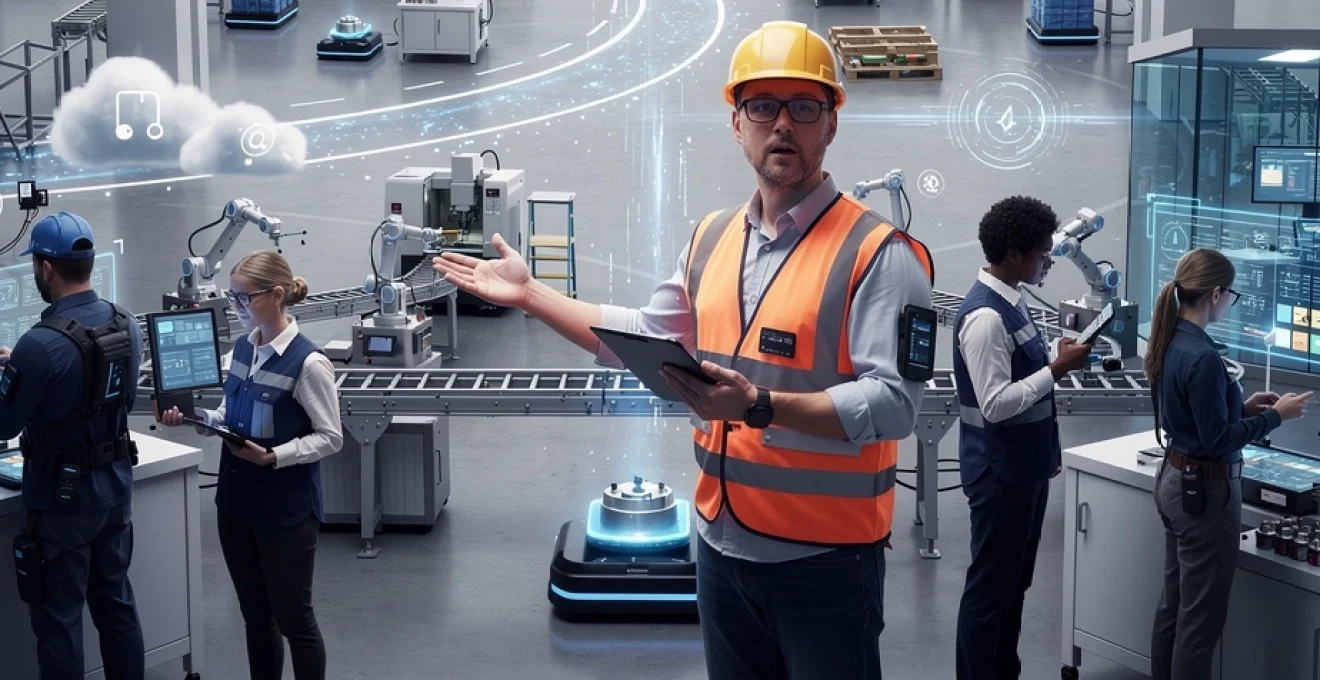
The industrial landscape has undergone seismic shifts over the past decade, transforming at a pace that would have seemed unimaginable to manufacturing professionals just a generation ago. Today’s production facilities bear little resemblance to their predecessors, operating within ecosystems defined by digital connectivity, artificial intelligence, and unprecedented global uncertainty. The organisations that thrive aren’t necessarily those with the deepest pockets or the most advanced equipment—they’re the ones that can adapt quickly when circumstances change. As manufacturing environments become increasingly complex and unpredictable, the capacity to adjust strategies, retrain workforces, and pivot operations has emerged as the single most critical determinant of long-term viability. This fundamental truth applies equally to individual professionals navigating career transitions, managers leading cross-functional teams, and executives steering entire organisations through technological disruption and market volatility.
Industry 4.0 and the digital transformation imperative for manufacturing organisations
The fourth industrial revolution represents far more than a technological upgrade—it constitutes a fundamental reimagining of how manufacturing organisations operate, compete, and create value. Industry 4.0 technologies have transformed traditional production environments into intelligent, interconnected ecosystems where physical and digital systems merge seamlessly. This digital transformation imperative isn’t optional for organisations hoping to remain competitive; it’s an existential requirement that demands continuous adaptation at every organisational level. What makes this transition particularly challenging is its comprehensive nature—it affects everything from shop floor operations to executive strategy, from customer relationships to supplier partnerships.
The pace of change shows no signs of slowing. Research indicates that manufacturers investing in digital transformation technologies report productivity improvements of 15-25% within the first two years of implementation. However, these gains don’t materialise automatically. They require organisations to cultivate adaptive cultures where experimentation is encouraged, failure is viewed as a learning opportunity, and continuous improvement becomes ingrained in daily operations. The companies that successfully navigate this transformation share a common characteristic: they’ve developed organisational adaptability as a core competency, enabling them to respond rapidly to technological advances while maintaining operational stability.
Iot-enabled smart factories and Real-Time production monitoring systems
Internet of Things (IoT) technology has fundamentally altered how manufacturing facilities monitor, analyse, and optimise production processes. Smart factories equipped with networked sensors generate millions of data points daily, providing unprecedented visibility into equipment performance, material flow, and quality metrics. This real-time monitoring capability enables you to identify bottlenecks, predict failures, and optimise resource allocation with precision that would have been impossible just a decade ago. Yet the technology itself represents only half the equation—your organisation’s ability to adapt workflows, decision-making processes, and operational protocols to leverage this information determines whether IoT investments deliver meaningful returns.
Implementing IoT-enabled monitoring systems requires significant cultural adaptation alongside technical infrastructure. Production teams accustomed to making decisions based on experience and intuition must learn to trust data-driven insights, even when they contradict conventional wisdom. This transition doesn’t happen overnight. Successful implementations typically involve phased rollouts that allow teams to gradually build confidence in new systems while developing the analytical skills necessary to interpret complex datasets effectively.
Artificial intelligence integration in predictive maintenance protocols
Artificial intelligence has revolutionised maintenance strategies, enabling organisations to transition from reactive repair approaches to predictive protocols that anticipate equipment failures before they occur. Machine learning algorithms analyse historical performance data, sensor readings, and environmental factors to identify patterns that precede breakdowns, allowing maintenance teams to intervene proactively. This capability delivers substantial cost savings—organisations implementing AI-driven predictive maintenance report 25-30% reductions in maintenance costs and 70-75% decreases in unexpected equipment failures.
However, integrating AI into maintenance operations demands considerable adaptability from technical teams. Maintenance professionals must develop new competencies in data interpretation, algorithm training, and exception handling. They need to understand not just how to fix equipment, but how to collaborate effectively with AI systems that may recommend counterintuitive interventions. Have you considered how your maintenance teams would respond to AI recommendations that conflict with their professional experience? This question highlights the human dimension of technological adaptation—one that many organisations underestimate when planning AI implementations.
Cloud-based ERP systems and Cross-Platform data synchronisation
Enterprise Resource Planning (ERP) systems have
no longer function as static, isolated databases. In an adaptable manufacturing organisation, cloud-based ERP platforms become the central nervous system, synchronising data across production, procurement, logistics, finance, and sales in real time. This cross-platform data synchronisation enables you to move from fragmented decision-making to an integrated, end-to-end view of operations. For example, a change in customer demand captured by your CRM can automatically trigger adjustments in production schedules, material purchasing, and workforce allocation.
Making this shift, however, requires both technical and organisational flexibility. Legacy on-premise systems, siloed departments, and entrenched workflows often resist the kind of transparency that cloud-based ERP systems introduce. Teams need to adapt to new data governance models, shared dashboards, and standardised processes that may initially feel restrictive but ultimately enhance agility. The manufacturers that succeed with cloud ERP are those that view implementation as an ongoing transformation rather than a one-time IT project, continuously refining configurations, permissions, and workflows as business needs evolve.
Cybersecurity challenges in connected industrial infrastructure
As factories become more connected, the attack surface for cyber threats expands dramatically. Industrial control systems, IoT devices, remote access tools, and cloud platforms all introduce potential vulnerabilities that can disrupt operations or compromise sensitive data. In this context, adaptability in cybersecurity strategies becomes just as important as adaptability in production processes. Static, perimeter-based security models are no longer sufficient; you need dynamic, layered defences that can evolve as threats change.
Adaptive organisations treat cybersecurity as a living system rather than a set of fixed controls. They regularly update risk assessments, patch management routines, and incident response plans to reflect new technologies and threat intelligence. Crucially, they also foster a security-aware culture on the shop floor and in the office, recognising that human error remains a leading cause of breaches. When your operators, engineers, and managers understand both the risks and their role in mitigating them, you build a resilient digital manufacturing environment capable of withstanding and recovering from cyber incidents.
Workforce reskilling strategies for evolving technical competencies
Technological transformation in manufacturing is ultimately constrained or enabled by human capability. Machines may become smarter, but people still design processes, interpret data, and make critical decisions when systems behave unexpectedly. This is where adaptability at the workforce level becomes decisive. The most advanced industrial technologies will underperform if your teams are locked into outdated skills and mindsets. By contrast, a workforce that embraces continuous learning can turn rapid change into a competitive advantage.
Effective workforce reskilling strategies recognise that industrial employees bring deep domain knowledge that should be augmented, not replaced, by new technical competencies. Think of it as upgrading the operating system of your organisation: the core experience stays, but the interfaces, tools, and capabilities improve. To achieve this, you need structured, ongoing programmes that help employees move from manual tasks to higher-value analytical, supervisory, and problem-solving roles that align with Industry 4.0 demands.
Transitioning from manual machining to CNC programming and automation
The shift from manual machining to CNC programming and industrial automation illustrates the broader adaptability challenge facing many plants. Skilled machinists possess invaluable tacit knowledge about materials, tolerances, and real-world production constraints. However, relying solely on manual methods limits scalability, repeatability, and integration with digital workflows. Transitioning these professionals into CNC programmers and automation specialists allows you to retain their expertise while enhancing precision and throughput.
Successful transitions rarely occur through simple “on-the-job learning.” They require structured training pathways that blend classroom instruction, simulation tools, and supervised practice on live equipment. For example, pairing experienced machinists with automation engineers in cross-mentoring arrangements can accelerate learning in both directions. Have you considered how your most seasoned operators could become your most effective CNC champions? When you give them the time, resources, and recognition to adapt, they often become powerful advocates for technology adoption on the shop floor.
Continuous learning frameworks and micro-credentialing in industrial settings
In a world where industrial technologies evolve every 18–24 months, one-off training events quickly become obsolete. Adaptable organisations move toward continuous learning frameworks that treat upskilling as part of daily work, not an occasional interruption. Micro-credentialing—offering targeted, stackable certifications for specific skills such as PLC troubleshooting, industrial data analysis, or robot programming—supports this approach. Employees can acquire competencies in manageable increments, building a portfolio of capabilities that aligns with both personal career goals and organisational needs.
From a practical standpoint, this might involve modular e-learning combined with short, hands-on workshops, assessed through practical tasks rather than just written tests. Digital learning platforms that integrate with HR systems can track progress and suggest next steps, creating personalised learning journeys. The analogy of “fitness training” is helpful here: instead of a single intense boot camp, you promote regular, varied workouts that keep skills in shape. Over time, this continuous learning culture enhances adaptability by ensuring your workforce is always ready for the next process, system, or tool.
Cross-functional training for lean six sigma methodologies
Lean Six Sigma methodologies remain central to operational excellence, but their impact multiplies when applied across functional boundaries. Traditionally, Lean tools might be confined to process engineers or quality departments. In an adaptable manufacturing organisation, operators, maintenance staff, planners, and even procurement teams understand and apply core principles like value stream mapping, root cause analysis, and standard work. This cross-functional training turns continuous improvement from a specialised activity into a shared responsibility.
Consider how a cross-trained team responds to variability in demand or unexpected machine downtime. Rather than waiting for a specialist to diagnose issues, team members can collaboratively identify waste, re-balance workloads, and update standard operating procedures. This is adaptability in action—using a common improvement language to rapidly adjust processes in response to real-world conditions. By embedding Lean Six Sigma capabilities broadly, you create a workforce that sees change not as disruption, but as an opportunity to refine and improve.
Digital literacy requirements for legacy workforce populations
One of the most sensitive aspects of industrial transformation is supporting legacy workforce populations who may have limited experience with digital tools. These employees often hold decades of process knowledge and equipment familiarity, yet may feel threatened by tablets, dashboards, or augmented reality instructions. Ignoring this challenge can create a divide between “digital natives” and “analogue veterans,” undermining collaboration and slowing adoption of new systems. Addressing it head-on, by contrast, strengthens organisational cohesion and resilience.
Developing digital literacy in this context means starting with practical, job-relevant applications rather than abstract theory. Short coaching sessions on using HMIs, navigating digital work instructions, or interpreting basic analytics dashboards can build confidence quickly. Peer support networks, where more digitally fluent colleagues provide on-the-spot assistance, also reduce anxiety. Ask yourself: are you designing your digital transformation around tools, or around the people who must use them every day? When you prioritise inclusive digital literacy, you unlock the full adaptive potential of your entire workforce.
Supply chain resilience and agile manufacturing response mechanisms
Recent years have exposed just how vulnerable global supply chains can be to disruption—whether from pandemics, geopolitical tensions, extreme weather, or logistics bottlenecks. For manufacturing organisations, adaptability now extends far beyond the factory walls into complex, multi-tier supplier networks. Supply chain resilience and agile manufacturing are two sides of the same coin: your ability to maintain production and service levels depends on how quickly you can sense disruptions and reconfigure sourcing, inventory, and capacity.
Traditional supply chains were often optimised for cost and efficiency under stable conditions. Today, leading manufacturers design supply chains with optionality and flexibility in mind. They invest in systems and processes that provide high visibility, scenario planning capabilities, and rapid decision-making. This doesn’t mean abandoning efficiency; rather, it means redefining it to include the ability to respond to shocks without catastrophic performance losses.
Just-in-time versus Just-in-Case inventory management approaches
The Just-in-Time (JIT) inventory philosophy has long been a cornerstone of lean manufacturing, minimising stock levels to reduce carrying costs and waste. However, global disruptions have highlighted its vulnerabilities when supply is unreliable. Just-in-Case (JIC) strategies, which involve holding safety stocks or maintaining backup suppliers, have re-entered the conversation. The key question is not whether JIT or JIC is “right,” but how adaptable your inventory strategy is to changing risk profiles.
Think of JIT and JIC as two ends of a spectrum rather than mutually exclusive choices. An adaptive manufacturer may apply JIT principles to stable, localised supply streams while adopting more JIC-like buffers for critical components sourced from volatile regions. Advanced planning systems and demand forecasting tools can support dynamic adjustment of safety stock levels based on real-time risk indicators. By treating inventory strategy as a flexible lever rather than a fixed doctrine, you balance efficiency with resilience in a way that matches current realities.
Nearshoring and reshoring strategies in post-pandemic production networks
Nearshoring and reshoring have gained momentum as manufacturers reassess the risks of heavily offshored production. Longer lead times, transportation bottlenecks, and geopolitical uncertainties have prompted many organisations to bring production closer to end markets or to diversify their manufacturing footprints. This geographic reconfiguration is not simply a logistical decision; it is a strategic act of adaptability, reshaping cost structures, labour models, and technology choices.
Transitioning to nearshored or reshored operations often involves rethinking automation levels, facility design, and workforce skills. For instance, higher labour costs in closer-to-home locations can be offset by increased use of robotics and digital production planning. At the same time, you may gain advantages in flexibility, customization, and brand perception. The organisations that manage this shift most effectively approach it iteratively—piloting new locations or hybrid models, learning from early experiences, and refining their network design over time rather than committing to rigid, all-or-nothing moves.
Supplier diversification and multi-sourcing risk mitigation tactics
Relying heavily on a single supplier or region for critical components can be efficient during stable periods, but it severely limits adaptability when disruptions strike. Supplier diversification and multi-sourcing strategies spread risk across multiple partners, materials, or geographies. While this can introduce additional complexity and coordination overhead, it also provides the flexibility to shift volumes, adjust specifications, or qualify alternatives more quickly when necessary.
Practical risk mitigation tactics include mapping second- and third-tier suppliers, establishing framework agreements with backup vendors, and conducting regular stress tests on your sourcing strategy. Have you explored how quickly you could reallocate orders if one of your primary suppliers were offline for several weeks? By answering questions like this in advance, you transform reactive crisis management into proactive resilience planning. Modern supplier relationship management tools and analytics platforms can further enhance this adaptability by providing real-time visibility into supplier performance and risk indicators.
Blockchain technology for supply chain transparency and traceability
Blockchain technology offers a powerful way to enhance transparency and traceability across complex supply chains. By creating a shared, tamper-evident ledger of transactions and movements, blockchain can help verify the origin of materials, track component histories, and ensure compliance with regulatory or customer requirements. This is particularly valuable in industries where provenance, quality assurance, or ethical sourcing are critical concerns.
However, blockchain is not a plug-and-play solution; its value depends on how well you integrate it into existing processes and partnerships. Implementing a blockchain-based traceability system requires alignment among suppliers, logistics providers, and customers regarding data standards, access rights, and governance. You also need the adaptability to refine smart contracts, data capture points, and reporting interfaces as you learn from real-world use. When treated as an evolving platform rather than a one-time project, blockchain can significantly strengthen your ability to respond to recalls, audits, and shifting market expectations around transparency.
Regulatory compliance adaptation across global manufacturing standards
Manufacturing organisations operating across borders must navigate a maze of regulations, standards, and certifications—from ISO and IEC norms to sector-specific requirements such as FDA guidelines or automotive quality frameworks. These regulatory landscapes are not static; they evolve in response to technological innovation, environmental concerns, and societal expectations. Adaptability in compliance, therefore, becomes a strategic capability rather than a mere box-ticking exercise.
Rather than treating each new regulation as an isolated burden, leading manufacturers develop flexible compliance frameworks that can be updated with minimal disruption. This may involve centralised regulatory intelligence functions, digital compliance management systems, and modular documentation structures. The goal is to ensure that when standards shift—whether related to safety, cybersecurity, emissions, or product labelling—you can adjust processes, documentation, and training smoothly. In effect, you transform compliance from a reactive cost centre into a proactive enabler of market access and customer trust.
Sustainable manufacturing practices and circular economy transition pathways
Sustainability has moved from a peripheral concern to a core strategic priority for industrial organisations. Customers, investors, and regulators increasingly expect manufacturers to reduce environmental impact, enhance energy efficiency, and design products with end-of-life considerations in mind. Adapting to this reality means rethinking everything from material selection and process design to logistics and product lifecycle management. It also requires aligning sustainability goals with operational performance, not pitting them against each other.
The circular economy offers a compelling framework for this transition. Instead of a linear “take-make-dispose” model, circular approaches emphasise keeping materials and products in use for as long as possible through repair, remanufacturing, and recycling. For manufacturers, this might involve designing components for easy disassembly, creating take-back programmes, or developing service-based business models where you retain ownership of equipment and provide uptime as a service. Like shifting from fossil fuels to renewables, moving toward circularity is a journey that demands iterative experimentation, partnerships, and new metrics for success.
Case studies: siemens, toyota production system, and general electric’s digital twin implementation
Abstract discussions of adaptability become much more tangible when we examine how real-world industrial leaders have navigated change. Siemens, Toyota, and General Electric offer instructive examples of how different aspects of adaptability—digital innovation, process discipline, and advanced analytics—can be harnessed to create lasting competitive advantage. While their strategies differ, they share a common thread: a willingness to evolve structures, technologies, and cultures in response to emerging challenges and opportunities.
Siemens has positioned itself as both a user and provider of Industry 4.0 technologies. Its own factories, such as the Amberg Electronics Plant, showcase highly automated, data-driven production systems that integrate IoT, AI, and digital twins. By treating its facilities as living laboratories, Siemens continuously refines its technologies and practices, feeding insights back into its product and service offerings. This feedback loop exemplifies organisational adaptability—where learning from internal operations drives external value creation.
The Toyota Production System (TPS) is often associated with stability and standardisation, yet at its core lies a profound adaptability. Practices such as kaizen (continuous improvement), jidoka (built-in quality), and just-in-time flow are not rigid rules but guiding principles that encourage frontline employees to identify problems and experiment with better ways of working. When disruptions occur, Toyota’s deeply ingrained problem-solving culture enables rapid, coordinated responses. The lesson for other manufacturers is clear: adaptability is not the opposite of discipline; it is discipline applied to learning and improvement.
General Electric’s work with digital twin technology illustrates another dimension of industrial adaptability. By creating virtual replicas of physical assets—from jet engines to gas turbines and manufacturing lines—GE can simulate performance under different conditions, predict failures, and optimise maintenance and operations. This ability to “test” changes in a digital environment before implementing them in the real world reduces risk and accelerates innovation. As more manufacturers adopt digital twins, the capability to interpret simulation insights, adjust operating parameters, and refine designs in near real time will become a critical adaptive skill.
Taken together, these case studies underscore a central message: adaptability in today’s industrial world is not a single trait but a composite of behaviours, systems, and mindsets. Whether you are reconfiguring supply chains, retraining your workforce, integrating AI, or pursuing sustainability, your long-term success will hinge on how effectively you learn, adjust, and evolve. The industrial organisations that will lead the next decade are those that treat change not as a threat to be managed, but as a constant source of opportunity to be harnessed.