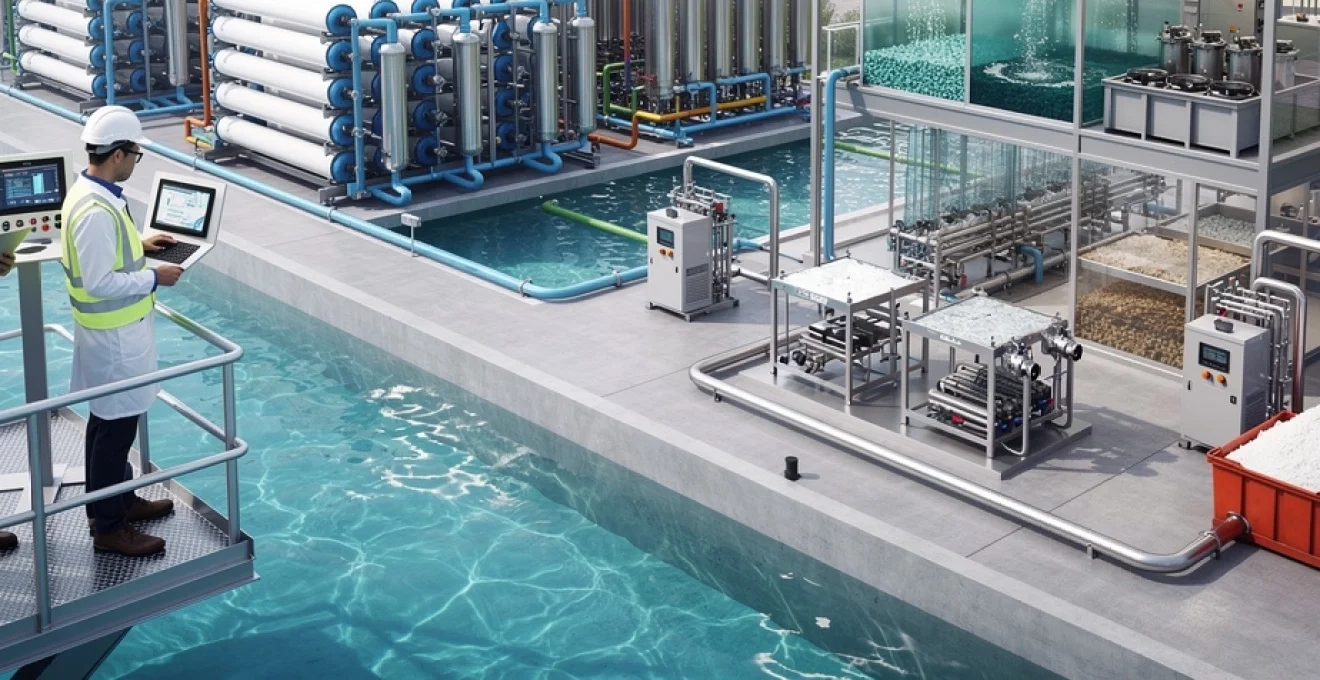
Industrial water consumption has quadrupled over the past five decades, with manufacturing sectors now accounting for approximately 20% of global freshwater usage. As climate change intensifies water scarcity and environmental regulations become increasingly stringent, industrial facilities face mounting pressure to implement sustainable water management practices that balance operational efficiency with environmental responsibility. Modern water treatment technologies have evolved to meet these challenges, offering innovative solutions that not only reduce environmental impact but also deliver substantial cost savings and operational benefits.
The shift towards sustainable industrial water management represents more than regulatory compliance—it’s becoming a cornerstone of competitive advantage. Companies implementing advanced water treatment systems report significant reductions in operational costs, improved product quality, and enhanced supply chain resilience. These technologies enable industries to transform wastewater from a disposal problem into a valuable resource, creating circular water economies that support long-term business sustainability.
Advanced membrane filtration technologies in industrial water treatment systems
Membrane filtration technologies have revolutionised industrial water treatment by providing precise, chemical-free separation processes that deliver consistent water quality whilst minimising environmental impact. These systems operate on the principle of selective permeability, allowing water molecules to pass through whilst retaining contaminants, dissolved solids, and other unwanted substances. The technology’s effectiveness stems from its ability to provide multiple barriers against contamination, ensuring treated water meets stringent quality standards across diverse industrial applications.
The versatility of membrane systems makes them particularly valuable in industries requiring ultra-pure water or dealing with complex wastewater compositions. Unlike traditional chemical treatment methods, membrane filtration operates without adding chemicals to the water stream, eliminating concerns about secondary contamination and reducing the environmental footprint of treatment processes. This chemical-free approach aligns perfectly with sustainability objectives whilst maintaining operational reliability and cost-effectiveness.
Reverse osmosis applications in pharmaceutical manufacturing facilities
Pharmaceutical manufacturing demands exceptionally pure water for drug formulation, equipment cleaning, and process operations. Reverse osmosis systems in pharmaceutical facilities typically achieve water purity levels exceeding 99.9%, removing dissolved salts, organic compounds, and microbial contaminants that could compromise product quality or patient safety. These systems operate under high pressure, forcing water molecules through semi-permeable membranes whilst retaining virtually all contaminants.
Modern pharmaceutical RO systems incorporate advanced monitoring technologies that provide real-time feedback on water quality parameters, ensuring consistent compliance with regulatory standards. The technology’s ability to operate continuously with minimal maintenance requirements makes it ideal for pharmaceutical environments where production interruptions can result in significant financial losses and regulatory complications.
Ultrafiltration processes for food and beverage production lines
Food and beverage manufacturers utilise ultrafiltration systems to remove bacteria, viruses, and suspended particles whilst preserving essential minerals and flavour compounds. This selective separation capability makes ultrafiltration particularly valuable in dairy processing, where it concentrates proteins and removes lactose without affecting nutritional quality. The technology operates at relatively low pressures compared to reverse osmosis, reducing energy consumption and operational costs.
Ultrafiltration systems in food production environments demonstrate exceptional reliability and cleanability, meeting strict hygiene standards required in food processing. The technology’s ability to handle varying feed water conditions makes it adaptable to seasonal changes in raw material quality, ensuring consistent product standards throughout the year.
Nanofiltration solutions for chemical industry wastewater management
Chemical manufacturers employ nanofiltration technology to selectively separate specific compounds from wastewater streams, enabling resource recovery and environmental compliance. This technology excels at removing divalent ions and larger organic molecules whilst allowing monovalent salts to pass through, creating opportunities for valuable material recovery. Nanofiltration systems typically operate at moderate pressures, balancing separation efficiency with energy consumption.
The selective permeability of nanofiltration membranes makes them particularly effective for treating complex chemical wastewater containing multiple contaminants. By recovering valuable chemicals that would otherwise be lost to waste streams, these systems transform waste treatment from a cost centre into a resource recovery operation that contributes to overall production efficiency.
Microfiltration systems in semiconductor manufacturing operations
Semiconductor fabrication requires ultra-pure water free from particles larger than 0.1 microns, making microfiltration an essential component of water
distribution systems. Even microscopic particles or trace organic residues can cause defects on wafers, so microfiltration units are typically installed as polishing steps within ultra-pure water (UPW) production trains. These systems use membranes with pore sizes in the 0.1–1.0 micron range to remove fine particulates, colloids, and some microorganisms before water comes into contact with sensitive process equipment.
In practice, microfiltration in semiconductor manufacturing is often combined with other advanced water treatment solutions such as reverse osmosis, ion exchange, and degassing to achieve parts-per-trillion impurity levels. Automated integrity testing, continuous particle monitoring, and periodic membrane replacement schedules help ensure that filtration performance remains consistent over time. By safeguarding process water quality, microfiltration reduces yield losses, minimises downtime, and supports more sustainable industrial activity by lowering the volume of wafers rejected due to contamination.
Biological treatment processes for industrial effluent remediation
Whilst membrane filtration focuses on physical separation, biological treatment processes harness naturally occurring microorganisms to break down organic pollutants in industrial wastewater. These systems convert complex contaminants into simpler, less harmful substances such as carbon dioxide, water, and biomass. For industries aiming to improve sustainability, biological treatment offers a powerful way to reduce chemical usage, cut greenhouse gas emissions, and meet tightening discharge limits without relying solely on energy-intensive processes.
Biological wastewater treatment is particularly effective for effluents with high biochemical oxygen demand (BOD) or chemical oxygen demand (COD), such as those from textiles, petrochemicals, pulp and paper, and food processing. When designed and operated correctly, these processes can achieve high removal efficiencies whilst generating biogas or reusable sludge as valuable by-products. The result is an integrated approach to industrial effluent remediation that supports circular water management and long-term resource efficiency.
Activated sludge systems in textile industry wastewater treatment
Textile manufacturing generates wastewater streams loaded with dyes, surfactants, sizing agents, and other organic chemicals that can be difficult to treat using conventional methods alone. Activated sludge systems use suspended microbial communities to metabolise these contaminants, converting them into stable end products and reducing overall pollutant load. Aeration tanks supply oxygen to support microbial activity, while secondary clarifiers separate treated water from biological sludge.
In many textile facilities, activated sludge processes are combined with equalisation tanks, pH adjustment, and chemical coagulation to handle variable loads and colour removal. Operators can optimise aeration rates, sludge age, and nutrient dosing to improve process stability and energy efficiency. By implementing well-managed activated sludge systems, textile plants can reduce discharge fees, avoid regulatory penalties, and enhance their environmental profile in a sector facing increasing scrutiny over water use and pollution.
Membrane bioreactor technology for petrochemical discharge processing
Petrochemical effluents often contain a complex mix of dissolved organics, surfactants, and trace hydrocarbons that require advanced treatment to meet regulatory standards. Membrane bioreactor (MBR) systems combine the biological degradation of conventional activated sludge with membrane filtration for biomass separation. Instead of relying on gravity settling, MBRs use microfiltration or ultrafiltration membranes to retain nearly all biomass within the bioreactor, achieving higher mixed liquor concentrations and superior effluent quality.
This integrated approach offers several advantages for petrochemical discharge processing. MBRs provide a smaller footprint than conventional systems, produce low-turbidity, low-BOD effluent suitable for reuse, and offer improved resilience to load fluctuations. With proper pretreatment to remove oils and heavy solids, MBR technology can support high levels of water recycling in refinery and petrochemical complexes, reducing freshwater abstraction and supporting more sustainable water treatment solutions in water-stressed regions.
Anaerobic digestion methods for pulp and paper mill effluents
Pulp and paper mills generate high-strength wastewater rich in biodegradable organic matter, making them ideal candidates for anaerobic digestion. Unlike aerobic systems, anaerobic digesters operate in the absence of oxygen, using specialised microorganisms to break down organics and produce biogas—a mixture of methane and carbon dioxide—that can be used as a renewable energy source. This transforms industrial wastewater from a liability into a resource that supports on-site energy generation.
Anaerobic technologies such as upflow anaerobic sludge blanket (UASB) reactors or anaerobic membrane bioreactors (AnMBRs) can significantly reduce COD levels while cutting aeration energy requirements. The recovered biogas can help power plant operations, offsetting fossil fuel use and lowering carbon emissions. When coupled with polishing steps such as aerobic treatment or membrane filtration, anaerobic digestion enables pulp and paper mills to meet strict discharge requirements while supporting a circular water and energy economy.
Moving bed biofilm reactor applications in steel production facilities
Steel production facilities typically generate complex wastewater containing oils, suspended solids, and dissolved organics from processes such as coking, pickling, and rolling. Moving bed biofilm reactors (MBBRs) provide a robust biological treatment option by combining the benefits of attached and suspended growth systems. Plastic carriers with high surface area move freely within aerated tanks, providing a stable habitat for biofilms that degrade organic contaminants.
MBBR systems are particularly well suited to steel industry wastewater because they tolerate shock loads and variable flows better than many traditional biological processes. They also offer a compact footprint, making them easier to retrofit into existing plants with limited space. By integrating MBBRs with oil separation, sedimentation, and tertiary filtration, steel producers can achieve high levels of pollutant removal, increase process water reuse, and improve overall water efficiency across their operations.
Chemical precipitation and coagulation techniques for heavy metal removal
Many industrial sectors—including mining, metal finishing, electronics, and battery manufacturing—produce effluents containing heavy metals such as lead, cadmium, chromium, and nickel. Because these substances are toxic even at low concentrations and tend to persist in the environment, their removal is a critical component of sustainable water treatment solutions. Chemical precipitation and coagulation processes remain among the most widely used methods for heavy metal removal due to their effectiveness, relatively low cost, and operational simplicity.
In chemical precipitation, reagents such as lime, sodium hydroxide, or sulfides are added to wastewater to convert dissolved metals into insoluble compounds that can be separated by sedimentation or filtration. Coagulation and flocculation agents—often iron or aluminium-based salts and polymers—are then used to aggregate fine particles into larger flocs, improving solid–liquid separation. When carefully controlled, these processes can reduce metal concentrations to meet stringent discharge limits or prepare water for further polishing by membranes or ion exchange.
From a sustainability perspective, the challenge lies in optimising chemical dosing to minimise sludge production and reagent consumption. Digital monitoring tools, real-time pH control, and jar testing protocols can help you fine-tune treatment conditions and avoid overdosing. In some cases, recovered metal-rich sludge can be processed for metal recovery or safe reuse, turning what was once a hazardous waste into a potential secondary resource and supporting a more circular industrial water management strategy.
Ion exchange resins and electrochemical treatment methods
As industries push towards higher levels of water reuse and stricter discharge standards, ion exchange resins and electrochemical treatment methods are becoming increasingly important components of advanced industrial water treatment systems. Ion exchange uses synthetic resins to selectively remove dissolved ions from water, replacing them with less problematic species such as hydrogen or sodium. Electrochemical methods, on the other hand, use electrical currents to destabilise contaminants, induce coagulation, or release gases that aid in flotation and separation.
These technologies are particularly valuable where conventional treatment struggles—such as in high-salinity waste streams, complex metal mixtures, or applications requiring ultra-low contaminant levels. When integrated into multi-barrier treatment trains alongside membrane filtration and biological processes, ion exchange and electrochemical solutions can help you close water loops, reduce waste volumes, and recover valuable materials from industrial effluents. The result is a more resilient, efficient, and sustainable approach to managing industrial water.
Cation exchange systems for mining industry water recovery
The mining industry faces a dual challenge: managing large volumes of metal-laden water while operating in regions often characterised by water scarcity. Cation exchange systems use resins loaded with exchangeable ions to capture dissolved metals such as copper, zinc, and nickel from process water and mine drainage. Once the resin reaches capacity, it is regenerated with a suitable solution, releasing a concentrated metal stream that can be processed for metal recovery or safely managed.
By integrating cation exchange units into existing treatment trains, mining operations can significantly improve water recovery rates and reduce reliance on fresh water sources. In many cases, treated water can be reused for dust suppression, ore processing, or equipment washing, lowering both operational costs and environmental impact. Additionally, selective resins allow for targeted recovery of high-value metals, turning wastewater into a source of secondary raw materials and supporting more sustainable resource use across the mining value chain.
Electrocoagulation processes in automotive manufacturing wastewater
Automotive manufacturing generates complex wastewater streams containing oils, paints, heavy metals, and surfactants from processes such as painting, coating, and parts washing. Electrocoagulation (EC) offers a compact, chemical-saving solution by using sacrificial metal electrodes—typically aluminium or iron—through which an electric current is passed. As the electrodes dissolve, they release coagulant species in situ, destabilising emulsions and suspended solids without the need for large volumes of chemical coagulants.
EC systems can achieve high removal efficiencies for colour, metals, oils, and organic matter, often producing sludge that is easier to dewater than that from traditional coagulation. Automated control of current density, flow rate, and electrode spacing allows you to tailor performance to variable wastewater characteristics. When combined with downstream filtration or flotation, electrocoagulation helps automotive plants meet strict discharge limits, improve water reuse in paint shops, and reduce their overall chemical footprint.
Electroflotation applications for oil and gas production water treatment
Produced water from oil and gas operations typically contains dispersed oil droplets, suspended solids, and dissolved gases that must be removed before reuse or discharge. Electroflotation, closely related to electrocoagulation, generates fine gas bubbles directly in the water using electrically driven reactions at electrodes. These microbubbles attach to oil droplets and suspended particles, causing them to rise to the surface where they can be skimmed off as a concentrated sludge.
Compared with conventional dissolved air flotation, electroflotation can produce smaller, more uniform bubbles, improving separation efficiency—especially for very fine oil droplets. It also reduces the need for external gas supply and can be combined with electrocoagulation for simultaneous destabilisation and flotation. For operators seeking more sustainable water treatment solutions in oil and gas production, electroflotation supports higher levels of produced water reuse, lowers chemical consumption, and helps mitigate the environmental impact of offshore and onshore discharges.
Zero liquid discharge systems and circular water economy implementation
As regulatory requirements tighten and water scarcity intensifies, more industrial facilities are exploring zero liquid discharge (ZLD) and minimum liquid discharge (MLD) approaches. ZLD systems aim to eliminate liquid effluent entirely, recovering clean water for reuse and converting dissolved solids into a dry, manageable residue. Whilst historically associated with energy-intensive thermal evaporators and crystallisers, modern ZLD increasingly relies on high-recovery membrane processes, advanced pre-treatment, and smart system integration to reduce energy consumption and capital costs.
In practice, ZLD and MLD solutions often combine multiple stages: primary treatment and softening, high-efficiency reverse osmosis, nanofiltration for selective salt removal, and final concentration using brine concentrators or thermal units. By progressively increasing recovery at each stage, industries can reduce the volume of brine requiring expensive thermal treatment by 50–75%, significantly lowering operational costs. This stepwise approach supports a more circular water economy, where each litre of water is used multiple times before final discharge or solidification.
Beyond water recovery, advanced ZLD strategies also focus on resource recovery from concentrated brines. Salts such as sodium chloride, sodium sulfate, and ammonium sulfate can be separated and reused in industrial processes or sold as by-products, turning waste streams into additional revenue sources. For example, cooling tower blowdown from power plants can be treated using high-recovery membranes, ion exchange, and selective precipitation to recover both water and reusable chemicals. By designing ZLD systems with resource recovery in mind, you create a more resilient and economically attractive water management strategy aligned with circular economy principles.
Of course, ZLD is not the right solution for every facility. It requires careful feasibility assessment, robust pretreatment to protect downstream units, and sophisticated monitoring to maintain system performance. However, in sectors such as power generation, chemicals, and mining—especially in highly regulated or water-stressed regions—ZLD and MLD can provide a critical competitive advantage. Integrating these systems into broader sustainability roadmaps helps industries demonstrate leadership on water stewardship, reduce long-term regulatory risk, and secure reliable water supplies for future growth.
Real-time monitoring technologies and industry 4.0 integration in water treatment
Delivering sustainable industrial water treatment is no longer just about hardware; it is increasingly about data. Real-time monitoring technologies and Industry 4.0 integration allow operators to move from reactive troubleshooting to proactive, predictive management of water treatment assets. Sensors tracking key parameters—such as turbidity, pH, conductivity, TOC, flow rates, and membrane differential pressures—feed continuous data streams into central platforms where advanced analytics and machine learning can identify anomalies, optimise dosing, and predict maintenance needs.
Digital water treatment solutions function much like a “control tower” for your industrial water cycle, offering a single view of plant performance across multiple units and sites. Cloud-based dashboards, automated alerts, and digital twins enable operators to test process changes virtually before implementing them in the field, reducing risk and improving decision-making. By using these tools to fine-tune aeration energy in biological reactors, optimise chemical usage in coagulation, or maximise recovery in reverse osmosis systems, you can significantly cut operating costs while lowering energy use and greenhouse gas emissions.
Industry 4.0 integration also supports better compliance and reporting. Automated data logging and report generation simplify environmental audits and help demonstrate adherence to discharge permits and corporate sustainability targets. In addition, remote monitoring capabilities allow specialist teams to support multiple sites, improving knowledge transfer and reducing the need for frequent site visits. For companies operating in regions with unstable water quality or infrastructure, this level of digital oversight can be the difference between unplanned shutdowns and resilient, continuous production.
Looking ahead, the convergence of artificial intelligence, edge computing, and advanced sensors will further transform how industrial water treatment systems are designed and operated. Imagine treatment plants that automatically adjust membrane backwash cycles based on fouling trends, or bioreactors that tune aeration in real time to changing loads—much like a car’s cruise control adapts to the road. By embracing these technologies today, you position your organisation to make smarter use of every drop of water, strengthen operational resilience, and contribute meaningfully to a more sustainable industrial future.