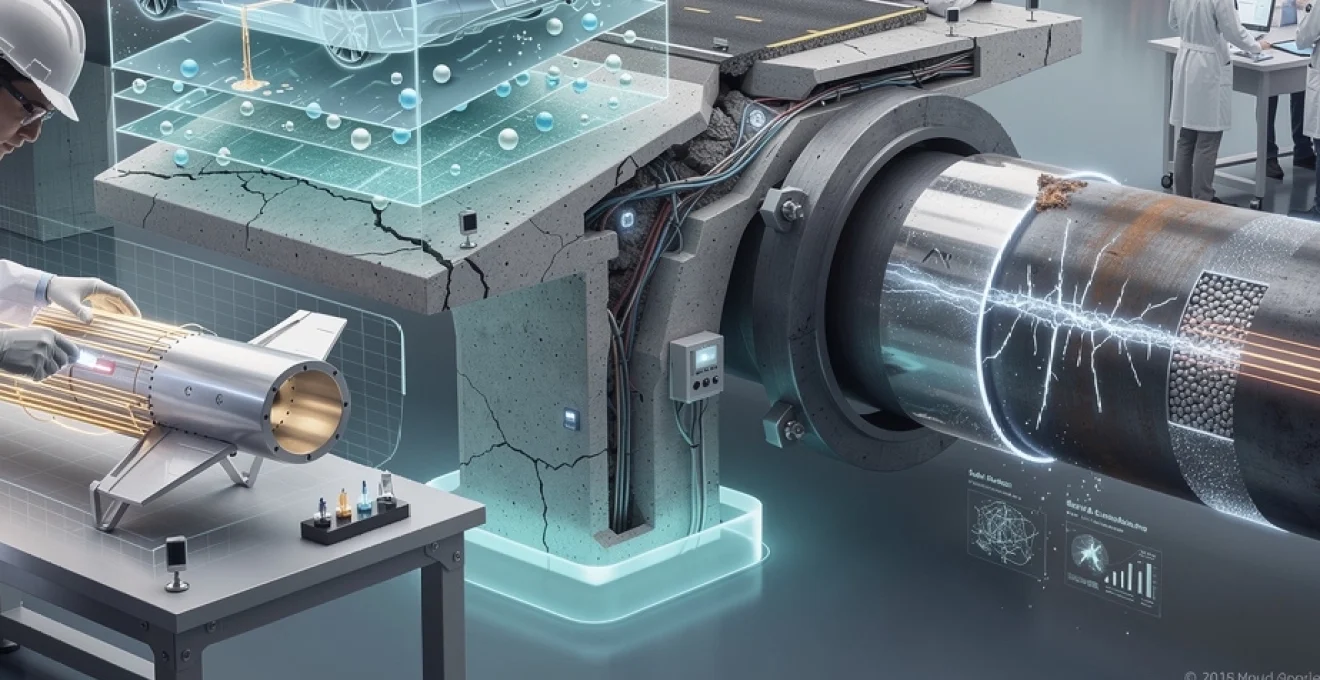
Manufacturing industries worldwide are experiencing a transformative shift towards materials that can autonomously repair damage, extending operational lifespans and reducing maintenance costs. Self-healing materials represent a revolutionary approach to engineering challenges, incorporating biological-inspired mechanisms that enable spontaneous restoration of material integrity. These advanced materials systems are moving beyond laboratory curiosities to become practical solutions for aerospace, automotive, construction, and electronics sectors.
The global self-healing materials market has demonstrated remarkable growth, with industry analysts projecting a compound annual growth rate exceeding 9% through 2029. This expansion reflects increasing recognition of the economic benefits derived from reduced maintenance intervals, enhanced component reliability, and improved sustainability metrics. Industrial applications are driving demand for materials that can address micro-damage before it progresses to catastrophic failure.
Shape memory alloys and Polymer-Based Self-Healing mechanisms in manufacturing
Shape memory alloys and advanced polymer systems form the backbone of contemporary self-healing technology implementations across manufacturing sectors. These materials leverage thermodynamically reversible processes to restore original configurations following deformation or damage events. The integration of these systems into manufacturing workflows represents a significant advancement in material science applications.
Nitinol wire integration in aerospace component manufacturing
Nitinol, a nickel-titanium alloy, demonstrates exceptional shape memory properties that enable aerospace components to recover from deformation automatically. When heated above its transformation temperature, nitinol returns to its pre-programmed shape, effectively “healing” structural alterations. Aerospace manufacturers are incorporating nitinol actuators into wing morphing systems, where the material’s ability to change shape provides both aerodynamic benefits and self-repair capabilities.
Recent developments in nitinol processing have enabled the production of ultra-thin wires suitable for embedding within composite structures. These embedded systems can detect stress concentrations and activate healing responses through localised heating mechanisms. The material’s biocompatibility also makes it valuable for aerospace applications where human safety is paramount, such as in cabin pressure regulation systems.
Thermoplastic polyurethane microcapsule systems for automotive applications
Thermoplastic polyurethane (TPU) microcapsule systems represent a significant advancement in extrinsic self-healing technology for automotive applications. These systems consist of healing agents encapsulated within polymer shells that rupture upon mechanical damage, releasing reactive compounds that polymerise to fill cracks and restore material properties. Automotive manufacturers are implementing TPU-based systems in paint coatings, bumper assemblies, and interior components.
The automotive industry has reported up to 80% reduction in minor scratch visibility when using TPU microcapsule systems in exterior coatings. These systems activate at temperatures commonly encountered during vehicle operation, ensuring that healing occurs naturally during normal use. The encapsulation technology has evolved to include multiple healing agents, enabling repeated repair cycles throughout the component’s service life.
Diels-alder reaction networks in composite material restoration
Diels-Alder reaction networks provide a thermally reversible healing mechanism particularly suited to composite material applications. This chemistry enables the formation and reformation of covalent bonds through cycloaddition reactions, allowing materials to heal multiple times when subjected to appropriate thermal cycling. The reaction operates efficiently at moderate temperatures, making it practical for industrial implementation.
Composite manufacturers have successfully demonstrated Diels-Alder healing in carbon fibre reinforced plastics used for automotive body panels and aerospace structures. The healing efficiency typically ranges from 60-90% of original mechanical properties, depending on damage severity and healing conditions. Research indicates that materials incorporating Diels-Alder networks can undergo multiple healing cycles without significant degradation in performance.
Supramolecular polymer chains for reversible bond formation
Supramolecular polymer systems utilise non-covalent interactions such as hydrogen bonding, π-π stacking, and electrostatic forces to create reversible network structures. These systems offer unique advantages in manufacturing applications where flexibility and processability are critical requirements. The reversible nature of supramolecular bonds enables materials to flow and reform under stress, providing both self-healing capabilities and enhanced toughness.
Manufacturing processes have been developed to incorporate supramolecular healing agents into thermoplastic matrices, creating materials that can
Manufacturing processes have been developed to incorporate supramolecular healing agents into thermoplastic matrices, creating materials that can repeatedly dissipate and recover from stress without permanent deformation. In industrial environments, these supramolecular polymer chains behave like a network of tiny Velcro fasteners that unhook under load and reattach when the stress is removed or when mild heat is applied. This mechanism is particularly valuable in flexible electronics, soft robotics components, and impact-resistant housings that experience frequent bending or vibration. Early commercial deployments show that supramolecular self-healing systems can restore up to 95% of tensile strength after minor damage, while maintaining good processability in standard extrusion and injection moulding lines.
Concrete infrastructure applications using encapsulated healing agents
Concrete infrastructure is a prime candidate for self-healing materials, given the high cost of inspection, repair, and downtime associated with bridges, tunnels, dams, and high-rise structures. Microcracks that initially appear benign can gradually propagate, enabling water ingress, corrosion of reinforcement, and eventual structural degradation. Self-healing concrete technologies aim to intervene at the microcrack stage, sealing pathways before deterioration accelerates. By embedding biological or chemical healing agents within the cementitious matrix, engineers can significantly extend service life while reducing lifecycle maintenance costs.
Calcium carbonate precipitation through bacillus pasteurii bacteria
One of the most widely researched approaches to self-healing concrete involves the use of calcite-precipitating bacteria such as Bacillus pasteurii. These bacteria, or their spores, are encapsulated within protective carriers and added to the concrete mix along with a nutrient source. When cracks form and water penetrates the structure, the bacteria become active, metabolising the nutrients and producing calcium carbonate that deposits within the crack. Over time, this mineral precipitation effectively seals the crack and restores watertightness.
Field trials have shown that bacteria-based self-healing concrete can autonomously close cracks up to 0.8 mm wide, significantly reducing permeability and corrosion risk. For asset owners, this translates into fewer emergency repairs and extended inspection intervals, especially in marine or de-icing-salt environments. However, we must also consider practical constraints such as bacterial survival during mixing, long-term viability in alkaline concrete, and regulatory acceptance for large-scale infrastructure. To address these challenges, current research focuses on optimised capsule formulations, improved spore stability, and standardised testing protocols for biological self-healing systems.
Polyurethane microcapsule embedment in portland cement matrix
Chemical encapsulation offers an alternative, fully inorganic-compatible route to self-healing concrete. In this approach, polyurethane or epoxy-based healing agents are encapsulated in polymer shells and dispersed throughout the Portland cement matrix. When mechanical loading induces cracking, the propagating fissures rupture nearby microcapsules, releasing the liquid healing agent into the damaged zone. Upon contact with moisture or a curing agent, the polymer solidifies, bonding crack faces and restoring mechanical continuity.
Laboratory studies indicate that microcapsule-based self-healing concrete can recover 50–80% of its original flexural strength after a damage-healing cycle, depending on capsule size, loading, and healing agent chemistry. The system behaves somewhat like a network of tiny repair kits pre-installed in the structure, activated only when and where they are needed. From an industrial perspective, polyurethane microcapsules can be integrated into existing batching and mixing operations with minimal equipment changes, although quality control of capsule dispersion and survivability during mixing remains critical. As we look toward commercial deployment, standardising capsule content (typically 5–10% by cement weight) and demonstrating long-term durability under cyclic loading are key milestones.
Crystalline admixture technology for crack sealing performance
Crystalline admixture technology represents a more mature and commercially established form of self-healing for concrete structures exposed to water. These admixtures contain proprietary blends of reactive chemicals that, when triggered by moisture ingress, form insoluble needle-like crystals within pores and microcracks. Unlike discrete capsules, crystalline systems rely on diffusion-driven reactions that continue as long as water is present and unreacted chemicals remain in the matrix.
Infrastructure owners value crystalline admixtures for their ability to provide ongoing autogenous crack sealing, particularly in water-retaining structures such as basements, tunnels, and reservoirs. Crack widths of up to 0.4 mm can often be sealed repeatedly over the life of the structure, improving watertightness and reducing the need for external membranes or coatings. From a practical standpoint, crystalline admixtures are dosed much like conventional chemical admixtures and are compatible with standard ready-mix and precast workflows. The main considerations for specifiers include verifying performance under specific exposure classes and ensuring that self-healing behaviour is properly reflected in durability design models.
Fibre-reinforced polymer integration with self-healing concrete systems
Combining self-healing concrete with fibre-reinforced polymers (FRPs) opens up new possibilities for durable, lightweight infrastructure. FRP bars and grids, often based on glass, carbon, or basalt fibres in a polymer matrix, provide corrosion-resistant reinforcement that complements the crack control and healing capabilities of advanced cementitious systems. When designed correctly, fibres in the concrete and FRP reinforcement work together to limit crack widths, keeping them within the effective range of biological, crystalline, or encapsulated healing mechanisms.
Engineers are also exploring hybrid systems where FRP laminates or textile reinforcements incorporate their own self-healing chemistries—such as Diels-Alder networks or microcapsule-filled resins—bonded to self-healing concrete substrates. This multi-layer approach aims to prevent both surface spalling and deeper structural damage, especially in seismic or fatigue-prone environments. While design codes are still evolving, early pilot projects indicate that FRP-integrated self-healing concrete can reduce whole-life costs even if initial material expenses are higher. The key question for asset managers becomes not “What is the cheapest mix today?” but “What system offers the lowest cost per year of reliable service?”
Coating technologies and surface protection systems
Beyond bulk materials, self-healing coatings and surface protection systems are gaining traction as first-line defences against corrosion, abrasion, and environmental attack. In many industrial assets—from offshore platforms to storage tanks and marine vessels—the coating is the only barrier between aggressive environments and high-value substrates. Self-healing coatings are engineered to close microdefects, re-passivate exposed metal, or release corrosion inhibitors when damage occurs, thereby extending maintenance intervals and improving asset availability.
Zinc-rich primer coatings with corrosion-activated healing
Zinc-rich primers have long been used as sacrificial coatings to protect steel structures through galvanic action. Recent innovations enhance this traditional protection mechanism with corrosion-activated self-healing behaviour. By incorporating zinc particles with tailored morphology and, in some formulations, microencapsulated inhibitors, these primers can not only provide cathodic protection but also actively promote reformation of protective layers at damaged sites. When a scratch exposes bare steel, corrosion products and released inhibitors work together to rebuild a barrier, slowing further degradation.
Industries such as offshore wind, petrochemicals, and transport infrastructure are already specifying advanced zinc-rich self-healing primers for critical assets exposed to salt spray and cyclic wet–dry conditions. The performance benefits—often quantified as extended time to first maintenance in accelerated corrosion tests—translate directly into reduced scaffolding, labour, and downtime costs. For coating applicators, the key advantage is that these systems can typically be applied using familiar spray or roller techniques, while still meeting rigorous ISO and NACE corrosion protection standards.
Epoxy-based microcapsule dispersions for marine applications
Marine environments present an unforgiving combination of saltwater, UV exposure, mechanical impact, and biofouling. Epoxy-based coatings reinforced with self-healing microcapsule dispersions are emerging as a robust solution for ship hulls, offshore structures, and subsea components. In these systems, microcapsules loaded with epoxy monomers, curing agents, or corrosion inhibitors are dispersed throughout the coating matrix. When mechanical damage occurs—such as a scratch from floating debris—the crack ruptures the capsules, releasing their contents to polymerise and fill the defect.
Testing in salt-fog chambers and real-world trials has shown that self-healing epoxy coatings can dramatically slow underfilm corrosion spread compared with conventional systems. In some cases, coatings maintain adhesion and barrier properties even after multiple damage-healing cycles, which is crucial for assets where dry-docking or recoating windows are limited. You can think of this mechanism as a built-in “touch-up kit” that activates on demand, helping operators maintain integrity between planned maintenance campaigns. Adoption decisions typically weigh the incremental coating cost against fuel savings from smoother hulls and reduced corrosion-related steel replacement.
Sol-gel derived silica coatings with embedded inhibitor release
Sol-gel derived silica coatings, often only a few micrometres thick, are increasingly used as multifunctional barrier layers on metals and alloys. By incorporating organic or inorganic corrosion inhibitors into the porous silica network, formulators can create smart coatings that release protective species when local pH or potential changes signal the onset of corrosion. The sol-gel matrix gradually reorganises, sealing pores and stabilising the inhibitor at the metal–coating interface.
These thin-film self-healing coatings are particularly attractive for aerospace, electronics enclosures, and high-value aluminium components where weight, precision, and appearance matter. Unlike thick organic paints, sol-gel coatings can provide excellent adhesion and compatibility with subsequent topcoats or adhesives. However, achieving the right balance between permeability (to enable inhibitor migration) and barrier properties remains a design challenge. Industrial users typically validate performance using electrochemical impedance spectroscopy and accelerated environmental exposure tests before approving sol-gel systems for mission-critical applications.
Polyelectrolyte multilayer films for anti-corrosion protection
Polyelectrolyte multilayer (PEM) films, assembled via layer-by-layer deposition of oppositely charged polymers, offer a highly tunable platform for self-healing anti-corrosion coatings. By embedding corrosion inhibitors, nanoparticles, or responsive groups within selected layers, engineers can program the film to release protective agents when triggered by pH shifts, chloride ingress, or mechanical disruption. The nanometre-scale structure of PEMs allows precise control over diffusion pathways and mechanical properties.
In industrial practice, PEM-based self-healing films are being evaluated as primers or interlayers on steel, magnesium, and aluminium substrates, particularly where traditional chromate-based systems are being phased out for environmental reasons. One useful analogy is to think of these films as “onion-like” structures, where each layer has a specific function—adhesion, sensing, inhibitor storage, or barrier enhancement. Scaling layer-by-layer techniques to large components remains a challenge, but advances in spray-assisted deposition and roll-to-roll processing are making industrial deployment more feasible, especially for smaller parts and electronic housings.
Electronics and semiconductor self-repair technologies
In electronics and semiconductor manufacturing, self-healing materials address a very different set of failure modes compared with bulk structures: microcracks in interconnects, dielectric breakdown, delamination of encapsulants, and fatigue in flexible substrates. As devices become thinner, more powerful, and more flexible, even tiny defects can compromise performance or safety. Self-repair technologies in this domain focus on restoring electrical continuity, maintaining insulation, and preserving mechanical integrity under repeated bending and thermal cycling.
Conductive polymer composites with microencapsulated liquid metals are one promising avenue for self-healing interconnects and printed traces. When a circuit line fractures, the capsules rupture and release conductive fluid that bridges the gap, restoring functionality in a manner analogous to how blood clots seal a wound. Research prototypes have demonstrated near-instantaneous recovery of conductivity after damage, which is particularly attractive for wearable electronics and soft robotics where continuous motion is expected. The main industrial questions revolve around long-term stability of the liquid metal, compatibility with standard PCB processes, and ensuring that healing events do not short unintended regions.
In semiconductor packaging and passivation layers, supramolecular polymers and ionogels with reversible bonding are being explored to mitigate cracking and delamination. These materials can relax local stress concentrations and heal microfissures when activated by modest temperature increases, such as those experienced during normal device operation. For example, self-healing dielectric layers in capacitors and transistors can “self-clear” after minor breakdown events, limiting further damage and prolonging component life. As we push towards 3D integration and heterogeneous packaging, these self-repair layers become an important design tool to manage thermo-mechanical mismatch.
Another active area is self-healing electrolytes and solid polymer conductors for energy storage devices integrated into electronics, such as thin-film batteries and supercapacitors. Here, intrinsic self-healing polymers based on dynamic covalent bonds or hydrogen bonding can repair microcracks caused by volume changes during charge–discharge cycles. This not only improves safety by reducing the risk of short circuits but also enhances cycle life, which is critical for consumer electronics expected to last several years without significant capacity fade. For manufacturers, integrating self-healing functionalities at the materials level can reduce warranty claims and enable more aggressive design envelopes for high-energy-density systems.
Pipeline and oil industry self-healing implementations
Pipelines, storage tanks, and downhole equipment in the oil and gas industry operate in harsh environments where corrosion, erosion, and mechanical damage are persistent threats. Failures in these systems carry high economic and environmental costs, making them prime candidates for self-healing material strategies. Implementations range from internal coating systems that seal microdefects to cementitious wellbore materials that autonomously close leaks and prevent fluid migration.
Self-healing epoxy and polyurethane coatings for pipelines often employ microcapsules or vascular networks containing corrosion inhibitors or polymerisable resins. When the coating is breached, the healing agents are released, forming a new barrier or re-passivating exposed steel. In buried pipelines where access is difficult, this autonomous repair capability can act as a safety net between in-line inspection intervals, slowing defect growth until planned maintenance can occur. Operators evaluating these systems typically model the impact on failure probability and expected inspection frequency, looking for a favourable balance between coating cost and reduced risk.
In well cementing, self-healing additives are added to the cement slurry to combat issues such as micro-annuli formation, gas migration, and long-term integrity loss. These additives may include swellable polymers, crystalline agents, or encapsulated resins that respond to the presence of hydrocarbons, CO2, or water. When a microchannel forms, the healing component activates—either by swelling to block the pathway or by generating solid phases that seal the leak. This behaviour can be likened to a gasket that automatically tightens whenever fluid attempts to escape.
For operators, the business case for self-healing well cements hinges on reducing remediation interventions, such as squeeze jobs or sidetracks, which are costly and disruptive. Regulatory bodies are also increasingly focused on long-term well integrity, particularly in mature fields and carbon capture and storage (CCS) projects, where leaks can undermine environmental goals. As a result, we see growing interest in qualification protocols and performance standards that specifically account for self-healing behaviour in downhole materials.
Economic viability and industrial scalability assessment
Across all these sectors, the central question is not whether self-healing materials work in principle—the science is well established—but whether they deliver economic value at industrial scale. A robust assessment considers not just material unit cost but the entire lifecycle of the asset: design, manufacturing, operation, maintenance, and end-of-life. Self-healing solutions typically carry a premium over conventional materials, yet they can reduce unplanned downtime, extend inspection intervals, and delay expensive replacements. When quantified properly, these benefits often outweigh the initial expenditure.
To evaluate economic viability, many organisations adopt a total cost of ownership (TCO) model that incorporates reliability data, failure probabilities, and maintenance strategies. For example, an automotive OEM might compare the cost of self-healing clear coats with the reduction in warranty claims for paint defects and improved residual vehicle values. Similarly, a bridge authority may justify self-healing concrete by modelling reduced frequency of deck repairs and traffic disruption. In each case, sensitivity analyses help identify which parameters—such as crack-healing efficiency or maximum healable damage size—most strongly influence the business case.
Industrial scalability is equally crucial. Even the most promising self-healing material will struggle in the market if it cannot be processed using existing equipment or if supply chains are fragile. Successful implementations therefore prioritise compatibility with standard manufacturing methods—extrusion, injection moulding, spraying, casting—while keeping additional steps, such as capsule incorporation or layer-by-layer deposition, as simple as possible. Close collaboration between material suppliers, equipment manufacturers, and end users accelerates this translation from lab to line.
Finally, we must not overlook regulatory, sustainability, and workforce considerations. Self-healing systems that rely on hazardous chemistries or scarce elements may face headwinds, while those that enable lower embodied carbon, fewer repair trips, and longer asset life support broader ESG goals. Training maintenance teams to understand how and when self-healing occurs is also important; they need to know which defects will repair autonomously and which still require intervention. As standards and best practices evolve, self-healing materials are likely to move from niche options to default choices in many high-value applications, reshaping how industries think about durability, risk, and long-term performance.