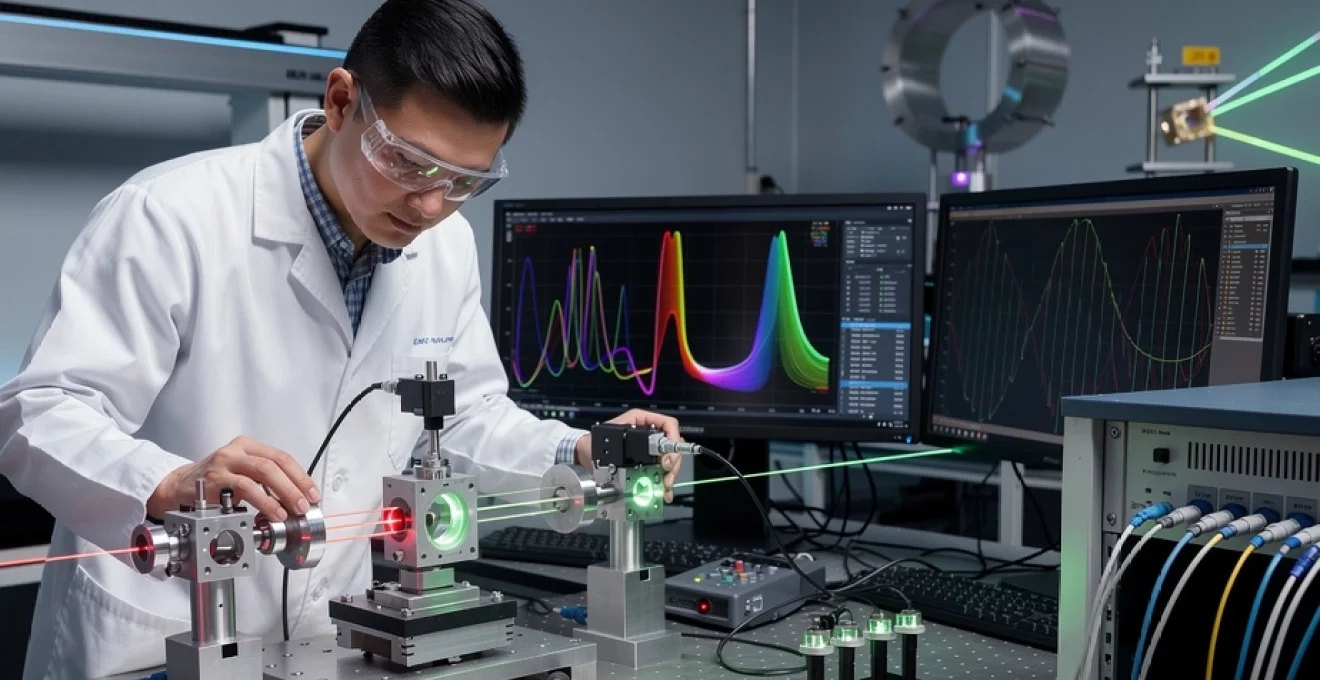
The field of optical sensing has witnessed remarkable breakthroughs that are fundamentally reshaping precision measurement capabilities across multiple industries. Recent developments in quantum sensing technologies have achieved unprecedented accuracy in detecting nanometre-scale displacements, revolutionising everything from gravitational wave detection to birefringent material characterisation. These advances represent a convergence of classical optical principles with cutting-edge quantum mechanics, enabling measurement precision that approaches theoretical limits imposed by nature itself.
Contemporary optical sensors now leverage sophisticated interferometric techniques, quantum entanglement, and advanced signal processing algorithms to deliver measurement capabilities that were previously unimaginable. The integration of quantum interference effects with practical sensing platforms has opened new frontiers in metrology, promising applications that extend from fundamental physics research to everyday industrial monitoring systems. This technological evolution is particularly significant as it maintains exceptional accuracy regardless of displacement magnitude, ensuring reliable tracking of changes over extended time periods.
Interferometric optical sensors: michelson and Fabry-Pérot configurations for Nanometre-Scale detection
Interferometric optical sensors represent the cornerstone of modern precision measurement technology, exploiting the wave nature of light to detect minute changes in path differences. These sophisticated instruments achieve extraordinary sensitivity by analysing interference patterns generated when coherent light beams traverse different optical paths. The fundamental principle underlying all interferometric sensors involves splitting a coherent light source into multiple beams, allowing these beams to travel through different environments or geometries, and then recombining them to create characteristic fringe patterns that reveal even the smallest physical changes.
Modern interferometric systems have evolved far beyond their historical predecessors, incorporating advanced laser sources with exceptional frequency stability and sophisticated detection arrays that can resolve phase changes corresponding to displacement measurements in the sub-nanometre range. The remarkable sensitivity of these instruments stems from their ability to convert mechanical displacements into optical phase changes, which can be measured with extraordinary precision using contemporary photodetection technology. This conversion process amplifies the measurement signal whilst maintaining the inherent stability of optical wavelengths as reference standards.
Michelson interferometer architecture in laser doppler vibrometry systems
Michelson interferometer configurations form the backbone of many high-precision vibrometry systems, offering exceptional versatility in measuring dynamic mechanical properties of materials and structures. These systems utilise the classic Michelson arrangement where a beam splitter divides incident laser light into two perpendicular paths: one directed towards a reference mirror and another towards the target surface under investigation. The reflected beams recombine at the beam splitter, creating interference patterns that directly correlate with surface displacement and velocity.
Contemporary laser Doppler vibrometry systems incorporate heterodyne detection techniques that enable simultaneous measurement of displacement amplitude and velocity with remarkable temporal resolution. The sensitivity of modern Michelson-based vibrometers can detect surface vibrations with amplitudes smaller than 0.1 nanometres across frequency ranges extending from near-DC to several megahertz. This extraordinary capability makes them invaluable for characterising everything from MEMS device dynamics to large-scale structural vibrations in aerospace applications.
Fabry-pérot cavity design optimisation for gravitational wave detection
Fabry-Pérot cavity configurations represent the ultimate evolution of interferometric sensing technology, particularly in gravitational wave detection applications where measurement sensitivity must approach quantum-limited performance. These resonant optical cavities employ multiple reflections between highly reflective mirrors to dramatically enhance the effective interaction length between light and gravitational wave-induced spacetime distortions. The cavity design process involves meticulous optimisation of mirror reflectivity, cavity length, and thermal noise characteristics to achieve the requisite sensitivity for detecting gravitational waves.
Advanced gravitational wave observatories utilise arm cavities extending several kilometres in length, with mirror reflectivities exceeding 99.999% to maximise optical gain. The extraordinary precision requirements for these systems demand mirror surface smoothness better than 1 angstrom RMS over the entire mirror surface, whilst maintaining mechanical isolation from seismic disturbances through sophisticated suspension systems. Recent developments in cavity design include the implementation of squeezed light injection to surpass the quantum shot-noise limit, representing a fundamental advancement in measurement science.
White light interferometry applications in surface roughness metrology
White light interferometry, also known as coherence scanning interferometry, has become a cornerstone technique for surface roughness metrology in both research and industrial environments. By using a broadband, low-coherence light source, these systems can resolve absolute height information without suffering from the 2π phase ambiguities that affect monochromatic interferometers. As the objective scans vertically over the sample, the system records interference fringes only when the optical path difference matches the short coherence length of the white light source. This enables precise three-dimensional topographical mapping of surfaces with sub-nanometre vertical resolution across fields of view spanning hundreds of micrometres.
In practical terms, white light interferometers are used to characterise surface roughness in applications ranging from precision optics to semiconductor wafers and additive manufacturing. The ability to generate full-field 3D maps in a matter of seconds makes them ideal for inline quality control, where high throughput and repeatability are critical. Modern instruments combine high numerical aperture objectives with advanced digital signal processing to extract height information from complex fringe envelopes, even on challenging surfaces with mixed reflectivity or steep slopes. For engineers tasked with ensuring surface quality, this combination of speed, accuracy, and non-contact operation is hard to match.
Phase-shifting interferometry algorithms for real-time displacement measurement
Phase-shifting interferometry (PSI) extends the capabilities of classical interferometric optical sensors by introducing controlled phase steps between interfering beams and numerically solving for the phase at each pixel. In many real-time displacement measurement systems, a piezoelectric transducer or electro-optic modulator introduces known phase shifts, typically in increments of π/2, across a sequence of interferograms. By applying well-established PSI algorithms to these frames, it becomes possible to reconstruct the underlying phase distribution with very high precision, effectively converting optical path differences into detailed displacement maps.
For high-speed applications, such as real-time monitoring of micro-electromechanical systems or dynamic surface deformations, optimised phase-shifting algorithms play a crucial role in maintaining measurement fidelity. Multi-step methods—three-step, four-step, or five-step PSI—offer different trade-offs between noise sensitivity, robustness to intensity fluctuations, and computational complexity. With modern digital signal processors and GPUs, these algorithms can run at kilohertz frame rates, allowing you to track nanometre-scale displacements as they evolve in time. This is particularly valuable when you need to capture transient events that would be missed by slower, static metrology techniques.
One of the central challenges in phase-shifting interferometry is mitigating errors due to phase-step miscalibration, vibration, and non-linearities in the modulation device. To address this, advanced PSI systems use self-calibrating algorithms that estimate the actual phase steps from the recorded data, significantly improving robustness in less-than-ideal environments. Researchers are also integrating machine learning approaches to detect and correct phase unwrapping errors, which can otherwise lead to artefacts in the reconstructed displacement fields. As a result, phase-shifting interferometry is increasingly suited for deployment outside controlled laboratories, in manufacturing lines or field environments where real-time optical displacement measurement offers a clear competitive advantage.
Fibre bragg grating sensors: wavelength-division multiplexing for distributed sensing networks
Fibre Bragg grating (FBG) sensors have transformed distributed sensing by using wavelength-encoded information to monitor strain, temperature, and other physical parameters along kilometres of optical fibre. Each FBG acts like a tiny, wavelength-selective mirror inscribed into the fibre core, reflecting a narrow band of wavelengths that shifts in response to mechanical deformation or thermal changes. By inscribing dozens—or even hundreds—of gratings with distinct Bragg wavelengths along a single fibre, engineers can implement powerful wavelength-division multiplexing (WDM) schemes for large-scale sensing networks. This makes FBG technology particularly attractive where traditional electrical sensors would be bulky, susceptible to electromagnetic interference, or impractical over long distances.
In a typical distributed FBG sensing network, a broadband optical source or swept-wavelength laser interrogates the fibre, and an optical spectrum analyser or dedicated interrogator tracks the reflected wavelengths from each grating. The resulting data stream provides a spatially resolved map of strain or temperature, which can be interpreted in real time to detect structural changes, localised hot spots, or incipient failures. Because FBGs are intrinsically lightweight, passive, and compatible with standard telecommunication fibres, they can be easily embedded within composite materials, bonded to metallic structures, or deployed in harsh environments such as offshore platforms and high-voltage substations. This combination of scalability and robustness explains why FBG-based optical sensors are now central to many modern asset monitoring strategies.
FBG strain sensing in aerospace structural health monitoring
Within aerospace structural health monitoring, FBG strain sensors provide a powerful means of tracking the mechanical state of critical components throughout the lifecycle of an aircraft or spacecraft. By embedding FBGs in composite wings, fuselage panels, or rotor blades, engineers can monitor distributed strain profiles during manufacturing, testing, and routine operation. This continuous insight into load distributions and stress concentrations makes it easier to detect early signs of fatigue, delamination, or impact damage before they evolve into critical failures. Compared to conventional strain gauges, FBGs offer superior multiplexing capability, reduced cabling weight, and immunity to electromagnetic interference—key advantages in weight-sensitive and high-EMI environments.
In practice, aerospace FBG systems often combine hundreds of gratings within a small number of fibres routed through the airframe, significantly reducing the mass and complexity of the sensing harness. You can think of a single FBG fibre as a nervous system for the structure, reporting on how different regions respond to aerodynamic loads, manoeuvres, and thermal cycling. Flight test campaigns already use such optical fibre networks to validate structural models and refine maintenance intervals based on real-world loading histories. As the industry moves towards condition-based maintenance and digital twin concepts, FBG strain sensing will become even more critical for feeding high-fidelity data into predictive models that support safer and more efficient operations.
Temperature compensation techniques using dual-parameter FBG arrays
Because FBG reflection wavelengths are sensitive to both strain and temperature, accurate measurements require careful separation of these two contributions. Without proper compensation, apparent strain readings may be biased by thermal expansions or contractions of the host material, especially in environments with significant temperature variations. Dual-parameter FBG arrays address this challenge by pairing gratings that experience the same temperature but different strain states, allowing you to decouple the two effects mathematically. For example, one FBG may be bonded to the structure to measure combined strain and temperature, while a nearby, isolated FBG acts as a pure temperature reference.
More advanced temperature compensation techniques use specialised fibres or FBG coatings to engineer different thermo-optic and thermal expansion responses within the same array. By solving a set of coupled equations that relate wavelength shifts to strain and temperature, these multi-parameter configurations can deliver highly accurate, temperature-compensated strain measurements even under harsh conditions. This is particularly important in sectors such as energy, civil engineering, and transportation, where structures are exposed to wide temperature swings. Implementing robust temperature compensation not only improves the reliability of FBG-based optical sensing systems but also reduces the need for frequent recalibration, lowering overall maintenance costs.
Chirped fibre bragg gratings for enhanced dynamic range measurements
Chirped fibre Bragg gratings (CFBGs) extend the capabilities of conventional FBGs by gradually varying the grating period along the fibre, resulting in a broader reflection bandwidth. This engineered dispersion allows different wavelengths within the reflected spectrum to correspond to different positions along the grating, effectively encoding spatial information within the optical signal. When such a chirped grating is subjected to non-uniform strain or temperature fields, its reflection spectrum deforms in a way that can be decoded to reveal the distributed physical conditions. The result is enhanced dynamic range and improved sensitivity to complex deformation patterns that would be difficult to capture with uniform gratings alone.
CFBGs are particularly valuable in dynamic environments where large strain ranges and high-resolution localisation are required, such as monitoring pipelines, wind turbine blades, or railway infrastructure. By analysing changes in the spectral centroid, bandwidth, or shape of the reflected light, interrogation systems can distinguish between global loading and localised anomalies. In some advanced implementations, chirped gratings also serve as dispersion compensators or sensing elements in time-domain reflectometry schemes, further broadening their utility. For designers of distributed sensing networks, combining standard FBGs with chirped gratings offers a flexible toolkit to balance resolution, coverage, and system complexity.
Interrogation systems: optical spectrum analysers vs tunable laser sources
The performance of any FBG-based sensing network is strongly influenced by the choice of interrogation system, with optical spectrum analysers (OSAs) and tunable laser sources representing two dominant approaches. OSAs measure the reflected spectrum across a broad wavelength range in a single shot, providing direct access to the positions and shapes of multiple Bragg peaks. They are straightforward to use and highly versatile, but commercial OSAs can be relatively slow, limiting their suitability for high-speed dynamic sensing. For static or quasi-static measurements, however, their high spectral resolution and wide bandwidth make them a reliable workhorse.
Tunable laser interrogators, by contrast, sweep a narrow-linewidth laser across the relevant wavelength range and record the reflected intensity as a function of time. This approach can achieve very high wavelength resolution and fast update rates, which are crucial for capturing rapid strain or vibration events in structural health monitoring and acoustic sensing. Because the tunable source can be tailored to the specific spectral region of interest, such systems may also offer better signal-to-noise ratios compared to general-purpose OSAs. The choice between these interrogation strategies depends on your application’s priorities—speed versus simplicity, cost versus precision—highlighting the importance of system-level design in achieving ultra-precise optical measurements.
Photodiode-based precision measurement systems: silicon and InGaAs technologies
Photodiode-based detection sits at the heart of many ultra-precise optical measurement systems, converting incident photons into electrical signals that can be analysed with high accuracy. Silicon photodiodes dominate applications in the visible and near-infrared up to roughly 1 µm, offering low noise, high quantum efficiency, and excellent linearity. For longer wavelengths, particularly in the 1.3–1.7 µm telecom window, indium gallium arsenide (InGaAs) photodiodes provide superior responsivity and lower dark current than many alternative materials. By carefully matching the photodiode technology to the laser wavelength and application requirements, you can significantly enhance the sensitivity and bandwidth of your optical sensor.
In precision metrology, the choice between standard, avalanche, and PIN photodiodes also affects noise performance, dynamic range, and response speed. PIN photodiodes, with their simple structure and low capacitance, are ideal for high-speed interferometry and optical communication systems. Avalanche photodiodes (APDs) introduce internal gain through impact ionisation, enabling detection of extremely weak signals at the cost of higher excess noise and bias requirements. For applications such as laser Doppler vibrometry, optical coherence tomography, or cavity ring-down spectroscopy, these trade-offs must be carefully balanced against system-level constraints on power, bandwidth, and environmental robustness.
Modern photodiode-based precision measurement systems often integrate transimpedance amplifiers, temperature stabilisation, and low-noise packaging to push performance towards shot-noise limited operation. In some cutting-edge quantum-enhanced optical sensors, balanced photodetection schemes are employed to cancel classical intensity noise and isolate the subtle quantum fluctuations of interest. This is where attention to detail—such as matching photodiode responsivities, minimising stray capacitances, and controlling temperature coefficients—can yield dramatic improvements in signal fidelity. As optical technologies continue to push into higher frequencies and lower power levels, the humble photodiode remains an essential, evolving component of the measurement toolbox.
Laser interferometry in coordinate measuring machines: renishaw and heidenhain integration
Coordinate measuring machines (CMMs) rely on precise position feedback to deliver accurate dimensional measurements of complex components, and laser interferometry has become a key enabling technology in this domain. By integrating interferometric optical sensors from companies such as Renishaw and Heidenhain, modern CMMs achieve sub-micrometre or even nanometre-scale positioning accuracy over travel lengths of several metres. The basic principle involves using a stabilised laser as a length reference and measuring phase or frequency changes as the CMM axes move, effectively tying the machine’s coordinate system to the invariant wavelength of light.
Renishaw and Heidenhain systems typically employ heterodyne or homodyne interferometer configurations, combined with environmental compensation for temperature, pressure, and humidity. This compensation is vital because even small changes in air refractive index can introduce measurement errors on the order of micrometres over long paths. Advanced CMM controllers continuously adjust scale factors based on real-time environmental data, ensuring that the reported dimensions remain traceable to international length standards. For manufacturers in aerospace, automotive, and precision engineering, this level of traceable accuracy is essential to meet tightening tolerance specifications and regulatory requirements.
From a practical standpoint, integrating laser interferometry into CMMs also improves repeatability and enables sophisticated error mapping and volumetric compensation. By calibrating the machine’s geometric errors with high-resolution interferometric data, you can correct for squareness, straightness, and scale deviations across the full working volume. This means that even older machines can be upgraded to deliver performance comparable to newer platforms, extending asset life and improving return on investment. As dimensional tolerances continue to shrink in high-value industries, the combination of coordinate metrology and optical interferometry will remain a cornerstone of quality assurance.
Quantum-enhanced optical sensing: shot-noise limited performance and beyond
Quantum-enhanced optical sensing pushes measurement capabilities beyond the classical shot-noise limit by exploiting non-classical states of light and matter. In conventional optical systems, measurement precision scales with the square root of the number of detected photons, setting a fundamental limit known as the standard quantum limit. By engineering quantum correlations, entanglement, and squeezing, researchers can surpass this scaling and achieve sensitivities that approach the ultimate bounds allowed by quantum mechanics. This paradigm shift is already impacting gravitational wave observatories, advanced magnetometers, and emerging quantum imaging techniques, where every incremental gain in sensitivity can unlock new scientific insights.
One of the most striking aspects of quantum-enhanced optical sensing is its potential to deliver these improvements using relatively simple and robust hardware. For example, recent studies have shown that entangled photon pairs sent through interferometric architectures can reveal tiny spatial displacements with unprecedented accuracy, even when detected with basic “bucket” detectors. This means that quantum advantages are no longer confined to delicate laboratory setups with exotic components; instead, they are starting to migrate into more practical devices that could one day underpin industrial sensor networks and navigation systems. As we continue to refine our understanding of quantum interference, superposition, and decoherence, the boundary between quantum and classical metrology will become increasingly blurred.
Squeezed light generation using parametric down-conversion for sub-shot-noise detection
Squeezed light is a key resource in quantum-enhanced optical sensors, enabling noise suppression in one quadrature of the electromagnetic field below the shot-noise level. A common way to generate such states is via parametric down-conversion in a nonlinear crystal, where a strong pump photon is converted into a pair of lower-energy photons with correlated properties. When configured appropriately within an optical cavity, this process produces a continuous stream of squeezed vacuum or squeezed coherent states that can be injected into interferometers or other measurement setups. The effect is akin to “reshaping” the quantum noise distribution so that the relevant measurement variable—typically phase—experiences reduced uncertainty.
Gravitational wave detectors such as LIGO and Virgo already use squeezed light injection to improve their strain sensitivity by several decibels, effectively extending the observable volume of space. Implementing such schemes requires meticulous control of phase, cavity alignment, and optical losses, as any degradation quickly erodes the quantum advantage. Nevertheless, ongoing research aims to develop more compact, integrated squeezed light sources based on waveguides and microresonators, which could bring sub-shot-noise detection to a broader range of optical sensors. If you imagine classical noise as a sea level, squeezed light allows us to locally lower that sea around our measurement, revealing signals that would otherwise remain submerged.
Atom interferometry applications in inertial navigation and gravimetry
Atom interferometry leverages the wave nature of matter to create exquisitely sensitive inertial and gravitational sensors, offering performance beyond many classical optical instruments. In a typical atom interferometer, laser pulses coherently split, redirect, and recombine atomic wave packets—often using cold or laser-cooled atoms such as rubidium, cesium, or helium. The resulting interference pattern encodes information about accelerations, rotations, and gravitational fields experienced by the atoms along their trajectories. Because atoms have mass and are sensitive to gravitational potential, atom interferometers can probe fundamental physics and geophysical phenomena with exceptional precision.
In inertial navigation, atom interferometers promise drift rates orders of magnitude lower than traditional gyroscopes and accelerometers, potentially enabling navigation-grade systems that operate independently of GPS. Prototype devices have already demonstrated impressive sensitivity to accelerations and rotations, although challenges remain in miniaturisation, power consumption, and robustness for field deployment. In gravimetry, atom interferometers are being used to map subtle variations in Earth’s gravitational field, supporting applications from mineral exploration to groundwater monitoring and volcano surveillance. As techniques for atomic state preparation, control, and readout continue to advance, we can expect atom-based optical sensors to play a growing role in both strategic and commercial technologies.
Cavity-enhanced spectroscopy with ring-down time constants
Cavity-enhanced spectroscopy exploits high-finesse optical cavities to extend the effective interaction length between light and matter, dramatically increasing sensitivity to weak absorption or scattering processes. One powerful implementation is cavity ring-down spectroscopy (CRDS), where a short laser pulse is injected into an optical cavity and the exponential decay of the stored light is monitored over time. The ring-down time constant is directly related to the total loss in the cavity, including mirror losses and sample absorption, allowing concentration measurements at parts-per-billion or even parts-per-trillion levels. Because the technique relies on measuring time rather than absolute intensity, it is inherently less sensitive to laser power fluctuations and detector gain drifts.
Quantum-enhanced variants of cavity-enhanced spectroscopy aim to further reduce noise and reach detection limits set only by fundamental quantum fluctuations. For instance, using squeezed or entangled light in CRDS setups could lower the uncertainty in ring-down time measurements, improving the detection of trace gases, pollutants, or biomolecules. Combined with advanced cavity QED platforms and highly coherent laser sources, these techniques open the door to new forms of quantum metrology where light–matter interactions are engineered at the single-photon or single-atom level. In many ways, an optical cavity can be seen as an amplifier for subtle physical effects, storing and recycling photons until even the faintest interaction leaves a measurable fingerprint on the decay dynamics.
Signal processing and noise reduction techniques in ultra-precise optical measurements
Achieving ultra-precise optical measurements is not solely a matter of hardware; sophisticated signal processing and noise reduction techniques are equally essential. In practice, optical sensor signals are contaminated by laser intensity noise, electronic noise, mechanical vibrations, and environmental fluctuations that can obscure the tiny effects you are trying to measure. To combat this, engineers employ a toolbox of methods including lock-in detection, digital filtering, adaptive algorithms, and correlation analysis. Lock-in amplifiers, for example, leverage narrowband detection around a modulation frequency to reject broadband noise, greatly improving the signal-to-noise ratio in interferometric and spectroscopic systems.
Digital signal processing (DSP) enables real-time implementation of advanced algorithms such as Kalman filters, wavelet denoising, and model-based estimation, which can extract weak signals from complex backgrounds. In many modern optical sensors, raw photodiode outputs are digitised at high sampling rates and processed on FPGAs or GPUs, supporting tasks like fringe-tracking, phase unwrapping, and outlier rejection with microsecond latency. Multi-channel and multi-sensor data fusion techniques further enhance robustness by combining redundant measurements, much like how our brains integrate information from both eyes and ears to form a stable perception of the world. When properly designed, these processing pipelines can transform inherently noisy physical measurements into reliable, actionable data streams.
Another key aspect of noise reduction in optical metrology is environmental isolation and active stabilization. Optical tables with vibration isolation, temperature-controlled enclosures, and acoustic shielding all help to reduce external disturbances at the source. Active feedback loops—controlling laser frequency, cavity length, or interferometer arm positions—maintain optimal operating points and suppress low-frequency drifts. As quantum-enhanced optical sensors push into regimes where even thermal and quantum back-action noise become relevant, careful co-design of mechanical, optical, and electronic subsystems becomes indispensable. Ultimately, by combining robust hardware with intelligent signal processing, we can harness the full potential of modern optical sensors for ultra-precise measurements across science and industry.