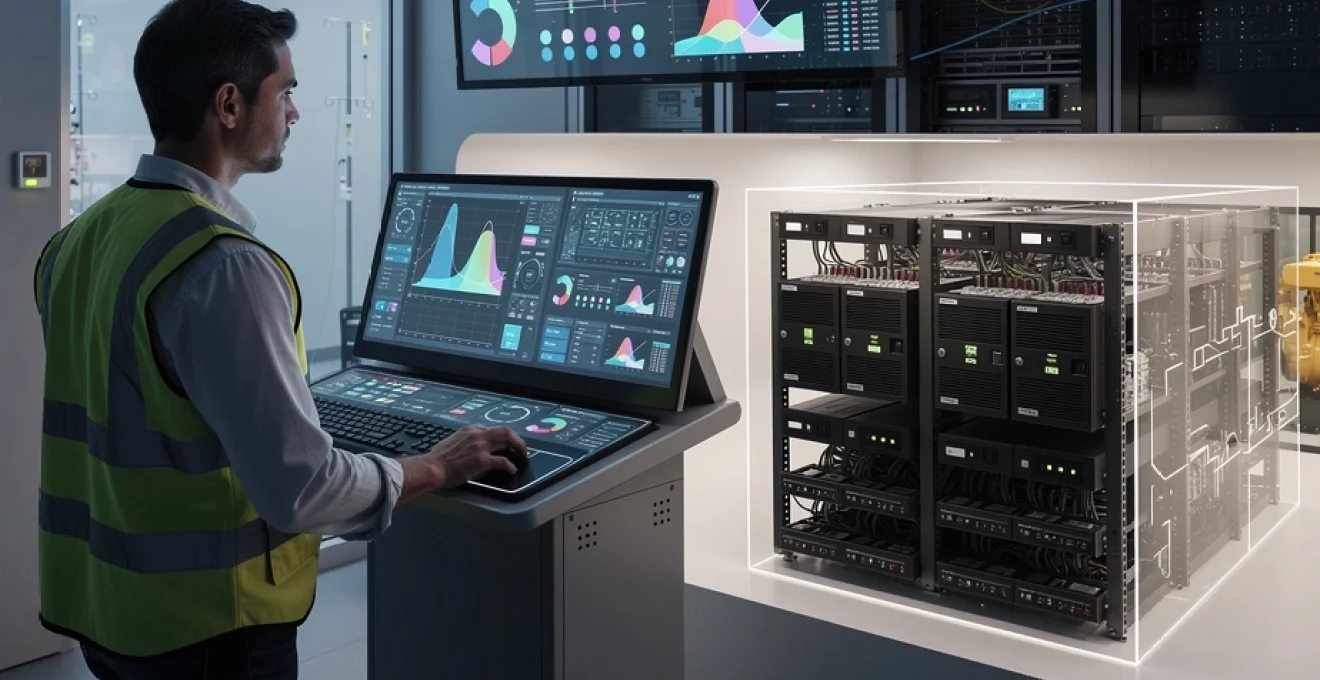
Modern business operations face an increasingly critical dependency on uninterrupted electrical power, with the average cost of downtime reaching $9,000 per minute for large organizations. The financial impact becomes even more severe in high-risk sectors such as finance and healthcare, where power disruptions can cost upwards of $5 million per hour. These staggering figures underscore the essential nature of customized power supply systems in maintaining operational continuity across diverse industrial environments.
Power infrastructure failures pose significant threats to business operations, ranging from immediate operational disruptions to long-term reputational damage. The challenge extends beyond simple power outages to encompass voltage fluctuations, harmonic distortion, and frequency variations that can severely impact sensitive electronic equipment. Organizations must implement sophisticated power protection strategies that go far beyond basic backup solutions, incorporating advanced technologies and redundant architectures to ensure seamless operations during any power-related incident.
The evolution of power supply technology has transformed traditional backup systems into intelligent, integrated platforms capable of addressing complex operational requirements. Today’s customized power solutions combine multiple technologies including uninterruptible power supplies, intelligent distribution systems, and predictive maintenance protocols to deliver comprehensive protection. These systems not only safeguard against immediate power failures but also optimize long-term operational efficiency through advanced monitoring and management capabilities.
Uninterruptible power supply (UPS) architecture and load management strategies
The foundation of any robust power continuity solution lies in properly designed UPS architecture that addresses specific load requirements and operational constraints. Modern UPS systems have evolved far beyond simple battery backup devices, incorporating sophisticated power conditioning, load management, and system integration capabilities. Understanding the various UPS topologies and their applications becomes crucial when designing customized power solutions for different operational environments.
Double conversion online UPS systems for critical infrastructure protection
Double conversion online UPS technology represents the gold standard for critical infrastructure protection, providing complete isolation between input and output power through continuous power processing. This topology eliminates all power quality issues by converting incoming AC power to DC, then back to perfectly regulated AC output. The process ensures that connected equipment receives clean, stable power regardless of input conditions, making it ideal for sensitive electronic systems requiring the highest level of protection.
The continuous operation of double conversion systems provides several advantages over other UPS topologies. Zero transfer time between utility and battery power ensures seamless operation during power transitions, while comprehensive power conditioning addresses voltage regulation, frequency stability, and harmonic distortion. These systems typically operate with efficiency ratings exceeding 94%, making them suitable for high-load applications where power quality cannot be compromised.
Modular UPS configurations using schneider electric galaxy VX series
Modular UPS architectures offer exceptional scalability and redundancy options for growing organizations requiring flexible power protection solutions. The Schneider Electric Galaxy VX series exemplifies advanced modular design, allowing organizations to start with lower capacity requirements and expand as needs grow. This approach provides significant advantages in terms of initial investment, operational efficiency, and maintenance flexibility.
The modular approach enables N+X redundancy configurations where additional modules provide backup capacity beyond operational requirements. Hot-swappable modules allow for maintenance and expansion without system shutdown, while intelligent load sharing distributes power demands across multiple modules. This design philosophy ensures that single module failures do not compromise system availability, making it particularly valuable for mission-critical applications.
Dynamic load balancing through eaton 9PXM power distribution units
Intelligent power distribution units have become essential components in modern power management systems, providing granular control and monitoring capabilities at the rack level. The Eaton 9PXM series demonstrates advanced load balancing capabilities that optimize power distribution across multiple circuits while preventing overload conditions. These systems continuously monitor power consumption patterns and automatically adjust distribution to maintain optimal balance.
Dynamic load balancing extends beyond simple current distribution to encompass thermal management and energy efficiency optimization. Advanced PDUs incorporate real-time monitoring of power quality parameters including voltage, current, frequency, and power factor across all outlets. This information enables proactive management of power resources and early identification of potential issues before they impact operations.
Battery management systems with VRLA and Lithium-Ion technologies
Battery technology selection and management represent critical factors in UPS system performance and longev
ity. Valve regulated lead-acid (VRLA) batteries remain common in legacy installations due to their predictable characteristics and lower upfront costs, while lithium-ion technologies are increasingly favored for their higher energy density and extended cycle life. Selecting between these chemistries requires careful evaluation of load profiles, ambient conditions, floor space constraints, and lifecycle cost expectations.
Advanced battery management systems continuously monitor key parameters such as state of charge, state of health, internal resistance, and temperature for each battery string. By leveraging these insights, facility teams can identify weak blocks before they fail, schedule proactive replacements, and avoid unexpected runtime shortfalls during utility outages. Intelligent charging algorithms further extend battery life by optimizing charge voltage and temperature compensation, reducing the risk of thermal runaway and ensuring consistent performance over many years of operation.
Power factor correction and harmonic distortion mitigation techniques
While battery backup often receives the most attention in UPS design, power quality conditioning is equally important for ensuring operational continuity. Many modern loads, such as variable speed drives and switch-mode power supplies, introduce reactive power and harmonics that degrade overall system efficiency and can cause overheating in transformers and cables. Effective power factor correction and harmonic mitigation strategies help maintain a stable, efficient electrical environment for your critical infrastructure.
Double conversion UPS systems inherently provide a degree of isolation from upstream disturbances, but additional corrective measures are often required at the system level. Techniques such as active power factor correction, multi-pulse rectifiers, and input filters can raise input power factor close to unity and reduce total harmonic distortion (THD) to below 5%. By deploying these technologies, organizations not only protect sensitive equipment but also reduce utility penalties and free up electrical capacity for future growth.
Redundancy implementation through N+1 and 2N power distribution models
Redundancy is a cornerstone of any customized power supply system designed for high availability. Rather than relying on a single UPS or feed, robust architectures distribute risk across multiple independent paths, ensuring that a single component failure does not interrupt operations. Two of the most common redundancy strategies are N+1 and 2N power distribution models, each offering different balances of resilience, complexity, and cost.
In an N+1 configuration, one additional unit of capacity is deployed beyond the calculated requirement (N), allowing maintenance or failure of a single component without impacting the load. A 2N design goes further by providing two completely independent power paths, each capable of supporting the full load. While 2N architectures deliver exceptional fault tolerance, they require greater capital investment and more rigorous coordination between feeds, UPS systems, and downstream power distribution units.
Parallel redundant UPS systems with ABB PowerValue 11RT configuration
Parallel redundant UPS systems provide a practical way to implement N+1 architectures without sacrificing scalability or maintainability. The ABB PowerValue 11RT series, for example, allows multiple UPS modules to operate in parallel, sharing load while providing redundant capacity. If one module fails or is taken offline for maintenance, the remaining units automatically assume the load, preserving continuous power to connected equipment.
From a design perspective, parallel configurations should include robust communication links between modules, coordinated bypass arrangements, and clear fault isolation mechanisms. This ensures that a faulty UPS cannot compromise the stability of the entire system. For growing organizations, the ability to add additional PowerValue 11RT units over time offers a flexible way to increase capacity while preserving redundancy, rather than performing costly forklift upgrades.
Automatic transfer switch (ATS) integration with socomec ATYS series
Redundant UPS systems are only part of the story; reliable source switching is essential when integrating multiple feeds, generators, or utility connections. Automatic transfer switches (ATS) such as the Socomec ATYS series provide fast, safe transfer between power sources based on predefined criteria. When a primary source fails or degrades beyond acceptable tolerances, the ATS seamlessly switches to the secondary source, typically within a few cycles.
Integrating Socomec ATYS devices into your power architecture enables flexible A/B feed arrangements for critical loads and simplifies 2N designs. Advanced models can monitor voltage, frequency, and phase angle on both sources, preventing improper transfers that could damage equipment. When combined with remote monitoring and test schedules, an ATS-based strategy ensures that backup sources are not only available but also properly exercised and ready for real events.
Generator backup systems using caterpillar C32 and cummins QSK60 engines
For prolonged outages that exceed UPS runtime, generator backup systems are indispensable for true business continuity. Industrial generators driven by engines such as the Caterpillar C32 and Cummins QSK60 provide the high power density and reliability required for large data centres, manufacturing plants, and healthcare facilities. These engines are engineered for rapid start-up, stable frequency control, and sustained operation under variable load conditions.
A well-designed generator integration strategy includes automatic start sequences, fuel management planning, exhaust and cooling design, and synchronization capabilities when multiple sets are deployed. UPS systems bridge the gap between utility loss and generator availability, typically 10–30 seconds, after which the generator assumes the load through coordinated switching. Regular load bank testing, fuel quality analysis, and predictive maintenance of these engines are crucial to avoid the all-too-common scenario where a generator fails to start when it is needed most.
Power distribution unit (PDU) redundancy with raritan PX3 intelligent strips
Downstream from UPS and generators, power distribution units (PDUs) play a vital role in delivering redundant power to individual racks and devices. Intelligent PDUs like the Raritan PX3 series support A/B feed configurations, enabling dual-powered IT equipment to receive independent power sources. If one feed is lost due to upstream failures or scheduled maintenance, the alternate feed continues to supply power, preserving uptime.
Raritan PX3 intelligent strips go beyond simple power distribution by providing granular outlet-level metering, environmental sensor integration, and remote switching capabilities. This allows data centre operators to manage load balancing, track energy usage per rack, and identify stranded capacity. By combining PX3 PDUs with upstream N+1 or 2N UPS architectures, organizations can create end-to-end redundant power paths that minimize single points of failure from the utility entrance right down to individual servers.
Real-time power monitoring and predictive maintenance protocols
Even the most sophisticated power supply architecture can fall short without effective monitoring and maintenance. Real-time visibility into system performance, combined with predictive analytics, allows you to address issues before they escalate into outages. Modern power management strategies increasingly rely on integrated platforms that bring together SCADA systems, IoT sensors, and specialized software tools to form a holistic view of the power infrastructure.
By implementing predictive maintenance protocols, organizations can shift from reactive repairs to proactive interventions based on actual equipment condition. This approach reduces unplanned downtime, extends asset life, and optimizes maintenance budgets. As power systems become more digitized, the combination of real-time monitoring and advanced analytics becomes a powerful enabler of operational continuity.
SCADA integration with schneider electric EcoStruxure power monitoring expert
Supervisory Control and Data Acquisition (SCADA) platforms form the backbone of centralized power monitoring in complex facilities. Schneider Electric EcoStruxure Power Monitoring Expert is a prime example of a modern SCADA-aligned solution that aggregates data from UPS systems, breakers, meters, and generators into a single pane of glass. Operators can visualize load flows, track power quality events, and analyze historical trends across the entire electrical network.
Integrating UPS and customized power supply systems with EcoStruxure enables real-time alarms, automated reporting, and advanced analytics for compliance and capacity planning. For instance, you can quickly identify circuits operating near their limits, correlate voltage sags with equipment alarms, or verify that redundancy targets are being met. This level of insight supports more informed decisions about upgrades, maintenance windows, and energy efficiency initiatives.
Iot sensor networks for thermal and vibration analysis
While electrical parameters provide valuable insights, mechanical and environmental conditions often give the earliest warning signs of developing problems. IoT sensor networks distributed across switchgear rooms, UPS enclosures, battery banks, and generator sets can monitor temperature, humidity, and vibration in real time. Abnormal heat buildup in a cable joint or increasing vibration in a generator bearing can signal impending failures long before they cause outages.
These sensor networks feed data into centralized platforms where thresholds and trend analyses are applied. When anomalies are detected—such as a steady rise in transformer temperature under normal load—maintenance teams receive alerts to investigate. Think of these sensors as a continuous health check for your power infrastructure, much like wearable devices that detect changes in heart rate or activity patterns before a medical issue becomes critical.
Machine learning algorithms for battery life prediction and replacement scheduling
Batteries are among the most critical and failure-prone components in any UPS system, making accurate life prediction essential. Machine learning algorithms can analyze historical data from VRLA and lithium-ion strings—such as discharge profiles, internal resistance measurements, temperature, and charge cycles—to forecast remaining useful life for each unit. This is far more precise than relying solely on manufacturer estimates or fixed replacement intervals.
By adopting predictive battery analytics, organizations can create optimized replacement schedules that minimize both risk and waste. Instead of replacing entire banks prematurely “just to be safe,” you can target only the cells exhibiting accelerated degradation. This not only enhances power supply reliability but also reduces total cost of ownership and supports sustainability goals by extending the lifespan of healthy batteries.
Remote diagnostics through eaton intelligent power manager software
Distributed organizations with multiple sites often struggle to maintain consistent power management practices everywhere. Remote diagnostics platforms such as Eaton Intelligent Power Manager (IPM) enable centralized monitoring and control of UPS systems across branches, edge locations, and core data centres. Through a secure interface, IT and facilities teams can check UPS status, review event logs, and initiate controlled shutdowns or restarts without being physically present.
Remote access becomes particularly valuable during large-scale disruptions or when travel is restricted. IPM and similar tools can integrate with virtualization platforms to orchestrate graceful shutdowns of virtual machines, ensuring that workloads are protected even during prolonged outages. In practical terms, this means you can maintain a high level of power resilience for geographically dispersed operations using a relatively small, centralized team.
Industry-specific power continuity solutions and compliance standards
While the core principles of customized power supply systems are universal, each industry faces unique regulatory requirements, risk profiles, and availability targets. A hospital’s tolerance for downtime, for example, is dramatically different from that of a small office. As a result, sector-specific standards and best practices strongly influence how UPS architectures, generators, and monitoring systems are designed and implemented.
Aligning your power continuity strategy with industry regulations not only reduces legal and compliance risks but also provides a concrete benchmark for acceptable performance. Whether you operate in healthcare, finance, manufacturing, or public services, mapping your power infrastructure to the relevant standards helps ensure that investments are focused where they matter most.
Critical infrastructure protection for data centres and healthcare facilities
Data centres and healthcare facilities represent two of the most demanding environments for power continuity. Data centres must meet strict uptime commitments—often targeting 99.999% availability—to support cloud services, financial transactions, and digital communications. Healthcare facilities, meanwhile, rely on continuous power to support life-critical systems such as operating theatres, intensive care units, and diagnostic imaging equipment.
In data centres, this typically translates into tiered power architectures, dual-corded IT equipment, and rigorous N+1 or 2N redundancy throughout the critical power path. Healthcare facilities must comply with standards such as IEC 60364-7-710 and national healthcare regulations, which dictate separation of essential and non-essential loads, automatic transfer to emergency sources, and clear testing protocols. In both cases, combining robust UPS systems, selective coordination of protection devices, and frequent drills ensures that critical infrastructure remains available even during severe grid disturbances.
Cost-benefit analysis and total cost of ownership (TCO) optimisation
Designing a customized power supply system inevitably raises the question: how much resilience is enough, and at what cost? To answer this, organizations should perform a structured cost-benefit analysis that compares the total cost of ownership (TCO) of power continuity solutions against the financial impact of potential downtime. Factoring in hardware, installation, energy consumption, maintenance, and periodic upgrades provides a realistic view of long-term investment.
When you consider that major outages can cost hundreds of thousands—or even millions—of dollars per incident, the business case for well-designed UPS and backup power systems often becomes compelling. TCO optimization does not simply mean buying the cheapest equipment; instead, it involves selecting technologies with higher efficiency, longer lifespans, and stronger monitoring capabilities. By combining energy-efficient UPS architectures, predictive maintenance, and modular scalability, organizations can achieve the right balance between upfront capital expenditure and ongoing operational savings, all while maintaining the operational continuity their business demands.