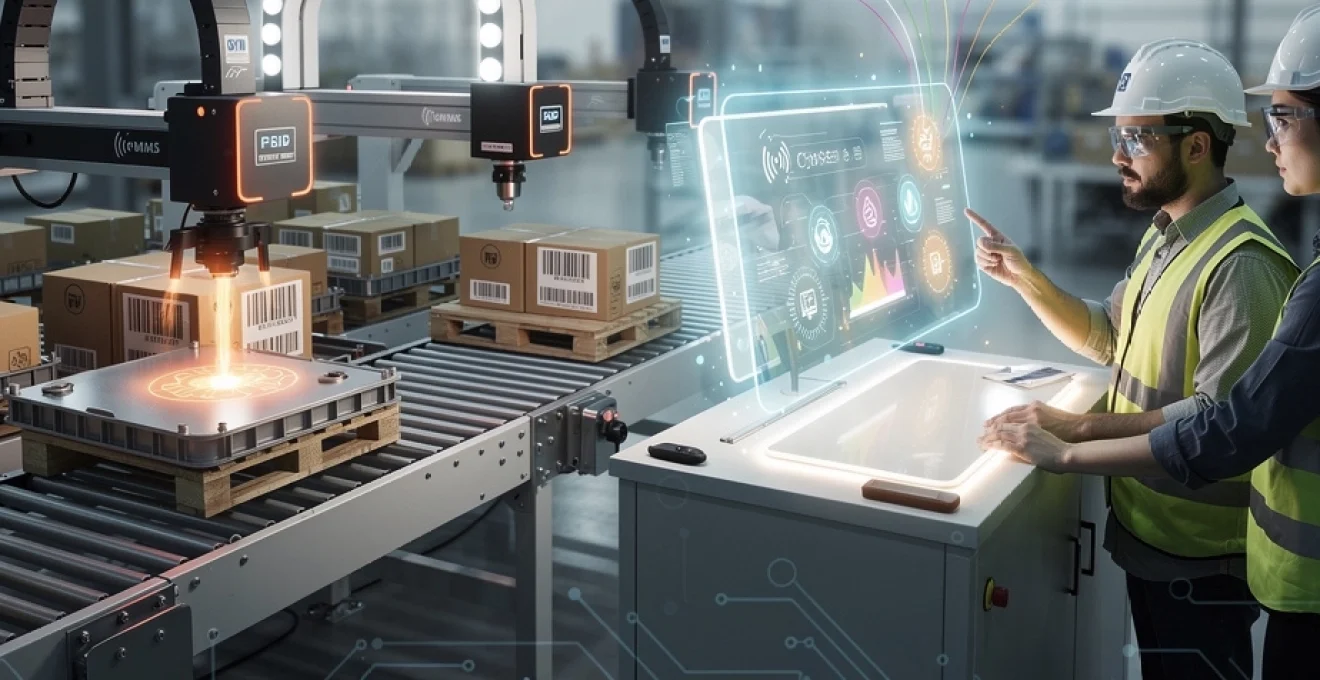
Manufacturing environments face mounting pressure to deliver flawless product quality, comply with increasingly stringent regulations, and maintain complete supply chain transparency. In this landscape, integrated industrial identification systems have emerged as the backbone of modern traceability initiatives. These sophisticated frameworks combine multiple technologies—from RFID tags and barcode scanners to machine vision systems and IoT sensor networks—into cohesive architectures that capture, transmit, and analyse data throughout the entire production lifecycle. The result is unprecedented visibility into product genealogy, batch tracking, and quality assurance processes. Companies implementing these systems report significant improvements in recall response times, regulatory compliance, and operational efficiency. As Industry 4.0 continues to reshape manufacturing paradigms, the question is no longer whether to invest in traceability technology, but rather how to architect these systems for maximum effectiveness and return on investment.
Core components of integrated industrial identification architecture
Modern traceability systems function as complex ecosystems where multiple identification technologies work in concert to capture comprehensive product data. Understanding the distinct capabilities and optimal applications of each component is essential for designing systems that deliver accurate, real-time tracking across diverse manufacturing environments. Each technology brings unique strengths to the table, and the most effective implementations leverage these complementary capabilities to create robust identification networks.
RFID tag technology and reader infrastructure integration
Radio-frequency identification represents one of the most transformative technologies in industrial traceability. Unlike passive identification methods, RFID enables automatic data capture without requiring line-of-sight contact or manual intervention. Tags come in three primary configurations: passive tags that harvest energy from reader signals, active tags with onboard power sources offering extended read ranges up to 100 metres, and battery-assisted passive tags that combine benefits of both approaches. The selection depends heavily on your operational requirements—passive tags excel in high-volume applications where cost per unit matters, whilst active tags prove invaluable for tracking high-value assets across large facilities.
Reader infrastructure integration requires careful planning of antenna placement, power output calibration, and interference mitigation strategies. In metallic environments or areas with electromagnetic noise, you’ll need to account for signal reflection and absorption that can create read zones with unpredictable boundaries. Modern RFID middleware solutions bridge the gap between raw tag reads and enterprise systems, filtering duplicate reads, smoothing data streams, and translating Electronic Product Codes into actionable business events. When properly deployed, RFID systems achieve read accuracy rates exceeding 99.9% whilst processing hundreds of tags simultaneously—a capability that proves particularly valuable in fast-moving production lines and automated warehousing operations.
Barcode systems: 1D linear vs 2D matrix code implementation
Barcode technology remains the workhorse of industrial identification due to its cost-effectiveness, reliability, and universal compatibility. Linear 1D barcodes like Code 128 and Code 39 encode data in varying widths of parallel lines, typically storing 20-25 alphanumeric characters. These codes work exceptionally well for applications requiring basic product identification, lot numbers, or serial tracking. Their simplicity translates to fast scanning speeds and compatibility with virtually all reading hardware.
Two-dimensional matrix codes such as Data Matrix and QR codes revolutionised identification by encoding information in both horizontal and vertical dimensions. A single Data Matrix symbol measuring just 3mm square can store up to 2,335 alphanumeric characters—sufficient for embedding complete product genealogy, manufacturing parameters, and compliance data directly onto components. This high-density encoding proves particularly valuable in electronics manufacturing, medical device production, and aerospace applications where space constraints limit marking area. Data Matrix codes also incorporate sophisticated error correction algorithms, enabling successful reads even when up to 30% of the symbol is damaged or obscured. Does your production environment involve harsh conditions, small components, or stringent data requirements? Two-dimensional codes likely represent your optimal solution.
Machine vision systems with OCR and pattern recognition capabilities
Artificial intelligence-powered vision systems bring human-like inspection capabilities to industrial environments, identifying parts through visual characteristics rather than relying solely on applied codes. These systems employ high-resolution cameras coupled with sophisticated image processing algorithms to recognise logos, serial numbers, text strings, and unique surface features. Optical character recognition (OCR) technology reads human-readable text with accuracy rates approaching 99.8% under controlled lighting conditions, eliminating
the need for manual inspection on high-speed lines. Pattern recognition algorithms can identify parts, orientation, surface defects, and even brand-specific geometries, making them ideal for mixed-model production environments. In traceability applications, machine vision is often used to verify the presence and readability of barcodes or Data Matrix codes, cross-check human-readable text against encoded data, and ensure that the correct marking has been applied to the correct part. When integrated with your MES or ERP, these systems can automatically reject non-compliant parts, trigger rework workflows, and generate audit-ready quality records.
To get the most from machine vision for industrial identification, you should invest in controlled lighting, robust camera mounting, and regular model re-training as products evolve. Treat vision systems a bit like a highly skilled operator: they perform exceptionally well when the environment is stable and they have been “trained” with representative examples. Poorly tuned systems, on the other hand, can lead to false rejects, missed defects, and gaps in your traceability data. By combining OCR, code verification, and pattern recognition into a single integrated inspection cell, manufacturers achieve both quality control and product identification in one step, reducing cycle times and manual handling.
Iot sensor networks for real-time asset tracking
IoT sensor networks extend industrial identification beyond static codes and markings by continuously monitoring the status and location of assets. While a barcode or RFID tag tells you what an item is, IoT sensors tell you how that item is behaving in real time. Low-power wireless devices can track temperature, humidity, vibration, shock, and geolocation across production, warehousing, and transport. This real-time asset tracking is crucial for traceability in sectors like pharmaceuticals, food and beverage, and electronics, where environmental excursions can compromise product integrity long before a final inspection step.
Designing an effective IoT sensor network for industrial traceability requires careful selection of communication protocols (such as Wi‑Fi, LoRaWAN, Bluetooth Low Energy, or 5G), gateway placement, and power management strategies. Think of the network as a nervous system for your plant—sensors serve as nerve endings collecting data, gateways as the spinal cord routing signals, and cloud or on-premise platforms as the brain interpreting information. To avoid data overload, many manufacturers implement threshold-based alerts and edge analytics so that only meaningful deviations, such as a temperature threshold breach, are escalated to operators or integrated into the MES. When IoT data is correlated with product identifiers like serial numbers or batch IDs, you gain a complete digital thread from raw material to finished goods.
Cloud-based data aggregation platforms and edge computing solutions
As identification and IoT devices proliferate, cloud-based aggregation platforms become essential for managing traceability at scale. These platforms collect data from scanners, RFID readers, PLCs, and sensors, standardise event formats, and store them in highly available databases. Manufacturers benefit from elastic scalability, global accessibility, and advanced analytics capabilities, including machine learning models that can predict quality issues or equipment failures based on historical traceability data. Cloud-native dashboards provide a single pane of glass view across plants and regions, enabling you to compare performance indicators like first-pass yield and on-time delivery across sites.
However, sending all data to the cloud is neither efficient nor always feasible due to latency, bandwidth, and data sovereignty constraints. This is where edge computing comes in, processing data closer to the source on industrial PCs, gateways, or embedded devices. Edge nodes can filter noisy identification reads, perform local decision-making (such as diverting a mislabelled carton), and sync only aggregated or exception data to the cloud. A hybrid cloud-edge architecture balances responsiveness with centralised oversight; think of it as having local “reflexes” on the shop floor backed by a strategic “brain” in the cloud. For highly regulated industries, edge and cloud components can also enforce role-based access, encryption, and audit logging to guarantee the integrity and security of traceability records.
Implementing GS1 standards and EPC global framework for supply chain visibility
Technology alone cannot deliver end-to-end traceability if every stakeholder uses different identification rules. This is why GS1 standards and the EPCglobal framework are so critical: they establish a common language that allows products, locations, and logistics units to be uniquely identified and traced across company boundaries. By implementing GS1 identifiers such as GTINs, SSCCs, and GLNs, and leveraging EPCIS for event capture, you move from isolated plant-level visibility to true supply chain transparency. For companies operating in retail, healthcare, and consumer goods, GS1-compliant traceability is rapidly becoming a prerequisite for doing business with major trading partners.
GTIN and SSCC numbering schemes for product serialisation
At the heart of GS1-based traceability are GTIN (Global Trade Item Number) and SSCC (Serial Shipping Container Code) schemes. GTINs uniquely identify trade items—products or services that can be priced, ordered, or invoiced—at any packaging level. SSCCs, by contrast, identify logistics units such as pallets, cases, or mixed consignments. When you combine GTIN-based product identifiers with individual serial numbers, you enable item-level serialisation, which is vital for combating counterfeiting, managing targeted recalls, and meeting regulatory requirements such as the EU Falsified Medicines Directive or US DSCSA.
Implementing GTINs and SSCCs in your industrial identification system involves coordination between product management, packaging engineering, and IT. You will need to define numbering ranges, update packaging artwork, configure printers and labellers, and ensure that scanners and MES modules correctly parse GS1 data structures. A common approach is to encode GTINs and serial numbers in GS1 DataMatrix or GS1‑128 barcodes, using Application Identifiers to structure the data. Once in place, these schemes support powerful use cases: you can trace which exact units were produced in a given batch, which pallets they were shipped on, and which customers ultimately received them.
EPCIS event data capture and query interface protocols
While identifiers tell you who or what an object is, EPCIS (Electronic Product Code Information Services) focuses on what happened to that object, where, and when. EPCIS defines a standard way to capture and share event data such as shipping, receiving, commissioning, aggregation, and transformation. For example, when a carton of components is packed onto a pallet, an EPCIS aggregation event can link the cartons’ serial numbers with the pallet’s SSCC, creating a digital representation of your physical hierarchy. Later, a shipping event at the distribution centre and a receiving event at the customer site close the loop.
From a technical standpoint, EPCIS provides both capture interfaces—where your identification systems push new events—and query interfaces—where authorised partners can request visibility into relevant events. Many modern traceability platforms now offer built-in EPCIS repositories, allowing you to integrate barcode scanners, RFID portals, and MES systems into a coherent event-driven architecture. When your partners also adopt EPCIS, end-to-end supply chain visibility becomes possible without custom point-to-point integrations. Do you work with multiple contract manufacturers and logistics providers? Standardised EPCIS event data can dramatically reduce manual reconciliation and accelerate root-cause analysis during quality incidents.
Electronic product code architecture and object naming service
The Electronic Product Code (EPC) is a structured identifier that extends traditional barcodes by providing a globally unique identity for every individual object, not just product types. EPC schemes typically combine a GS1 Company Prefix with an item reference and a serial number, which can be encoded into RFID tags or 2D barcodes. The EPC architecture defines how these identifiers are represented, how they are encoded into different data carriers, and how they interoperate with systems like EPCIS and GS1 keys. By adopting EPC-based numbering, you can ensure that every asset, from a single vial of medicine to an engine component, has a unique digital identity across the entire supply chain.
Object Naming Service (ONS) plays a role similar to DNS on the internet: it resolves an EPC to one or more network addresses where additional information about that object can be found. In practice, many organisations implement ONS-like directory services within private networks or industry consortia, enabling systems to discover master data, certificates of analysis, or maintenance histories linked to a particular EPC. This capability is especially valuable in highly distributed ecosystems, such as automotive or aerospace, where multiple suppliers contribute subcomponents to a final assembly. By combining EPC identifiers with ONS resolution, stakeholders can access consistent, authoritative data for any component, no matter where it originated.
Compliance with ISO/IEC 15459 for unique identification marking
ISO/IEC 15459 complements GS1 and EPC standards by specifying rules for unique identification of items, groups, and locations across the global supply chain. It defines how issuing agencies allocate company identifiers and how those companies, in turn, generate unique codes for their assets. Compliance with this standard ensures that identification numbers embedded in barcodes, RFID tags, or direct part marks will not conflict with codes issued by other organisations, which is critical in aerospace, defence, and automotive industries where parts from many suppliers converge in a single assembly.
When designing your industrial identification framework, you should verify that your numbering schemes and marking practices align with ISO/IEC 15459 requirements. This may involve registering with an issuing agency, updating your ERP or PLM data models, and validating that your marking equipment can encode the necessary symbologies and data structures. The payoff is a robust, future-proof traceability model that will integrate smoothly with customer systems and regulatory databases. In other words, ISO/IEC 15459 compliance is like building on a solid foundation: it might seem invisible at first, but it prevents costly rework and interoperability issues as your ecosystem grows.
Manufacturing execution systems integration with traceability modules
Manufacturing Execution Systems provide the operational backbone that ties identification events to production orders, quality records, and equipment performance. Without MES integration, your traceability data remains fragmented—RFID portals, barcode scanners, and vision systems generate information, but no central system contextualises it against routing steps, work-in-progress (WIP) status, or bill of materials structures. Integrating MES traceability modules with industrial identification systems allows you to construct detailed batch genealogy, track non-conformances, and support real-time decision-making on the shop floor. The result is not only better compliance, but also more predictable production performance.
Siemens opcenter and SAP MII connectivity for production data capture
Siemens Opcenter (formerly SIMATIC IT and Camstar) and SAP Manufacturing Integration and Intelligence (MII) are two widely deployed platforms for orchestrating production and capturing traceability data. Opcenter can manage electronic work instructions, routing, and quality checks, while SAP MII acts as a bridge between shop-floor systems and SAP ERP or S/4HANA. By integrating barcode scanners, RFID readers, and vision systems with these platforms, each identification event can be associated with the correct production order, operation step, and resource. For instance, scanning a component’s Data Matrix code at a workstation can automatically verify that the part matches the bill of materials for that order and log its consumption.
From a technical perspective, connectivity often leverages web services, REST APIs, or intermediate message queues that decouple device-level events from MES transactions. Standardising event payloads—such as including timestamp, equipment ID, operator ID, and scanned code—simplifies mapping into Opcenter or SAP MII data models. When implemented correctly, this integration eliminates manual data entry, reduces errors, and provides a granular, time-stamped history of each unit’s journey through the plant. Have you ever struggled to reconstruct what happened to a product after a customer complaint? With well-integrated MES and identification systems, you can pull a complete, audit-ready history in seconds.
Rockwell automation FactoryTalk and wonderware InTouch integration points
Rockwell Automation’s FactoryTalk suite and AVEVA’s Wonderware InTouch (now AVEVA InTouch HMI) are mainstays in many discrete and process manufacturing environments. While these platforms are often associated with SCADA and HMI functions, they also serve as valuable integration points for traceability. Barcode readers and RFID devices connected via PLCs or industrial PCs can feed identification events into FactoryTalk Historian or FactoryTalk ProductionCentre, where they are stored and correlated with process parameters. Similarly, InTouch screens can be configured to display scanned part information, prompt operators for confirmations, or trigger workflows when mismatches occur.
Integrating identification systems with these platforms typically involves OPC servers, custom scripts, or built-in connectors. For example, a PLC might receive a signal from a barcode scanner, parse the code, and expose it as a tag in the OPC namespace. HMI screens can then react to that tag value by updating WIP status, raising alarms, or writing records to a SQL database. The key is to design data flows so that critical traceability events are captured once, validated, and then propagated to higher-level systems like MES or ERP without duplication. This layered approach keeps your architecture modular while ensuring that no essential identification data is lost.
OPC UA protocol for cross-platform device communication
OPC UA has become the de facto standard for secure, platform-independent communication between industrial devices and software systems. Unlike its predecessor OPC Classic, OPC UA is not tied to Windows COM/DCOM and supports robust security features such as encryption, authentication, and fine-grained access control. For industrial identification and traceability, OPC UA acts as the universal “translator” that enables barcode scanners, RFID readers, vision systems, PLCs, and MES platforms to exchange data consistently. Instead of building and maintaining a tangle of vendor-specific drivers, you can use OPC UA to expose identification events in a harmonised information model.
In practice, many modern devices now include embedded OPC UA servers, publishing identification data as structured objects that client applications can subscribe to. For legacy equipment, OPC UA gateways can bridge proprietary protocols to the OPC UA ecosystem. When combined with information modelling, you can define standard object types for “Scanned Item” or “RFID Read Event” that include fields such as code value, symbology, confidence, and timestamp. This semantic consistency simplifies downstream analytics and reduces engineering effort. Think of OPC UA as a common language that lets all layers of your traceability stack talk to each other fluently, regardless of manufacturer or operating system.
Batch genealogy tracking and bill of materials reconciliation
One of the most valuable outcomes of integrating MES with identification systems is the ability to construct accurate batch genealogy. Batch genealogy shows how raw materials and subcomponents flow into intermediate products and, ultimately, into finished goods. By scanning materials at each operation and linking those scans to production orders, you can trace a finished product back to specific supplier lots, machine settings, and operator actions. This capability is critical for targeted recalls, root-cause investigations, and compliance with regulations in industries such as food, pharmaceuticals, and aerospace.
Bill of materials (BOM) reconciliation takes this a step further by comparing what should have been consumed (according to the BOM) with what was actually scanned and recorded. Discrepancies can reveal mis-picks, undocumented substitutions, or even potential fraud. Automated reconciliation logic in MES or specialised traceability modules can flag such issues in real time, prompting supervisors to intervene before non-conforming products leave the plant. Over time, analysing genealogy and reconciliation data also uncovers systemic problems—such as frequently substituted components or recurring process deviations—that you can address through continuous improvement projects.
Laser marking and direct part marking technologies for permanent identification
For components that must remain identifiable throughout long service lives or harsh operating conditions, laser marking and direct part marking (DPM) provide durable, tamper-resistant solutions. Unlike labels or inkjet codes that can fade, peel, or be removed, laser-etched Data Matrix or alphanumeric codes become part of the material surface itself. This is essential in sectors such as aerospace, automotive powertrain, medical implants, and heavy machinery, where traceability must extend beyond manufacturing into maintenance, repair, and overhaul (MRO) operations. In many cases, standards like SAE AS9132 or ISO/IEC TR 29158 explicitly define requirements for DPM quality and readability.
Different laser technologies—fibre, CO2, UV, and green lasers—are suited to different materials and applications. Fibre lasers excel at marking metals with high contrast and speed, while CO2 lasers are common for organics and certain plastics. UV and green lasers can mark delicate or heat-sensitive materials with minimal surface damage. Key process parameters include power, frequency, marking speed, and focal distance, all of which influence mark depth, contrast, and cycle time. To ensure consistent readability by handheld or fixed-mount scanners, you should validate your laser parameters against relevant DPM grading standards and perform regular verification using calibrated test pieces.
Integrating laser marking into your traceability workflow means more than just etching a code. You need to link the marked identifier to digital records in MES or ERP at the moment of creation, typically by having a vision system or scanner read back the code immediately after marking. This closed-loop verification prevents illegible or incorrect codes from progressing downstream and ensures that each physical part is correctly associated with its digital twin. When done well, laser marking is like engraving a passport into every component: wherever that part travels, service technicians and inspectors can access its full history with a quick scan.
Blockchain-enabled track and trace solutions for anti-counterfeiting
As global supply chains become more complex, the risk of counterfeiting and grey-market diversion continues to grow. Traditional centralised databases can provide traceability within a single organisation, but they may not fully address trust issues between independent actors. Blockchain-enabled track and trace solutions tackle this challenge by creating an immutable, distributed ledger of key supply chain events, such as production, shipping, authentication, and returns. Each transaction is cryptographically linked to the previous one, making it extremely difficult to alter records without detection.
In a typical implementation, physical identifiers such as serialised QR codes, NFC tags, or RFID labels serve as the bridge between the physical product and its blockchain record. When a product is manufactured, a unique identifier is generated and registered on the blockchain along with relevant metadata—origin, batch number, timestamp, and so on. At each subsequent handover, authorised parties scan the identifier and append new transactions. Brand owners, regulators, and even end consumers can then verify authenticity by checking the product’s history against the blockchain. For high-value goods such as pharmaceuticals, luxury items, or critical spare parts, this approach provides a powerful deterrent to counterfeiters.
However, blockchain is not a silver bullet. You still need robust industrial identification at the edge and reliable processes to ensure that the data written to the ledger is accurate in the first place—often summarised as “garbage in, garbage out.” Performance and scalability must also be considered, especially in high-volume manufacturing environments where millions of items are produced daily. Many organisations therefore adopt permissioned blockchain platforms, which restrict participation to vetted entities and optimise consensus mechanisms for enterprise performance. When combined with GS1/EPC standards and strong DPM or RFID marking, blockchain becomes a complementary layer that enhances trust, transparency, and anti-counterfeiting capabilities across the extended supply chain.
ROI metrics and key performance indicators for traceability system effectiveness
Deploying integrated industrial identification and traceability systems requires investment in hardware, software, and change management. To justify and optimise this investment, you need clear ROI metrics and key performance indicators (KPIs) that reflect both operational and strategic value. Typical financial benefits include reduced rework and scrap, lower recall and warranty costs, and improved labour productivity through automation of data capture. Strategic gains, while harder to quantify, encompass enhanced brand protection, easier regulatory compliance, and the ability to support new business models such as product-as-a-service or extended warranties based on accurate usage histories.
When defining KPIs for traceability effectiveness, consider a balanced set of indicators across quality, operations, and compliance. Common examples include: percentage of products with complete genealogy records; time to identify and isolate affected units during a recall; read rate accuracy for barcodes, RFID, or DPM; rate of manual data entry vs automatic capture; and mean time to investigate customer complaints. You might also track the percentage reduction in non-conformances linked to misidentified or misassembled parts after system deployment. Over time, trending these KPIs will reveal whether your traceability initiative is delivering sustained improvements or if bottlenecks are simply shifting to new points in the process.
To make ROI tangible, many manufacturers start with a pilot project focused on a single product family or line, measuring baseline performance before implementing integrated identification. After go-live, they compare KPIs such as first-pass yield, line throughput, and investigation lead times. It is not uncommon to see investigation times drop by 50–80% once reliable digital records replace manual logbooks and spreadsheets. By treating traceability as a continuous improvement journey rather than a one-off compliance exercise, you can keep refining processes, adjusting technologies, and expanding coverage across your operations. In the long run, integrated industrial identification systems become a strategic asset that underpins both operational excellence and customer trust.