# How Real-Time Data is Changing Decision-Making in Industrial Environments
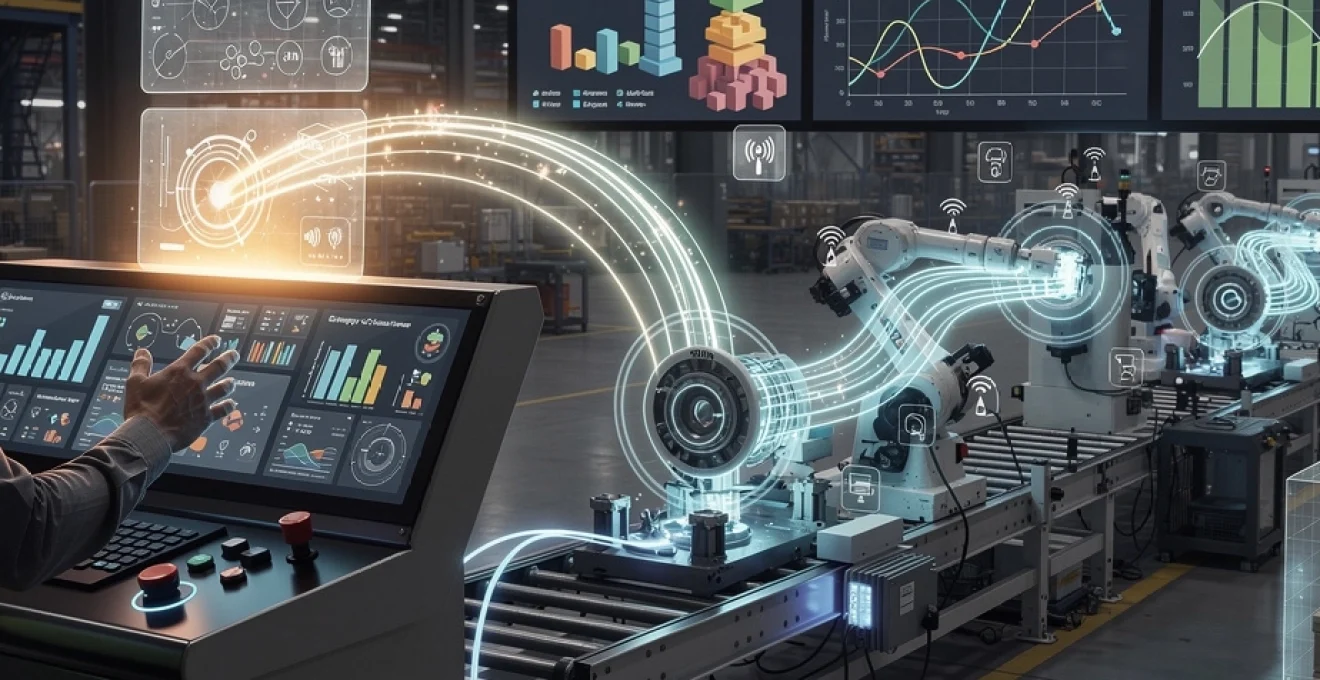
Industrial operations have entered an era where milliseconds matter. The convergence of sensor technologies, edge computing capabilities, and advanced analytics platforms has fundamentally transformed how manufacturing facilities, supply chains, and energy systems respond to operational challenges. Real-time data isn’t simply about speed—it represents a paradigm shift from reactive management to predictive intelligence, where production lines self-optimize, maintenance schedules adapt autonomously, and supply chain disruptions are mitigated before they cascade through the entire operation.
This transformation extends beyond incremental improvements in efficiency. Real-time industrial data creates entirely new possibilities for operational excellence, quality assurance, and competitive differentiation. Traditional batch processing models, where data was collected, stored, and analyzed hours or days after events occurred, have become obsolete in environments where production speeds, market demands, and quality standards change by the second. Manufacturing facilities now generate terabytes of operational data daily, and the organizations that can harness this information instantaneously gain substantial advantages in productivity, cost control, and market responsiveness.
Industrial IoT sensor networks and edge computing architecture
The foundation of real-time industrial decision-making rests on sophisticated sensor networks that continuously monitor every aspect of production environments. Modern manufacturing facilities deploy thousands of IoT devices measuring parameters ranging from vibration frequencies and thermal signatures to chemical concentrations and positional accuracy. These sensors create a comprehensive digital representation of physical operations, capturing granular details that human observation could never consistently track across large-scale industrial processes.
Edge computing architecture has emerged as the critical infrastructure enabling this transformation. Rather than transmitting all sensor data to centralized cloud platforms for processing, edge computing systems perform analytics at the network periphery, closer to where data originates. This architectural approach dramatically reduces latency, minimizes bandwidth consumption, and ensures that critical decisions can be executed even when connectivity to central systems is temporarily compromised. Industrial controllers equipped with edge processing capabilities can execute machine learning models locally, triggering automated responses within milliseconds rather than waiting for round-trip communication with distant data centers.
MQTT protocol implementation for manufacturing telemetry
The Message Queuing Telemetry Transport (MQTT) protocol has become the de facto standard for industrial IoT communications due to its lightweight design and publish-subscribe messaging pattern. In manufacturing telemetry applications, MQTT enables thousands of sensors to transmit data efficiently over constrained networks while maintaining reliable delivery guarantees. The protocol’s minimal overhead makes it particularly suitable for battery-powered sensors and bandwidth-limited industrial networks where traditional HTTP-based communication would be impractical.
MQTT brokers serve as central message hubs, receiving published data from sensors and distributing it to subscribed applications and analytics platforms. This decoupled architecture allows you to add new sensors, reconfigure data flows, and modify processing logic without disrupting existing operations. Quality of Service (QoS) levels in MQTT ensure that critical safety alerts and control commands receive guaranteed delivery, while less urgent diagnostic data can be transmitted with lower reliability requirements to optimize network utilization.
OPC UA standards in SCADA system integration
Open Platform Communications Unified Architecture (OPC UA) provides the semantic framework that enables different industrial systems to exchange information meaningfully. Unlike proprietary protocols that lock organizations into specific vendor ecosystems, OPC UA defines standardized information models for manufacturing equipment, process variables, and operational hierarchies. This standardization allows SCADA systems to integrate seamlessly with programmable logic controllers, human-machine interfaces, and enterprise resource planning platforms regardless of manufacturer.
The security features embedded within OPC UA address critical concerns in industrial cybersecurity. Authentication mechanisms, encryption standards, and audit trails ensure that only authorized systems can access sensitive operational data or issue control commands. As industrial facilities become increasingly connected to enterprise networks and cloud platforms, these security capabilities become essential safeguards against cyber threats that could disrupt production or compromise intellectual property.
Edge analytics with apache kafka for millisecond latency
Apache Kafka has revolutionized how industrial organizations handle high-velocity data streams. This distributed streaming platform can process millions of messages per second with latency measured in single-digit milliseconds, making it ideal for applications where split-second decisions determine production quality or equipment safety. Kafka’s architecture distributes data across multiple brokers, providing fault tolerance and
horizontal scalability, ensuring that even as sensor counts grow into the tens of thousands, the real-time stream remains reliable. By deploying Kafka at the edge—sometimes as a lightweight distribution or combined with Kubernetes—you can buffer, filter, and enrich telemetry before forwarding it to central systems. This edge analytics pattern allows you to perform tasks like threshold detection, rule evaluation, or simple aggregations locally, reserving cloud resources for heavier analytics and long-term storage.
For industrial environments where milliseconds matter, Kafka’s combination with stream processing frameworks such as Kafka Streams or Apache Flink enables complex event processing right next to the production line. You might, for example, correlate vibration data from a motor with temperature readings and PLC status codes to detect early signs of failure. Instead of waiting for batch jobs to complete, the system flags anomalies in real time and triggers automated workflows—stopping a machine, generating a maintenance ticket, or adjusting process parameters on the fly.
Digital twin synchronisation using AWS IoT greengrass
Digital twins—virtual replicas of physical assets and processes—depend on accurate, real-time data flows to remain useful. AWS IoT Greengrass plays a central role in synchronising these digital twins by running cloud-native logic at the edge and managing secure communication with AWS IoT Core. By deploying Greengrass on industrial gateways or embedded PCs, you can collect sensor data, perform local transformations, and publish only relevant updates to your cloud-hosted digital twins. This reduces bandwidth while ensuring that cloud models reflect the current state of machines, lines, or entire plants.
With Greengrass, you can also run containerised applications and machine learning models directly on-site, keeping response times low even if connectivity is intermittent. For instance, an edge application might compare live process variables with the expected behaviour of the digital twin and detect deviations that indicate misalignment, wear, or calibration drift. When the connection to AWS is restored, Greengrass automatically syncs buffered data, keeping the digital twin history intact and enabling more accurate long-term analytics and simulation.
Predictive maintenance algorithms powered by streaming data
The move from calendar-based maintenance to predictive maintenance is one of the most tangible outcomes of real-time data in industrial environments. Instead of servicing equipment based on fixed intervals or after failures occur, organizations can leverage continuous streams of condition data to estimate remaining useful life and schedule interventions at the optimal time. This approach not only minimizes unplanned downtime but also reduces spare parts inventory and labour costs, while extending the life of critical assets such as pumps, motors, conveyors, and compressors.
Predictive maintenance algorithms thrive on high-frequency data captured from industrial IoT sensors and processed by edge and cloud analytics platforms. By combining traditional statistical models with machine learning techniques, you can uncover subtle signatures of degradation that would otherwise go unnoticed. The result is a more resilient maintenance strategy, where technicians focus on the right assets at the right moment, supported by clear, data-driven insights rather than guesswork or solely operator intuition.
Machine learning models for bearing failure detection
Bearing failures are among the most common causes of unplanned downtime in rotating equipment. Machine learning models trained on historical vibration, temperature, and load data can detect early warning signs weeks or even months before a catastrophic failure. Supervised learning approaches—such as random forests, gradient boosting machines, or deep neural networks—can classify operating states into healthy, warning, and critical conditions based on labelled datasets from previous failures and normal operations.
To implement these models in a real factory, you typically deploy them within an edge analytics stack or a streaming analytics platform. As new sensor readings arrive, the model calculates a bearing health score in real time and streams this metric to maintenance dashboards and CMMS (Computerized Maintenance Management System) tools. When the score crosses a predefined threshold, a maintenance ticket is created automatically, including supporting context such as recent vibration trends and operating conditions, enabling technicians to act quickly with the right information in hand.
Vibration analysis with fast fourier transform processing
Fast Fourier Transform (FFT) processing remains a cornerstone of condition monitoring because many mechanical faults manifest as characteristic frequency patterns. By converting raw time-domain vibration signals into the frequency domain, FFT reveals harmonics and sidebands associated with imbalance, misalignment, looseness, or bearing defects. In modern plants, FFT calculations can be performed at the edge on small embedded devices, allowing continuous monitoring rather than periodic handheld measurements.
Real-time FFT analysis supports early fault detection by comparing current spectra against baseline signatures or dynamic thresholds. For example, you might track the amplitude of bearing defect frequencies over time and correlate them with load conditions to determine when a bearing is likely to fail. When coupled with streaming platforms, these FFT-derived indicators can be fed into dashboards, machine learning models, or alerting engines, providing a precise, mathematically grounded basis for predictive maintenance decisions.
Thermal imaging integration with siemens MindSphere
Thermal imaging adds another dimension to predictive maintenance by capturing heat patterns that signal friction, overload, poor lubrication, or electrical faults. When thermal cameras are integrated into an industrial IoT platform such as Siemens MindSphere, you can ingest temperature maps and key metrics—like hotspot intensity or average surface temperature—into your central analytics environment. These data streams can be combined with other condition data, such as vibration or current consumption, to build a richer picture of asset health.
MindSphere applications can automatically analyse thermal trends and compare them across similar assets, production lines, or sites. If one motor consistently runs hotter than its peers even under similar loads, the system flags it as an outlier for further inspection. Over time, this integration supports not only failure prevention but also energy optimization, as you identify assets that consume more power or generate excess heat due to inefficiencies and suboptimal operating conditions.
Anomaly detection using TensorFlow lite on industrial controllers
While traditional rule-based systems work well for known failure modes, many industrial processes exhibit complex behaviours that are hard to capture with static thresholds. Anomaly detection models deployed with TensorFlow Lite on industrial controllers can learn normal operating patterns and identify deviations in real time. These models often rely on techniques such as autoencoders, clustering, or probabilistic methods to estimate how likely a given data point is, given historical patterns.
Running TensorFlow Lite directly on PLCs or industrial PCs allows you to detect anomalies with minimal latency and without sending all raw data to the cloud. Suppose a controller monitoring a high-speed packaging line observes unusual combinations of speed, torque, and sensor triggers that have never occurred during normal operation. In that case, the anomaly model raises a flag and can either slow the line, stop it, or notify operators through local HMIs. This on-device intelligence is especially powerful in safety-critical or high-throughput environments where every second counts.
Manufacturing execution systems with live production monitoring
Manufacturing Execution Systems (MES) sit at the heart of real-time decision-making on the shop floor, bridging the gap between enterprise planning and physical production. Modern MES platforms ingest live data from PLCs, SCADA, and IoT sensors to provide a continuously updated view of Overall Equipment Effectiveness (OEE), scrap rates, cycle times, and work-in-progress levels. Instead of waiting for end-of-shift reports, supervisors see the status of every line and order in real time, enabling proactive adjustments to keep performance on target.
Live production monitoring within MES allows you to identify bottlenecks as they form and not after they have already reduced output. For instance, if a packaging station begins to lag behind upstream processes, the MES can highlight growing queue sizes and suggest reassigning operators or adjusting machine parameters. Real-time alerts can be configured when performance drifts beyond control limits, supporting lean initiatives such as continuous improvement, just-in-time production, and takt time adherence across complex, multi-line operations.
Supply chain visibility through real-time track and trace
Real-time data does not stop at the factory gate; it extends across the entire supply chain, from inbound raw materials to outbound finished goods. Track and trace capabilities built on industrial IoT and connectivity technologies give you end-to-end visibility of where items are, their condition, and their expected arrival times. This level of transparency is crucial when dealing with volatile demand, tight delivery windows, or strict regulatory requirements, particularly in sectors like automotive, food and beverage, and pharmaceuticals.
By combining live location data, inventory status, and production schedules, organizations can make smarter decisions about sourcing, production planning, and logistics. Have a critical component stuck at a port or delayed in transit? With real-time track and trace, planners see the issue immediately and can reallocate inventory, adjust production plans, or switch suppliers before it affects customer delivery dates. This transforms supply chain management from reactive firefighting to predictive orchestration based on trusted, up-to-the-minute information.
RFID and barcode scanning in warehouse management systems
RFID and barcode technologies remain the workhorses of warehouse automation and real-time inventory tracking. When integrated into Warehouse Management Systems (WMS), they provide continuous visibility into stock locations, quantities, and movements. RFID portals at dock doors can automatically log pallet arrivals and departures without manual scanning, while handheld or vehicle-mounted barcode scanners support precise picking, packing, and cycle counting activities on the warehouse floor.
Connecting these identification technologies to a real-time WMS allows you to reduce picking errors, prevent stockouts, and optimize storage layouts based on actual movement patterns. For example, high-velocity items can be automatically assigned to locations closer to shipping areas, while slow movers are stored further away. Because inventory status is updated the moment an item is scanned or passes an RFID gate, planners and production schedulers always work with accurate, real-time stock levels rather than estimates or outdated spreadsheets.
GPS fleet tracking integration with SAP extended warehouse management
Outbound logistics can also benefit from real-time data through GPS fleet tracking integrated with systems like SAP Extended Warehouse Management (EWM). By combining vehicle location data with order and shipment information, you gain a unified view of deliveries in transit and their expected arrival times. This integration enables dynamic dock scheduling and labour planning—warehouse teams can prepare for incoming trucks based on live ETAs rather than static schedules that may no longer be accurate.
From a customer perspective, GPS-enabled visibility supports more precise delivery notifications and improved service levels. If a shipment is delayed due to traffic or weather, SAP EWM can automatically reschedule related tasks and update customer-facing portals. Over time, analysing this live transportation data helps refine route planning, consolidate loads more efficiently, and identify systemic issues that impact on-time performance, such as recurring bottlenecks at specific hubs or carriers.
Blockchain-enabled provenance in pharmaceutical manufacturing
In highly regulated industries like pharmaceuticals, real-time data and immutable records are essential to guarantee product integrity and traceability. Blockchain technology, when combined with IoT sensors and manufacturing systems, enables end-to-end provenance tracking—from raw material sourcing to final delivery. Each critical event, such as batch production, quality testing, packaging, and distribution, is recorded as a transaction on a shared ledger that cannot be altered retroactively.
By linking blockchain entries to real-time telemetry—such as temperature and humidity during transport—you create a verifiable chain of custody demonstrating that products remained within prescribed conditions. Regulators, distributors, and even end consumers can access this provenance information to confirm authenticity and compliance. In recall scenarios, blockchain-based track and trace allows you to pinpoint affected lots quickly and accurately, reducing risk to patients and minimizing the scope and cost of corrective actions.
Energy management and power quality monitoring platforms
Energy has become both a major cost driver and a sustainability priority in industrial environments. Real-time energy management platforms collect data from smart meters, power quality analyzers, and equipment-level sensors to deliver granular insight into consumption patterns and electrical health. Instead of relying on monthly utility bills, you can see in real time which lines, shifts, or processes are the most energy-intensive and how usage fluctuates with production volume or ambient conditions.
Power quality monitoring is equally important, as voltage sags, harmonics, and transients can damage sensitive equipment or cause intermittent failures that are difficult to troubleshoot. By analysing these parameters continuously, energy management systems can detect issues early and correlate them with events such as equipment trips or product defects. Facilities can then work with utilities or internal engineering teams to mitigate root causes—installing filters, adjusting loads, or upgrading infrastructure—based on data rather than assumptions.
From a decision-making perspective, real-time visibility into energy and power quality allows you to implement dynamic demand response strategies and peak shaving. For example, you might automatically reschedule non-critical loads when prices spike or when the grid is under stress, without compromising production targets. Over time, these real-time optimizations contribute to lower operating costs, reduced carbon emissions, and improved equipment reliability—key metrics in any modern industrial sustainability and ESG strategy.
Operator decision support dashboards and augmented reality interfaces
Even in highly automated industrial environments, human operators and engineers remain central to effective decision-making. Operator decision support dashboards aggregate real-time data from MES, SCADA, IIoT platforms, and enterprise systems into role-specific views. Instead of juggling multiple applications and screens, operators see the KPIs, trends, and alerts most relevant to their area of responsibility, presented on large displays, tablets, or control room video walls. This consolidation reduces cognitive load and enables faster, more confident responses to emerging issues.
Advanced dashboards increasingly incorporate predictive insights, recommended actions, and what-if simulations. For example, a line supervisor might see not only that OEE is dropping, but also which combination of minor stops and speed losses is driving the decline and which corrective actions historically resolved similar situations. By turning raw real-time data into contextual, prioritized information, dashboards support a culture of data-driven decision-making across all levels of the plant.
Augmented Reality (AR) interfaces take this concept a step further by overlaying digital information directly onto the physical environment. Technicians wearing AR headsets or using tablets can view live sensor readings, maintenance instructions, or 3D models superimposed on the machines they are servicing. Need to locate a faulty valve in a complex piping system? AR can guide you visually, reducing search time and errors. Real-time collaboration features allow remote experts to see exactly what on-site staff see and provide step-by-step guidance, which is especially valuable in specialized or hazardous operations.
By combining operator dashboards with AR, industrial organizations create a powerful human-machine interface where insights derived from real-time data are delivered at the right moment and in the right context. This not only accelerates troubleshooting and changeovers but also supports training and knowledge transfer for new staff. In effect, you turn every operator into a “connected expert,” equipped with the information and tools needed to make better decisions in millisecond-driven industrial environments.