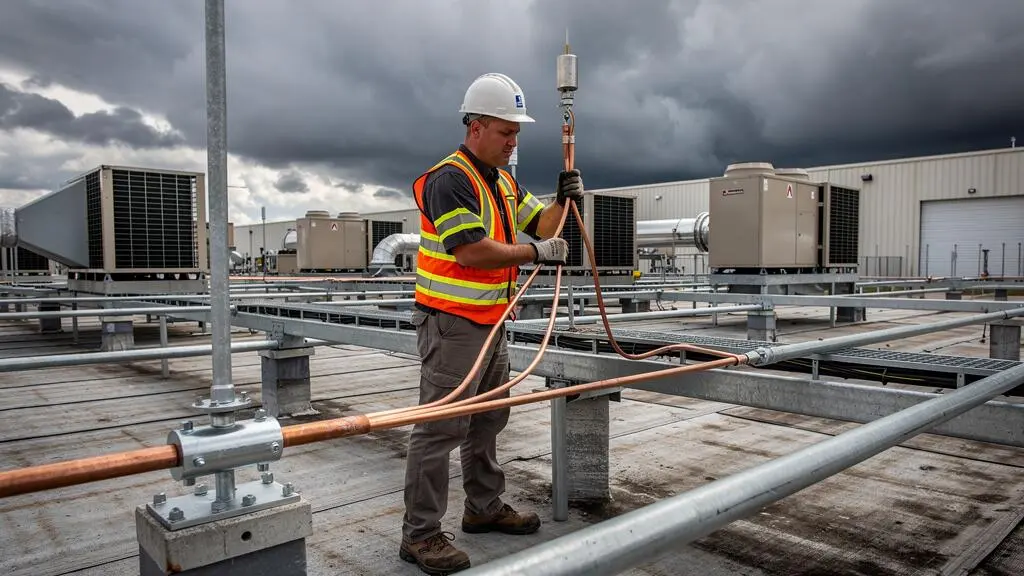
For industrial facility managers facing mounting pressure to justify every dollar of capital expenditure, lightning protection often sits uncomfortably between preventive necessity and budget constraint. Yet the risk landscape has fundamentally shifted. According to the Insurance Information Institute, U.S. insurers paid approximately $1.65 billion in lightning-related claims in 2025 alone, representing a 59% increase from the previous year. This surge reflects not just growing frequency of severe weather events, but also escalating costs when protection systems fail to meet modern operational demands.
The global lightning protection market is undergoing a structural transformation that extends far beyond incremental product improvements. Industrial decision-makers now confront a fundamental choice between perpetuating traditional passive hardware approaches and adopting data-driven risk management platforms that fundamentally redefine how facilities anticipate, document, and respond to atmospheric electrical threats. This shift carries direct implications for compliance roadmaps, total cost of ownership calculations, and the strategic positioning of safety functions within broader digital transformation initiatives.
Understanding the drivers reshaping this market through 2030 is essential for industrial leaders planning multi-year capital allocation strategies, particularly those managing facilities under stringent regulatory frameworks like Seveso classifications or operating in sectors where unplanned downtime carries six-figure hourly costs.
- Lightning strikes and industrial risk: What’s driving market growth through 2030?
- Regulatory evolution: how IEC standards reshape market dynamics
- Which industries are leading lightning protection adoption?
- From hardware to SaaS: the technology shift reshaping the sector
- How can predictive data transform lightning risk management?
- Key takeaways for industrial decision-makers
Lightning strikes and industrial risk: What’s driving market growth through 2030?
The perception that lightning risk remains a stable, well-understood hazard no longer aligns with observable climate patterns and their industrial consequences. Research synthesized by Climate Central indicates that while severe thunderstorm frequency has not changed dramatically since 1979 in many U.S. regions, modeling projects that conditions favorable to severe thunderstorms could become approximately 5 to 20% more frequent per 1.8°F of warming. For facilities operating continuous production processes, even marginal increases in storm activity translate directly into elevated operational risk exposure.
59%
increase
Growth in U.S. lightning-related insurance claims from 2024 to 2025, driven primarily by severity rather than frequency, according to the Insurance Information Institute.
This rising cost environment intersects with four structural drivers creating sustained demand for advanced protection solutions. First, regulatory tightening continues to compress replacement cycles for installed systems. Revisions to international standards—particularly IEC 62858 and related frameworks—have introduced documentation and performance requirements that render many pre-2019 installations technically compliant yet operationally insufficient for modern audit expectations.
Second, the digitalization of industrial operations has fundamentally altered vulnerability profiles. The convergence of information technology and operational technology systems means that facilities now house concentrations of sensitive electronic equipment whose replacement costs and downtime impacts dwarf those of traditional electromechanical systems. A lightning-induced surge that might have caused manageable damage to a relay-based control system a decade ago can now cascade through networked SCADA infrastructure, triggering facility-wide shutdowns.
Third, geographic market expansion reflects accelerating industrialization in regions with inherently high lightning density. Southeast Asia and sub-Saharan Africa, where manufacturing capacity and data center development are growing rapidly, experience some of the highest atmospheric electrical activity globally. This creates new demand in markets where protection infrastructure is being designed from inception rather than retrofitted.
Fourth, the escalating financial impact of unplanned downtime has elevated lightning protection from a compliance checkbox to a production continuity priority. For chemical processing facilities, refineries, and continuous manufacturing operations, each hour of unscheduled shutdown can generate losses exceeding $100,000 when accounting for lost production, restart costs, quality impacts, and contractual penalties. Two unplanned stoppages can easily eliminate the entire annual HSE budget margin, making preventive investment economically rational even under constrained capital allocation.
These drivers do not operate independently. Climate-driven increases in severe weather events create financial losses that trigger tighter insurance requirements and regulatory scrutiny, which apply to an industrial base undergoing rapid digital transformation that makes traditional passive protection approaches inadequate. The result is a market experiencing fundamental restructuring rather than incremental growth.
Regulatory evolution: how IEC standards reshape market dynamics
Understanding the chronology and implications of international lightning protection standards is essential for anticipating when existing installations transition from compliant to obsolete. The IEC 62858 standard, initially published in 2015 and substantively revised in 2019, establishes performance requirements for lightning detection and warning systems. Facilities relying on installations designed to the 2015 edition may find themselves facing documentation gaps during audits conducted against the 2019 revision’s more stringent traceability requirements.
The practical impact extends beyond theoretical compliance. Modern audit protocols—whether conducted by regulatory bodies like OSHA in the United States or insurance underwriters reassessing risk classifications—increasingly demand documented evidence of lightning events, protective responses, and system performance verification. Traditional passive protection architectures, consisting solely of air terminals, down conductors, and grounding systems, inherently cannot generate the audit trails now expected under revised standards.
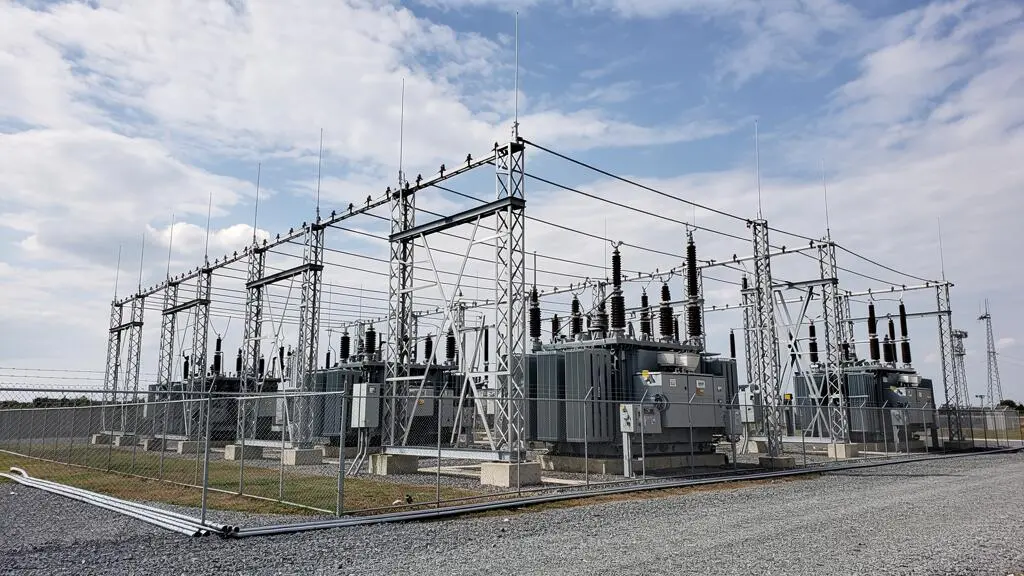
For facilities in the United States, the interaction between international IEC standards and domestic NFPA 780 requirements creates additional complexity. The NFPA 780 standard, maintained by the National Fire Protection Association, defines installation requirements for lightning protection systems across various structure types, including those housing flammable vapors or explosive materials. While IEC standards carry international authority, NFPA 780 remains the primary reference for U.S. compliance assessments and insurance certifications. Facilities operating across multiple jurisdictions must navigate both frameworks, often adopting the more stringent requirements from each.
Key differences between IEC 62858 editions: The 2019 revision introduced enhanced requirements for documented performance verification, systematic testing protocols, and auditable event logging. Systems installed to the 2015 standard may lack the data infrastructure to satisfy these expanded documentation expectations without retrofit integration of monitoring capabilities.
The business implication is straightforward: regulatory evolution functions as a market demand driver by creating technical obsolescence independent of physical equipment condition. A lightning protection system installed in 2014 may remain physically functional and capable of providing basic protection, yet fail to meet current documentation standards during regulatory inspections or insurance audits. This creates replacement pressure driven not by equipment failure but by compliance gap emergence.
For HSE managers preparing multi-year capital plans, the regulatory trajectory suggests that investments in protection systems lacking comprehensive monitoring and documentation capabilities face accelerated obsolescence risk. Conversely, platforms designed around data capture and audit trail generation align with the directional movement of both IEC and NFPA frameworks, reducing the probability of compliance-driven replacement within typical capital equipment lifecycles.
Compliance and liability considerations: Non-conformance with applicable IEC or NFPA standards can trigger consequences extending beyond regulatory citations, including personal liability for facility safety managers, insurance coverage exclusions for lightning-related losses, and increased scrutiny during regulatory audits following any incident.
Which industries are leading lightning protection adoption?
Lightning protection investment patterns vary significantly across industrial sectors, driven by distinct combinations of regulatory requirements, downtime costs, and asset criticality. Understanding these sectoral drivers provides benchmarking context for facility managers evaluating their own investment positioning.
Chemical and petrochemical facilities, particularly those classified under Seveso directives or equivalent high-threshold regulatory frameworks, face the most comprehensive protection requirements. These sites combine multiple risk amplification factors: catastrophic failure potential from ignition of flammable atmospheres, regulatory mandates for redundant safety systems, and severe financial consequences from production interruptions. For a mid-sized chemical plant operating continuous processes, even brief unplanned shutdowns can generate losses approaching $200,000 when factoring restart sequences, off-spec product disposal, and contractual delivery penalties. This economic reality makes advanced lightning protection with predictive alerting capabilities a rational operational investment rather than merely a compliance expense.
Data center operators represent another leading adoption segment, though driven by entirely different economics. These facilities house concentrated high-value electronic assets whose replacement costs are substantial, but whose revenue criticality stems primarily from service level agreement commitments. A lightning-induced power quality event that forces even momentary server shutdowns can trigger SLA violations with immediate financial penalties and long-term customer relationship damage. Data center managers increasingly view lightning protection as integral to their broader power quality and uptime assurance strategies, often specifying protection systems with real-time monitoring integration into facility management platforms.
The lightning protection industry has evolved to address these diverse sectoral requirements, with solutions ranging from traditional passive systems for lower-risk applications to comprehensive monitoring and alerting platforms for critical infrastructure.
Utilities and energy infrastructure operators face distinct requirements centered on public safety obligations and network reliability mandates. Electrical substations, transmission infrastructure, and renewable energy installations (particularly wind farms) require protection not only for asset preservation but to prevent cascade failures that could affect thousands of customers. Regulatory frameworks governing utilities typically impose more stringent protection and documentation standards than those applicable to private industrial facilities.
Manufacturing facilities, while facing less stringent regulatory requirements than Seveso-classified chemical plants, increasingly prioritize lightning protection as production efficiency metrics (Overall Equipment Effectiveness) become more demanding. The integration of advanced process control systems and just-in-time inventory approaches means that unplanned stoppages create ripple effects extending well beyond the immediate facility, potentially disrupting supply chains and customer delivery commitments.
From hardware to SaaS: the technology shift reshaping the sector
The most significant transformation in the lightning protection market involves a fundamental reconceptualization of what protection means. Traditional approaches centered on passive physical infrastructure: air terminals to intercept strikes, down conductors to channel current, and grounding systems to dissipate energy safely into earth. These systems provide essential protection but operate entirely reactively, offering no advance warning, generating no operational data, and requiring manual inspection to verify continued functionality.
Modern alternatives increasingly adopt a software-as-a-service architecture that treats lightning protection as an active risk management function rather than static physical equipment. Platforms like those offered by Meteorage exemplify this shift, providing real-time lightning detection and alerting without requiring physical installation of detection equipment at each protected site. By leveraging extensive networks of detection sensors and exploiting decades of historical data—in some cases spanning more than 30 years—these systems can deliver site-specific risk assessments and time-critical warnings that enable proactive protective measures.
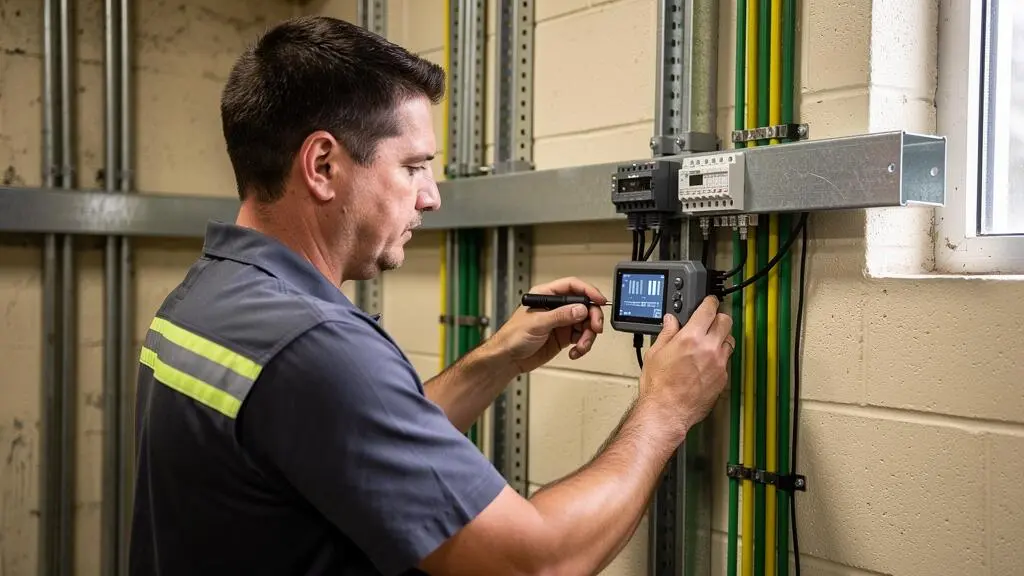
This architectural shift carries significant business model implications. Traditional lightning protection represents a capital expenditure: substantial upfront investment in physical infrastructure, followed by periodic maintenance costs and eventual replacement. SaaS platforms typically operate on an operational expenditure model: ongoing subscription fees that include continuous system updates, expanding historical databases, and evolving analytical capabilities without additional capital outlay.
For facility managers operating under constrained capital budgets, this CAPEX-to-OPEX transition can offer budgetary flexibility. Rather than seeking approval for a large upfront investment that may face competition from other capital priorities, protection can be funded through operational budgets with costs distributed across multiple fiscal periods. However, this advantage must be weighed against total cost of ownership over relevant time horizons, typically five to seven years for industrial safety system planning.
The functional capabilities distinguish the two approaches more fundamentally than their financial structures. SaaS platforms can integrate with existing facility systems—SCADA networks, building management systems, emergency response protocols—enabling automated protective actions. When a high-probability lightning event is detected approaching a facility, integrated systems can automatically initiate equipment shutdown sequences, alert personnel to postpone hazardous operations, or activate backup power conditioning systems, all without requiring manual intervention.
Traditional passive systems, by contrast, offer protection only after a strike occurs, providing no opportunity for anticipatory measures. For operations where controlled shutdown is vastly preferable to emergency shutdown (a common scenario in chemical processing and continuous manufacturing), this anticipatory capability carries substantial operational value beyond basic asset protection.
The market data supports this transformation. While comprehensive segmentation by business model remains limited in publicly available sources, industry participants report accelerating adoption of subscription-based protection services among operators of critical facilities, particularly those already implementing broader digital transformation initiatives where lightning protection integration aligns with established IT procurement patterns.
How can predictive data transform lightning risk management?
The operational question facing industrial decision-makers is not whether predictive lightning data is technologically impressive, but whether it delivers measurable improvements in safety outcomes, cost management, or regulatory compliance. Skepticism about data-driven solutions in industrial contexts is often well-founded, given the proliferation of analytics platforms that generate attractive visualizations without enabling better decisions.
Predictive lightning capabilities rest on the application of machine learning algorithms to extensive historical datasets. Platforms exploiting decades of observational data can identify atmospheric patterns associated with elevated strike probability for specific geographic locations, often with useful lead times of 24 to 48 hours. This temporal advance warning creates operational options unavailable with detection-only systems that identify lightning only as it occurs.
The most direct operational benefit involves optimizing preventive shutdown decisions. Facility operators facing approaching severe weather must choose between continuing operations (risking emergency shutdown with associated safety hazards and equipment stress) or implementing precautionary shutdown (accepting certain production loss to avoid uncertain but potentially severe consequences). Without reliable probability assessment, this decision often defaults to overly conservative patterns that accumulate substantial unnecessary downtime over annual operations.
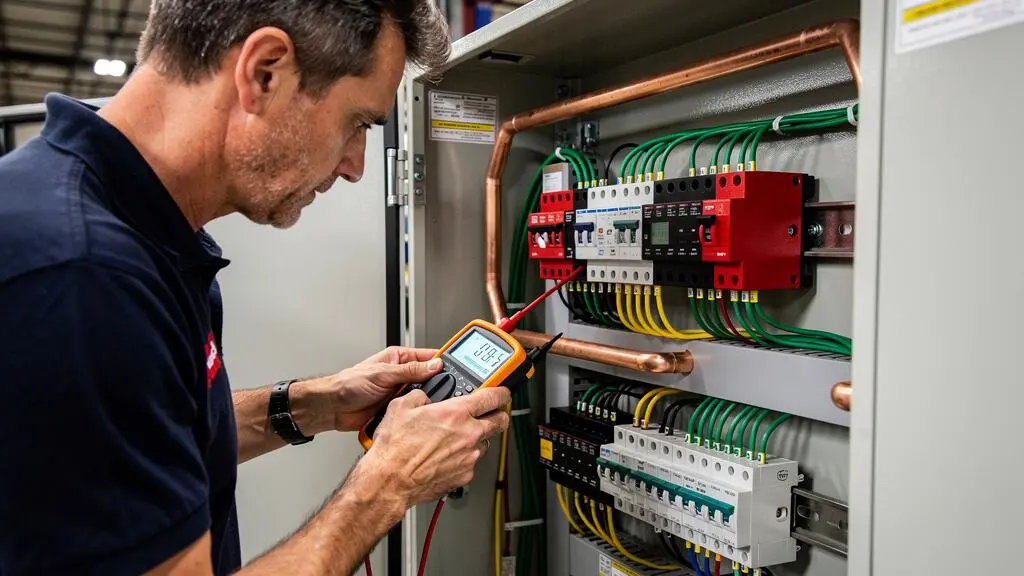
Facilities implementing predictive alerting report ability to reduce precautionary shutdowns while maintaining or improving safety margins. By distinguishing between weather systems with genuinely elevated lightning risk and those with low strike probability despite impressive radar signatures, operators can make more discriminating decisions that preserve production when safe while still implementing protective measures when warranted.
A secondary benefit involves protection system dimensioning optimization. Historical lightning density data for specific locations enables engineering teams to design protection systems matched to actual local exposure rather than generic regional averages. In areas with below-average lightning activity, this can justify less extensive (and less expensive) physical infrastructure without compromising protection adequacy. Conversely, facilities in high-density microclimates can justify enhanced protection investments with site-specific risk quantification.
For HSE functions seeking to demonstrate value beyond compliance administration, predictive lightning integration offers tangible examples of data-driven operational decision support. Integration with maintenance planning systems allows scheduling of outdoor work, tank cleaning operations, or other lightning-sensitive activities during periods of statistically lower risk. Integration with production planning enables proactive rather than reactive responses to weather threats. These applications position safety functions as contributors to operational efficiency rather than purely as cost centers imposing restrictions.
The documentation and audit value should not be underestimated. Automated logging of lightning events, proximity to facilities, and protective actions taken creates comprehensive audit trails that satisfy increasingly demanding regulatory and insurance documentation requirements. For facilities that have experienced challenges demonstrating compliance with IEC 62858 documentation standards, this capability alone may justify platform adoption independent of operational benefits.
The critical question—return on investment—depends heavily on facility-specific factors including downtime costs, regulatory exposure, and current protection infrastructure adequacy. Facilities where unplanned shutdown costs exceed $100,000 per event and which experience multiple weather-related production interruptions annually can typically justify predictive platform investments through downtime reduction alone. Facilities with lower consequence profiles may find value primarily through compliance and insurance benefits rather than direct operational returns.
Key takeaways for industrial decision-makers
Industrial leaders preparing lightning protection investment strategies for the 2027-2030 planning horizon confront a market in transition. The convergence of climate-driven risk elevation, regulatory framework evolution, and technological capability expansion creates both opportunity and complexity. The following strategic actions provide a framework for navigating this environment effectively.
Conduct a compliance gap assessment against current IEC and NFPA standards. For facilities with protection systems installed before 2019, commission a detailed audit comparing current installation capabilities against IEC 62858 revision 2019 requirements, with particular attention to documentation, testing, and performance verification provisions. This assessment should identify not only current compliance gaps but also probable future requirements based on regulatory trajectory, enabling proactive rather than reactive investment planning.
Calculate realistic total cost of ownership comparisons. When evaluating traditional hardware upgrades against SaaS platforms, construct TCO models spanning at least five years and including often-overlooked cost components: inspection and maintenance labor, documentation overhead, insurance premium impacts, and the opportunity cost of downtime events. For many facilities, the apparent cost premium of data-driven platforms diminishes or reverses when these comprehensive factors are included. See our analysis on the role of sensors in real-time control for broader context on monitoring system economics.
Integrate lightning protection requirements into digital transformation roadmaps. Facilities implementing SCADA upgrades, IoT sensor deployments, or enterprise system integrations should incorporate lightning protection integration requirements into these projects rather than treating protection as an isolated safety system. This approach achieves better technical integration, distributes costs across initiatives with different budget sources, and positions protection capabilities within broader operational intelligence strategies. Understanding the use of predictive analytics for operations provides valuable perspective on embedding safety systems within comprehensive analytics frameworks.
Establish quantified decision criteria for procurement specifications. Rather than relying on general vendor claims about capabilities, develop specific performance metrics for evaluation: required lead time for alerts, acceptable false positive rates, historical database depth for local risk assessment, API availability for system integration, and audit trail completeness for regulatory compliance. These quantified criteria enable objective comparison and create accountability for vendor performance commitments.
Document current baseline costs and performance. Before implementing any new protection approach, establish clear measurements of current annual downtime attributable to weather events, compliance audit findings, insurance costs, and maintenance expenditures. This baseline documentation enables credible ROI demonstration for investments and provides the evidentiary foundation for future budget justifications.
- Audit existing system compliance with IEC 62858 (2019 revision) and NFPA 780 current editions
- Quantify annual downtime costs and frequency of weather-related production interruptions
- Calculate 5-year TCO for hardware replacement versus SaaS platform adoption
- Review insurance policy requirements and potential premium impacts of protection upgrades
- Integrate lightning protection requirements into facility digital transformation planning
- Establish vendor evaluation criteria including integration capabilities and documentation features
The lightning protection market’s evolution from passive hardware provision to active risk management platforms mirrors broader industrial digitalization patterns. Facilities that successfully navigate this transition will position protection systems not as isolated compliance investments but as integrated components of comprehensive operational risk management, delivering measurable returns through downtime reduction, regulatory confidence, and strategic alignment with digital transformation trajectories. Those that defer decisions risk compounding technical obsolescence with regulatory non-conformance, ultimately facing more disruptive and expensive transitions under constrained timelines.