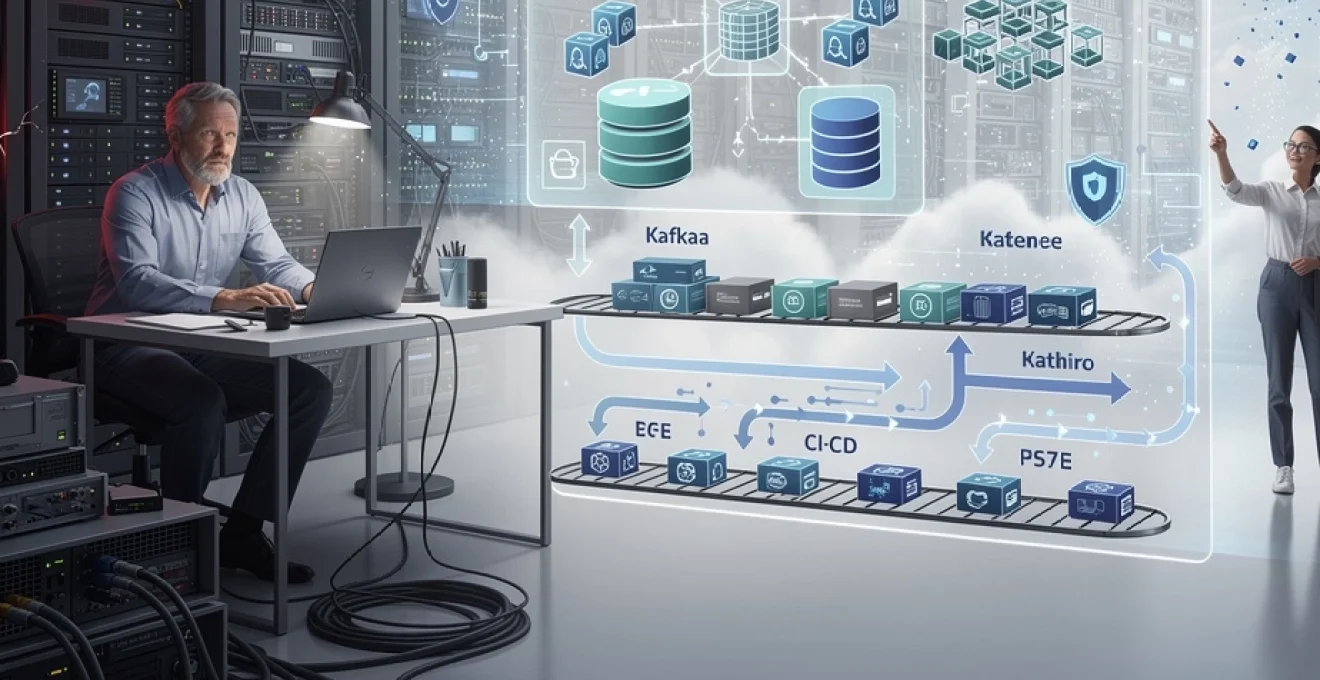
Digital transformation initiatives across enterprises often stumble upon a fundamental obstacle: the entrenched legacy systems that have served organisations for decades. These systems, built on outdated technologies and rigid architectures, create significant bottlenecks that prevent businesses from achieving their modernisation goals. While companies invest heavily in cloud migration, artificial intelligence, and automation technologies, their progress remains hampered by the technical debt accumulated over years of quick fixes and workarounds.
The challenge extends beyond simple technology upgrades. Legacy systems represent complex ecosystems of interdependent processes, data structures, and business logic that have evolved organically over time. Understanding how these systems impede digital transformation and implementing effective modernisation strategies requires a comprehensive approach that addresses technical, operational, and strategic considerations simultaneously.
Technical debt accumulation in mainframe systems and monolithic architectures
Technical debt represents one of the most pervasive challenges facing organisations attempting digital transformation. This metaphorical debt accumulates when development teams choose expedient solutions over optimal ones, often under pressure to deliver quick fixes or meet tight deadlines. In legacy environments, particularly those built on mainframe systems and monolithic architectures, this debt compounds exponentially over time, creating increasingly complex and unwieldy systems.
COBOL codebase maintenance challenges in financial services
Financial services institutions face particularly acute challenges with COBOL codebases that often span millions of lines of code across critical systems. These systems process trillions of transactions annually, yet finding developers with COBOL expertise becomes increasingly difficult as the workforce ages. The programming language, developed in 1959, lacks modern development tools and methodologies that contemporary developers expect.
Maintaining COBOL systems requires specialised knowledge of business logic that may not be adequately documented. Many financial institutions discover that their most critical business rules exist only in the minds of retiring developers or buried within complex code structures. This creates significant risk factors for operational continuity and compliance requirements. The cost of maintaining these systems often exceeds the expense of modern alternatives, yet the risk of migration failures keeps many organisations locked into their existing platforms.
Database schema rigidity in oracle and IBM DB2 legacy environments
Legacy database environments, particularly those built on Oracle and IBM DB2 platforms, often suffer from rigid schema designs that resist modification. These databases typically evolved through decades of incremental changes, resulting in complex table relationships and dependencies that make schema modifications extremely risky. The rigid structure prevents organisations from implementing modern data management practices such as real-time analytics or flexible data models.
Database administrators frequently encounter situations where seemingly simple changes require extensive impact analysis and lengthy testing cycles. The interconnected nature of legacy schemas means that modifications in one area can have unexpected consequences across the entire system. This rigidity becomes particularly problematic when organisations attempt to implement agile development methodologies that require rapid iteration and frequent schema updates.
API integration bottlenecks with REST and SOAP protocol mismatches
Modern digital transformation initiatives rely heavily on API-driven architectures that enable seamless integration between systems and services. However, legacy systems often use outdated communication protocols such as SOAP or proprietary messaging formats that create significant integration challenges. These protocol mismatches require complex transformation layers that add latency and increase the potential for system failures.
The transition from SOAP-based web services to RESTful APIs represents a fundamental shift in how systems communicate. Legacy systems designed around SOAP protocols often require extensive modification to support REST endpoints effectively. This creates integration bottlenecks where modern applications must communicate through multiple protocol layers, resulting in performance degradation and increased system complexity. The overhead of protocol translation can significantly impact system responsiveness, particularly in high-volume transaction environments.
Security vulnerabilities in outdated java EE and .NET framework applications
Legacy applications built on outdated versions of Java EE and .NET Framework present significant security vulnerabilities that threaten digital transformation initiatives. These platforms may lack current security patches and updates, leaving applications exposed to modern cyber threats. The challenge extends beyond simple patch management, as older frameworks may not support contemporary security practices such as multi-factor authentication or encrypted communications.
Security vulnerabilities in legacy systems often require comprehensive remediation efforts that go beyond applying patches. Outdated authentication mechanisms, weak encryption standards, and inadequate logging capabilities create multiple attack vectors that malicious actors can exploit
and are particularly dangerous in industries with strict regulatory requirements. As threat actors increasingly target older platforms, organisations running legacy Java EE and .NET applications find that traditional perimeter defences are no longer sufficient. Without modern security controls such as zero-trust architectures, fine-grained access control, and continuous security monitoring, these legacy systems become weak links that can compromise broader digital transformation efforts.
Infrastructure limitations hampering cloud-native adoption
Even when application teams are ready to modernise, infrastructure limitations can significantly slow down cloud-native adoption. Many enterprises still rely on ageing data centres, rigid virtualisation stacks, and network topologies designed for static workloads rather than dynamic, distributed applications. As a result, attempts to introduce containers, microservices, and cloud-native platforms often clash with the physical and operational constraints of on-premises environments.
These infrastructure challenges do not simply disappear when workloads are lifted and shifted into the cloud. Without addressing architectural and operational gaps, organisations risk recreating legacy constraints in a new environment, undermining the very benefits that digital transformation is supposed to deliver. Understanding where your current infrastructure falls short is essential to planning a realistic and sustainable modernisation roadmap.
On-premises server hardware constraints and virtualisation barriers
Legacy server hardware often lacks the flexibility and performance characteristics required for cloud-native workloads. Older x86 servers, proprietary UNIX systems, or tightly coupled mainframes were optimised for predictable, long-running applications rather than elastic, container-based deployments. This mismatch leads to resource contention, inefficient utilisation, and difficulty in scaling applications in line with fluctuating business demand.
Virtualisation platforms can partially mitigate these constraints, but many organisations run outdated hypervisors or have rigid VM provisioning processes. For example, if every new environment request still requires manual approval and ticket-based provisioning, the promise of rapid, self-service infrastructure evaporates. These virtualisation barriers translate into slower release cycles, longer lead times for experimentation, and reduced ability to support agile development practices.
Network bandwidth limitations affecting microservices communication
Microservices architectures rely heavily on fast, reliable network communication between services. In legacy environments, network bandwidth and latency were often engineered for a smaller number of chatty, monolithic applications confined within a data centre. When dozens or hundreds of microservices start communicating over the same network fabric, existing switches, firewalls, and routing configurations can quickly become bottlenecks.
Insufficient bandwidth or high latency between services leads to cascading performance degradation and unpredictable behaviour under load. You may see timeouts, increased error rates, or intermittent failures that are difficult to diagnose. To fully realise the benefits of microservices and cloud-native architectures, organisations must modernise not only their applications but also their network design, introducing software-defined networking, modern load balancers, and observability tools that can handle high volumes of east–west traffic.
Data centre colocation costs versus AWS and azure migration expenses
Operating legacy data centres and colocation facilities is capital-intensive, with ongoing costs for power, cooling, space, hardware refreshes, and specialised staff. Many organisations assume that migrating to AWS or Azure will automatically reduce costs, only to discover that poorly planned migrations can actually increase their total spend. Without right-sizing, reserved instance planning, or workload optimisation, cloud bills can escalate rapidly.
The financial trade-off between colocation and public cloud goes beyond simple cost-per-CPU comparisons. Enterprises must consider elasticity, disaster recovery, global reach, and managed services that reduce operational overhead. A structured cost model that compares three to five years of data centre expenses against cloud migration and operation costs helps you make informed decisions. In many cases, a hybrid strategy that gradually reduces colocation footprint while modernising applications in the cloud yields the best balance between cost and risk.
Compliance requirements for GDPR and PCI DSS in hybrid environments
Regulatory frameworks such as GDPR and PCI DSS add another layer of complexity to legacy system modernisation. In hybrid environments where data flows between on-premises systems and multiple clouds, ensuring consistent compliance controls becomes challenging. Legacy applications may not support granular data classification, encryption at rest, or role-based access control, making it difficult to demonstrate adherence to modern regulatory standards.
Maintaining compliance in these mixed environments requires a unified governance model, consistent logging and audit trails, and clear data residency policies. You need to know where personal and payment data is stored, how it is transmitted, and which systems process it. Implementing centralised identity and access management, encryption key management, and policy-as-code frameworks helps bridge the gap between legacy constraints and modern compliance obligations.
Application modernisation strategies through containerisation and microservices
To overcome the limitations of legacy systems without triggering massive, high-risk rewrites, many organisations adopt a gradual application modernisation strategy using containerisation and microservices. Instead of replacing entire systems at once, they encapsulate existing components, break down tightly coupled services, and re-architect critical paths over time. This iterative approach enables faster time-to-value and reduces disruption to business operations.
Containerisation and microservices do more than change how applications are deployed; they fundamentally reshape how you design, build, and operate software. When combined with DevOps practices and cloud-native platforms, they help you move from fragile, release-heavy projects to continuous delivery of smaller, safer changes. However, success requires clear patterns, strong governance, and careful attention to operational complexity.
Docker containerisation for legacy java and .NET applications
Docker has become a de facto standard for containerising legacy Java and .NET applications, allowing teams to package code, runtime, libraries, and configuration into portable images. For many organisations, the first step in legacy system modernisation is to lift existing applications into containers without major code changes. This “lift-and-shift into containers” approach provides immediate benefits such as environment consistency, simplified deployment, and easier scaling.
However, containerising legacy applications is not a silver bullet. You still need to address issues such as large image sizes, stateful dependencies, and configuration sprawl. A pragmatic pattern is to start with stateless components—APIs, web front-ends, batch jobs—before tackling heavily stateful services. Over time, you can refactor monolithic applications within containers into smaller, domain-aligned services, improving resilience and enabling independent deployment of critical business capabilities.
Kubernetes orchestration deployment patterns for enterprise workloads
Once applications are containerised, enterprises typically turn to Kubernetes for orchestration and lifecycle management. Kubernetes provides primitives for scaling, self-healing, rolling updates, and service discovery, but it can also introduce significant operational complexity. To avoid turning Kubernetes into another legacy platform-in-the-making, it is important to adopt proven deployment patterns that align with your organisation’s skills and risk tolerance.
Common patterns include blue–green deployments for critical services, canary releases to test new versions with a small portion of traffic, and multi-tenancy strategies that separate environments using namespaces and network policies. Many enterprises choose managed Kubernetes services such as Amazon EKS or Azure AKS to reduce the burden of cluster management. Regardless of the platform, investing in observability—logs, metrics, and distributed tracing—is essential to run production workloads reliably at scale.
Service mesh implementation using istio and linkerd for traffic management
As the number of microservices grows, managing secure, reliable communication between them becomes increasingly complex. Service meshes such as Istio and Linkerd address this challenge by providing a dedicated infrastructure layer for traffic management, security, and observability. Instead of embedding cross-cutting concerns into each service, you delegate them to sidecar proxies controlled by a central control plane.
With a service mesh, you can implement advanced patterns like mutual TLS encryption between services, circuit breaking, rate limiting, and sophisticated routing rules without changing application code. For example, you might gradually shift traffic from an old version of a service to a new one using weighted routing, or automatically retry failed requests with back-off. While service meshes add operational overhead, for large enterprises they offer a powerful way to standardise communication and improve resilience across heterogeneous microservices landscapes.
Event-driven architecture migration using apache kafka and RabbitMQ
Many legacy systems rely on synchronous, request–response communication that creates tight coupling and limits scalability. Migrating to event-driven architectures using platforms such as Apache Kafka and RabbitMQ enables more decoupled, resilient, and real-time systems. Instead of services calling each other directly, they publish and subscribe to events, allowing new consumers to be added without impacting existing producers.
Event-driven modernisation can start with a “strangler fig” pattern, where you route specific events from the legacy system into Kafka or RabbitMQ and build new services that consume these streams. Over time, more functionality is moved into event-driven components while the legacy core is gradually decommissioned. This approach supports digital transformation initiatives that require near real-time analytics, responsive customer experiences, and integration with external partners or SaaS platforms.
Data migration techniques from legacy databases to cloud platforms
Modernising legacy systems almost always involves migrating data from on-premises databases such as Oracle or IBM DB2 to cloud platforms like Amazon RDS, Azure SQL Database, or cloud-native data warehouses. Data migration is often the most complex and risky part of digital transformation, as it touches critical business records, customer information, and regulatory reporting data. Poorly executed migrations can result in data loss, extended downtime, or inconsistencies that undermine trust.
Successful data migration starts with a comprehensive assessment of data quality, dependencies, and usage patterns. Organisations typically combine multiple techniques: bulk data loads for historical data, change data capture (CDC) to replicate ongoing transactions, and dual-running strategies where legacy and modern systems operate in parallel during cutover. Automated ETL or ELT pipelines, robust validation scripts, and frequent reconciliation checks are essential to ensure that migrated data remains accurate and complete.
Devops implementation roadmap for continuous integration and deployment
Legacy systems often rely on manual deployment processes, long release cycles, and siloed operations teams, all of which conflict with the goals of digital transformation. Implementing a DevOps roadmap enables continuous integration and continuous deployment (CI/CD), shortening feedback loops and reducing the risk associated with releases. Rather than treating DevOps as a tooling exercise, leading organisations approach it as a cultural and process transformation.
A practical DevOps roadmap usually begins with establishing automated build and test pipelines for a small, non-critical application. As confidence grows, additional services are onboarded, test coverage is expanded, and deployment automation is introduced. Over time, practices such as infrastructure as code, automated environment provisioning, and continuous security testing are adopted. This incremental approach helps you move away from fragile, big-bang releases towards frequent, reliable deployments that support faster innovation.
Risk mitigation frameworks during enterprise system transformation
Modernising legacy systems at enterprise scale inevitably introduces risk—technical, operational, financial, and regulatory. Without a structured risk mitigation framework, organisations can become paralysed by fear of disruption or, conversely, rush into changes that jeopardise core operations. A balanced approach combines robust governance with agile delivery, ensuring that risks are identified, quantified, and addressed throughout the transformation lifecycle.
Effective risk mitigation frameworks typically include formal risk registers, impact assessments, and contingency plans for critical systems. Techniques such as the strangler fig pattern, feature toggles, and dark launches limit blast radius by introducing new capabilities alongside existing ones rather than replacing them outright. Regular stakeholder communication, transparent metrics, and post-implementation reviews further reduce uncertainty. By embedding risk management into your modernisation strategy, you can move faster with confidence, turning legacy constraints into a catalyst for sustainable digital transformation.