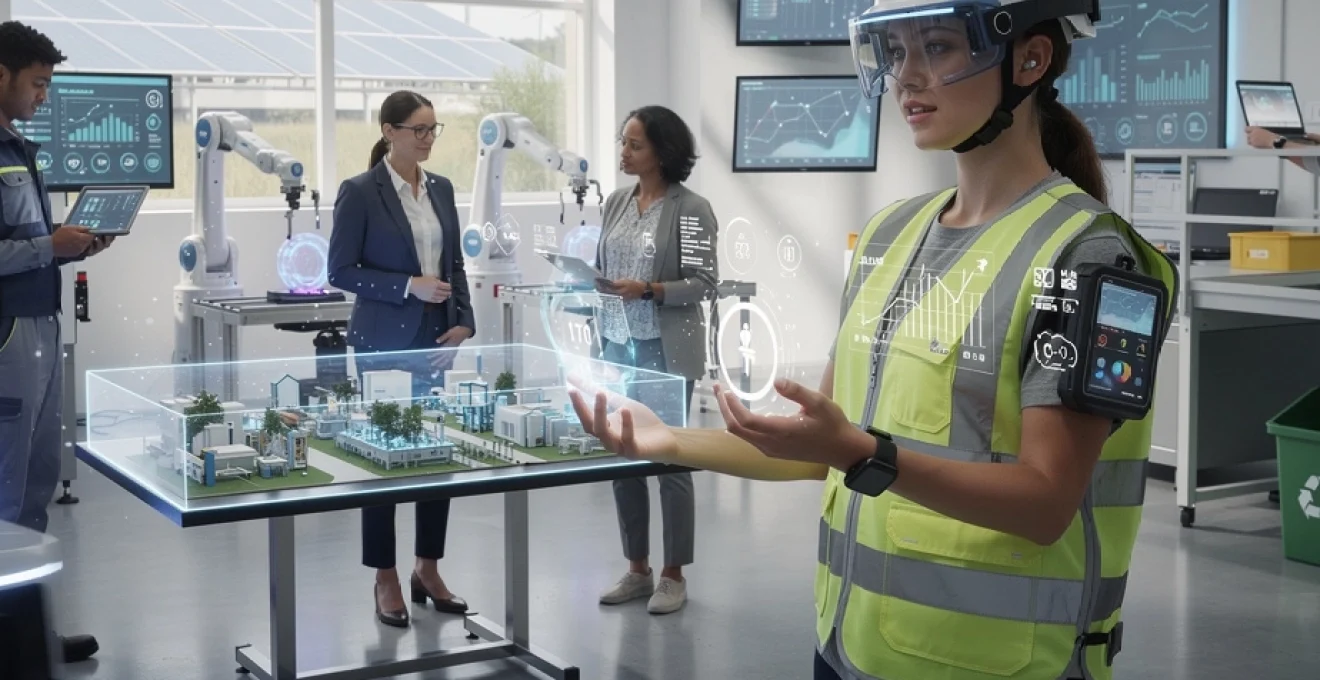
The manufacturing sector stands at a critical inflection point. As Generation Z and Millennials increasingly populate industrial workplaces, their expectations are fundamentally reshaping production environments that have historically operated on decades-old paradigms. These younger workers, representing nearly half of today’s global workforce, bring perspectives forged in digital connectivity, economic volatility, and heightened social consciousness. Unlike their predecessors who often accepted industrial work conditions as unchangeable constants, today’s younger generations view technology integration, environmental responsibility, and psychological safety as baseline requirements rather than aspirational goals. For industrial operations managers, this generational shift presents both challenges and opportunities: organizations that adapt their practices will secure competitive talent advantages, while those clinging to traditional models risk becoming obsolete in an increasingly tight labour market.
The data tells a compelling story. Research indicates that 40% of Gen Z employees have declined job offers from companies whose values didn’t align with their principles, whilst 34% have left positions due to professional stagnation. In industrial contexts where worker retention has always posed challenges, these statistics demand serious attention. The question facing manufacturing leaders isn’t whether to accommodate younger workers’ expectations, but rather how to integrate their perspectives whilst maintaining operational efficiency and productivity standards that drive business success.
Digital-native workforce integration in manufacturing and production environments
Younger generations entering industrial workplaces have never known a world without smartphones, cloud computing, and instant digital communication. This fundamental reality shapes their expectations for how manufacturing operations should function. They anticipate seamless technology integration that mirrors their personal digital experiences, and outdated systems that create friction rather than facilitate work represent significant frustration points. When production facilities rely on paper-based processes, disconnected databases, or clunky legacy software, Gen Z workers perceive these inefficiencies as organizational failures rather than acceptable industry norms.
The contrast becomes particularly stark when you consider that younger workers routinely use sophisticated apps for everyday tasks like banking, navigation, and social coordination. When they encounter industrial management systems that feel decades behind consumer technology, the cognitive dissonance undermines their confidence in organizational competence. Manufacturing leaders must recognize that technology expectations aren’t about novelty-seeking; they’re about fundamental usability standards that younger workers consider non-negotiable. Companies investing in intuitive digital infrastructure signal both operational sophistication and respect for their workforce’s time and capabilities.
Cloud-based ERP systems and Real-Time production monitoring expectations
Enterprise Resource Planning (ERP) systems represent the nervous system of modern manufacturing operations, yet many facilities still operate on premise-based platforms requiring desktop access and offering limited mobile functionality. Gen Z and Millennial workers expect cloud-based ERP solutions accessible from any device, providing real-time visibility into production metrics, inventory levels, and quality control data. These expectations stem from their experience with cloud platforms that deliver instant information access regardless of physical location.
Real-time production monitoring particularly resonates with younger workers’ desire for transparency and immediate feedback. Dashboard interfaces displaying current output rates, efficiency metrics, and performance against targets create the data-driven environment that digital natives find motivating. When production information remains siloed in manager-only systems or delayed through batch reporting processes, younger workers feel disconnected from operational realities and unable to understand their contributions’ impact. Cloud-based systems democratize data access whilst enabling the instant gratification that research shows Gen Z particularly values in workplace feedback mechanisms.
Mobile-first CMMS platforms for maintenance task management
Computerized Maintenance Management Systems (CMMS) have traditionally been designed for desktop use, requiring maintenance technicians to physically return to office workstations for task updates, parts requests, or documentation. This workflow fundamentally conflicts with younger workers’ expectations for mobile-first functionality. Gen Z maintenance technicians expect to receive work orders, access equipment manuals, log completed tasks, and request parts directly from smartphones or tablets whilst standing at the equipment requiring attention.
Mobile CMMS platforms also facilitate the visual documentation younger workers prefer. Rather than writing lengthy text descriptions of equipment issues, they can capture photos or videos that communicate problems more effectively. This approach aligns with their communication preferences shaped by visual social media platforms. Additionally, mobile access enables the immediate task completion confirmation that younger workers value, rather than creating end-of-shift administrative burdens that feel disconnected from actual maintenance work.
Iot sensor data accessibility and transparency requirements
Internet of Things (Io
T (IoT) deployments across manufacturing have exploded over the past decade, but younger generations expect more than just sensors quietly feeding data into black-box systems. They want accessible, transparent IoT data that helps them make smarter decisions in real time. When vibration, temperature, or throughput data is only visible to a handful of engineers—or buried in specialist software—frontline operators feel excluded from the very information that shapes their performance evaluations.
Digital-native workers expect intuitive dashboards where they can see the status of machines, energy consumption, and anomaly alerts without needing advanced coding or engineering skills. They are used to analytics apps that surface trends with clear visuals rather than dense spreadsheets. Giving technicians and operators access to IoT sensor data empowers them to participate in predictive maintenance, root-cause analysis, and continuous improvement. It also signals trust: rather than hoarding information at the top, leadership is willing to share context and decision-making power with those closest to the process.
Collaborative digital twins and virtual factory floor simulations
Digital twins and virtual factory simulations are no longer futuristic concepts; they are becoming central to how modern industrial workplaces operate. For younger generations, who grew up with video games and immersive 3D environments, the idea of navigating a virtual replica of a production line feels intuitive. They expect to be able to test process changes, evaluate layout options, and simulate “what if” scenarios in a digital space before any physical adjustments are made on the actual factory floor.
Collaborative digital twins support the kind of cross-functional teamwork that Gen Z and Millennials value. Production engineers, maintenance teams, and operators can jointly explore bottlenecks, safety risks, and energy waste within the same virtual environment. This shared digital context reduces misunderstandings and speeds up decision cycles. Just as importantly, it allows younger employees to contribute ideas without needing decades of on-the-floor experience; they can visually see the impact of proposed changes and back their suggestions with simulation data.
When industrial organizations use digital twins purely as engineering tools, they miss a crucial engagement opportunity. Opening these platforms to operators—through intuitive user interfaces and guided scenarios—turns the virtual factory into a learning and innovation hub. In practice, this might mean inviting shift teams to run weekly simulation sessions or integrating digital twin insights into standard continuous improvement meetings. The more you democratize these advanced tools, the more they become a magnet for younger talent looking for modern, high-tech industrial careers.
Flexible scheduling models and non-traditional shift patterns in industrial operations
Work-life balance is not a buzzword for younger generations; it is a core criterion when evaluating industrial employers. Yet many manufacturing and processing facilities still operate on rigid shift systems designed decades ago, long before hybrid work or burnout were mainstream concerns. For Gen Z and Millennials, the expectation is clear: modern industrial workplaces should explore flexible scheduling models that protect operational continuity without sacrificing employee well-being.
This does not mean abandoning 24/7 coverage where it is required. Instead, it means revisiting how shifts are structured, how overtime is managed, and how much autonomy workers have in influencing their schedules. Younger employees are far more likely to stay—and perform at a high level—when they feel they can plan their lives around work, not the other way around. In tight labour markets, forward-thinking scheduling becomes a competitive advantage rather than an administrative headache.
Four-day working week implementation in continuous manufacturing lines
The idea of a four-day working week has gained significant momentum across sectors, and younger industrial workers are paying attention. While continuous manufacturing lines cannot simply shut down every Friday, they can adopt compressed work patterns that deliver similar benefits. For example, some plants are experimenting with 4 x 10-hour shifts or rotating four-day blocks that cover all seven days through staggered teams. The goal is to provide more frequent extended rest periods without compromising throughput.
From a generational expectations standpoint, a shortened workweek signals that leadership genuinely cares about fatigue, mental health, and work-life integration. Studies from pilot programmes in other industries have reported stable or even increased productivity, along with lower absenteeism and higher engagement. For manufacturing leaders, the key question is not “Is a four-day week possible in theory?” but rather “Where in our process could we pilot compressed weeks without affecting quality or safety?” Starting with specific lines, roles, or seasons can help build a business case grounded in actual plant data.
Of course, changing shift patterns requires careful planning. You will need to account for maintenance windows, handover quality, and staffing coverage for critical roles. But when younger employees see management actively exploring four-day formats and seeking their input through surveys or pilot committees, trust increases. They no longer feel locked into legacy schedules that ignore evolving expectations in modern industrial workplaces.
Compressed shift schedules and DuPont rotation system alternatives
The traditional DuPont rotation system, with its complex pattern of 12-hour shifts and changing rest days, has been widely used in process industries. However, younger workers often perceive such systems as opaque and disruptive to their personal lives. They prefer scheduling models that offer predictability, clarity, and more consistent time off. As a result, many industrial employers are re-evaluating long-standing rotation patterns and exploring alternatives that balance coverage and well-being.
Compressed shift schedules—such as 2-2-3 patterns, fixed days/nights, or hybrid 8/12-hour combinations—can be more appealing to Gen Z and Millennial employees. These models reduce the feeling of constantly “living at the plant” while still ensuring around-the-clock operations. When organizations involve staff in redesigning shift systems, using workshops or anonymous surveys, they not only arrive at more practical solutions but also demonstrate the kind of inclusive decision-making younger generations expect.
Importantly, any new schedule should be evaluated not only for productivity but also for health and safety implications. Fatigue levels, error rates, and incident data need to be tracked before and after implementation. Sharing these metrics transparently closes the loop with younger employees, showing that their comfort is considered alongside operational outcomes. In this way, shift design becomes a joint continuous improvement project rather than a top-down edict.
Remote monitoring capabilities for hybrid industrial supervision roles
The pandemic accelerated remote work expectations across all sectors, and industrial environments are no exception. While frontline production roles must remain on site, many supervisory, engineering, and quality assurance tasks can now be performed partially off-site via remote monitoring tools. Younger professionals in these roles often expect hybrid arrangements where they can analyze data, review dashboards, and attend meetings from home on designated days.
To enable this, manufacturing organizations are investing in secure remote access to SCADA systems, cloud-based production dashboards, and mobile alarm notifications. Hybrid supervisors might spend part of the week physically on the shop floor and the rest reviewing performance data, writing reports, or planning improvements from their home office. This model does not reduce accountability; instead, it leverages the digital skills of younger leaders who are comfortable managing by metrics and real-time alerts.
From a talent perspective, offering hybrid supervisory roles in an industrial workplace can be a game-changer. It counters the perception that manufacturing careers are inherently inflexible and location-bound. At the same time, it encourages more analytical, data-driven management practices. The key is to clarify expectations: remote days should be structured around high-value tasks, not treated as unofficial downtime. When done well, hybrid supervision aligns with both generational preferences and the drive towards more connected, intelligent factories.
Advanced safety technology and wearable PPE integration
Younger generations have grown up with always-on connectivity and smart devices that track steps, heart rate, and even sleep patterns. It is no surprise, then, that they expect industrial safety to move beyond clipboards and static signage towards intelligent, connected systems. In their view, if consumer wearables can flag health risks, industrial workplaces should certainly be using similar technology to prevent injuries and incidents.
Modern safety technology—particularly when integrated into personal protective equipment (PPE)—resonates strongly with Gen Z and Millennial workers. It demonstrates that employers are willing to invest not only in production machinery but also in the people operating it. Moreover, connected safety systems can provide the kind of real-time feedback and data transparency that younger employees associate with high-performing industrial environments. The question is no longer whether you can afford to deploy smart PPE, but whether you can afford not to in a competitive labour market.
Smart helmet systems with augmented reality hazard detection
Smart helmets equipped with augmented reality (AR) overlays are transforming how younger workers interact with complex industrial environments. These devices can display step-by-step instructions, highlight pinch points or high-voltage areas, and show real-time equipment status directly in the wearer’s field of view. For digital natives used to heads-up displays in video games, AR-guided workflows feel natural—and can significantly shorten the learning curve for new tasks or unfamiliar equipment.
From a safety standpoint, AR-enabled helmets can alert users to hazards that might otherwise go unnoticed: moving cranes entering a zone, hot surfaces, or lockout/tagout points that must be verified before maintenance. By combining sensor inputs with visual cues, these systems turn the factory floor into an interactive safety map. This is far more engaging for younger employees than static posters or lengthy printed procedures.
Operationally, smart helmets can also support remote assistance. Senior technicians or engineers can “see what the wearer sees” and guide them through complex diagnostics or repairs. This not only improves problem resolution times but also reinforces a culture of collaborative learning. For younger workers seeking mentorship and real-time feedback, this kind of guided AR support can be a powerful retention tool.
Proximity warning sensors and collision avoidance wearables
In busy warehouses and production areas with forklifts, automated guided vehicles (AGVs), and heavy equipment, proximity warning systems are becoming an expected standard rather than a nice-to-have. Wearables such as smart vests, badges, or wristbands can vibrate or emit audible alerts when workers move too close to moving vehicles or restricted zones. For younger employees who are accustomed to smartphones buzzing with notifications, this haptic feedback is an intuitive way to signal risk.
Collision avoidance wearables do more than just protect individuals; they also generate valuable data about near-miss patterns, traffic flows, and congestion points. When analyzed, this information can guide layout changes, revised traffic rules, or additional training. Sharing these insights with teams—especially younger workers keen on data-driven improvements—helps create a sense of joint ownership over safety outcomes.
It is important, however, to position such systems as supportive tools rather than surveillance mechanisms. Gen Z and Millennials are sensitive to privacy issues and may resist technology that feels overly intrusive. Clear communication about what data is collected, how it will be used, and how it benefits workers directly is essential for widespread adoption and trust.
Biometric fatigue monitoring through connected safety devices
Fatigue is a critical risk factor in industrial environments, especially where long shifts, night work, or repetitive tasks are involved. Younger generations are more vocal than previous cohorts about mental health, sleep quality, and burnout, and they expect employers to take these issues seriously. Biometric fatigue monitoring systems—integrated into wearables or cab-mounted devices—can track indicators such as eye movement, micro-sleeps, or heart rate variability to flag potential fatigue before it leads to an incident.
For example, a driver of a heavy vehicle might receive an alert suggesting a break when their biometrics indicate decreasing alertness. Supervisors can view anonymized trend data to identify chronic fatigue hotspots, such as specific shifts or tasks. Treating this information as a tool for workload redesign and rest scheduling, rather than as a disciplinary trigger, is crucial for building trust with younger employees.
The analogy to consumer fitness trackers is helpful here: just as people use smartwatches to understand and improve their health, workers can use industrial fatigue data to co-manage their well-being with their employer. This shared responsibility model aligns with Gen Z’s desire for partnership rather than paternalism in workplace health and safety.
Real-time air quality sensors and environmental exposure tracking
Air quality, chemical exposure, and dust levels are no longer invisible risks that workers simply “tolerate.” Modern sensor networks can continuously monitor particulates, volatile organic compounds (VOCs), noise, and other environmental factors across a facility. Younger generations, highly attuned to environmental health topics, increasingly expect this level of monitoring in any modern industrial workplace.
Real-time dashboards showing air quality by zone—accessible on large screens or mobile devices—provide transparency and reassurance. When thresholds are exceeded, automated alerts can trigger ventilation changes, process adjustments, or temporary evacuations. This immediate feedback loop stands in stark contrast to traditional periodic sampling or manual checks, which can feel outdated and insufficient to younger employees.
Beyond immediate safety, exposure tracking data can support long-term health planning and compliance. Sharing aggregated, anonymized exposure trends with the workforce builds confidence that the company is not hiding risks. In an era where trust and transparency heavily influence employer choice, visible environmental monitoring can be a decisive factor for Gen Z and Millennial candidates considering industrial careers.
Sustainable manufacturing practices and environmental accountability metrics
For many younger workers, environmental responsibility is not an optional corporate social responsibility add-on; it is central to whether they feel proud to work for a company. Surveys consistently show that Gen Z in particular scrutinize employers’ climate commitments and operational practices. In heavy industries that have historically been carbon-intensive, this creates both pressure and opportunity: organizations that embrace sustainable manufacturing can position themselves as employers of choice for environmentally conscious talent.
Modern industrial workplaces are therefore expected to measure, report, and reduce their environmental footprint in transparent and credible ways. It is not enough to publish high-level sustainability statements; younger employees want to see tangible initiatives on the factory floor—energy-efficient equipment, waste reduction programmes, and clear accountability metrics. When they can directly link their daily work to environmental outcomes, their engagement and retention rise significantly.
Carbon footprint dashboards and scope 1-3 emissions transparency
Carbon accounting has moved from annual sustainability reports into real-time operational management. Younger generations expect companies to understand and communicate their Scope 1 (direct), Scope 2 (energy-related), and Scope 3 (value chain) emissions with increasing granularity. In manufacturing settings, this often means implementing energy meters, fuel-use tracking, and supplier data integration into centralized carbon dashboards.
Making these dashboards visible to frontline teams—not just executives—helps connect daily production decisions with broader climate goals. For example, operators might see how different machine settings affect energy use per unit, or how downtime practices influence peak demand charges and associated emissions. This is analogous to seeing fuel economy in a car’s dashboard: once the data is visible, behaviour tends to shift toward more efficient patterns.
Transparency also builds credibility. Younger workers are quick to spot greenwashing and expect companies to acknowledge both progress and gaps. Sharing emissions reduction roadmaps, interim targets, and performance updates—warts and all—demonstrates the kind of honesty that research shows is critical for Gen Z trust. When employees can track environmental performance like any other KPI, sustainability stops being an abstract PR topic and becomes part of everyday industrial decision-making.
Circular economy principles in production line design
The linear “take-make-dispose” model is increasingly at odds with how younger generations think about resources. In its place, they look for circular economy principles: designing products and processes so that materials are reused, refurbished, or recycled rather than discarded. For industrial workplaces, this expectation translates into scrutiny of scrap rates, packaging waste, and end-of-life product handling.
Embedding circularity into production line design might involve closed-loop cooling systems, modular components that can be easily replaced and remanufactured, or reclaim stations that capture offcuts for reprocessing. Younger engineers and operators often bring creative ideas to these challenges, particularly when given data on waste streams and associated costs. Inviting them into design reviews and Kaizen events focused on resource efficiency taps into their desire to contribute to something bigger than immediate output volumes.
Communicating circular initiatives clearly is equally important. When workers see labelled recycling stations, remanufacturing cells, or dashboards tracking waste diversion rates, they understand that sustainability is operationalized, not just theorized. This alignment between stated values and visible practices is a powerful differentiator for younger employees deciding whether to commit to a long-term industrial career with your organization.
Renewable energy integration and net-zero manufacturing commitments
Net-zero goals are rapidly becoming a baseline expectation among younger talent, especially in energy-intensive sectors. Manufacturing organizations that commit to science-based targets and invest in renewable energy—whether through onsite solar, wind, or long-term power purchase agreements—signal seriousness about climate action. For Gen Z and Millennials, the difference between a vague “green” statement and a detailed net-zero roadmap can determine whether they even apply for a role.
On the shop floor, renewable integration often shows up as solar arrays on facility roofs, energy storage systems, or smart controls that align high-energy processes with periods of cleaner grid power. Explaining these projects to employees, and involving them in energy-saving initiatives, helps translate corporate climate strategy into tangible workplace improvements. It also provides an opportunity for younger workers to build skills in energy management—a field likely to grow in importance over their careers.
Of course, net-zero pathways involve trade-offs and complexities, from capital investment decisions to supply chain impacts. Being open about these challenges, and inviting input from cross-functional teams, reflects the transparent, participatory culture younger generations expect. In many cases, they would rather join a company that is honestly wrestling with decarbonization than one that stays silent on the issue.
Continuous learning platforms and skills development infrastructure
In fast-evolving industrial environments, static job descriptions and one-off training sessions no longer suffice. Automation, robotics, and data analytics are reshaping roles at every level, and younger workers are acutely aware that their employability depends on continuous learning. They expect industrial employers to provide structured development pathways, accessible learning platforms, and clear signals that skill growth is valued—not just tolerated.
This expectation aligns closely with operational needs: plants implementing Industry 4.0 technologies require multi-skilled technicians, data-literate operators, and adaptable supervisors. Treating learning as part of daily work, rather than as an occasional add-on, helps bridge this gap. It also counters the perception that industrial jobs are “dead ends,” a stigma that can deter younger candidates unless actively challenged through visible development opportunities.
Vr-based equipment training simulations and safety protocols
Virtual reality (VR) training is particularly well-suited to younger generations, who are comfortable with immersive digital environments. In manufacturing, VR can replicate complex equipment, hazardous scenarios, or rare maintenance tasks in a fully controlled setting. New hires can practice lockout/tagout procedures, emergency shutdowns, or intricate assembly steps repeatedly, without risk to themselves or the plant.
This approach is not only safer but often more engaging than classroom lectures or static videos. Trainees receive instant feedback based on their actions in the simulation, mirroring the real-time responses they are used to in gaming. As a result, knowledge retention and confidence tend to be higher when they eventually step onto the actual factory floor. For younger workers wary of high-risk environments, being able to “learn the ropes” virtually first can ease anxiety and accelerate onboarding.
From a business perspective, VR-based training also scales efficiently across sites and shifts. Standardized modules can be rolled out globally, while still allowing for localization of procedures or equipment models. Involving younger employees in testing and refining these modules can further boost buy-in and ensure the content resonates with a digital-native audience.
Micro-credentialing through LinkedIn learning and coursera partnerships
Traditional multi-day courses or offsite workshops often clash with the way younger generations prefer to learn: in short, focused bursts that fit around their work and personal lives. Micro-credentialing—earning small, stackable certificates for specific skills—aligns much better with this expectation. Many industrial employers are now partnering with platforms like LinkedIn Learning, Coursera, or specialized technical providers to offer curated learning pathways tied directly to career progression.
For example, a maintenance technician might complete a series of micro-courses on PLC programming, vibration analysis, or root-cause problem solving, each resulting in a digital badge. These badges can be recognized internally for promotion eligibility or pay adjustments, and externally on professional profiles. This creates a transparent link between effort, learning, and reward—something Gen Z and Millennials consistently say they value.
The key is to integrate micro-credentials into performance and talent management processes, rather than treating them as optional extras. When supervisors actively discuss learning goals in one-to-ones, reference micro-credentials in succession planning, and celebrate completions in team meetings, younger employees see clear evidence that development is not just encouraged but expected and rewarded.
Cross-functional upskilling in automation and robotics programming
As automation and robotics become more prevalent, the most resilient industrial roles are those that blend mechanical understanding with digital skills. Younger workers, often less attached to rigid role boundaries than their predecessors, are keen to build cross-functional capabilities. They want opportunities to move between operations, maintenance, quality, and even data analytics, rather than being confined to a narrow specialism.
Forward-looking plants are responding by creating structured cross-training programmes. Operators might learn basic robot teach-pendant operations, while electricians gain exposure to Python scripting for data collection or simple algorithm tuning. Think of it as building “industrial bilinguals” who can speak both mechanical and digital languages. This not only increases flexibility in staffing but also prepares the workforce for future technology deployments.
Practically, cross-functional upskilling can be implemented through job rotations, project-based assignments, or joint workshops led by automation suppliers. Involving younger employees in commissioning new equipment, data integration projects, or continuous improvement teams accelerates their learning while giving them visible impact on the plant’s modernization journey. The message they receive is clear: in this industrial workplace, your skills will grow as fast as the technology does.
Inclusive leadership models and psychological safety in production teams
Perhaps the most profound expectation younger generations bring to industrial workplaces concerns how they are led and how safe they feel speaking up. Hierarchical, command-and-control models—long typical of factories and plants—clash with Gen Z and Millennials’ desire for voice, collaboration, and respect. They are more likely to leave environments where questioning decisions is discouraged, where mistakes are punished rather than analyzed, or where diversity is treated as a checkbox exercise.
Psychological safety—the belief that you can raise concerns, admit errors, and propose ideas without fear of ridicule or retaliation—is especially important in high-risk industrial settings. It is not just a “soft” cultural factor; it directly affects safety outcomes, quality performance, and innovation. Younger workers, who have grown up with social platforms that amplify their voices, expect industrial leaders to create spaces where that voice is welcomed on the shop floor as well.
Flat organisational hierarchies replacing traditional foreman structures
In many plants, the traditional foreman role has historically been a single point of authority, often based more on tenure than on coaching ability. Younger employees tend to respond better to team-based structures with accessible leaders who facilitate rather than command. This does not mean eliminating supervision, but it may mean redefining it: shifting from “boss” to “team lead” or “coach” models, and reducing unnecessary layers between frontline workers and decision-makers.
Flatter hierarchies can speed up problem-solving and empower cross-functional collaboration. For instance, autonomous production cells might have multi-skilled teams that jointly own output, quality, and basic maintenance, supported by a coach who removes obstacles and connects them with specialist resources. Younger workers appreciate the autonomy and shared responsibility this model provides, as well as the clearer visibility into how decisions are made.
Transitioning away from rigid foreman structures requires investment in leadership development. Supervisors may need support to build skills in facilitation, feedback, and conflict resolution. However, the payoff is significant: teams where members feel heard and respected tend to show higher engagement, lower turnover, and a stronger continuous improvement culture—all of which align with younger generations’ expectations of a modern industrial workplace.
Anonymous feedback mechanisms and continuous improvement suggestion systems
Younger employees expect to be able to share their views on safety, processes, and leadership without fear of negative consequences. Anonymous feedback tools—ranging from digital pulse surveys to suggestion apps accessible via smartphones—provide a channel for this input. When used well, these tools transform the traditional “suggestion box” into a dynamic, real-time insight engine that leadership can use to prioritize improvements.
However, anonymity alone is not enough. What matters most to Gen Z and Millennials is whether their feedback leads to visible action. Regularly sharing summaries of themes raised, decisions taken, and changes implemented closes the loop and reinforces trust. For example, a monthly “You Said, We Did” update posted in common areas or on internal platforms can highlight fixes to PPE availability, shift handover practices, or training content based on employee suggestions.
Integrating these mechanisms into formal continuous improvement systems—such as Kaizen boards, daily huddles, or digital ticketing—ensures that ideas from younger workers are not sidelined. Over time, this participation builds a sense of ownership: they are not just operating within the system; they are actively helping to shape it.
Diversity representation in engineering and technical management roles
Finally, representation matters deeply to younger generations. They notice who holds the technical authority, who leads maintenance teams, and who sits in production planning meetings. When engineering and management ranks lack diversity—whether in gender, ethnicity, age, or background—it sends a silent message about who is expected to advance in the organization. For many Gen Z and Millennial workers, especially those from underrepresented groups, this can be a decisive factor in whether they see a future in your industrial workplace.
Improving diversity in technical and leadership roles requires more than inclusive hiring statements. It involves targeted outreach to diverse talent pools, fair promotion processes, mentorship programmes, and unbiased evaluation criteria. For example, pairing early-career technicians with senior mentors from varied backgrounds, or setting clear, skills-based criteria for supervisory promotions, can begin to shift the makeup of leadership over time.
Crucially, younger employees expect transparency about progress and challenges in this area. Publishing diversity metrics, setting realistic but ambitious goals, and openly discussing barriers demonstrates authenticity. When they see leaders who look like them and hear stories of non-traditional career paths into engineering or management, they are far more likely to envision a long-term, committed future in modern industrial workplaces.