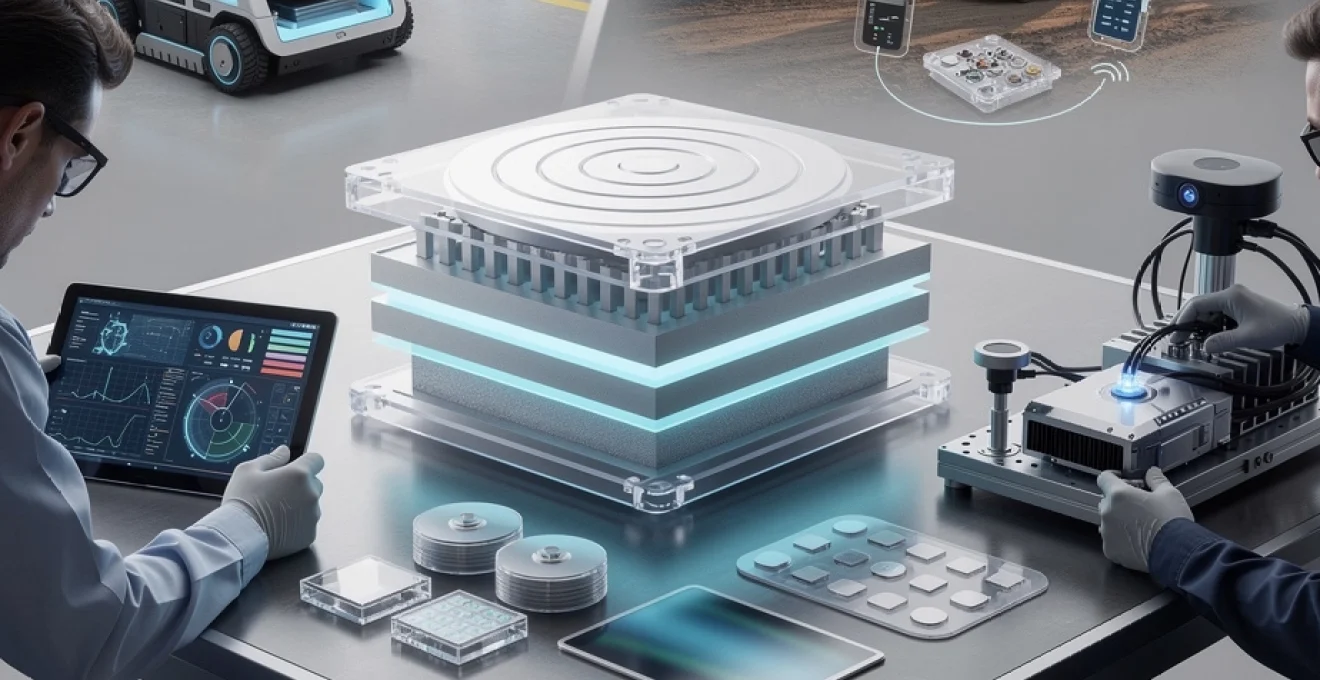
Industrial sectors are experiencing a fundamental shift in power storage technology, one that promises to redefine operational capabilities across manufacturing, healthcare, aerospace, and automation. Solid-state batteries represent a paradigm shift from conventional lithium-ion cells, offering enhanced safety profiles, superior energy density, and remarkable thermal stability. These characteristics position solid-state technology as the optimal solution for industrial applications where reliability, longevity, and performance under extreme conditions are non-negotiable requirements. As manufacturers transition from prototype development to commercial production, you’ll witness transformative changes in how industrial equipment is powered, maintained, and deployed across diverse operating environments.
The implications extend far beyond incremental improvements. Industrial operations demanding continuous uptime, precise power delivery, and minimal maintenance interventions stand to benefit substantially from solid-state architectures. From autonomous guided vehicles navigating warehouse floors to downhole sensors monitoring petroleum extraction in scorching conditions, these advanced cells are unlocking possibilities that were previously constrained by the limitations of liquid electrolyte systems. Understanding the technical foundations and practical applications of solid-state batteries enables you to make informed decisions about future equipment investments and operational strategies.
Solid-state battery architecture: Lithium-Metal anodes and ceramic electrolytes
The fundamental architecture of solid-state batteries distinguishes them from traditional lithium-ion cells through the replacement of liquid or gel electrolytes with solid-state materials. This structural transformation eliminates the flammability concerns inherent to liquid electrolytes whilst enabling the use of lithium-metal anodes, which offer significantly higher theoretical capacity than conventional graphite alternatives. The solid electrolyte serves as both the ion conductor and physical separator between electrodes, performing dual functions that contribute to enhanced volumetric efficiency and improved safety characteristics.
Ceramic electrolytes have emerged as particularly promising materials, offering exceptional ionic conductivity whilst maintaining structural integrity across wide temperature ranges. These materials, including lithium phosphorus oxynitride (LiPON) and garnet-type structures such as Li7La3Zr2O12 (LLZO), demonstrate stability against lithium-metal anodes whilst preventing dendrite formation—a critical failure mechanism in conventional batteries. The ceramic matrix provides mechanical resistance that constrains lithium dendrite growth, thereby extending cycle life and enhancing safety margins in industrial applications where battery failures could have catastrophic consequences.
Sulphide-based electrolytes in QuantumScape and toyota prototypes
Sulphide-based solid electrolytes represent a competing approach to ceramic materials, offering superior room-temperature ionic conductivity that approaches values comparable to liquid electrolytes. Companies like QuantumScape have demonstrated prototype cells utilizing lithium-sulphide compounds that achieve conductivities exceeding 10 mS/cm at ambient temperatures. This performance characteristic translates directly into improved power density capabilities, enabling rapid charge and discharge cycles essential for industrial applications with demanding load profiles.
Toyota’s ongoing development efforts focus on sulphide electrolytes incorporating lithium, sulphur, and phosphorus compounds, which demonstrate favourable mechanical properties for manufacturing scalability. These materials can be processed using pressure-assisted techniques that facilitate intimate electrode-electrolyte contact, reducing interfacial resistance that would otherwise compromise performance. However, sulphide electrolytes present challenges related to moisture sensitivity and chemical stability, requiring protective coatings and controlled manufacturing environments that impact production economics.
Oxide and polymer composite electrolyte materials
Oxide-based solid electrolytes, particularly LLZO variants, offer exceptional chemical stability and wide electrochemical windows that accommodate high-voltage cathode materials. These characteristics make oxide electrolytes attractive for applications requiring maximum energy density and long-term stability under elevated temperatures. The garnet structure demonstrates remarkable resilience against lithium-metal reactivity, though achieving adequate ionic conductivity requires careful composition optimisation and grain boundary engineering.
Polymer composite electrolytes represent a third architectural approach, combining organic polymer matrices with ceramic fillers to achieve balanced performance characteristics. These hybrid systems offer mechanical flexibility that simplifies manufacturing processes whilst maintaining adequate ionic conductivity for moderate-power applications. Polyethylene oxide (PEO) based composites incorporating ceramic nanoparticles demonstrate enhanced conductivity compared to pure polymer electrolytes, though performance typically requires elevated operating temperatures that may limit applicability in certain industrial contexts.
For industrial device designers, these composite electrolytes open up intriguing form-factor possibilities, including semi-flexible cells that can be integrated into curved surfaces or embedded within enclosures. However, trade-offs between ionic conductivity, mechanical robustness, and processing temperature must be carefully evaluated against application requirements. As we move from R&D to deployment, you’ll increasingly see hybrid electrolyte stacks that combine a thin, high-conductivity ceramic or sulphide layer with a tougher polymer support, balancing performance with manufacturability.
Lithium-metal anode energy density advantages over graphite
The transition from graphite to lithium-metal anodes is central to the performance leap promised by solid-state batteries in industrial devices. Graphite offers a theoretical specific capacity of around 372 mAh/g, whereas lithium-metal reaches approximately 3,860 mAh/g—an order of magnitude improvement. In practical cell designs, this translates to gravimetric energy density gains of 30–70% compared with today’s high-end lithium-ion packs, depending on cathode selection and packaging overheads.
For industrial IoT gateways, handheld diagnostic tools, or autonomous robots, that extra energy density can be “spent” in several ways: extended runtime between charges, reduced pack size and weight, or a combination of both. In harsh environments where servicing is costly or logistically complex, you may prefer to keep the battery volume constant and use the lithium-metal advantage purely for longer intervals between maintenance. The solid electrolyte’s mechanical barrier function is what makes this anode viable, suppressing dendrite formation that would otherwise short-circuit a conventional cell.
From a systems engineering perspective, higher energy density at the cell level also simplifies thermal design and enclosure layout. You can pack more usable energy into the same footprint, freeing space for additional sensors, shielding, or connectivity modules. However, exploiting lithium-metal’s full potential requires careful current density management and robust battery management system (BMS) algorithms, particularly in industrial devices that experience frequent power surges or irregular load profiles.
Thin-film deposition techniques for solid electrolyte manufacturing
Achieving uniform, defect-free solid electrolytes is one of the most critical manufacturing challenges for solid-state batteries. Thin-film deposition techniques such as pulsed laser deposition (PLD), sputtering, and atomic layer deposition (ALD) enable the creation of nanometre-to-micrometre scale electrolyte layers with precise thickness control. In industrial terms, these processes are like applying a perfectly even coat of protective paint at the atomic level, ensuring consistent ion transport and minimising weak points where dendrites could initiate.
For high-value industrial devices—such as aerospace systems, medical implants, or advanced metrology tools—thin-film solid-state batteries can be integrated directly onto substrates or PCBs. This “embedded power” approach reduces wiring complexity and improves shock resistance, an important advantage in high-vibration environments. However, vacuum-based deposition processes are currently capital intensive and relatively slow, which limits their viability for large-format packs powering AGVs or heavy machinery.
To address scalability, manufacturers are exploring hybrid approaches that combine thin-film layers for critical interfaces with thicker, tape-cast or pressed electrolytes in the bulk of the cell. As deposition equipment evolves towards higher throughput and roll-to-roll compatibility, we can expect the cost per watt-hour to decline, opening the door for thin-film-enhanced solid-state packs in more mainstream industrial devices.
Industrial IoT sensor networks: extended operating life and temperature resilience
Industrial IoT sensor networks often operate in locations where access is difficult and downtime is expensive, making battery longevity and temperature resilience paramount. Solid-state batteries excel in these conditions thanks to their non-flammable electrolytes, wide operating temperature ranges, and low self-discharge rates. Where traditional lithium-ion cells might require replacement every few years, solid-state designs can realistically support service lives of 10–15 years in low-drain sensor nodes, aligning with the lifecycle of the equipment they monitor.
Because solid-state batteries tolerate both high and low temperatures more effectively, they reduce the need for extensive thermal insulation or active heating and cooling in field-deployed devices. This is particularly beneficial in distributed sensor networks across factory floors, logistics hubs, or outdoor infrastructure, where installing additional thermal management adds cost and complexity. By extending replacement intervals and simplifying system design, solid-state power solutions directly lower the total cost of ownership for industrial IoT deployments.
Automotive ADAS and LiDAR systems thermal management
Advanced driver-assistance systems (ADAS) and LiDAR platforms generate substantial heat from processing units, laser diodes, and high-bandwidth communication modules. Integrating traditional batteries into such thermally dense environments can be challenging, as elevated temperatures accelerate electrolyte degradation and increase the risk of thermal runaway. Solid-state batteries, with their ceramic or sulphide electrolytes, provide far greater thermal stability, often remaining operational from -20°C to 100°C or more, depending on chemistry.
By tolerating higher local temperatures, solid-state packs allow you to position backup power closer to sensors and processing boards, reducing voltage drops and wiring complexity. Imagine LiDAR units with compact solid-state cells onboard, providing clean, stable power even during transient load spikes or main power interruptions. This not only improves system reliability but also simplifies harness design and reduces weight in tightly packaged automotive assemblies.
Thermal management strategies can also be streamlined. Instead of designing elaborate cooling pathways solely to protect batteries, you can leverage existing heat sinks and airflow designed for processors and power electronics. This converged approach is particularly attractive in next-generation ADAS and autonomous driving platforms, where every cubic centimetre and gram counts toward overall system efficiency.
Warehouse automation AGVs and extended duty cycles
Automated guided vehicles (AGVs) and autonomous mobile robots (AMRs) in warehouses and factories are prime beneficiaries of solid-state battery technology. These systems typically operate on tight schedules with minimal room for unplanned downtime, so higher energy density and faster charging directly translate into productivity gains. Solid-state packs can support longer duty cycles, enabling AGVs to complete more missions between charges or shift changes.
Because solid-state batteries offer improved safety and lower risk of thermal incidents, they are particularly well-suited to environments where vehicles navigate close to workers, inventory, and critical infrastructure. You can also take advantage of opportunity charging—short, high-power top-ups during natural idle periods—without inducing the same level of degradation seen in conventional lithium-ion chemistries. Over the life of the fleet, this can significantly reduce battery replacement costs and maintenance interventions.
From a warehouse design standpoint, more energy-dense packs free space within AGVs for additional sensors, higher-performance compute units, or mechanical enhancements such as larger payload capabilities. As solid-state battery production scales and cost trajectories improve, we’re likely to see AGV and AMR designs that are smaller, more agile, and yet capable of longer autonomous operation in complex industrial environments.
Oil and gas downhole sensors in extreme temperature environments
Downhole sensors in oil and gas applications face some of the harshest operating conditions of any industrial devices, with ambient temperatures often exceeding 150°C and pressures climbing beyond 1,000 bar. Conventional lithium-ion batteries struggle in such environments, suffering rapid capacity loss and increased failure rates. Solid-state batteries built on high-temperature ceramic electrolytes, however, maintain structural integrity and ionic conductivity at these extremes, making them ideal for long-duration downhole monitoring.
For operators, extended battery life in downhole tools means fewer trips to retrieve and redeploy equipment—each of which can cost tens or hundreds of thousands of dollars. Solid-state cells can power pressure, temperature, and acoustic sensors for months or even years, providing continuous data to optimise extraction processes and detect anomalies early. In effect, you gain a more reliable “nervous system” deep within the wellbore, backed by stable power that is far less sensitive to the brutal environment.
Moreover, the non-flammable nature of solid electrolytes reduces risk in confined, high-pressure spaces where any ignition event can be catastrophic. While specific chemistries must be tailored to withstand corrosive downhole fluids and repeated thermal cycling, the core advantages of solid-state batteries create a compelling value proposition for energy companies focused on operational safety and efficiency.
Remote monitoring devices in mining and construction equipment
Mining and heavy construction equipment increasingly rely on telematics and condition-monitoring systems to track utilisation, predict failures, and improve safety. These remote monitoring devices are often mounted on exposed surfaces or within harsh engine compartments, where vibration, dust, moisture, and temperature swings are the norm. Solid-state batteries, with their rigid electrolytes and robust packaging, provide superior mechanical resilience compared with liquid-based cells.
Because solid-state chemistries tolerate frequent charge-discharge cycles and partial state-of-charge operation, they are well-suited to power-on-demand scenarios where devices wake periodically to transmit data before returning to low-power states. You can design sensor modules that operate for years on a single embedded battery, even when attached to equipment working in Arctic cold, desert heat, or high-humidity tunnels. This extended autonomy is especially valuable on sites where regular maintenance access is limited or hazardous.
In addition, the improved safety profile of solid-state batteries simplifies compliance with stringent regulations governing explosive atmospheres in mines. With no liquid electrolyte to leak or outgas, the risk of ignition in the presence of flammable gases or dust is significantly reduced. Over time, this will make solid-state-powered monitoring systems a preferred choice for mining operators aiming to modernise their fleets while maintaining the highest safety standards.
Power density specifications: matching solid-state cells to industrial load profiles
While energy density determines how long a device can run, power density governs how quickly it can deliver or absorb energy—critical for industrial devices with dynamic load profiles. Solid-state batteries must therefore be carefully specified not only for capacity but also for peak current and continuous discharge capabilities. In high-power applications such as robotic actuators, hydraulic pump starters, or emergency valve controls, inadequate power density can cause voltage sag, reduced performance, or even unexpected shutdowns.
Modern sulphide and optimised oxide electrolytes can support impressive power densities, especially when combined with tailored electrode architectures and low-resistance interfaces. For instance, prototype cells from leading solid-state developers have demonstrated the ability to charge from 10% to 80% in under 15 minutes, highlighting their suitability for rapid turnaround industrial processes. However, achieving these metrics consistently in production cells requires precise control over electrolyte thickness, porosity, and electrode composition.
When you’re specifying solid-state batteries for industrial devices, it helps to map expected load profiles in detail: average current draw, peak transients, duty cycles, and environmental conditions. This data allows system integrators to choose chemistries and form factors that balance energy and power density appropriately—similar to choosing between a long-distance fuel tank and a high-performance engine. In some cases, hybrid systems pairing solid-state batteries with supercapacitors or ultracapacitors will offer the best of both worlds, absorbing short, intense bursts of power without stressing the primary energy storage.
Manufacturing scalability challenges: roll-to-roll production and cost trajectories
Despite their compelling performance, solid-state batteries will only transform industrial devices at scale if manufacturing processes become cost-competitive with, or at least acceptable alternatives to, conventional lithium-ion lines. Today, many solid-state architectures rely on batch processes, precision ceramic sintering, or vacuum deposition, which are capital intensive and slow. To supply the enormous volumes required for industrial IoT sensor networks, robotics, and electric fleets, producers are rapidly developing roll-to-roll manufacturing methods akin to printing newspapers rather than binding individual books.
Roll-to-roll processes allow continuous casting, coating, and lamination of solid electrolytes and electrode layers on flexible substrates. This approach promises higher throughput and better economies of scale, but introduces new challenges in maintaining uniform thickness, preventing cracking, and ensuring strong interlayer adhesion over large areas. As you evaluate timelines and cost models for adopting solid-state batteries in your products, it’s important to understand where your potential suppliers are on this journey from lab-scale to gigawatt-hour scale.
Prologium and solid power pilot production line outputs
Companies such as ProLogium and Solid Power are at the forefront of scaling solid-state battery manufacturing, providing valuable reference points for industrial device planners. ProLogium has been operating pilot lines producing multi-layer solid-state pouch cells, with reported capacities on the order of several megawatt-hours per year—sufficient for early automotive trials and high-value industrial applications. Their focus on oxide-based electrolytes and proprietary stacking methods aims to balance energy density with manufacturability.
Solid Power, backed by major automotive and aerospace partners, has commissioned pilot production lines capable of producing large-format cells for qualification testing. While exact output figures evolve rapidly, the key takeaway for you is that volume remains limited compared with conventional lithium-ion gigafactories. This scarcity means early industrial deployments will likely prioritise applications where solid-state advantages justify higher initial costs, such as life-critical medical devices, aerospace systems, and specialised industrial sensors.
As pilot lines transition to pre-commercial and commercial-scale facilities, unit costs are expected to decline along learning curves similar to those seen in lithium-ion over the past decade. Industry analysts project that, by the early 2030s, solid-state battery packs could approach cost parity with high-end lithium-ion solutions in premium segments, particularly as yield rates improve and material utilisation is optimised.
Pressure-assisted stacking versus vacuum deposition methods
Two broad manufacturing paradigms dominate current solid-state battery development: pressure-assisted stacking and vacuum-based deposition. Pressure-assisted methods typically involve tape casting or pressing solid electrolyte sheets, then stacking them with electrode layers under high pressure and sometimes moderate heat. This approach is more compatible with existing lithium-ion cell manufacturing equipment and easier to adapt for roll-to-roll production, which makes it attractive for larger-format industrial cells.
Vacuum deposition methods, including sputtering and evaporation, excel at producing ultra-thin, highly uniform layers with excellent interfacial contact. These techniques are ideal for microbatteries, thin-film cells, and applications where precise thickness control is essential—such as implantable medical devices or integrated power sources on circuit boards. However, they require sophisticated vacuum chambers and can be challenging to scale economically for large-area cells.
For industrial device manufacturers, understanding these process differences helps in assessing supplier roadmaps and technology risks. Do you prioritise near-term availability of pressure-stacked cells for robotics or AGVs, or wait for more mature vacuum-deposited solutions offering unparalleled miniaturisation for sensors and wearables? In practice, the market will likely support both approaches, each optimised for different segments of the industrial landscape.
Interface resistance reduction through surface coating technologies
One of the subtle but critical hurdles in solid-state battery production is minimising interfacial resistance between the solid electrolyte and the electrodes. Unlike liquid electrolytes, which naturally wet surfaces and penetrate pores, solid layers can leave microscopic gaps or form chemically unstable interfaces, impeding ion flow. To address this, manufacturers are increasingly turning to thin interlayer coatings—such as lithium phosphate, lithium niobate, or other tailored compounds—applied via ALD, sputtering, or solution-based methods.
These coatings act like lubricants for ions, smoothing energy transfer across the interface while also serving as chemical buffers that prevent unwanted reactions. In industrial devices where consistent performance over thousands of cycles is essential, even small reductions in interfacial resistance can translate into noticeable gains in efficiency and usable capacity. Lower resistance also means less heat generation during high-power operation, improving thermal management and extending battery life.
For engineers specifying solid-state batteries, it’s worth asking suppliers about their interface engineering strategies and any proprietary coatings they employ. As these surface technologies mature, we can expect solid-state cells to achieve both higher power density and better cycle stability, bringing them closer to the robust, predictable behaviour industrial users demand.
Safety protocols and certification standards for non-flammable battery integration
Although solid-state batteries are inherently safer than conventional lithium-ion cells due to their non-flammable electrolytes, they are not exempt from rigorous safety and certification requirements. Industrial devices leveraging solid-state technology must still comply with standards such as UL 62133, IEC 62619, and application-specific regulations covering explosive atmospheres (ATEX/IECEx), medical safety (IEC 60601), or aviation equipment (RTCA DO-160). The non-flammable nature of the electrolyte simplifies some aspects of certification, but mechanical robustness, overcharge protection, and abuse tolerance remain critical evaluation criteria.
In practice, integrating solid-state batteries into industrial systems calls for a holistic safety strategy that includes robust BMS design, appropriate enclosure materials, fault detection algorithms, and clear servicing procedures. Because solid electrolytes are more brittle than liquids, mechanical shock and vibration testing takes on added importance, particularly for mobile robots, heavy equipment, and aerospace platforms. You’ll also need to consider end-of-life handling and recycling protocols, which are still evolving as recyclers adapt their processes to solid-state chemistries.
From a risk management perspective, the shift to non-flammable batteries opens the door to deploying energy storage in areas previously considered too hazardous, such as within confined control cabinets, near high-heat processes, or in underground facilities with strict fire codes. As certification bodies gain experience with solid-state technologies, we can expect the creation of dedicated test procedures and classification schemes that reflect their distinct failure modes and advantages.
Market adoption timeline: medical devices, robotics, and aerospace applications
The path to widespread solid-state battery adoption in industrial devices will not be uniform across sectors. Instead, we’ll see a phased rollout starting with applications where performance, safety, and form-factor benefits outweigh higher initial costs. Medical devices, precision robotics, and aerospace systems are at the forefront of this transition, driven by stringent reliability requirements and strong economic incentives for longer-lasting, maintenance-free power. As manufacturing volumes ramp up and costs decline, downstream sectors such as general automation, logistics, and construction equipment will follow.
Industry roadmaps from automotive OEMs and leading solid-state developers suggest that the late 2020s will mark the inflection point for initial commercial deployments, with broader industrial integration accelerating through the early to mid-2030s. For you as an equipment designer or operations planner, this means now is the time to pilot solid-state-powered prototypes, validate performance under real-world conditions, and build internal expertise. Those who understand the nuances of solid-state technology early will be best positioned to exploit its advantages as availability grows.
Cardiac pacemakers and implantable medical electronics
Implantable medical devices such as cardiac pacemakers, defibrillators, neurostimulators, and drug delivery pumps are among the earliest commercial beneficiaries of solid-state batteries. These systems demand exceptionally long life, absolute reliability, and minimal risk of leakage or thermal events inside the human body—requirements that align closely with the strengths of thin-film solid-state cells. With energy densities sufficient to support multi-year operation and chemistries optimised for ultra-low self-discharge, solid-state batteries can extend replacement intervals and reduce the need for repeat surgeries.
The biocompatibility of solid electrolytes and their ability to be hermetically sealed within tiny packages also enable new form factors in implantable electronics. Devices can be made smaller, more comfortable, and easier to position optimally within the body. As regulatory bodies gain confidence in long-term clinical data from early deployments, we can expect solid-state batteries to become the default choice for many classes of implantable medical electronics over the next decade.
For manufacturers in this space, early collaboration with battery developers is crucial. Tailoring cell geometries, voltage ranges, and interfaces to specific device requirements will maximise the benefits of solid-state technology while ensuring smooth paths through regulatory approval processes.
Collaborative robots and precision manufacturing tools
Collaborative robots (cobots) and precision manufacturing tools are another promising early market for solid-state batteries in industrial environments. These systems often operate in close proximity to human workers, making safety a top priority. Non-flammable solid-state packs significantly reduce the risk of fire or smoke in the event of mechanical damage or electrical faults, which is particularly important on densely populated factory floors and in high-value cleanroom environments.
Battery-powered cobots benefit from improved energy density by gaining longer operating time between charges or allowing more compact designs that can manoeuvre in tighter spaces. When combined with fast-charging capabilities, solid-state batteries enable “burst productivity” patterns, where robots perform intensive tasks, quickly recharge during breaks, and resume work without lengthy downtime. This flexibility is ideal for precision manufacturing lines that must frequently reconfigure for different product runs.
Manufacturers evaluating solid-state integration in robotics should focus on pilot projects in high-mix, low-volume environments or specialised tasks where power cables and traditional battery packs are particularly cumbersome. Lessons learned in these controlled deployments will inform broader adoption in more demanding, 24/7 production settings as the technology matures.
Satellite systems and unmanned aerial vehicle power solutions
Satellite systems and unmanned aerial vehicles (UAVs) sit at the cutting edge of energy storage requirements, demanding high energy density, low weight, excellent cycle life, and robust performance across extreme temperatures and radiation levels. Solid-state batteries are well positioned to meet these needs, especially in small satellites, high-altitude pseudo-satellites (HAPS), and long-endurance drones. Every gram saved in the power system equates to either reduced launch costs or additional payload capacity, providing a strong economic case for adopting advanced chemistries.
In satellites, solid-state cells can offer superior radiation tolerance and reduced risk of outgassing, simplifying thermal and vacuum design. For UAVs, the combination of high energy density and fast charging supports longer flight times and quicker turnaround between missions, which is invaluable in industrial inspection, mapping, and logistics operations. The improved safety profile also makes solid-state-powered UAVs more acceptable in urban or sensitive environments, where crash risks and fire hazards are tightly regulated.
As aerospace primes and defence contractors validate solid-state performance in early missions, we can expect a cascading effect of confidence throughout the broader industrial drone and space ecosystem. Over time, lessons from these demanding applications will feed back into more conventional industrial devices, accelerating the refinement of solid-state batteries for everyday use on the ground.