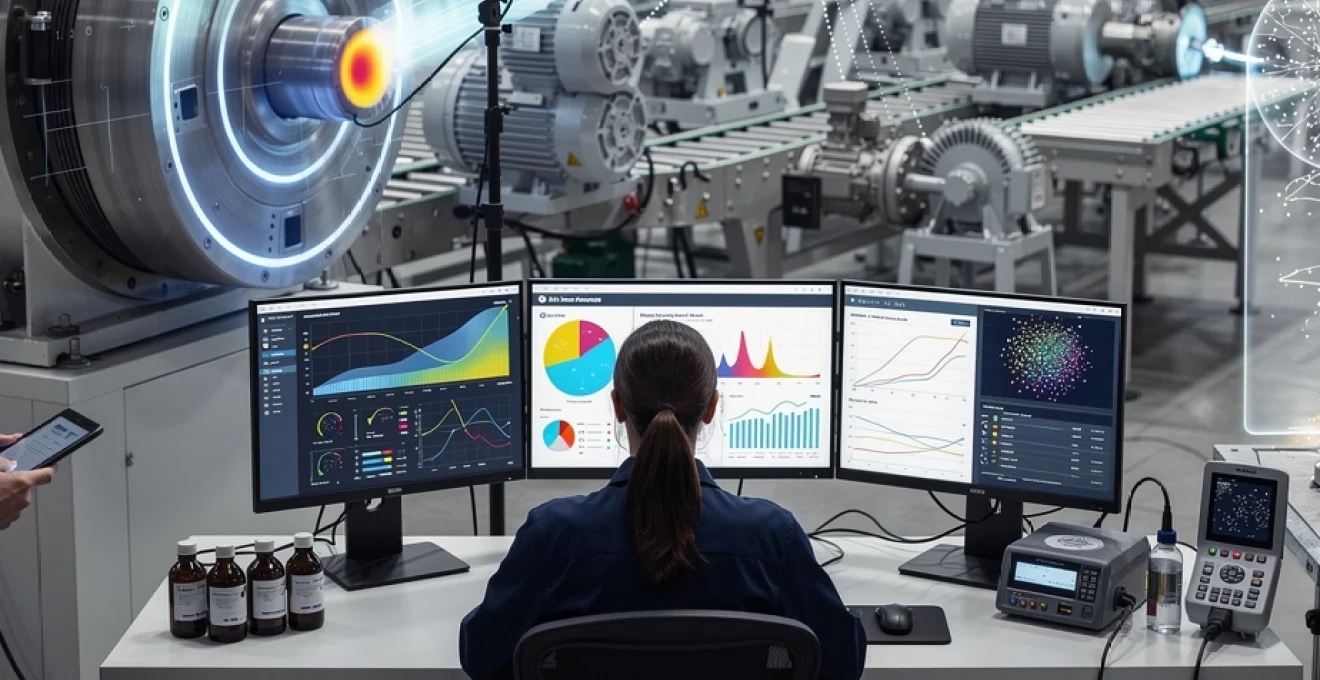
Manufacturing downtime costs industrial companies an estimated £50 billion annually, with the average large manufacturing firm losing approximately £300,000 per hour during unplanned shutdowns. These staggering figures underscore the critical importance of transitioning from reactive maintenance strategies to predictive maintenance services that can anticipate equipment failures before they occur. By leveraging advanced sensor technologies, machine learning algorithms, and data analytics platforms, organisations can dramatically reduce unexpected downtime whilst optimising their maintenance operations and extending asset lifecycles.
Modern predictive maintenance represents a fundamental shift from traditional time-based maintenance schedules to condition-based monitoring approaches. This evolution enables maintenance teams to move beyond manufacturer recommendations and reactive repairs, instead utilising real-time data to make informed decisions about when equipment truly requires attention. The result is a more efficient allocation of maintenance resources and significantly improved operational reliability.
Condition-based monitoring technologies for asset health assessment
Effective predictive maintenance programmes rely on sophisticated monitoring technologies that continuously assess equipment condition and performance. These systems provide the foundational data necessary for accurate failure prediction and optimal maintenance scheduling. The integration of multiple monitoring technologies creates a comprehensive picture of asset health that would be impossible to achieve through manual inspections alone.
Vibration analysis using accelerometers and FFT algorithms
Vibration monitoring stands as one of the most established and reliable predictive maintenance technologies, particularly for rotating machinery such as motors, pumps, and compressors. Modern accelerometers can detect minute changes in vibration patterns that indicate bearing wear, misalignment, or imbalance issues long before they result in catastrophic failure. Fast Fourier Transform (FFT) algorithms process the raw vibration data to identify specific frequency signatures associated with different fault conditions.
The implementation of vibration analysis typically involves mounting triaxial accelerometers at strategic locations on critical equipment. These sensors continuously monitor vibration amplitude across multiple frequency ranges, with ISO 10816 standards providing guidance on acceptable vibration levels for different machine types. Advanced systems can automatically trend this data over time, establishing baseline conditions and alerting maintenance personnel when vibration levels exceed predetermined thresholds.
Thermal imaging with FLIR systems for temperature anomaly detection
Infrared thermography offers a non-invasive method for detecting temperature anomalies that often precede equipment failures. FLIR (Forward Looking Infrared) systems can identify hot spots in electrical connections, mechanical components, and thermal processes that indicate developing problems. Overheating components typically exhibit temperature increases of 10-15°C above normal operating conditions before failure occurs.
Regular thermal inspections can reveal loose electrical connections, bearing problems, belt misalignment, and insulation degradation. The technology proves particularly valuable in electrical switchgear monitoring, where connection failures can result in costly arc flash incidents. Modern thermal cameras equipped with WiFi connectivity enable real-time data transmission to maintenance management systems, facilitating immediate response to critical temperature anomalies.
Ultrasonic testing with olympus NDT equipment for structural integrity
Ultrasonic testing employs high-frequency sound waves to detect internal flaws, thickness variations, and structural changes in materials and components. Olympus NDT equipment utilises advanced phased array technology that can create detailed images of internal component structures, revealing cracks, corrosion, and other defects invisible to visual inspection. This technology proves invaluable for pressure vessels, pipework, and structural components where failure could result in catastrophic consequences.
The technique offers exceptional versatility, with different probe configurations enabling inspection of various materials including metals, composites, and ceramics. Automated scanning systems can perform regular inspections of critical components, building databases of thickness measurements and flaw characteristics that enable trending analysis over time. This approach allows maintenance teams to schedule repairs based on actual component condition rather than arbitrary time intervals.
Oil analysis through spectroscopy and particle counting methods
Lubricating oil analysis provides detailed insights into machinery condition by examining wear particles, contamination levels, and oil degradation products. Atomic emission spectroscopy can detect metal concentrations as low as 1 part per million, enabling early detection of bearing wear, gear tooth damage, and other mechanical problems. Particle counting techniques quantify the size and distribution of wear particles, providing
actionable insights into component wear mechanisms. By trending wear metal concentrations and particle counts over time, maintenance teams can distinguish between normal break-in wear and abnormal conditions that indicate impending failure. Combining oil analysis with vibration data and temperature monitoring creates a powerful multi-parameter framework for asset health assessment, significantly enhancing the accuracy of predictive maintenance services.
In practice, implementing an effective oil analysis programme involves defining sampling points, establishing baseline contamination levels, and setting clear alarm limits based on OEM recommendations and historical performance. Samples are typically analysed for viscosity, total acid number (TAN), water content, and ISO cleanliness codes, alongside elemental spectroscopy results. When integrated into a centralised maintenance management system, these results can automatically trigger work orders, recommend oil changes, or schedule inspections, ensuring that lubrication-related failures become the exception rather than the rule.
Machine learning algorithms in predictive maintenance implementation
While advanced sensors and condition-based monitoring technologies generate vast amounts of data, it is machine learning algorithms that transform this information into reliable predictions about future equipment behaviour. Modern predictive maintenance services increasingly rely on data-driven models that learn from historical failures, operating conditions, and maintenance records to forecast when assets are likely to degrade. By embedding these algorithms into maintenance workflows, organisations can move from simple threshold-based alerts to intelligent, context-aware recommendations.
The selection of appropriate machine learning techniques depends on the nature of the assets, data availability, and specific maintenance objectives. For some use cases, straightforward statistical models may be sufficient, whereas complex, high-value equipment may justify the use of deep learning architectures. In every case, success hinges on high-quality data, robust feature engineering, and close collaboration between data scientists, reliability engineers, and frontline maintenance teams.
Regression models for remaining useful life (RUL) estimation
Regression-based approaches are widely used to estimate the remaining useful life (RUL) of critical components and systems. Linear regression, random forest regression, and gradient boosting methods can model the relationship between condition indicators (such as vibration RMS, temperature rise, or pressure fluctuations) and time-to-failure. These models output a continuous prediction of how many operating hours or cycles remain before a failure is likely, enabling precise planning of maintenance windows and spare parts inventory.
To build reliable RUL models, historical failure data is essential. Engineers typically label data windows leading up to previous failures and extract features that capture degradation trends. Variables such as rate of change, moving averages, and statistical dispersion often prove more informative than raw sensor readings. When deployed within a predictive maintenance platform, RUL predictions can be visualised as intuitive health indices, helping you prioritise interventions on assets that are approaching critical thresholds.
Classification algorithms for fault pattern recognition
Classification algorithms address a different but equally important question: not when will equipment fail, but what type of fault is developing. Techniques such as support vector machines (SVM), decision trees, and convolutional neural networks (CNNs) can be trained to recognise characteristic patterns in vibration spectra, acoustic emissions, or electrical signatures associated with specific failure modes. For example, a model might distinguish between bearing defects, rotor imbalance, and misalignment based on their unique frequency components.
Accurate fault pattern recognition allows maintenance teams to dispatch the right skills and resources on the first visit, reducing diagnostic time and avoiding unnecessary part replacements. It also supports targeted root cause analysis, since each fault class can be linked to underlying issues such as poor lubrication, installation errors, or process changes. As more labelled examples are collected over time, classification performance improves, making the predictive maintenance service progressively more reliable and valuable.
Time series forecasting with LSTM neural networks
Industrial assets generate highly dynamic, time-dependent data that can be challenging to model using conventional techniques. Long Short-Term Memory (LSTM) neural networks are specifically designed to capture long-range temporal dependencies in time series data, making them well-suited to predictive maintenance applications. By learning how sensor readings evolve under normal and degrading conditions, LSTMs can forecast future values and identify when a parameter is likely to drift outside acceptable limits.
For instance, an LSTM model might predict the future temperature profile of a gearbox under varying load conditions or anticipate pressure fluctuations in a hydraulic system. When these forecasts indicate that a parameter will breach its control limits within a defined horizon, the maintenance system can automatically recommend an inspection or controlled shutdown. Although LSTM models require more computational resources and data than simpler methods, they offer substantial gains in accuracy for complex, non-linear systems where traditional models struggle.
Anomaly detection using isolation forest and autoencoder models
In many industrial environments, labelled failure data is scarce, making supervised learning approaches difficult to implement. In such cases, unsupervised anomaly detection techniques provide an effective alternative. Algorithms like Isolation Forest and deep learning autoencoders learn the patterns of normal operation from historical data and flag observations that deviate significantly from this baseline. These anomalies often correspond to emerging faults, process upsets, or sensor malfunctions.
Autoencoders compress input data into a lower-dimensional representation and then attempt to reconstruct the original signal. When the reconstruction error exceeds a predefined threshold, the event is classified as anomalous. Similarly, Isolation Forest isolates outliers in the feature space by recursively partitioning the data. By integrating anomaly scores with other condition indicators and maintenance rules, organisations can surface early warning signs that would be impossible to detect through manual monitoring alone, thereby further reducing unexpected downtime.
Industrial IoT sensor integration and data acquisition systems
The effectiveness of predictive maintenance services ultimately depends on the quality and accessibility of asset health data. Industrial Internet of Things (IIoT) architectures provide the backbone for collecting, transmitting, and aggregating this data at scale. Smart sensors, edge devices, and industrial gateways connect legacy equipment and modern machinery alike, streaming condition data into centralised data acquisition systems and cloud platforms for analysis.
Successful IIoT integration requires careful attention to connectivity, data standards, and cybersecurity. Protocols such as OPC UA, Modbus TCP, and MQTT enable interoperability between heterogeneous devices, while time-synchronised data acquisition ensures that events across different assets can be correlated accurately. Edge computing devices can pre-process high-frequency sensor signals, applying filtering, feature extraction, or initial anomaly detection close to the source to reduce bandwidth consumption and latency.
From a practical perspective, you should prioritise sensor deployment on assets that are both critical to production and prone to failure. A phased rollout, starting with a pilot line or a specific plant area, allows you to validate connectivity, data quality, and integration with existing SCADA and CMMS systems before scaling up. Equally important is the establishment of clear data ownership and governance policies, ensuring that maintenance, operations, and IT teams can securely access the information they need without compromising network security.
Predictive analytics platforms and software solutions
To harness the full value of condition-based monitoring and machine learning, organisations require robust predictive analytics platforms capable of ingesting, processing, and visualising large volumes of asset data. These software solutions provide the user interface and workflow orchestration that connect advanced analytics with day-to-day maintenance decisions. Rather than relying on custom-built tools, many industrial companies opt for proven commercial platforms that integrate with existing enterprise systems and offer out-of-the-box predictive maintenance capabilities.
Modern platforms support features such as asset health dashboards, automated work order generation, and configurable alerting rules. They also provide APIs and connectors to integrate with ERP, MES, and historian databases, ensuring a single source of truth for operational and maintenance data. Selecting the right predictive analytics platform is therefore a strategic decision that should take into account scalability, ease of use, and alignment with your broader digital transformation roadmap.
IBM maximo health and predict suite capabilities
IBM Maximo Health and Predict extends the well-established Maximo asset management system with advanced analytics tailored for predictive maintenance. The suite combines real-time condition monitoring with AI-driven health scoring, giving maintenance teams a clear view of asset risk levels across the organisation. By correlating sensor data, work history, and operating context, the platform produces actionable insights that help you prioritise interventions on the assets that matter most.
Among its key capabilities are configurable health rules, automatic detection of abnormal behaviour, and RUL estimation for selected asset classes. Integration with Maximo’s work management and inventory modules means that predictive insights can directly trigger preventive actions, such as generating work orders or reserving spare parts. For organisations already invested in the IBM ecosystem, this tight integration reduces implementation complexity and accelerates the realisation of predictive maintenance benefits.
GE digital predix asset performance management
GE Digital Predix APM (Asset Performance Management) is designed to optimise the reliability and performance of industrial assets across sectors such as power generation, oil and gas, and manufacturing. The platform combines risk-based inspection, condition monitoring, and predictive analytics to support data-driven maintenance decisions. Its asset digital twin models provide a contextual view of equipment performance, incorporating design data, operational history, and real-time sensor readings.
Predix APM includes libraries of proven analytics for common machinery types, enabling faster deployment of predictive maintenance use cases. Users can configure policies that link specific condition indicators or analytics outputs to recommended actions, helping to standardise best practices across sites and business units. By quantifying risk and potential production impact, the platform also supports strategic decisions about where to invest in upgrades, redundancies, or additional monitoring.
Siemens MindSphere cloud-based analytics platform
Siemens MindSphere is a cloud-based IIoT operating system that enables manufacturers to connect machines and physical infrastructure to the digital world. Within the context of predictive maintenance, MindSphere offers applications and toolkits for collecting machine data, performing analytics, and visualising asset performance in real time. Its open architecture allows integration with a wide range of Siemens and third-party devices, making it suitable for mixed-vendor environments.
MindSphere-based predictive maintenance solutions can leverage pre-built analytics for common equipment, as well as custom models developed using open-source frameworks. Asset performance dashboards provide high-level health overviews, while drill-down capabilities allow engineers to investigate anomalies at the sensor level. Because the platform is cloud-native, it scales easily from a single facility to global operations, ensuring that lessons learned in one plant can be quickly applied across the entire fleet.
Microsoft azure IoT predictive maintenance architecture
Microsoft Azure IoT provides a comprehensive reference architecture for implementing predictive maintenance services in the cloud. Key building blocks include Azure IoT Hub for device connectivity, Azure Stream Analytics for real-time data processing, and Azure Machine Learning for model training and deployment. Together, these components enable organisations to ingest high-frequency sensor data, apply advanced analytics, and surface actionable insights through dashboards and APIs.
An Azure-based architecture is particularly attractive for organisations seeking flexibility and integration with existing Microsoft investments such as Dynamics 365 or Power BI. For example, you can visualise asset health metrics in Power BI, automatically create maintenance work orders in Dynamics 365 Field Service, and manage the full lifecycle of predictive models within Azure ML. This tightly integrated ecosystem simplifies the deployment and maintenance of predictive maintenance solutions, reducing both technical complexity and time-to-value.
Failure mode and effects analysis (FMEA) in maintenance strategy
Advanced analytics and IIoT technologies are powerful tools, but they must be guided by a structured understanding of how and why assets fail. Failure Mode and Effects Analysis (FMEA) provides that structure by systematically identifying potential failure modes, their causes, and their consequences for safety, quality, and production. By quantifying risk through metrics such as the Risk Priority Number (RPN), FMEA helps you focus predictive maintenance efforts where they will deliver the greatest impact.
In practice, an effective FMEA process brings together cross-functional teams from maintenance, operations, engineering, and safety. For each critical asset, the team documents known failure modes, assigns severity, occurrence, and detection ratings, and identifies existing controls. This analysis then informs decisions about which condition-based monitoring technologies to deploy, which parameters to track, and what alarm thresholds to set. In other words, FMEA acts as the blueprint that aligns predictive maintenance services with your broader reliability strategy.
As predictive maintenance programmes mature, FMEA should be treated as a living document rather than a one-off exercise. New failure modes may emerge as operating conditions change or as data reveals patterns that were previously unknown. By regularly revisiting and updating FMEAs based on actual failure events, near misses, and anomaly trends, you can refine your maintenance strategy and ensure that monitoring resources remain aligned with evolving risks. This continuous improvement loop is essential for sustaining reductions in unexpected downtime over the long term.
ROI calculation methodologies for predictive maintenance programmes
Investing in predictive maintenance services inevitably raises a key question for senior stakeholders: what is the expected return on investment (ROI)? To build a compelling business case, organisations must quantify both the tangible and intangible benefits of reduced unexpected downtime, optimised maintenance activities, and extended asset life. While every operation is different, a structured ROI calculation methodology can provide a clear, defensible estimate of the financial impact.
At its core, ROI analysis compares the total benefits achieved over a given period with the costs of implementing and operating the predictive maintenance programme. Benefits typically include reduced unplanned downtime, lower emergency repair costs, decreased spare parts inventory, and improved energy efficiency. Costs encompass sensors and hardware, software licences, integration and consultancy, staff training, and ongoing data management. By tracking key performance indicators such as mean time between failures (MTBF), maintenance labour hours, and production output before and after implementation, you can measure real-world improvements rather than relying solely on theoretical estimates.
For many organisations, one of the most persuasive metrics is the avoided cost of downtime. By multiplying the reduction in unplanned downtime hours by the estimated cost per hour of lost production, you obtain a direct financial benefit that is easy for business leaders to understand. Additional value often arises from softer factors such as improved safety, regulatory compliance, and customer satisfaction, which may be harder to quantify but still contribute to competitive advantage. When predictive maintenance projects are initially piloted on a limited set of critical assets, the resulting ROI data can then be used to justify scaling the programme across the wider asset base, creating a virtuous cycle of investment and performance improvement.