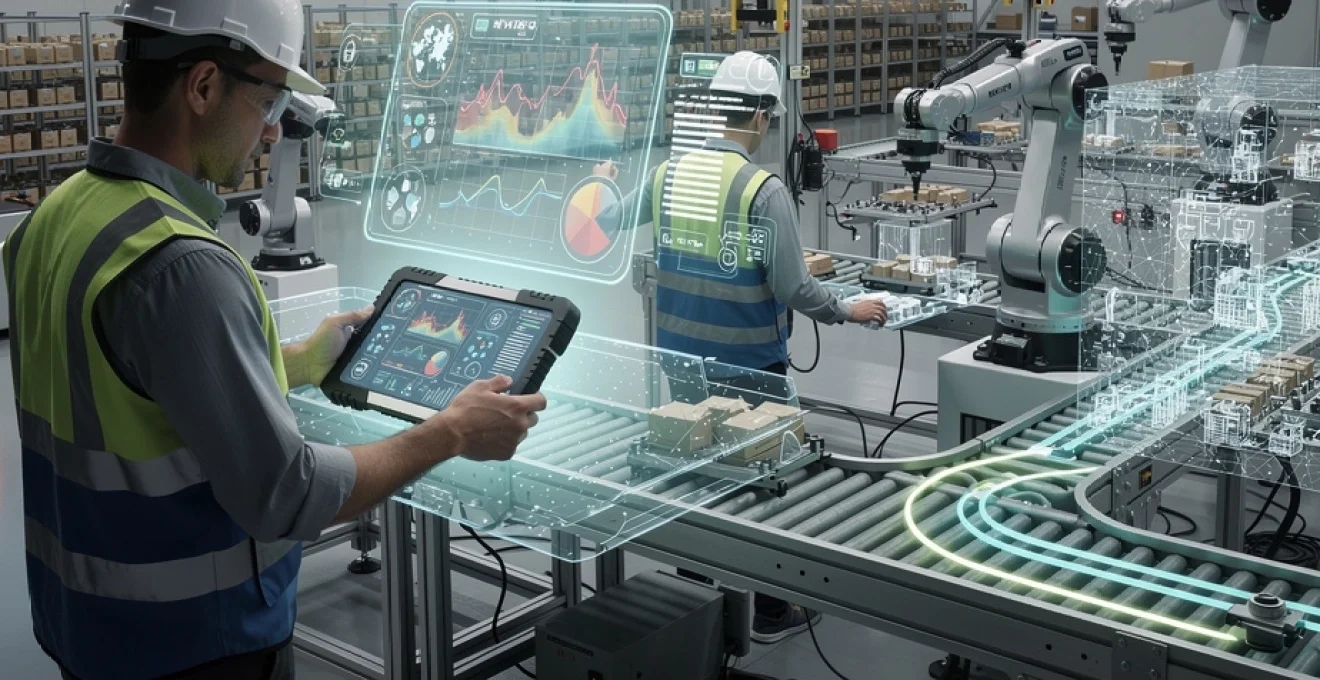
Manufacturing environments today face unprecedented pressure to deliver higher quality products faster while reducing costs and minimising waste. Traditional decision-making processes, often reliant on human intuition and historical data, struggle to keep pace with the complexity and speed required in modern production facilities. Intelligent automation represents a fundamental shift in how manufacturing decisions are made, moving from reactive, manual processes to proactive, data-driven systems that can respond to changing conditions in real-time.
The integration of artificial intelligence, machine learning, and advanced sensor technologies has transformed the factory floor into an intelligent ecosystem where decisions are made with unprecedented speed and accuracy. This evolution enables manufacturers to optimise production processes, predict equipment failures, and adjust operations dynamically based on real-time data analysis. The result is a more responsive, efficient, and profitable manufacturing operation that can adapt to market demands and operational challenges with remarkable agility.
Machine learning algorithms in industrial process optimisation
Machine learning algorithms have become the cornerstone of intelligent manufacturing systems, enabling facilities to process vast amounts of operational data and extract actionable insights that drive better decision-making. These algorithms continuously learn from historical and real-time data patterns, identifying correlations and trends that human operators might miss. The implementation of machine learning in industrial settings has resulted in productivity improvements of up to 20% and quality enhancements exceeding 35% across various manufacturing sectors.
The power of machine learning lies in its ability to handle multiple variables simultaneously while adapting to changing conditions. Unlike traditional rule-based systems that follow predetermined logic, machine learning algorithms evolve their decision-making criteria based on new information and outcomes. This adaptability proves invaluable in complex manufacturing environments where process parameters, material properties, and external conditions constantly fluctuate.
Neural networks for predictive quality control systems
Neural networks have revolutionised quality control processes by enabling manufacturers to predict defects before they occur rather than simply detecting them after production. These sophisticated algorithms analyse patterns in sensor data, process parameters, and environmental conditions to identify subtle indicators that precede quality issues. Implementation of neural network-based quality systems typically reduces defect rates by 40-60% while significantly decreasing inspection costs and time.
The deep learning capabilities of neural networks allow them to recognise complex patterns in multidimensional data sets that traditional statistical methods cannot detect. For instance, a neural network might identify that specific combinations of temperature, pressure, and material feed rate lead to surface finish problems, even when each parameter individually falls within acceptable ranges. This predictive capability enables operators to make preventive adjustments before quality issues manifest.
Reinforcement learning applications in production line scheduling
Reinforcement learning algorithms excel in optimising production scheduling by learning from the consequences of scheduling decisions and continuously improving their strategies. These systems treat scheduling as a dynamic game where the algorithm receives rewards for efficient schedules and penalties for delays or resource conflicts. Over time, the algorithm develops sophisticated strategies that balance competing objectives such as minimising makespan, reducing setup times, and maximising resource utilisation.
The adaptive nature of reinforcement learning makes it particularly valuable in environments with high variability or unexpected disruptions. When equipment breaks down or rush orders arrive, these systems can rapidly recalculate optimal schedules while considering the changed circumstances. Manufacturing facilities using reinforcement learning for scheduling report improvements in on-time delivery rates of 25-35% and reductions in average cycle time of 15-20%.
Computer vision integration with siemens MindSphere platforms
Computer vision systems integrated with industrial IoT platforms like Siemens MindSphere create powerful decision-making tools that combine visual inspection capabilities with comprehensive data analytics. These systems can analyse thousands of images per minute, identifying defects, measuring dimensions, and verifying assembly correctness with accuracy levels exceeding 99.5%. The integration with cloud-based platforms enables sophisticated analytics that combine visual data with process parameters and historical trends.
The combination of edge-based image processing and cloud-based analytics allows for real-time decision-making while maintaining comprehensive records for trend analysis and process improvement. Computer vision systems can trigger immediate responses to quality issues while simultaneously feeding data to higher-level systems for long-term optimisation strategies. This multi-layered approach ensures both immediate problem resolution and continuous improvement of manufacturing processes.
Edge computing implementation for Real-Time analytics
Edge computing brings analytical capabilities directly to the factory floor,
processing data from sensors, controllers, and machines within milliseconds, rather than sending everything to the cloud. By keeping computation close to the equipment, manufacturers reduce latency, avoid bandwidth bottlenecks, and maintain operations even if external connectivity is disrupted. This is particularly important for safety-critical applications, high-speed production lines, and real-time control loops where even a few hundred milliseconds of delay can impact product quality or machine health.
From a decision-making perspective, edge computing allows you to embed intelligence directly into PLCs, industrial PCs, and smart gateways. Anomaly detection models can run at the machine level to flag abnormal vibration, temperature, or torque patterns and immediately trigger a controlled stop or parameter adjustment. At the same time, summarised data and events are forwarded to central systems for long-term analysis and continuous improvement, creating a layered architecture where fast decisions happen at the edge and strategic optimisation happens in the cloud.
Digital twin technology and sensor data integration
Digital twin technology takes intelligent automation a step further by creating virtual replicas of machines, production lines, or entire plants that evolve in sync with their physical counterparts. These digital models use live sensor data, historical performance information, and physics-based simulations to mirror real-world behaviour as closely as possible. The result is a powerful decision-support tool that lets engineers and operators test scenarios, diagnose issues, and optimise parameters without risking disruption on the factory floor.
When combined with robust sensor data integration, digital twins become a central hub for data-driven decision-making in manufacturing. Instead of piecing together insights from disparate dashboards, you can visualise how process changes, maintenance strategies, or product design tweaks will affect performance across the entire value chain. This reduces the time required for root-cause analysis, shortens new product introduction cycles, and helps you answer a crucial question with confidence: “What will happen if we change this?”
Iot sensor networks for manufacturing equipment monitoring
IoT sensor networks form the backbone of any effective digital twin and intelligent automation strategy. By deploying vibration, temperature, pressure, acoustic, and energy sensors on critical assets, manufacturers gain continuous visibility into equipment health and process stability. Modern wireless protocols and low-power devices make it feasible to retrofit legacy machines, turning even decades-old equipment into data-generating assets that support predictive maintenance and real-time optimisation.
The value of these IoT sensor networks lies not just in collecting data, but in structuring and contextualising it. Sensor readings linked to specific assets, orders, batches, and shifts allow machine learning algorithms to distinguish between normal variation and early signs of trouble. For instance, a subtle increase in motor current may be acceptable during a heavy-duty product run but problematic during light-load operation. As IoT data sets grow richer, decision-making on the factory floor evolves from reactive troubleshooting to proactive risk avoidance.
SCADA systems integration with wonderware InTouch HMI
Supervisory Control and Data Acquisition (SCADA) systems, combined with HMIs like Wonderware InTouch, have long been the control nerve centre of industrial operations. In the context of intelligent automation, their role is expanding from simple visualisation and manual control to orchestrating automated decisions based on advanced analytics. Integrating SCADA systems with AI models and digital twins enables a closed-loop environment where insights seamlessly flow into actions.
For example, InTouch HMI screens can present operators with recommended setpoint changes generated by predictive models, along with confidence scores and explanations. Instead of asking operators to interpret dozens of raw trends, the system highlights the most meaningful deviations and proposes optimised responses. Over time, this integration shortens reaction times, standardises best practices across shifts, and reduces the cognitive load on operators who are already managing complex processes.
PLM software connectivity through dassault systèmes platforms
Product Lifecycle Management (PLM) platforms, such as those from Dassault Systèmes, connect design, engineering, and manufacturing data in a single digital thread. When PLM is tightly integrated with shop-floor systems and digital twins, changes in product design or process plans can be evaluated and executed with far greater confidence. This connectivity is crucial for manufacturers dealing with high product variability, short life cycles, and strict compliance requirements.
By linking PLM data to live operational performance, decision-makers can see how design choices impact manufacturability, quality, and cost in real time. For instance, if a new component geometry increases cycle time or raises scrap rates on a specific machine, this feedback can flow directly into the PLM environment. Engineers can then adjust tolerances, materials, or process steps and virtually validate the impact before releasing a new revision. The result is a more agile, data-driven product development loop that reduces late-stage surprises on the factory floor.
OPC UA protocol implementation for data standardisation
Standardising industrial data is one of the most persistent challenges in intelligent manufacturing. Machines from different vendors, legacy control systems, and custom interfaces often speak their own “dialects,” making it difficult to build unified analytics and automation workflows. OPC UA addresses this by providing a vendor-neutral, secure communication standard that structures both data and semantics, not just raw values.
Implementing OPC UA across the factory floor allows you to expose data from PLCs, sensors, SCADA, MES, and even PLM through a consistent information model. This significantly reduces integration complexity when deploying AI-driven decision-making or connecting digital twins to physical assets. Moreover, OPC UA’s built-in security features—such as encryption and authentication—help protect critical production data against tampering or unauthorised access, a key concern as more systems are connected to enterprise networks and the cloud.
Automated decision trees in manufacturing execution systems
Manufacturing Execution Systems (MES) are evolving from passive record-keeping tools into active decision engines that guide operators and machines in real time. Automated decision trees embedded within MES platforms use predefined logic, enriched with machine learning insights, to standardise responses to common scenarios on the factory floor. Think of them as digital standard operating procedures that can adapt based on context and historical performance.
For example, when a quality check fails, a decision tree can automatically determine the appropriate next step: isolate the affected batch, trigger additional inspections, adjust machine parameters, or initiate a maintenance ticket. Instead of relying on tribal knowledge or individual judgement, the MES ensures that similar issues are handled consistently across shifts and sites. Over time, data from these decisions feeds back into optimisation efforts, refining thresholds, branching logic, and escalation rules.
From a practical standpoint, automated decision trees help manufacturers reduce variability, shorten response times, and improve compliance with regulatory or customer requirements. They also provide a clear audit trail of who did what and why, which is invaluable during audits or root-cause investigations. As you combine decision-tree logic with predictive analytics, the MES can shift from simply documenting events to preventing problems before they escalate.
Robotic process automation in quality assurance workflows
Robotic Process Automation (RPA) is often associated with office tasks, but its principles translate well to manufacturing quality assurance. Many QA workflows involve repetitive, rules-based activities such as logging test results, updating certificates of analysis, cross-checking specifications, or transferring data between systems. By automating these digital tasks, manufacturers free up quality engineers and inspectors to focus on higher-value analysis and problem-solving.
On the factory floor, RPA complements physical automation by ensuring that data captured by sensors, cameras, and machines is correctly validated, stored, and acted upon. For instance, when a vision system flags a defect, RPA bots can automatically update the MES, trigger rework orders, and notify supervisors without manual data entry. This reduces latency between detection and response, minimises human error in documentation, and improves traceability across the quality management process.
ABB RobotStudio programming for automated inspection
ABB RobotStudio enables offline programming and simulation of robotic inspection tasks, allowing engineers to design and validate inspection routines without stopping production. In an intelligent automation context, RobotStudio becomes a key enabler for rapid iteration and continuous improvement in quality inspection strategies. You can simulate camera angles, lighting conditions, and robot paths to maximise inspection coverage while minimising cycle time.
By linking RobotStudio models with real production data, manufacturers can adjust inspection frequency and depth based on risk levels predicted by machine learning algorithms. For example, when process variability increases or a new supplier batch is introduced, the system can automatically increase inspection sampling for specific features. This dynamic approach to inspection, driven by both simulation and live data, helps you strike a better balance between quality assurance and throughput.
FANUC CRX collaborative robots in assembly line decision-making
Collaborative robots such as the FANUC CRX are designed to work safely alongside human operators, making them ideal for flexible assembly lines where tasks and workflows frequently change. When integrated with intelligent automation systems, these cobots become active participants in decision-making rather than just programmable tools. They can adapt their behaviour based on sensor inputs, production priorities, and operator feedback.
Consider an assembly station where the FANUC CRX assists with component placement and torqueing operations. By feeding real-time torque, position, and vision data into AI models, the system can decide whether each assembly meets quality standards, requires rework, or should be routed to additional testing. Cobots can also adjust their speed, force, or sequence based on upstream bottlenecks or downstream availability, effectively negotiating with the broader production system to maintain optimal flow.
Universal robots integration with ERP systems
Universal Robots platforms are widely used for tasks like packaging, palletising, and light assembly due to their ease of deployment and programming. Integrating these robots with ERP systems extends their role from local task execution to enterprise-level resource coordination. Instead of running fixed programs, robots can receive work orders, priorities, and parameters directly from the ERP based on current demand, inventory levels, and shipping commitments.
This integration turns physical robotic actions into part of a fully orchestrated, data-driven workflow. For instance, when the ERP detects a rush order, it can automatically reprioritise robot tasks, reassign pallets, or adjust labelling instructions without manual intervention. At the same time, robots send back production counts, downtime events, and performance metrics, giving planners an accurate, real-time view of capacity. The result is a tighter connection between what the business promises to customers and what actually happens on the factory floor.
Artificial intelligence-driven supply chain orchestration
Intelligent automation on the factory floor cannot deliver its full value without extending into the broader supply chain. AI-driven supply chain orchestration connects procurement, production, logistics, and distribution into a single, responsive system that makes coordinated decisions across the entire network. Instead of planning in static monthly or weekly cycles, manufacturers can adjust sourcing, scheduling, and shipping on a near real-time basis in response to changing demand and constraints.
Machine learning models analyse data from sales orders, market signals, supplier performance, transportation networks, and shop-floor execution systems to generate optimised plans. These plans consider trade-offs between cost, lead time, service level, and risk, enabling more informed decisions when disruptions occur. For example, if a key supplier experiences a delay, the system can automatically evaluate alternative suppliers, adjust production recipes, or reschedule orders to minimise impact on customer deliveries.
For factory-floor teams, AI-driven orchestration translates into clearer priorities and fewer last-minute surprises. Production schedules, material calls, and labour allocations become more stable and predictable, even in volatile markets. At the same time, when changes are necessary, they are communicated with better context: why they are happening, how they affect key performance indicators, and which automated decisions have already been made upstream or downstream.
Cybersecurity frameworks for intelligent manufacturing networks
As factories become more connected and data-driven, cybersecurity shifts from a purely IT concern to a central part of operational decision-making. Intelligent automation platforms, IoT sensor networks, OPC UA servers, and cloud-based analytics all introduce new attack surfaces that must be protected. A successful cyberattack can do more than steal data; it can disrupt production, compromise product quality, or damage equipment, directly impacting safety and profitability.
Modern cybersecurity frameworks for intelligent manufacturing focus on a few key principles: zero-trust access control, network segmentation, continuous monitoring, and secure-by-design architectures. Implementing role-based access, strong authentication, and encrypted communication ensures that only authorised users and systems can influence critical operations. Network segmentation isolates production networks from corporate and external networks, limiting the spread of potential intrusions and protecting safety-critical control systems.
From a decision-making standpoint, cybersecurity also involves detecting and responding to anomalous behaviour that could indicate a breach. The same machine learning techniques used for predictive maintenance can analyse network traffic, user actions, and system logs to flag suspicious activity in real time. When an anomaly is detected, automated playbooks can isolate affected systems, switch to safe modes, or revert to known-good configurations. In this way, cybersecurity and intelligent automation converge, creating a resilient manufacturing environment where data-driven decisions are not only fast and efficient, but also trustworthy and secure.