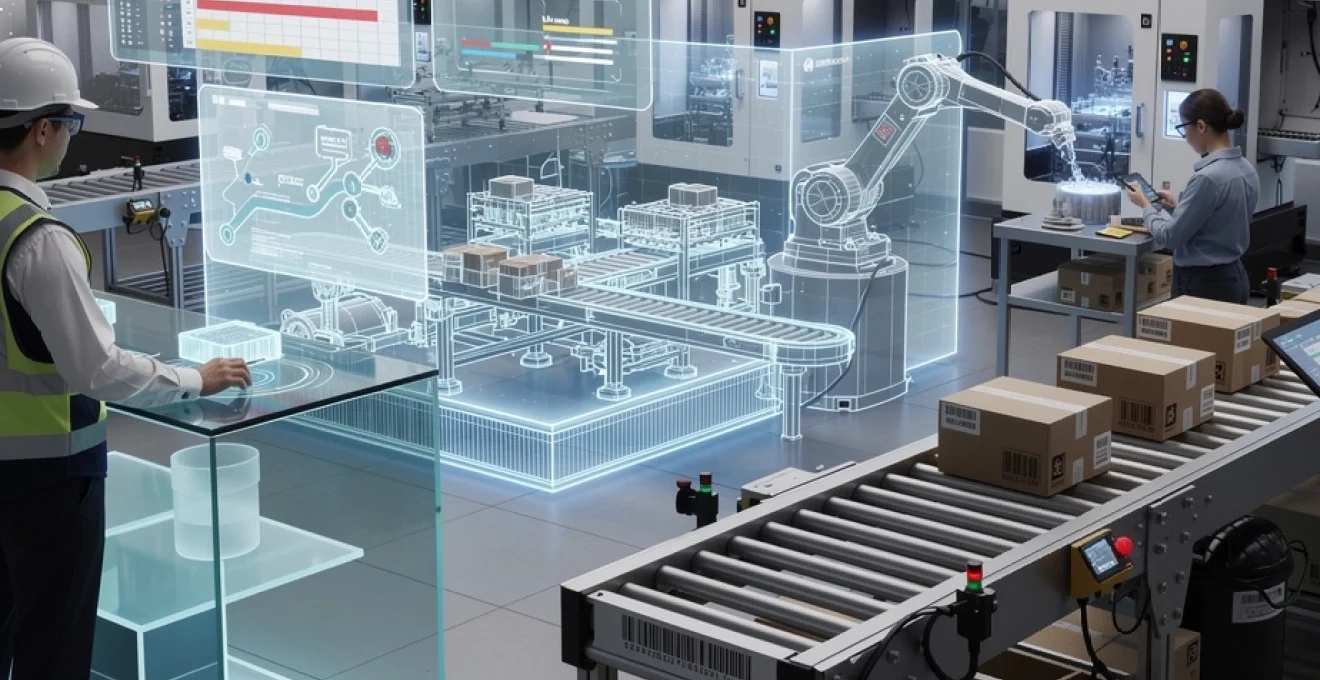
Modern manufacturing operates in an environment where precision, accountability, and responsiveness define competitive advantage. Industrial software has emerged as the backbone of this transformation, enabling manufacturers to track every component through production, optimise scheduling decisions in real time, and maintain complete visibility across complex operations. The integration of digital systems into factory environments has fundamentally changed how production data flows, how decisions are made, and how quickly organisations can respond to disruptions or opportunities.
For manufacturers facing regulatory pressures, supply chain complexity, and customer demands for shorter lead times, industrial software solutions provide the infrastructure necessary to maintain control whilst scaling operations. These systems connect machines, materials, and people into unified ecosystems where information moves seamlessly from the shop floor to executive dashboards. The result is not merely incremental improvement but a fundamental shift in operational capability—one that enables proactive management rather than reactive problem-solving.
Manufacturing execution systems (MES) and Real-Time production tracking
Manufacturing Execution Systems represent the digital nervous system of modern production facilities, capturing granular data at every stage of manufacturing and transforming it into actionable intelligence. These platforms bridge the gap between enterprise resource planning systems and shop floor operations, creating a continuous feedback loop that enhances decision-making at all organisational levels. When properly implemented, MES provides manufacturers with unprecedented visibility into production status, quality metrics, and resource utilisation—information that was historically either unavailable or hours behind actual events.
Automated data capture through SCADA integration and IoT sensors
The foundation of effective production tracking lies in automated data collection that eliminates manual recording and the errors it introduces. SCADA (Supervisory Control and Data Acquisition) systems integrate directly with MES platforms to capture machine states, cycle times, temperature readings, and countless other process parameters without human intervention. Industrial IoT sensors extend this capability further, monitoring everything from vibration patterns that indicate impending equipment failure to environmental conditions that affect product quality.
This automated approach delivers several critical advantages. First, it ensures data accuracy by removing transcription errors and subjective interpretation. Second, it operates continuously without fatigue or distraction, capturing information during all shifts and production scenarios. Third, it provides the volume and frequency of data necessary for advanced analytics and machine learning applications. Manufacturers implementing these systems typically see data collection costs decrease by 40-60% whilst simultaneously improving data quality and granularity.
Batch genealogy and material flow mapping across production lines
Understanding exactly which raw materials, components, and process parameters contributed to any finished product forms the essence of comprehensive traceability. MES platforms create detailed batch genealogy records that document the complete manufacturing history—from incoming material lot numbers through every processing step to final packaging. This capability proves invaluable when quality issues arise, enabling manufacturers to identify affected products with surgical precision rather than implementing costly broad recalls.
Material flow mapping visualises how components move through production facilities, highlighting bottlenecks, inefficient routing, and opportunities for process improvement. These digital representations update in real time, allowing production managers to see exactly where work-in-progress inventory accumulates and where capacity constraints limit throughput. Pharmaceutical manufacturers, who face particularly stringent traceability requirements, have reduced recall costs by an average of 70% through implementing comprehensive batch genealogy systems.
OEE dashboards and Machine-Level performance analytics
Overall Equipment Effectiveness (OEE) has become the universal language for discussing manufacturing performance, combining availability, performance, and quality metrics into a single percentage that reflects true productive capacity. Modern MES platforms calculate OEE automatically and present it through intuitive dashboards that update continuously. These visualisations break down the three OEE components, allowing you to identify whether availability losses (downtime), performance losses (speed reduction), or quality losses (defects) represent your primary improvement opportunity.
Machine-level analytics extend beyond OEE to examine cycle time distributions, changeover durations, minor stop frequencies, and countless other performance indicators. This granular visibility enables maintenance teams to implement condition-based servicing that prevents failures rather than responding to them. Production planners can identify which equipment requires attention and schedule interventions during planned downtime rather than experiencing unexpected disruptions. Manufacturers implementing comprehensive OEE monitoring typically achieve 15-25% productivity improvements within the first year.
Integration with ERP systems like SAP
Integration with ERP systems like SAP S/4HANA and microsoft dynamics 365
The true value of MES and real-time production tracking is unlocked when these systems are tightly integrated with enterprise resource planning platforms such as SAP S/4HANA and Microsoft Dynamics 365. This integration synchronises production orders, Bills of Materials (BOMs), routings, and inventory movements between the shop floor and back-office functions. As a result, planners, finance teams, and supply chain managers gain an accurate, real-time view of what is actually happening in production rather than relying on periodic manual updates.
Bidirectional data flows allow MES to automatically receive planned orders, scheduled operations, and material reservations from ERP, then feed back confirmations, scrap quantities, consumption, and machine utilisation data. This closes the loop between planning and execution, reducing discrepancies between theoretical and actual production. Manufacturers that connect MES with ERP systems typically see inventory accuracy rise above 98%, whilst order-to-cash cycles shorten due to more reliable production confirmations.
From a practical standpoint, this integration also streamlines change management. When engineering changes occur in ERP, updated BOMs and routings propagate to MES, ensuring operators always work from the latest version-controlled instructions. Similarly, real-time labour and machine usage recorded in MES can be posted back to ERP for accurate cost accounting and profitability analysis. This alignment between operational reality and financial reporting is essential for manufacturers seeking to optimise margins in highly competitive markets.
Barcode, RFID, and serialisation technologies for End-to-End traceability
Whilst MES provides the backbone for real-time production tracking, physical identification technologies such as barcodes, RFID, and serialisation make end-to-end traceability possible. These technologies act as the “digital passport” for materials and products as they move through the supply chain. By linking each scan or read event to a centralised industrial software platform, manufacturers can reconstruct the complete journey of any item—from raw material receipt to finished goods shipment.
In practice, combining automatic identification with industrial software transforms traceability from a regulatory requirement into a powerful operational tool. You can rapidly isolate defective batches, verify component authenticity, and respond to customer or regulator inquiries with detailed, time-stamped records. As global regulations around product safety and anti-counterfeiting continue to tighten, robust barcode and RFID strategies are no longer optional for manufacturers looking to maintain market access.
GS1 standards implementation and 2D DataMatrix labelling systems
Implementing GS1 standards ensures that the identification and labelling practices used within a factory are interoperable with customers, suppliers, and logistics partners. By adopting GS1-compliant barcodes, such as 2D DataMatrix codes, manufacturers can encode product identifiers, batch numbers, expiry dates, and even serial numbers within a compact symbol. Industrial software then decodes and stores this information, linking it to production records and quality data.
2D DataMatrix labelling is especially valuable in sectors like pharmaceuticals, medical devices, and electronics where space on packaging is limited yet the demand for detailed traceability is high. High-speed vision systems and handheld scanners can read these codes reliably, even when printed on small components or curved surfaces. When integrated with MES and QMS platforms, each scan event automatically updates product status and location, eliminating manual paperwork and reducing transcription errors.
For organisations transitioning from legacy labelling approaches, a phased implementation of GS1 standards is often the most effective route. Starting with critical product families or high-risk markets allows you to validate labelling designs, scanner performance, and data flows before scaling. Over time, standardised identification across all products significantly simplifies traceability, recall management, and regulatory reporting.
RFID tag infrastructure for Work-in-Progress (WIP) tracking
Radio Frequency Identification (RFID) adds another dimension to traceability by enabling automatic, non-line-of-sight tracking of assets and Work-in-Progress. Unlike barcodes, RFID tags can be read in bulk as items pass through gates or portals, making them ideal for high-mix, high-volume environments where manual scanning would create bottlenecks. Industrial software platforms aggregate these read events into real-time WIP visibility dashboards, showing exactly where each order or component resides.
By deploying RFID readers at strategic locations—such as warehouse doors, production cells, and staging areas—you can create a digital map of material flow. This allows planners and supervisors to answer questions like “Where is this order right now?” or “Which jobs are queuing at heat treatment?” in seconds rather than hours. Studies show that manufacturers implementing RFID-based WIP tracking often reduce search time for materials by 50–80%, freeing up valuable labour for value-added tasks.
However, an effective RFID infrastructure requires careful design. Tag selection must consider factors such as metal surfaces, high temperatures, and chemical exposure, while read zones must be tuned to avoid cross-reads from adjacent areas. Industrial software plays a critical role in filtering and interpreting raw RFID data, turning a flood of tag reads into meaningful production intelligence that operators and planners can act on.
Serialised unit traceability for pharmaceutical and food safety compliance
In highly regulated sectors like pharmaceuticals and food and beverage, serialised unit traceability is becoming mandatory. Rather than tracking only batch numbers, each individual saleable unit receives a unique serial number, often encoded in a 2D barcode or printed directly on packaging. Industrial software platforms manage the generation, assignment, and verification of these serial numbers, ensuring there are no duplicates and that each code is correctly linked to its production history.
This level of granularity allows manufacturers and regulators to trace a specific unit back to the exact line, shift, and set of raw materials used in its production. For example, EU Falsified Medicines Directive (FMD) and US Drug Supply Chain Security Act (DSCSA) both require end-to-end serialisation to combat counterfeiting and diversion. Similarly, global food safety standards increasingly expect precise tracking of ingredients and finished products at the unit level.
Implementing serialisation can be complex, involving changes to packaging lines, label design, data storage, and integration with external verification systems. However, by leveraging scalable industrial software platforms, you can orchestrate serial number management, aggregation hierarchies (unit to case to pallet), and reporting in a controlled and auditable manner. The result is not only compliance, but also faster root cause analysis when safety concerns arise.
Track-and-trace solutions for supply chain visibility and recall management
End-to-end track-and-trace systems extend visibility beyond the factory walls, connecting production data with logistics and distribution networks. Each scan, RFID read, or serial number verification event—whether in a warehouse, at a 3PL provider, or at a customer distribution centre—is captured by centralised industrial software. This creates a continuous chain of custody for each product, making it possible to pinpoint its location and status at any moment.
When recalls or quality issues occur, this visibility proves invaluable. Instead of issuing broad and expensive recalls, manufacturers can identify the specific lots, serials, and destinations affected. According to industry estimates, targeted recalls enabled by digital track-and-trace can reduce recall-related costs by up to 60%. Moreover, the ability to demonstrate precise traceability builds trust with regulators and customers, particularly in sensitive sectors such as infant nutrition, biologics, and medical devices.
From an operational perspective, track-and-trace solutions also support better demand sensing and inventory optimisation. By analysing movement patterns and consumption rates across the supply chain, planners can adjust production and distribution strategies more intelligently. In this way, traceability data becomes a strategic asset rather than simply a compliance cost.
Advanced planning and scheduling (APS) software for production optimisation
While MES and traceability technologies provide visibility into what is happening, Advanced Planning and Scheduling (APS) software focuses on deciding what should happen next. APS tools use sophisticated algorithms to create realistic, optimised production schedules that respect constraints such as machine capacity, labour availability, tooling, and material supply. In complex manufacturing environments, manual scheduling or basic spreadsheet-based approaches simply cannot keep pace with changing priorities and disruptions.
By integrating APS software with MES and ERP systems, manufacturers can move from static, once-a-day planning to dynamic, real-time scheduling. This shift is particularly valuable in high-mix, low-volume or engineer-to-order settings, where each day presents a new set of priorities. Organisations that adopt APS solutions commonly see on-time delivery performance improve by 10–30%, alongside reductions in overtime and WIP inventory.
Finite capacity scheduling with constraint-based algorithms
Finite capacity scheduling recognises that machines, people, and resources have real limits. Rather than overloading equipment and hoping everything fits, APS systems use constraint-based algorithms to generate schedules that respect these limitations. Each operation is assigned to a specific resource at a specific time, ensuring that no machine or work centre is double-booked. This prevents the chronic expediting and firefighting that plague many plants relying on infinite capacity planning.
Constraint-based algorithms can also consider sequence-dependent setup times, tool availability, and maintenance windows. For example, the schedule may group similar products together to minimise changeovers, or avoid scheduling long runs on a machine that is due for preventive maintenance. Industrial software visualises these schedules using interactive Gantt charts, allowing planners to see the impact of changes instantly. If you drag and drop an order to an earlier slot, the system recalculates downstream effects in seconds.
From a business perspective, finite capacity scheduling brings production reality and customer promises into alignment. Sales teams can quote more accurate lead times, knowing that the schedule already accounts for actual resource availability. This reduces the risk of late deliveries and improves customer satisfaction, particularly in markets where delivery performance is a key differentiator.
Demand-driven MRP and dynamic resource allocation
Traditional Material Requirements Planning (MRP) systems often rely on fixed lead times and batch sizes, which can lead to excess inventory or shortages when demand fluctuates. Demand-driven MRP (DDMRP) approaches, supported by modern APS software, use actual consumption and buffer management principles to adjust plans in near real time. Instead of pushing production based on long-range forecasts, you pull work through the system based on current demand and decoupled inventory positions.
Industrial software platforms implementing DDMRP continuously monitor buffer levels at critical points in the supply chain. When buffers drop below predefined thresholds, replenishment orders are triggered automatically, sized according to current volatility and lead time. This dynamic resource allocation helps stabilise flow, reduce bullwhip effects, and minimise both stockouts and excess stock. Many manufacturers report inventory reductions of 20–40% after adopting demand-driven planning practices.
For production scheduling, this approach means that priority is given to orders that truly protect flow and customer service, rather than simply following a static due-date list. By integrating demand-driven logic with finite capacity scheduling, APS tools can orchestrate both material and capacity in a coordinated way, ensuring resources are deployed where they add the most value.
Integration of siemens opcenter APS and dassault systèmes DELMIA ortems
Leading APS solutions such as Siemens Opcenter APS and Dassault Systèmes DELMIA Ortems demonstrate how advanced algorithms and intuitive visualisation can transform production scheduling. These platforms integrate with existing ERP and MES systems, pulling in orders, BOMs, routings, and capacity data, then generating optimised schedules that planners can adjust interactively. The result is a scheduling environment that combines mathematical rigour with human expertise.
For example, Siemens Opcenter APS can model complex multi-constraint scenarios, including alternate routing options, subcontracting, and synchronised operations across multiple plants. DELMIA Ortems, similarly, excels at managing constraint-based planning for high-mix environments such as aerospace or industrial equipment. In both cases, what was once a labour-intensive spreadsheet exercise becomes a continuous planning process supported by powerful industrial software.
Implementing these tools often reveals hidden capacity and improvement opportunities. By visualising bottlenecks across the entire value chain, you can identify where modest investments in additional shifts, tooling, or automation will yield the greatest return. Over time, this drives a culture of data-driven decision-making in production planning, moving the organisation away from intuition-based scheduling.
Real-time schedule adjustments based on machine downtime and material shortages
No matter how good your initial schedule is, real-world events will force changes: machines fail, urgent orders arrive, materials are delayed. APS software integrated with MES and IoT data can respond to these disruptions in near real time. When a critical asset goes down, the system can automatically reschedule affected operations to alternate machines, adjust sequences, or shift orders to later slots, all while preserving high-priority commitments.
Similarly, if MES or warehouse systems signal that a key material is short, APS can reprioritise jobs that are not affected by the shortage and push back those that are. This avoids idle time on the shop floor and maintains throughput even in the face of supply disruptions. From the planner’s perspective, the software acts like a GPS for production: when a “roadblock” appears, it automatically recalculates the best route to meet due dates.
By embedding these feedback loops into industrial software, you move from static to adaptive scheduling. This flexibility is critical in today’s volatile environment, where demand patterns and supply chain conditions can shift rapidly. Plants that embrace real-time scheduling adjustments often see dramatic reductions in expediting costs and a noticeable decline in last-minute overtime.
Quality management systems (QMS) and statistical process control (SPC)
Traceability and scheduling are only part of the equation; consistent product quality is equally essential. Digital Quality Management Systems (QMS) and Statistical Process Control (SPC) capabilities integrated into industrial software help manufacturers detect issues early, enforce standardised procedures, and maintain compliance with industry regulations. Instead of relying solely on end-of-line inspection, you can build quality into every stage of the process.
Modern QMS platforms centralise non-conformance management, corrective and preventive actions (CAPA), audit trails, and document control. When combined with real-time SPC and production data, they provide a closed-loop quality system that continuously drives improvement. Manufacturers that digitise their quality processes typically reduce defect rates by 30–50% while simplifying regulatory audits and customer reporting.
In-line inspection data integration and automated non-conformance reporting
Integrating in-line inspection equipment—such as vision systems, checkweighers, and torque testers—directly with industrial software enables automatic capture of quality data at the point of production. Each measurement, pass/fail result, or image is logged against the relevant batch, serial number, or work order within the QMS or MES. This granular visibility makes it far easier to trace issues back to specific conditions, shifts, or machines.
When measurements fall outside predefined control limits or specification ranges, the system can automatically generate non-conformance reports. These events trigger workflows that may include quarantining affected product, notifying supervisors, and initiating root cause analysis. By removing manual reporting from the equation, you ensure that no critical deviations are overlooked due to time pressure or fatigue.
Over time, analysing this accumulated inspection data reveals patterns and recurring issues. For instance, you might discover that a particular combination of operator and machine leads to higher defect rates, or that quality issues spike during certain environmental conditions. Industrial software turns these observations into actionable insights, enabling targeted training, equipment adjustments, or process redesigns.
Six sigma methodologies and control chart analysis in digital platforms
Six Sigma and SPC techniques, long used by quality professionals, are significantly more powerful when embedded in digital platforms. Control charts, process capability indices (Cp, Cpk), and Pareto analyses can be generated automatically from real-time production data. Instead of manually sampling and plotting measurements, engineers can monitor live charts that update as new data points arrive.
These digital tools make it easier to distinguish between common-cause and special-cause variation. When a process drifts towards an out-of-control condition, alerts can be sent to engineers and supervisors before non-conforming product is produced. This proactive approach prevents defects rather than simply detecting them after the fact. In many plants, this shift towards real-time SPC has reduced scrap and rework costs by double-digit percentages.
Moreover, industrial software platforms can guide users through structured Six Sigma projects, from Define and Measure through Analyse, Improve, and Control (DMAIC). By linking improvement initiatives directly to underlying data and control charts, you ensure that changes are grounded in evidence rather than assumption. This data-centric approach supports a culture of continuous improvement across engineering, production, and quality teams.
Electronic batch records (EBR) for FDA 21 CFR part 11 compliance
In regulated industries such as pharmaceuticals and biotech, Electronic Batch Records (EBR) are rapidly replacing paper-based documentation. EBR systems within MES or specialised QMS platforms capture all critical process parameters, operator actions, material additions, and equipment states for each batch in a secure, auditable format. This is essential for compliance with FDA 21 CFR Part 11, which governs electronic records and electronic signatures.
By enforcing workflows, electronic signatures, and automatic time-stamped entries, EBR reduces the risk of missing data, illegible handwriting, or backdated entries that plague manual systems. When deviations occur, they are logged immediately and linked to corrective actions, ensuring full traceability. During inspections, regulators can review complete digital records in minutes rather than sifting through stacks of paper.
Beyond compliance, EBR systems significantly shorten batch review and release cycles. Because data is validated at the point of entry and cross-checked automatically, quality assurance teams can perform exceptions-based review instead of manually checking every record. Many life sciences manufacturers report batch release times shrinking from weeks to days or even hours after implementing robust EBR solutions.
Digital twin technology and predictive analytics for production visibility
As industrial software matures, manufacturers are moving beyond simple monitoring towards advanced simulation and prediction. Digital twin technology creates virtual replicas of machines, lines, or entire plants that mirror their real-world counterparts in real time. Combined with predictive analytics, these digital models provide deep insights into how processes behave under different conditions, enabling you to test scenarios and optimise performance without risking actual production.
Think of a digital twin as a flight simulator for your factory. Instead of experimenting directly on critical assets, you can simulate parameter changes, new product introductions, or maintenance strategies in a virtual environment. The insights gained help you make better decisions about investments, process settings, and scheduling rules, ultimately improving throughput, quality, and equipment reliability.
Virtual commissioning and simulation using rockwell automation Emulate3D
Virtual commissioning tools such as Rockwell Automation Emulate3D allow engineers to design, test, and validate automation systems before hardware is installed or modified. By creating a digital model of the production line—even down to PLC logic and material flow—you can verify that control strategies, safety interlocks, and throughput targets are achievable. This reduces the risk of costly surprises during physical commissioning.
Industrial software platforms integrate these simulation tools with real engineering data, enabling re-use of CAD models, PLC code, and layout information. Engineers can run “what-if” studies to evaluate the impact of adding a new conveyor, changing buffer sizes, or rebalancing workstations. When the digital model behaves as expected, it greatly increases confidence that the physical implementation will perform as intended.
Manufacturers that embrace virtual commissioning often report commissioning time reductions of 20–50%, alongside fewer change orders and less disruption to existing production. In complex brownfield environments, where downtime is extremely expensive, the ability to debug and optimise changes in a virtual twin before deployment can be a decisive competitive advantage.
Machine learning models for predictive maintenance and downtime prevention
Predictive maintenance uses machine learning models trained on historical sensor and event data to forecast when equipment is likely to fail or degrade. By analysing patterns in vibration, temperature, pressure, current draw, and other signals, these models can identify subtle deviations that precede breakdowns. Industrial software platforms orchestrate data collection, model training, and deployment, then generate actionable alerts when risk levels rise.
Instead of relying on fixed-interval preventive maintenance or reactive repairs, maintenance teams can plan interventions at the optimal time—after maximum useful life has been extracted, but before a failure occurs. This reduces unplanned downtime and extends asset life, while also minimising unnecessary maintenance tasks. According to various industry benchmarks, predictive maintenance initiatives can cut maintenance costs by up to 30% and reduce breakdowns by up to 70% when properly implemented.
Of course, building effective models requires high-quality data and collaboration between data scientists, reliability engineers, and operators. Industrial software facilitates this collaboration, providing tools for feature engineering, model validation, and continuous monitoring of model performance. As you accumulate more data, the models become more accurate, creating a virtuous cycle of learning and improvement.
Real-time process optimisation through digital replica monitoring
Beyond maintenance, digital twins support real-time process optimisation. By continuously comparing live process data against the digital model, industrial software can identify inefficiencies, deviations, and opportunities for improvement. Advanced control strategies—such as model-predictive control (MPC)—use these insights to adjust set points proactively, keeping the process in its optimal operating window.
For example, in a chemical reactor or furnace, the digital twin might predict how changes in feed composition or ambient conditions will affect product quality or energy consumption. The control system can then adjust temperatures, flow rates, or residence times in anticipation of these changes, rather than reacting after specifications are missed. This is akin to driving by looking through the windscreen rather than the rear-view mirror.
As more manufacturers adopt digital replicas for critical assets and processes, the boundary between planning and execution becomes increasingly blurred. Industrial software serves as the nervous system that links real-time sensing, predictive models, and control actions, turning raw data into optimised performance across the entire value chain.
Cloud-based industrial platforms and mobile workforce management
The final piece of the puzzle is how industrial data is delivered to the people who need it, when they need it. Cloud-based industrial platforms and mobile applications enable secure, scalable access to production information from anywhere. Instead of being tied to fixed terminals or on-premise servers, teams can monitor KPIs, respond to alerts, and collaborate using tablets, smartphones, and web dashboards.
This shift towards connected, mobile-friendly industrial software is reshaping how frontline workers, supervisors, and executives interact with production systems. It supports new ways of working—such as remote support, cross-site collaboration, and flexible resourcing—while reducing the IT burden associated with traditional on-premise infrastructure.
Iiot platforms like PTC ThingWorx and siemens MindSphere for data aggregation
Industrial Internet of Things (IIoT) platforms such as PTC ThingWorx and Siemens MindSphere provide the backbone for aggregating data from diverse machines, sensors, and systems. These cloud-based platforms offer connectors for common industrial protocols, enabling rapid onboarding of assets without extensive custom development. Once data is ingested, it can be normalised, contextualised, and exposed to analytics, dashboards, and applications.
By centralising data in an IIoT platform, manufacturers avoid fragmented “data islands” and enable cross-plant benchmarking, fleet analytics, and centralised monitoring centres. For instance, you can compare OEE performance across multiple sites, detect systemic issues, or deploy standardised apps globally. Many organisations treat these platforms as a foundation for their digital transformation, layering MES, APS, and QMS capabilities on top.
Security and governance are paramount in this context. Leading IIoT platforms incorporate robust role-based access controls, encryption, and audit logging to ensure that sensitive production data is protected. At the same time, open APIs and development toolkits make it possible to build tailored solutions that address your unique operational challenges without locking you into rigid vendor-specific workflows.
Mobile applications for shop floor operators and production supervisors
Empowering frontline workers with mobile applications transforms how quickly issues are resolved and decisions are made. Instead of walking back to a terminal or office to check the schedule or log a deviation, operators can access industrial software directly from rugged tablets or smartphones. They can view digital work instructions, record completion times, capture photos of defects, and request support, all at the point of work.
For supervisors, mobile apps provide real-time overviews of line performance, labour allocation, and WIP status. If an alarm triggers or a KPI moves outside its threshold, they receive push notifications and can drill down into the root cause instantly. This reduces response times, shortens standstills, and fosters more proactive management. In many plants, adopting mobile tools has cut the time needed to escalate and resolve issues by 30–50%.
Mobile applications also support training and knowledge transfer. New operators can access step-by-step guidance, videos, and checklists whilst performing tasks, reducing the learning curve and improving consistency. Over time, this contributes to a more flexible and resilient workforce, capable of adapting quickly to changing product mixes and technologies.
Role-based dashboards and customisable KPI visualisation tools
Finally, effective production visibility depends on presenting the right information to the right people in a clear, actionable format. Role-based dashboards within industrial software platforms tailor KPIs and visualisations to each user group—operators, maintenance technicians, planners, quality engineers, and executives. Rather than overwhelming everyone with the same data, you can focus each view on the metrics and alerts that matter most to that role.
Customisable visualisation tools allow you to design dashboards that reflect your processes and priorities. For example, an operations manager might see OEE by line, schedule adherence, and top downtime causes, while a quality manager focuses on defect rates, SPC charts, and open non-conformances. When these dashboards are available on both desktop and mobile devices, stakeholders can monitor performance and intervene from wherever they are.
By combining IIoT data aggregation, mobile access, and role-specific visualisation, industrial software turns production data into a shared, real-time language across the organisation. This shared understanding is the foundation for faster decisions, better collaboration, and sustained improvements in traceability, scheduling, and production visibility.