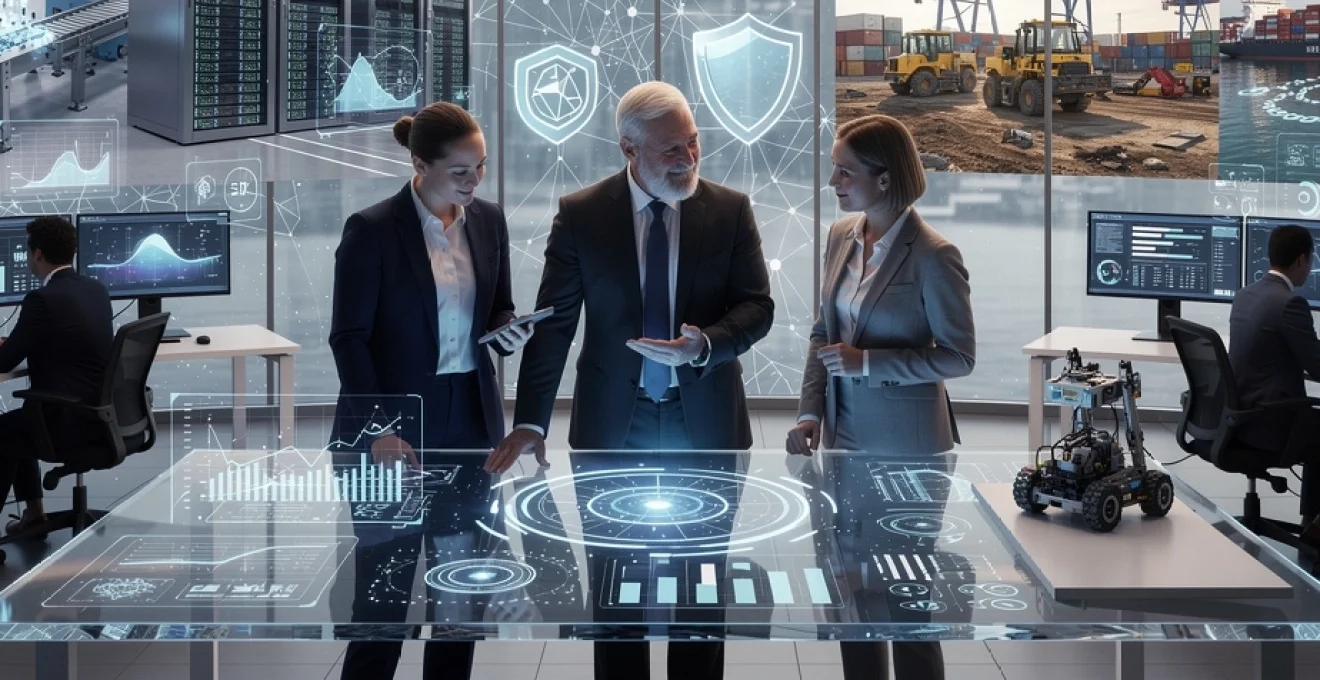
The industrial landscape has undergone unprecedented transformation over the past decade, with technological innovation accelerating at breakneck speed. Manufacturing giants, aerospace companies, and heavy industry leaders find themselves navigating an increasingly complex digital ecosystem where traditional operational models are being completely reimagined. This technological revolution isn’t merely about adopting new tools; it represents a fundamental shift in how industrial organisations approach production, quality control, supply chain management, and workforce development.
Today’s industrial leaders face the dual challenge of maintaining operational excellence whilst simultaneously integrating cutting-edge technologies that promise enhanced efficiency, reduced costs, and improved competitiveness. The companies that succeed in this transformation are those that view technological change not as a threat, but as an opportunity to reimagine their entire business model. From artificial intelligence and machine learning to IoT sensors and blockchain technology, the industrial sector is witnessing a convergence of digital innovations that are reshaping manufacturing floors, supply chains, and customer relationships.
Digital transformation strategies in manufacturing: siemens and general electric case studies
Leading manufacturers have recognised that digital transformation extends far beyond simple technology adoption—it requires a comprehensive reimagining of operational processes, workforce capabilities, and strategic objectives. Siemens and General Electric have emerged as exemplars of successful digital transformation, demonstrating how traditional industrial companies can leverage technology to create new value propositions and maintain competitive advantages in rapidly evolving markets.
These industrial giants have implemented holistic approaches that integrate multiple technological solutions whilst maintaining focus on core manufacturing excellence. Their strategies encompass everything from shop floor automation to enterprise-wide data analytics, creating interconnected systems that provide unprecedented visibility into operations and enable predictive decision-making capabilities.
Industry 4.0 implementation through IoT sensor integration
The deployment of Internet of Things sensors across manufacturing environments has revolutionised how companies monitor, analyse, and optimise their production processes. Siemens has integrated over 100,000 sensors across its manufacturing facilities, creating a comprehensive network that captures real-time data on everything from machine performance to environmental conditions. This sensor ecosystem generates approximately 50 terabytes of data daily, providing granular insights into operational efficiency and potential improvement opportunities.
General Electric’s approach to IoT implementation focuses on creating digital twins of physical assets, enabling engineers to simulate operational scenarios and predict equipment behaviour under various conditions. Their Predix platform processes data from thousands of connected machines, turbines, and locomotives, transforming raw sensor data into actionable intelligence that drives maintenance schedules, operational adjustments, and strategic planning decisions.
Predictive maintenance systems using machine learning algorithms
Machine learning algorithms have become instrumental in transforming reactive maintenance approaches into predictive maintenance strategies that significantly reduce downtime and operational costs. Siemens has developed sophisticated algorithms that analyse vibration patterns, temperature fluctuations, and performance metrics to predict equipment failures up to six weeks in advance. This capability has reduced unplanned downtime by 35% across their manufacturing network whilst extending equipment lifespan by an average of 20%.
The implementation of predictive maintenance represents a paradigm shift from traditional time-based maintenance schedules to condition-based strategies that optimise resource allocation and minimise operational disruptions. General Electric’s machine learning models process historical maintenance data, operational parameters, and environmental factors to generate failure probability scores for individual components, enabling maintenance teams to prioritise interventions based on actual risk rather than predetermined schedules.
Cloud-based enterprise resource planning migration processes
The migration from on-premises ERP systems to cloud-based platforms has enabled manufacturers to achieve greater scalability, flexibility, and integration capabilities. Siemens completed a comprehensive SAP S/4HANA Cloud migration across 150 manufacturing facilities, standardising processes whilst maintaining local customisation requirements. This migration reduced IT infrastructure costs by 40% whilst improving system responsiveness and enabling real-time analytics across global operations.
Cloud-based ERP systems provide manufacturers with the agility to rapidly scale operations, integrate new technologies, and respond to changing market conditions without significant infrastructure investments. The ability to access real-time data from any location has proven particularly valuable during the pandemic, enabling remote monitoring and management of manufacturing operations whilst maintaining productivity and quality standards.
Cybersecurity frameworks for connected manufacturing equipment
As manufacturing environments become increasingly connected, cybersecurity has emerged as a critical
priority for both Siemens and General Electric. Siemens has implemented a multi-layered cybersecurity framework based on zero-trust principles, segmenting production networks from corporate IT and enforcing strict access controls for every connected device. Continuous vulnerability scanning, automated patch management, and security information and event management (SIEM) systems enable real-time monitoring of anomalous activity across thousands of machines and sensors.
General Electric has embedded cybersecurity into the design of its industrial control systems, incorporating encryption, secure boot mechanisms, and hardware-based security modules into equipment from turbines to medical imaging devices. Their industrial cybersecurity operations centres (ICSOCs) monitor global assets 24/7, combining threat intelligence feeds with behavioural analytics to detect and respond to potential attacks before they disrupt production. For industrial leaders, the lesson is clear: as connectivity increases, robust cybersecurity frameworks are no longer optional—they are foundational to safe and reliable digital manufacturing.
Artificial intelligence integration across heavy industries: boeing and caterpillar approaches
Heavy industry players such as Boeing and Caterpillar are demonstrating how artificial intelligence can move far beyond pilot projects to become a core driver of operational excellence. From autonomous equipment to AI-assisted engineering, these organisations are integrating advanced algorithms into everyday workflows. Their experience shows that successful AI integration in heavy industry depends on high-quality data, strong governance, and close collaboration between domain experts and data scientists.
Rather than treating AI as a standalone initiative, both companies embed machine learning and deep learning capabilities into existing systems and processes. This approach ensures that AI tools enhance, rather than disrupt, critical operations like quality control, supply chain planning, and financial management. For industrial leaders wondering where to start with AI adoption, the strategies used by Boeing and Caterpillar provide a practical roadmap grounded in measurable business outcomes.
Computer vision applications in quality control systems
Boeing has implemented computer vision systems on assembly lines to identify surface defects, alignment issues, and component mismatches that human inspectors might miss under time pressure. High-resolution cameras capture detailed images of aircraft components, while convolutional neural networks compare them against reference models to flag irregularities in real time. This has improved defect detection rates by double-digit percentages and reduced the need for rework, which is critical in a safety-critical industry where quality control cannot be compromised.
Caterpillar deploys similar computer vision technology in engine and heavy machinery production, using AI models to assess weld integrity, paint quality, and component fit. By automating visual inspection, the company has shortened quality control cycles and increased consistency, even in facilities operating around the clock. Think of these systems as tireless inspectors with perfect memory: they learn from every defect they see, continuously improving their ability to catch subtle anomalies that indicate emerging quality issues.
Natural language processing for supply chain communication
Natural language processing (NLP) is helping heavy industrial players cut through the noise of complex, global supply chain communication. Boeing uses NLP tools to analyse thousands of emails, supplier reports, and maintenance logs, automatically categorising and prioritising issues that could impact production schedules. By extracting key entities—such as part numbers, delivery dates, and risk indicators—NLP engines give planners a consolidated view of emerging supply chain risks.
Caterpillar leverages NLP-powered chatbots and virtual assistants to support dealers and customers seeking technical information or parts availability. These systems understand natural language queries, retrieve relevant documentation, and even trigger workflows such as warranty claims or service requests. For industrial leaders, the message is simple: when you turn unstructured text into structured, searchable intelligence, you gain visibility into supply chain dynamics that would otherwise remain buried in email inboxes and PDF reports.
Robotic process automation in financial and administrative functions
While heavy industry transformation often focuses on factories and field operations, back-office functions can also unlock significant value through automation. Boeing has deployed robotic process automation (RPA) bots to handle repetitive financial tasks such as invoice matching, expense validation, and purchase order reconciliation. These software robots interact with legacy systems through the user interface, mimicking human actions but with higher speed and fewer errors.
Caterpillar uses RPA to streamline administrative processes from HR onboarding to compliance reporting, integrating bots with ERP and document management systems. By automating routine tasks, finance and administrative teams can shift their focus to higher-value activities such as scenario analysis, risk management, and business partnering. If we think of digital transformation as upgrading the “engine” of the business, RPA is like replacing worn-out cogs in the transmission—often invisible from the outside, but essential for smooth and efficient performance.
Deep learning models for demand forecasting and inventory optimisation
Accurate demand forecasting is particularly challenging in heavy industry, where long lead times and cyclical markets can make traditional forecasting methods unreliable. Boeing employs deep learning models that incorporate variables such as airline fleet renewal cycles, macroeconomic indicators, fuel prices, and historical order patterns to predict demand for aircraft and spare parts. These models enable more precise production planning and inventory positioning, helping to balance utilisation and responsiveness.
Caterpillar applies deep learning to anticipate demand for replacement parts and new equipment across mining, construction, and energy sectors. By analysing telematics data from connected machines, usage patterns, and customer maintenance histories, the company can predict when components are likely to fail and ensure that parts are available in regional warehouses. For industrial leaders, advanced demand forecasting and inventory optimisation reduce capital tied up in stock while minimising the risk of costly stockouts—a critical advantage in volatile markets.
Agile organisational restructuring methods for technology adoption
Adopting new technologies at scale often requires more than new tools; it demands new ways of working. Agile organisational restructuring is emerging as a key strategy for industrial leaders who need to accelerate digital initiatives without undermining operational stability. Instead of relying solely on rigid hierarchies and long planning cycles, manufacturers are embracing cross-functional squads, shorter decision loops, and iterative delivery models adapted from the software world.
In practice, this means creating small, empowered teams that own specific digital transformation objectives—from implementing predictive maintenance to redesigning digital customer portals. These teams typically combine IT, operations, finance, and HR expertise, ensuring that technology adoption is aligned with practical constraints on the shop floor and in the field. By breaking large programmes into manageable increments, industrial companies can test, learn, and scale successful approaches while limiting risk.
Cross-functional technology integration teams: 3M and honeywell models
Companies like 3M and Honeywell demonstrate how cross-functional technology integration teams can bridge the gap between innovation and execution. These organisations have decades of experience balancing core industrial operations with constant product and process innovation. Their models show that the right organisational structures are as important as the right technologies when it comes to sustaining digital transformation in complex industrial environments.
Rather than isolating digital experts in separate innovation units, both companies embed technologists directly into business lines and operational teams. This ensures that emerging technologies are evaluated through the lens of real business problems and that domain experts have a voice in solution design. For industrial leaders seeking to avoid the “pilot purgatory” trap, the 3M and Honeywell models offer practical lessons on governance, leadership, and collaboration.
Chief digital officer role definition and responsibilities
At both 3M and Honeywell, the Chief Digital Officer (CDO) plays a central role in orchestrating digital initiatives across the enterprise. The CDO is responsible for defining the digital vision, aligning it with corporate strategy, and ensuring that investments in areas such as AI, IoT, and cloud computing deliver measurable value. This involves not only technology selection but also talent development, operating model design, and partnership strategy.
In many industrial organisations, the CDO acts as a translator between the boardroom and the factory floor, ensuring that ambitious digital roadmaps are grounded in operational reality. Key responsibilities often include establishing digital performance metrics, overseeing data governance, and sponsoring cross-functional programmes that cut across traditional business unit boundaries. When the CDO role is clearly defined and backed by executive authority, it becomes a powerful catalyst for coherent, enterprise-wide technology adoption.
Devops culture implementation in traditional manufacturing environments
Implementing a DevOps culture in traditional manufacturing may sound counterintuitive at first—after all, DevOps originated in software development. Yet industrial leaders are increasingly applying DevOps principles to accelerate the deployment of digital tools that interface with production systems. Honeywell, for example, has created integrated product teams where software developers, OT engineers, and quality specialists collaborate from the outset on industrial control system upgrades and analytics platforms.
This approach replaces the old “throw over the wall” model between IT and operations with continuous collaboration, automated testing, and rapid feedback loops. 3M has similarly adopted DevOps practices for its digital platforms, using continuous integration and continuous deployment (CI/CD) pipelines to roll out new features while maintaining system stability. For manufacturers, adopting DevOps is akin to moving from waterfall production planning to just-in-time delivery of digital capabilities—more responsive, less wasteful, and better aligned with fast-changing business needs.
Technology scouting and innovation lab establishment strategies
To stay ahead of emerging technologies, 3M and Honeywell have formalised technology scouting functions and established dedicated innovation labs. These teams scan the horizon for promising start-ups, university research, and vendor solutions in areas such as advanced robotics, edge AI, and sustainable materials. By evaluating technologies early, they can run controlled experiments in lab environments before committing to large-scale deployment in production facilities.
Innovation labs also serve as safe spaces for employees to experiment with new tools without risking production downtime. Engineers, data scientists, and operators can co-create prototypes, test use cases, and develop proof-of-concept projects that later transition into production-ready solutions. If we think of the core business as a large cargo ship, innovation labs function like agile speedboats—able to explore new routes quickly, then return with validated insights that influence the ship’s long-term course.
Change management frameworks for digital workforce transformation
No digital initiative succeeds without bringing people along on the journey. 3M and Honeywell employ structured change management frameworks that address communication, training, and cultural alignment throughout digital workforce transformation. This includes stakeholder mapping, early involvement of frontline staff, and clear articulation of the “why” behind each technology initiative. By addressing fears about job displacement and skill obsolescence, leaders can reduce resistance and build enthusiasm for new ways of working.
Both companies invest heavily in reskilling and upskilling programmes, combining e-learning with hands-on training in new tools and processes. Managers are equipped with change leadership skills, from active listening to coaching employees through uncertainty. For industrial leaders, the key insight is that technology change is ultimately human change: structured frameworks such as ADKAR or Prosci can provide a repeatable, measurable approach to managing that transformation across multiple sites and business units.
Emerging technology investment prioritisation frameworks
With an ever-expanding array of emerging technologies—from digital twins and collaborative robots to blockchain and edge AI—industrial leaders face a crucial question: where should they invest first? Leading organisations are adopting formal investment prioritisation frameworks that weigh potential value, implementation risk, and strategic alignment. These frameworks help avoid both paralysis and impulsive spending on “shiny objects” that lack a clear business case.
Typically, companies score emerging technologies against criteria such as expected ROI, time to value, impact on safety and quality, scalability across plants, and compatibility with existing infrastructure. Scenario modelling and pilot results feed into these assessments, creating a dynamic portfolio view rather than one-off decisions. By treating technology investments like a balanced portfolio—mixing low-risk, incremental improvements with a few high-upside bets—industrial leaders can systematically adapt to constant technological change while protecting core operations.
Blockchain and edge computing adoption in supply chain management: walmart and maersk examples
Blockchain and edge computing are reshaping how global supply chains are tracked, verified, and optimised. Walmart and Maersk have emerged as high-profile examples of how these technologies can deliver transparency and responsiveness at scale. In industries where goods travel through complex, multi-party networks, the ability to verify provenance, condition, and location in near real time is becoming a major source of competitive advantage.
For industrial leaders managing intricate supplier ecosystems and logistics operations, these developments offer concrete lessons on both the opportunities and practical challenges of deploying blockchain and edge computing. How can your organisation build similar capabilities without introducing unnecessary complexity or cost? The experiences of Walmart and Maersk provide valuable signposts.
Walmart has used blockchain to trace the journey of food products from farm to shelf, reducing traceability times from days to seconds and enhancing food safety. In a similar way, industrial manufacturers can apply blockchain to track critical components, verify certifications, and ensure compliance with regulations across global supply chains. Maersk, in partnership with technology providers, has implemented blockchain-based trade platforms that digitise and secure shipping documentation, reducing paperwork, fraud risk, and delays in port clearance.
Edge computing complements these efforts by processing data closer to where it is generated—on ships, in warehouses, or at factory loading bays—rather than sending everything to central clouds. Maersk uses edge devices on vessels and containers to monitor location, temperature, and vibration, enabling immediate action if conditions deviate from acceptable ranges. Walmart employs edge computing in distribution centres to analyse scanner, camera, and sensor data in real time, optimising routing and inventory movements. Together, blockchain and edge computing form a powerful combination: immutable records backed by timely, local intelligence that allows industrial leaders to run supply chains that are not only more transparent, but also more agile and resilient.