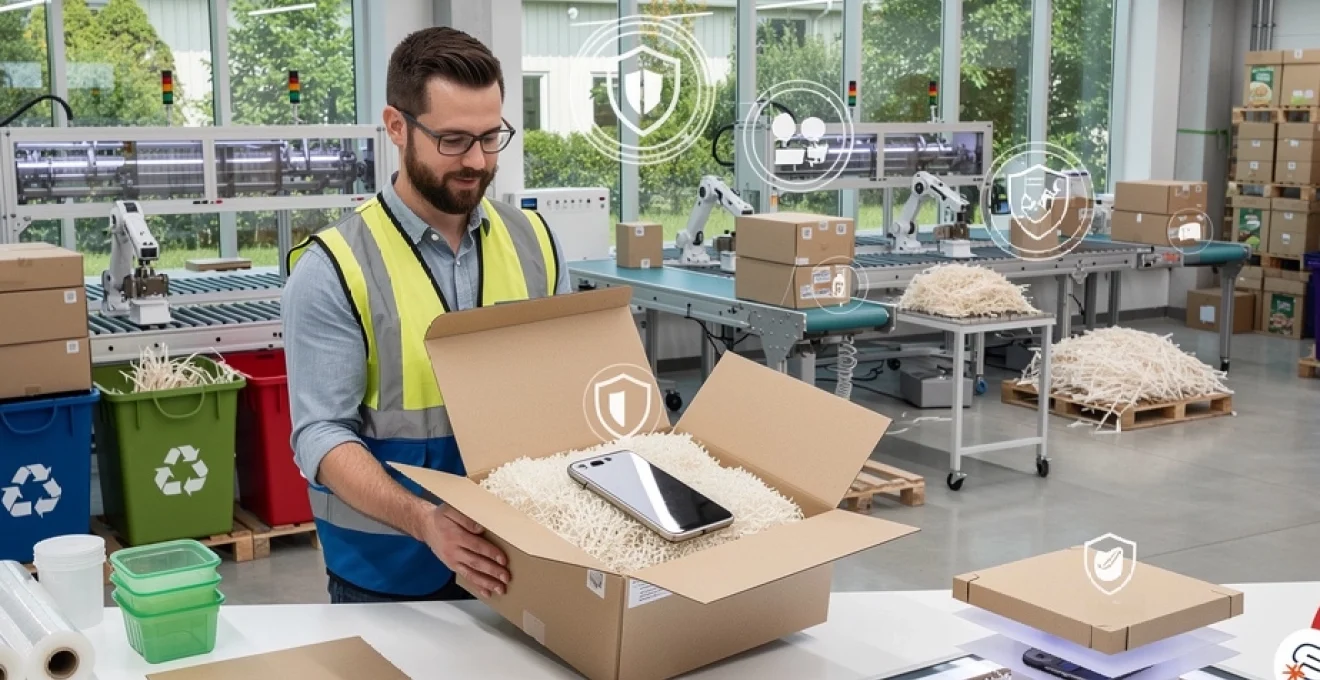
Manufacturing industries worldwide face mounting pressure to reduce environmental impact while maintaining rigorous product protection standards. The packaging sector, responsible for nearly 30% of global waste streams, has emerged as a critical battleground where sustainability meets functionality. Modern eco-friendly packaging solutions demonstrate that environmental responsibility need not compromise product integrity, offering manufacturers innovative pathways to achieve both waste reduction and superior protection simultaneously.
The transformation towards sustainable packaging represents more than environmental compliance—it signals a fundamental shift in how manufacturers approach product lifecycle management. Companies implementing comprehensive green packaging strategies report average waste reductions of 40-60% while maintaining or improving product protection metrics. This evolution challenges traditional assumptions about the trade-offs between sustainability and performance, revealing opportunities for manufacturers to enhance both environmental credentials and operational efficiency.
Biodegradable material innovation transforming packaging supply chains
Revolutionary biodegradable materials are reshaping manufacturing packaging standards, offering unprecedented combinations of environmental sustainability and protective performance. These advanced biopolymers provide manufacturers with viable alternatives to conventional petroleum-based packaging materials while delivering equivalent or superior protection characteristics. The integration of biodegradable solutions into existing supply chains requires strategic planning but yields significant long-term benefits in waste reduction and regulatory compliance.
Contemporary biodegradable packaging materials exhibit remarkable versatility across diverse manufacturing applications. From electronics protection to food preservation, these materials demonstrate exceptional barrier properties while maintaining complete environmental compatibility. Manufacturers adopting biodegradable packaging solutions report reduced disposal costs, enhanced brand reputation, and improved compliance with evolving environmental regulations.
PLA and PBAT polymer applications in primary packaging solutions
Polylactic acid (PLA) and polybutylene adipate terephthalate (PBAT) represent breakthrough polymer technologies revolutionising primary packaging applications. These compostable bioplastics offer manufacturers flexible film properties comparable to traditional polyethylene while providing complete biodegradability under industrial composting conditions. PLA demonstrates excellent clarity and printability, making it ideal for consumer-facing packaging applications where visual appeal remains crucial.
PBAT polymers excel in applications requiring enhanced flexibility and tear resistance. Manufacturing operations utilising PBAT films report superior puncture resistance compared to conventional plastic alternatives, ensuring product protection during transportation and handling. The combination of PLA and PBAT in multilayer structures creates packaging solutions that balance rigidity, flexibility, and environmental performance across diverse manufacturing sectors.
Mushroom-based mycelium packaging for electronics and fragile goods
Mycelium packaging represents a paradigm shift in protective packaging for sensitive electronic components and fragile manufactured goods. This innovative material, derived from mushroom root structures, grows naturally around product contours, providing custom-fit protection without traditional moulding processes. Electronics manufacturers increasingly adopt mycelium solutions for their natural shock-absorption properties and fire-resistant characteristics.
The cultivation process for mycelium packaging occurs within controlled agricultural environments, eliminating chemical processing requirements typical of synthetic alternatives. Manufacturing facilities implementing mycelium packaging report significant reductions in protective material volumes while achieving enhanced product security during shipping and storage. This biological approach to packaging design offers manufacturers sustainable solutions without compromising protective performance.
Seaweed-derived bioplastics replacing traditional polystyrene foam
Marine-derived bioplastics from seaweed sources provide manufacturers with renewable alternatives to expanded polystyrene foam applications. These algae-based materials offer excellent insulation properties crucial for temperature-sensitive manufacturing processes while maintaining complete biodegradability in marine environments. Pharmaceutical and chemical manufacturers particularly benefit from seaweed bioplastics’ natural barrier properties against moisture and oxygen infiltration.
Seaweed cultivation for packaging materials requires minimal freshwater resources and produces oxygen as a beneficial byproduct. Manufacturing operations incorporating seaweed-derived packaging solutions contribute to ocean ecosystem restoration while reducing dependency on petroleum-based protective materials. The scalability of seaweed cultivation ensures sustainable raw material availability for large-scale manufacturing applications.
Paper-based barrier coatings eliminating plastic film requirements
Advanced paper-based barrier coatings enable manufacturers to eliminate
traditional plastic film laminates in many packaging formats. Water-based and bio-based coating technologies now deliver oil, grease, and moisture resistance on fibre substrates without compromising recyclability. By applying these coatings directly to cartonboard or kraft paper, manufacturers can achieve barrier performance suitable for dry foods, frozen goods, and certain liquid-filled applications while keeping packaging mono-material.
For manufacturers, the operational impact is substantial. Eliminating plastic films simplifies material inventories, streamlines recycling processes, and reduces contamination in paper recycling streams. Packaging lines can be recalibrated to accommodate coated papers with minimal modification, especially where heat-seal coatings are used to replace plastic layers. The result is lower overall material consumption, improved recyclability rates, and packaging that protects products as effectively as traditional plastic-laminated structures.
Circular economy packaging design methodologies
While biodegradable materials play a vital role, they are only one pillar of sustainable packaging. Truly eco-friendly packaging for manufacturers is rooted in circular economy design methodologies that prioritise keeping materials in continuous use. Rather than viewing packaging as a disposable necessity, leading manufacturers now treat it as a recoverable asset designed for multiple lifecycles, high recyclability, and minimal waste generation.
This shift demands new ways of thinking across design, sourcing, production, and end-of-life management. Circular packaging strategies integrate lifecycle data, cross-functional collaboration, and emerging regulatory requirements into a single design framework. When executed well, circular economy packaging reduces raw material demand, minimises landfill dependency, and maintains or improves product protection standards throughout complex global supply chains.
Cradle-to-cradle assessment protocols for package development
Cradle-to-cradle (C2C) assessment protocols provide manufacturers with a structured methodology for evaluating packaging beyond traditional cradle-to-grave lifecycle analysis. Instead of accepting disposal as the endpoint, C2C frameworks require designers to plan for continuous material recovery, whether via technical cycles (recycling, reuse) or biological cycles (composting, safe biodegradation). Packaging components are assessed based on material health, recyclability, energy use, water stewardship, and social responsibility.
In practice, manufacturers use cradle-to-cradle principles to screen inks, adhesives, coatings, and substrates during early-stage design. Problematic substances that hinder recycling or contaminate composting streams are identified and replaced before large-scale rollout. By adopting C2C assessment checklists at the design brief stage, engineering teams ensure packaging performance and eco-credentials evolve together, avoiding costly redesigns driven by future regulatory or customer requirements.
Material flow analysis integration in manufacturing operations
Material flow analysis (MFA) helps manufacturers understand how packaging materials move through factories, distribution centres, and customer sites. Think of MFA as an x-ray of your packaging system: it reveals where materials enter, where they accumulate, and where they ultimately exit as waste. By integrating MFA into continuous improvement programmes, manufacturers can pinpoint high-leverage opportunities to reduce consumption and increase recovery without jeopardising product protection.
For example, MFA may reveal that small changes in carton dimensions reduce offcuts at the converting stage and improve pallet utilisation by several percentage points. Over thousands of shipments, these marginal gains translate into significant reductions in corrugate use and transport emissions. When combined with digital tracking tools and ERP data, MFA enables scenario modelling—allowing you to compare the environmental and cost impact of different packaging formats before committing capital to new tooling or machinery.
Design for disassembly principles in multi-layer packaging
Multi-layer packaging structures often deliver best-in-class barrier and mechanical performance, but they can be difficult to recycle when materials are tightly bonded. Design for disassembly (DfD) addresses this challenge by ensuring multi-component packs can be easily separated into recyclable fractions at end-of-life. This may involve mechanical interlocking rather than permanent adhesives, perforated tear lines, or clear visual cues that guide users in separating components.
Manufacturers implementing DfD principles typically focus on two goals: maximise mono-material content and simplify consumer instructions. For instance, using a fibre-based tray with a peelable film lid allows paper and plastic fractions to be sorted into their respective recycling streams. The key is to maintain sealing integrity and barrier performance during use, while making disassembly intuitive once the product reaches the user or recovery facility. This approach enables high protection standards while aligning with emerging circular economy legislation that discourages non-recyclable composite materials.
Extended producer responsibility compliance strategies
Extended Producer Responsibility (EPR) regulations are rapidly transforming how manufacturers design and finance packaging systems. Under EPR schemes, producers bear financial and operational responsibility for the packaging they place on the market, often paying eco-fees based on recyclability, material type, and weight. This creates a powerful economic incentive to reduce packaging volumes, favour recyclable materials, and simplify structures.
Proactive manufacturers are responding with cross-functional EPR compliance strategies that align design, procurement, and sustainability teams. These strategies include implementing internal eco-modulation models to forecast future fee structures, prioritising highly recyclable mono-material packaging, and building data systems that track packaging formats by region. By treating EPR as a design constraint rather than a back-office compliance issue, manufacturers can minimise future liabilities while accelerating their transition to circular packaging solutions.
Advanced protection technologies in sustainable packaging systems
A persistent concern for manufacturers is whether eco-friendly packaging can truly match the protection offered by conventional materials. Advanced protection technologies now demonstrate that sustainable solutions can deliver equal—or superior—performance in shock absorption, barrier properties, and tamper evidence. Rather than accepting a trade-off, you can use engineered fibre structures, smart materials, and precision machinery to enhance both sustainability and product security.
Engineered paper honeycomb, moulded pulp inserts, and fibre-based corner protectors are prime examples. These systems distribute impact forces more evenly than loose-fill plastics, reducing damage rates in transit while remaining fully recyclable or compostable. At the same time, innovations like active barrier coatings, oxygen scavengers integrated into bio-based films, and RFID-enabled seals help ensure product quality and traceability throughout long, complex supply chains.
Machinery innovations play an equally important role. Thermoformers, traysealers, vertical form-fill-seal machines, and horizontal flow wrappers have evolved to run thinner films, mono-material laminates, and paper-based substrates without compromising seal integrity. Features such as precise temperature control, tight-bag air extraction, and optimised forming profiles cut material usage by double-digit percentages while preserving pack strength and hygiene. In this way, advanced protection is no longer tied exclusively to multi-layer plastics; it is increasingly delivered through smart engineering and better process control.
Cost-benefit analysis of green packaging implementation
Transitioning to eco-friendly packaging inevitably raises the question: will it cost more? In the short term, certain bio-based materials and certified substrates can command price premiums. However, a comprehensive cost-benefit analysis typically reveals that total system costs often decrease over time. Material reduction, lower damage rates, optimised transportation, and reduced waste management fees combine to offset, and sometimes exceed, any increase in unit material prices.
To evaluate the business case, manufacturers should look beyond material price per kilogram and consider cost per shipped unit in real-world conditions. Right-sized packaging that reduces dimensional weight can generate immediate savings on freight. Durable fibre-based solutions that prevent product damage lower reverse logistics costs and avoid the high environmental burden of scrapped goods. Furthermore, as EPR fees, landfill charges, and plastic taxes expand, non-optimised conventional packaging becomes increasingly expensive relative to greener alternatives.
Intangible benefits also carry financial weight. Brands that adopt visible, credible eco-packaging often experience stronger customer loyalty and easier access to new retail channels that prioritise sustainable suppliers. Investors and B2B buyers increasingly assess packaging performance as part of ESG criteria, influencing tender outcomes and capital access. When these factors are integrated into a multi-year financial model, the argument for green packaging shifts from “ethical expense” to strategic investment that supports resilience, compliance, and long-term competitiveness.
Industry case studies: unilever, Coca-Cola, and IKEA packaging transitions
Large manufacturers provide useful benchmarks for what is possible at scale. Unilever, Coca-Cola, and IKEA have each embarked on ambitious packaging transformations that demonstrate how eco-friendly solutions can cut waste while maintaining stringent product protection requirements across global operations. Their strategies differ by sector, but they share common themes: material simplification, recyclability, and circular design.
Unilever has committed to making 100% of its plastic packaging reusable, recyclable, or compostable, and to cut virgin plastic use significantly. In practice, this has meant shifting to recycled-content bottles, concentrated product formats, and refill systems that reduce overall packaging volumes. Importantly, the company invests heavily in performance testing to ensure that lighter-weight bottles and pouches still protect products during shipping and use, proving that resource efficiency and product protection can advance together.
Coca-Cola has focused on increasing the recycled content of its PET bottles and rolling out returnable and refillable packaging in multiple markets. By designing bottles optimised for multiple life cycles and improving collection infrastructure, the company reduces dependency on virgin resin while maintaining carbonation retention and structural integrity. Trials with paper-based bottle prototypes highlight how major beverage manufacturers are exploring next-generation fibre-based packaging that still delivers the barrier performance required for sensitive drinks.
IKEA offers a clear illustration of replacing traditional protective materials with fibre-based and bio-based systems. The company has systematically phased out expanded polystyrene in many product lines, replacing it with moulded pulp, corrugated structures, and mycelium-based solutions. These alternatives are designed to absorb shocks during flat-pack furniture transport while remaining recyclable or compostable in most markets. By optimising pack dimensions and introducing precision-engineered fibre components, IKEA has reduced overall packaging weight and improved container fill rates, cutting both costs and emissions.
Regulatory compliance and certification standards for eco-packaging
As regulators tighten requirements around waste, recyclability, and chemical safety, manufacturers must ensure that eco-friendly packaging not only performs well but also meets recognised standards. Compliance now extends beyond basic material safety to include recyclability benchmarks, compostability criteria, and responsible sourcing certifications. Navigating this landscape effectively helps reduce legal risk and provides credible proof points for sustainability claims.
Key frameworks include ISO 14001 for environmental management systems, FSC and PEFC certification for responsibly sourced fibre, and EN and ASTM standards for industrial and home compostability. Many markets also reference recyclability guidelines issued by industry coalitions and packaging recovery organisations, which outline design rules for widely recyclable packs. By aligning packaging specifications with these standards from the outset, manufacturers can avoid costly reformulations triggered by non-compliance or accusations of greenwashing.
Certification bodies and third-party laboratories play an essential role in validating claims about biodegradable plastics, compostable films, and recyclable structures. Independent testing of barrier performance, disintegration rates, and material compatibility with recycling streams ensures that sustainability promises are backed by evidence. For manufacturers, this due diligence not only protects brand reputation but also simplifies communication with regulators, retailers, and end-users who increasingly demand transparency about packaging’s true environmental impact.