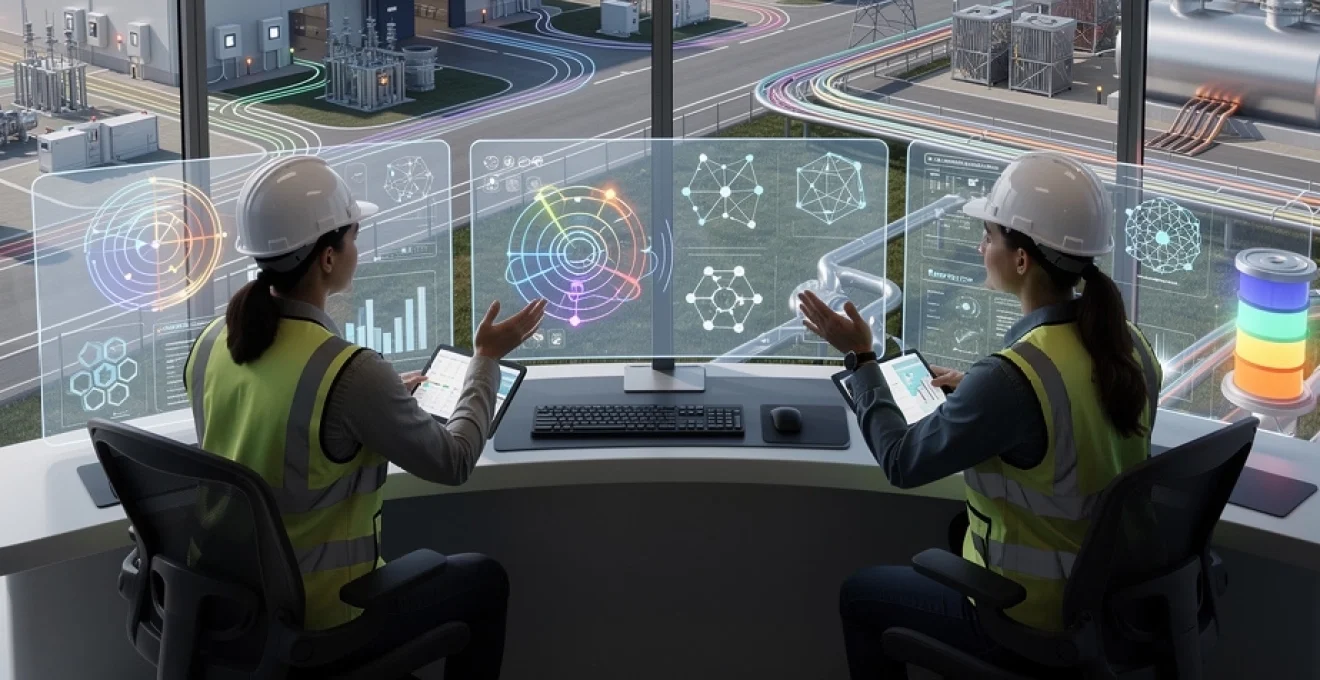
Manufacturing and heavy industry are in the throes of a profound shift—one that’s redefining how facilities consume, manage, and generate power. The old playbook, centred on fossil-fueled combustion and linear energy flows, is being rewritten by digital intelligence, renewable generation, and closed-loop resource recovery. It’s not simply a matter of swapping out aging motors or flipping to LED lighting; rather, what’s underway is a systemic transformation that leverages real-time data, advanced materials science, and distributed generation architectures to slash energy waste, cut emissions, and improve operational resilience. For facility managers, procurement teams, and sustainability officers, the challenge is twofold: identifying which technologies deliver genuine, measurable returns, and integrating them into legacy infrastructure without disrupting production. The convergence of smart grids, artificial intelligence, and onsite renewable power is making that possible—and financially compelling—in ways that were unthinkable even a decade ago.
Smart grid infrastructure and Real-Time energy management systems in manufacturing
Industrial facilities have historically operated as passive consumers of electricity, drawing power from the grid with little visibility into consumption patterns or opportunities for optimisation. That dynamic is changing rapidly. Modern smart grid infrastructure enables bidirectional communication between utilities and industrial consumers, creating new possibilities for demand response, dynamic pricing, and real-time load management. For you as a plant operator or energy manager, this means unprecedented control over when and how your facility consumes power—and the ability to monetise flexibility by participating in ancillary services markets.
Advanced metering infrastructure (AMI) and bidirectional communication protocols
Advanced metering infrastructure forms the backbone of smart grid capabilities, replacing traditional meters with intelligent devices that capture granular consumption data at intervals as short as one minute. These systems employ communication protocols such as Zigbee, LoRaWAN, and cellular networks to transmit data in near real-time, enabling both utilities and industrial consumers to respond dynamically to grid conditions. The value proposition extends beyond simple monitoring: AMI allows you to identify anomalous consumption patterns that may indicate equipment faults, quantify the impact of process changes on energy use, and verify the savings delivered by efficiency projects with far greater precision than was previously possible.
Predictive load balancing through machine learning algorithms
Machine learning algorithms are now being deployed to forecast energy demand with remarkable accuracy, often achieving prediction errors of less than 3% over rolling 24-hour windows. By analysing historical consumption data alongside variables such as production schedules, ambient temperature, and equipment operating status, these systems can anticipate load spikes and adjust facility operations proactively. For instance, energy-intensive batch processes can be scheduled to coincide with periods of low grid demand or high renewable generation, capturing lower tariffs and reducing strain on transmission infrastructure. The result is a manufacturing operation that functions almost like a living organism, constantly adapting its energy consumption to match both internal requirements and external grid conditions.
Distributed energy resource management systems (DERMS) integration
As industrial facilities increasingly deploy onsite generation—solar arrays, combined heat and power units, battery storage—the complexity of coordinating these assets grows exponentially. Distributed Energy Resource Management Systems provide the orchestration layer, optimising the dispatch of onsite generation, storage charging and discharging, and grid imports or exports. DERMS platforms use sophisticated algorithms to balance multiple objectives: minimising energy costs, maximising self-consumption of renewable generation, participating in demand response programmes, and maintaining power quality. For facilities with multiple meters or sites, these systems can aggregate resources to unlock participation in wholesale markets that would otherwise be inaccessible.
Industrial IoT sensor networks for granular energy monitoring
The proliferation of low-cost, wireless sensors has made sub-metering economically viable at a level of granularity that was once confined to academic research. Industrial IoT networks now enable you to monitor individual motors, lighting circuits, compressed air systems, and process equipment in real time. This visibility is transformative: rather than relying on annual audits or periodic surveys, energy managers can continuously track performance, detect degradation as it occurs, and quantify the impact of operational changes within hours. When combined with cloud-based analytics platforms, these sensor networks generate actionable insights—alerting you when a
compressor starts to leak, when a motor is running outside its optimal efficiency band, or when a line is drawing baseload power even during scheduled downtime. Over time, this kind of granular energy monitoring builds a rich dataset you can mine for continuous improvement, benchmarking sites against each other and identifying the “hidden” energy hogs that rarely show up in monthly utility bills but quietly erode margins.
Combined heat and power (CHP) systems and waste heat recovery technologies
Beyond smart grid integration, one of the most powerful levers for industrial energy efficiency is making better use of the heat you already generate. Combined Heat and Power systems and modern waste heat recovery technologies turn what was once a liability—high-temperature exhaust or cooling loads—into a strategic asset. In energy-intensive industries, it’s common for 30–50% of input energy to leave the process as waste heat; capturing even a portion of that can translate into double-digit reductions in primary fuel use. When you align CHP systems with intelligent controls and real-time energy management, the result is a more resilient, low-carbon energy backbone for your facility.
Organic rankine cycle (ORC) systems for Low-Temperature heat conversion
Traditional steam Rankine cycles struggle to operate efficiently at the relatively low temperatures found in many industrial exhaust streams—often between 80°C and 200°C. Organic Rankine Cycle (ORC) systems solve this by using organic working fluids with lower boiling points, enabling you to convert low-grade heat into electricity that would otherwise be lost. Typical electrical conversion efficiencies may range from 8–18% for these low-temperature sources, but when you factor in the fuel and carbon costs avoided, payback periods of 3–7 years are increasingly common in sectors like food processing, pulp and paper, and glass manufacturing. ORC modules are often skid-mounted and modular, making them a practical retrofit option for sites with constrained space or complex piping layouts.
From an operational perspective, ORC systems function almost like silent co-workers sitting in the background: they tap into existing heat streams, require minimal operator intervention, and deliver steady power output correlated with your process load. You can either use the electricity behind the meter, displacing grid imports, or export it where regulatory frameworks allow. The key to unlocking maximum value is a detailed heat mapping exercise—identifying temperature levels, flow rates, and temporal availability of waste heat across your plant. Once you know where low-grade heat is “leaking” away, ORC becomes a precise tool rather than a speculative investment.
Thermoelectric generators in steel and cement manufacturing processes
While ORC targets low- to medium-temperature streams, thermoelectric generators (TEGs) are gaining traction in ultra-harsh, high-temperature environments such as steel reheating furnaces, cement kilns, and glass melting tanks. TEGs rely on the Seebeck effect—directly converting temperature gradients into electrical power without moving parts. Their conversion efficiency is relatively modest, often around 5–8% in industrial settings, but their robustness and compact form factor make them ideal where rotating equipment would struggle to survive. In a steel mill, for example, arrays of TEG modules can be attached to flue gas ducts or hot surfaces, quietly generating supplemental power around the clock.
Because TEG systems are solid-state, maintenance needs are low compared with turbines or heat engines. That said, you should think of them as part of a broader waste heat hierarchy rather than a standalone solution: high-temperature heat may first be used for preheating combustion air or feedstock, with TEGs capturing smaller residual gradients. In cement plants where decarbonisation pressures are acute, integrating TEGs with other waste heat recovery options can shave a few percentage points off energy intensity—incremental gains that matter when margins are tight and carbon pricing is rising. As new thermoelectric materials with higher figures of merit move from the lab to commercial scale, their role in industrial efficiency strategies is likely to expand.
Heat pump integration with district heating networks
Industrial sites located near urban areas or other heat consumers have a growing opportunity: selling excess low-temperature heat into district heating networks. Large-scale industrial heat pumps act as the bridge, upgrading waste heat from cooling water, condensers, or low-grade exhaust streams to temperatures suitable for space heating and domestic hot water. Coefficients of performance (COP) of 3–5 are common, meaning every unit of electrical input yields three to five units of useful heat. For energy managers, this can turn a disposal problem—getting rid of surplus heat without stressing cooling systems—into a revenue stream or a powerful way to offset gas-fired boilers.
When integrated with district heating, heat pumps also help decarbonise local energy systems, displacing fossil-fired combined heat and power units or standalone boilers. However, making this work in practice requires close coordination with network operators around temperature levels, availability profiles, and contractual frameworks. You’ll need to assess whether to operate the heat pump in a load-following mode tied to your own processes, or in a grid-responsive mode aligned with electricity price signals and renewable generation peaks. In many cases, the optimal configuration uses both, supported by thermal storage to decouple when heat is produced from when it is consumed.
Thermal energy storage solutions using phase change materials
Thermal energy storage (TES) with phase change materials (PCMs) adds yet another layer of flexibility to clean and intelligent energy systems. PCMs absorb and release large amounts of latent heat as they transition between solid and liquid states, allowing you to store heat or cooling at nearly constant temperatures. Compared with traditional hot water tanks, PCM-based systems can achieve higher energy density, which is particularly valuable in space-constrained industrial facilities. In practice, TES can smooth out mismatches between when waste heat is generated and when it’s needed, stabilising process temperatures and reducing the need to cycle boilers or chillers.
For example, a food processing plant might use PCM-based cold storage to stockpile “cooling capacity” during off-peak electricity periods, then draw from it during production peaks rather than ramping compressors. In a similar vein, high-temperature PCMs can be charged using surplus solar or CHP output during the day, then discharged for process heat or district heating at night. As with electrical battery storage, the economics of TES hinges on your ability to arbitrage time—shifting energy use away from high-tariff periods or using stored heat to avoid firing up less efficient backup equipment. When engineered correctly, PCMs effectively act as a thermal battery, but without the cycle degradation issues associated with many electrochemical systems.
Artificial Intelligence-Driven process optimisation in Energy-Intensive industries
As the physical layers of industrial energy systems become cleaner and more flexible, artificial intelligence provides the “brain” that orchestrates them. In energy-intensive sectors such as chemicals, metals, cement, and refining, AI-driven optimisation is moving far beyond simple rule-based controls or static setpoints. Instead, machine learning models continuously learn from process data, predicting how changes in feedstock quality, ambient conditions, or equipment health will impact both energy consumption and product quality. The goal is not just to use less energy, but to use it more intelligently—maintaining or even improving throughput while cutting kilowatt-hours per unit of output.
Neural network models for predictive maintenance in power generation equipment
Neural networks have become a cornerstone of predictive maintenance for turbines, generators, boilers, and large rotating equipment. By ingesting vibration signatures, temperature trends, oil analysis data, and operational logs, these models can detect subtle patterns that humans or traditional threshold-based systems would miss. In gas turbines, for instance, early-stage compressor fouling or blade fatigue can be identified weeks or months before it would trigger alarms, allowing you to plan corrective action for scheduled downtime. Studies in power generation and heavy manufacturing regularly report 20–30% reductions in unplanned outages and maintenance costs when predictive maintenance is fully deployed.
The energy efficiency implications are just as important. Equipment running outside specification consumes more fuel and electricity, even if it hasn’t yet failed catastrophically. Neural-network-based monitoring can flag when heat rate is drifting on a boiler, when a motor’s power factor is deteriorating, or when auxiliary loads are creeping up due to misalignment or partial blockages. By treating these deviations as early warning signs rather than background noise, you maintain optimal efficiency profiles over the whole asset lifecycle. Over thousands of operating hours, the avoided energy waste translates into significant carbon and cost savings.
Digital twin technology for Real-Time energy consumption simulation
Digital twins—high-fidelity, virtual replicas of physical assets or entire plants—are rapidly becoming central to industrial energy optimisation strategies. These models combine physics-based simulation with live data feeds from sensors and control systems, allowing you to test “what-if” scenarios in real time. What happens to your steam balance if you tweak a reactor temperature by 2°C, or if you route more load to a newer compressor train? Instead of experimenting on the live plant and risking quality or safety issues, you explore these options in the twin, where the only thing at stake is compute time.
From an energy perspective, digital twins help you uncover non-obvious interactions across processes. A change in upstream drying conditions, for example, might reduce energy consumption in downstream kilns more than it increases electricity use in fans and blowers. Twin-based optimisation can reveal such system-level trade-offs, guiding you toward settings that minimise total energy use rather than just optimising individual unit operations. In some advanced deployments, the digital twin runs continuously alongside the plant, recommending optimal setpoints minute by minute—a bit like a flight simulator constantly advising the pilot on the most efficient route through changing weather.
Reinforcement learning applications in chemical plant operations
Reinforcement learning (RL) takes AI-driven optimisation a step further, allowing algorithms to learn the best sequences of control actions through trial and error within a simulated environment. In complex chemical plants with dozens of interacting loops, traditional tuning and manual optimisation quickly run into limits. RL agents, by contrast, can explore thousands of control strategies in a digital twin, slowly converging on policies that balance energy consumption, throughput, yield, and safety constraints. When deployed carefully, the learned policies are then transferred to the real plant under strict guardrails, with human operators retaining override authority.
The analogy here is training a self-driving car in a virtual city before putting it on real roads. You wouldn’t want an RL agent to “experiment” freely with live reactors or distillation columns, but in a realistic simulator it can safely learn how subtle changes in reflux ratios, pressure setpoints, or feed rates affect both energy intensity and product specs. Early case studies report 5–10% reductions in specific energy consumption (for example, megajoules per ton of product) in large chemical complexes where RL-assisted control has been adopted. Of course, success depends on high-quality data, robust safety envelopes, and a change management process that keeps operations staff engaged rather than sidelined.
Renewable energy microgrids and On-Site power generation strategies
While efficiency and optimisation reduce the amount of energy you need, renewable energy microgrids change where that energy comes from. For many industrial sites, relying solely on centralised grids exposes operations to volatility in prices, outages, and evolving carbon regulations. On-site power generation—solar, wind, biomass, and even small hydro—combined into a microgrid with storage and intelligent controls can transform your facility from a passive consumer into an active energy hub. The result is greater resilience, lower long-run energy costs, and a clearer pathway to meeting corporate net-zero commitments.
Behind-the-metre solar PV arrays with battery energy storage systems (BESS)
Behind-the-metre solar PV is now a mainstream option for industrial facilities with available roof or land area. Global module prices have fallen more than 80% in the past decade, and levelised costs of energy from commercial-scale solar often undercut retail grid tariffs, especially during daytime peaks. When you pair solar with battery energy storage systems (BESS), you unlock additional value streams: demand charge reduction, peak shaving, backup power, and participation in demand response or ancillary service markets. A well-sized PV+BESS system can cover a significant fraction of daytime baseload, particularly for facilities with high HVAC or process cooling demands.
From an operational standpoint, intelligent energy management software sits at the heart of these hybrid systems. It decides when to charge batteries from solar, when to discharge to meet on-site loads, and when to draw from or export to the grid. Think of it as a traffic controller for electrons, continuously weighing tariff structures, weather forecasts, and production plans. If you’re just starting out, it often makes sense to target a subset of your load—say, critical production lines or cold storage—then expand the microgrid as you gain confidence and as your data reveals the most lucrative use cases.
Industrial-scale wind turbines for Self-Sufficient manufacturing facilities
For sites with suitable wind resources and planning conditions, industrial-scale wind turbines can form the backbone of a self-sufficient power strategy. A single 3–5 MW turbine can produce 8–15 GWh per year depending on capacity factor, enough to cover a substantial portion of many factories’ annual demand. Integrating wind into an industrial microgrid introduces variability, but modern forecasting tools and storage solutions help smooth output. In some cases, wind and solar complement each other seasonally and diurnally, creating a more balanced renewable generation profile.
However, wind projects require careful stakeholder engagement—local communities, aviation authorities, and grid operators all have a voice. You’ll also need to evaluate interconnection capacity and the regulatory framework for net exports. Some manufacturers choose to site wind assets off-site but within the same grid region, tying them to consumption through virtual power purchase agreements rather than direct wires. Whether on-site or off-site, wind can significantly reduce exposure to future carbon pricing and fossil fuel volatility while sending a strong signal to customers and investors about your long-term sustainability strategy.
Green hydrogen production through electrolysis for process heat applications
In sectors where high-temperature process heat or chemical feedstocks are hard to electrify—such as refining, fertilisers, and certain metal processes—green hydrogen is emerging as a promising pathway. By using renewable electricity to power electrolysers, you produce hydrogen without associated CO2 emissions, which can then be burned for heat, used in fuel cells, or fed into existing chemical processes. Today, green hydrogen is still more expensive than natural gas on an energy-equivalent basis, but costs are falling as electrolyser manufacturing scales and renewable power gets cheaper. For process heat applications above 800°C, hydrogen combustion can be particularly attractive where direct electrification is technically challenging.
From your perspective as an industrial energy planner, the key questions are scale, intermittency, and integration. Will you run electrolysers continuously at a lower utilisation, or flex them to chase periods of abundant, low-cost renewable power? How will hydrogen storage be handled safely on-site, and what retrofits are needed for burners, turbines, or kilns? In many early projects, hydrogen starts as a partial substitute—blended with natural gas or used in specific high-value processes—before scaling up as economics and policy incentives (such as hydrogen contracts for difference or tax credits) improve.
Power purchase agreements (PPAs) and virtual net metering arrangements
Not every facility has the space, capital, or risk appetite to build its own renewable generation. Power Purchase Agreements (PPAs) and virtual net metering arrangements provide an alternative route, allowing you to lock in long-term access to clean electricity without taking on full project development responsibilities. Under a physical PPA, you buy power directly from a specific wind or solar asset, often at a fixed or floor price, shielding your operations from wholesale market volatility. Virtual or synthetic PPAs go a step further: you agree a strike price with a project developer, then settle the difference between that price and the market price financially, while still sourcing electricity from the grid as usual.
These instruments not only support the financing of new renewable assets but also allow you to credibly claim emission reductions under recognised accounting frameworks. Virtual net metering, where allowed, lets multiple sites share the output of a single generation asset, allocating credits across your portfolio. The challenge lies in structuring PPAs that align with your load profile, risk tolerance, and ESG aspirations. It’s wise to involve both finance and sustainability teams early, ensuring that contractual terms (tenor, pricing structure, curtailment risk) match your broader corporate strategy rather than being treated as a standalone energy procurement decision.
Carbon capture, utilisation and storage (CCUS) technologies in heavy industry
Even with aggressive efficiency measures and high penetration of renewables, some industrial emissions are notoriously hard to abate. Process emissions from cement clinker production, steelmaking, and certain chemical reactions arise from the chemistry itself, not just from the energy used. That’s where Carbon Capture, Utilisation and Storage (CCUS) comes into play—acting as a critical backstop for deep decarbonisation in heavy industry. While CCUS has historically been associated with high costs and large-scale power projects, newer modular systems and utilisation pathways are making it more relevant to a broader range of facilities.
Post-combustion amine scrubbing systems in cement and petrochemical plants
Post-combustion amine scrubbing remains one of the most mature carbon capture technologies, particularly suited to flue gases from cement kilns, refineries, and petrochemical plants. In these systems, flue gas passes through an absorber where CO2 binds chemically to an amine solvent; the CO2-rich solvent is then heated in a stripper column to release concentrated CO2 for compression and storage or utilisation. Capture rates of 90% or more are technically achievable, though they come with an energy penalty—often 15–25% additional fuel consumption if no waste heat is available. This is why integrating amine systems with existing CHP and waste heat recovery is so important: reclaimed heat can drive solvent regeneration, reducing incremental energy needs.
In practice, retrofitting amine scrubbing requires careful layout planning, solvent management strategies, and robust corrosion control. Solvent degradation and amine slip must be managed to avoid environmental or operational issues. Nonetheless, demonstration projects in Europe, North America, and Asia are proving that large-scale cement and petrochemical facilities can significantly cut emissions using post-combustion capture. If your organisation operates in a sector facing looming carbon border adjustments or tightening emissions trading schemes, early exploration of CCUS can provide strategic optionality—even if full deployment is staged over many years.
Direct air capture (DAC) integration with industrial facilities
Direct Air Capture (DAC) takes a different approach, removing CO2 directly from ambient air rather than from concentrated flue gas. While DAC is more energy-intensive due to the low concentration of CO2 in the atmosphere, coupling DAC units with industrial facilities can unlock important synergies. Low-cost waste heat, surplus renewable electricity, and existing infrastructure for CO2 compression or transport can all be leveraged. Some industrial parks are exploring hub models where multiple emitters share DAC and storage infrastructure, spreading costs across a wider base.
From a strategic standpoint, DAC is particularly interesting for companies with net-zero or net-negative pledges that extend beyond their own direct emissions. It allows you to offset residual emissions elsewhere in your value chain or even in customers’ use of your products. However, DAC technology is still in an early commercial phase, with costs currently in the hundreds of dollars per tonne of CO2 removed. If you’re considering DAC, it’s wise to start with pilot-scale collaborations or research partnerships, building familiarity with the technology and its integration requirements ahead of broader roll-out.
CO2 mineralisation and utilisation in concrete production
One of the most promising utilisation pathways for captured CO2 lies in concrete and construction materials. CO2 mineralisation injects or exposes captured CO2 to alkaline industrial residues or fresh concrete mixes, where it reacts to form stable carbonate minerals. This not only sequesters CO2 permanently but can also enhance material properties such as compressive strength and durability. Several commercial technologies already allow ready-mix plants to dose CO2 into concrete during mixing, reducing the required cement content by a few percent while maintaining performance—an important lever given that cement production alone accounts for roughly 7–8% of global CO2 emissions.
For industrial sites producing cement, aggregates, or by-products like steel slag, integrating CO2 mineralisation can create a circular carbon loop: emissions captured from kilns or furnaces are locked into construction materials that may last for decades. The economics depend on local markets for low-carbon concrete, regulatory incentives, and crediting schemes that recognise mineralised CO2 as permanent storage. As green building standards tighten and customers increasingly specify low-embodied-carbon materials, these technologies can confer a genuine competitive edge, not just a compliance advantage.
Blockchain-enabled energy trading platforms and Peer-to-Peer energy markets
As industrial energy systems become more distributed and data-rich, traditional top-down market structures are starting to look increasingly strained. Blockchain-enabled energy trading platforms offer a radically different model: one where industrial consumers, prosumers, and generators can transact directly with each other in near real-time. By using distributed ledger technology to record and verify transactions, these platforms aim to reduce friction, enhance transparency, and enable new business models for flexibility and renewable energy procurement. For industrial players, the question is no longer whether such systems will emerge, but how and when to participate.
Ethereum-based smart contracts for renewable energy certificate (REC) trading
Renewable Energy Certificates (RECs) and Guarantees of Origin are key instruments for tracking the environmental attributes of renewable electricity, but traditional registries can be slow, opaque, and fragmented. Ethereum-based smart contracts bring a new level of automation and trust to REC trading. Each certificate can be tokenised on a blockchain, with smart contracts enforcing issuance, transfer, and retirement rules without manual intervention. This reduces administrative overhead and the risk of double counting, while allowing you to integrate REC transactions directly with your internal energy and ESG reporting systems.
Imagine a scenario where your behind-the-metre solar or wind assets automatically generate digital RECs as they produce power, which are then sold or retired according to pre-defined rules encoded in smart contracts. You could, for example, prioritise retiring RECs to cover Scope 2 emissions for critical facilities, then sell any surplus into secondary markets when prices exceed a certain threshold. While regulatory acceptance of blockchain-based RECs is still evolving, pilot projects in Europe, North America, and Asia suggest that this approach can make voluntary and compliance markets more liquid and transparent.
Decentralised energy marketplaces for industrial consumers
Beyond certificates, blockchain platforms can enable decentralised energy marketplaces where industrial consumers buy and sell actual kilowatt-hours or flexibility services. In such a marketplace, a factory with a flexible CHP plant or battery system could offer demand response capacity to nearby data centres or commercial buildings, settling transactions via automated smart contracts. Prices might update every 5–15 minutes based on local supply-demand balances, grid constraints, and participants’ bids. The blockchain ledger acts as an auditable record of who provided what service, when, and at what price.
For you, this opens up new monetisation options for assets that would otherwise sit idle or underutilised. However, it also introduces complexity: you must decide which markets to participate in, how to manage risk across volatile price signals, and how to integrate marketplace operations with your existing SCADA and energy management systems. Regulatory frameworks and grid codes still limit the scope of true peer-to-peer trading in many jurisdictions, but the direction of travel is clear. As pilot projects mature, leading industrial players are positioning themselves as early adopters, building internal capabilities ahead of wider market liberalisation.
Transparent energy provenance tracking through distributed ledger technology
One of the subtler but highly impactful applications of blockchain in industrial energy is provenance tracking—proving not just how much energy you used, but exactly where, when, and how it was generated. Distributed ledger technology can record timestamped, cryptographically signed data from meters and generation assets, creating an immutable chain of custody for electrons and associated environmental attributes. This level of traceability is increasingly valuable as customers, investors, and regulators demand credible proof of green claims and as supply chain emissions become a competitive issue.
For example, an automotive manufacturer might want to prove that a particular batch of components was produced using 100% renewable electricity during certain hours, or that specific critical processes ran on locally generated green power rather than generic grid mix. With blockchain-based provenance, such claims can be verified without relying solely on aggregated annual averages or certificates divorced from real-time consumption. While no technology is a silver bullet, combining clean and intelligent energy systems with transparent digital record-keeping can help you navigate the complex intersection of decarbonisation, compliance, and brand trust—turning your energy strategy into a demonstrable asset rather than an unverifiable promise.